

Others like what faith is Features >>
Plans, Purposes And Pursuits
The Life Of Obedience
Understanding The Anointing
The Bible Way To Receive The Holy Spirit
-160.webp)
The Present-Day Ministry Of Jesus Christ
How To Keep Your Healing
The Spirit Within & The Spirit Upon
The Human Spirit
Overflow - Living Aboves Life's Limits

What To Do When Nothing Seems To Work
About the Book
"What Faith Is" by Kenneth Hagin explores the concept of faith, defining it as a spiritual force that enables believers to access God's power and promises. Through personal anecdotes and biblical teachings, Hagin explains how faith operates and how individuals can cultivate and strengthen their faith to experience miracles and breakthroughs in their lives. The book emphasizes the importance of believing in God's word and trusting in His faithfulness to bring about desired outcomes. Overall, "What Faith Is" serves as a practical guide for deepening one's understanding of faith and living a victorious Christian life.
William Chalmers Burns
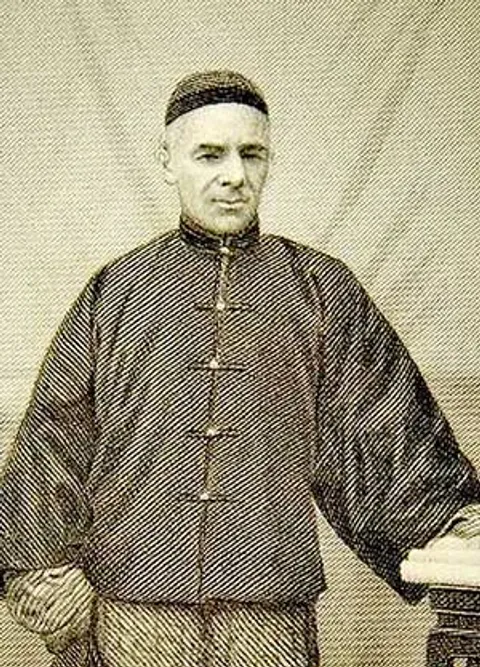 William Chalmers Burns was born in the Manse of Dun, in Angus, on April Ist, 1815. He was the third son of the Parish Church minister there. After leaving school, he went to Edinburgh to be apprenticed with an uncle to the legal profession. His eldest sister, a gay young lady, was converted to God, and became a bright witness for the Lord Jesus in 1831, and it was by means of her decided testimony that William was first awakened to a sense of his need of salvation, and led to put his trust in the Son of God, as his Redeemer and Saviour.
It was shortly after his conversion that he walked into the manse of Kilsyth, where the family then resided, having walked on foot the thirty-six miles from Edinburgh, to tell his mother and his sisters the glad news of his conversion, and to say that his desire now was to relinquish his study of law, and devote himself entirely to the preaching of the Gospel of God’s grace to his fellowmen.
And this he did heartily and with all his might, first in the neglected Parts of Scotland, and latterly among many heathen millions of the great Chinese Empire, then scarcely touched by the feet of God’s messengers of peace.
Mr. Burns’s name came into prominence in connection with a wonderful work of grace in Dundee, while he was preaching for Robert Murray M’Cheyne, then on a visit to Palestine, for the evangelization of the Jews. During Mr. Burns’s preaching in Dundee, a remarkable awakening took place; thousands were aroused to their condition in the sight of God, truly converted, and set on the heavenward way.
Remarkable scenes were witnessed in the old church of St. Peter’s, near to which M’Cheyne’s body now lies, awaiting the first resurrection. It was on the evening of a Lord’s Day in Kilsyth, after preaching to a crowded congregation, that Mr. Burns felt constrained to intimate to the people that he would preach to the people in the open air, before returning to Dundee the following day.
Deeply burdened with the souls of the people, he went into the village and invited the people, who thronged into the old church, until every seat and passage was filled. And the Lord helped His servant to preach straight to the people with great power, with the result that the whole congregation became melted under the message, many weeping aloud and crying to God for mercy. A glorious work of conversion followed.
Meetings for prayer and preaching of the Gospel continued in the churchyard, the market-place and elsewhere for weeks, while Mr. Burns returned to Dundee to resume his ministry. The work progressed in Dundee with increased interest, until the return of Mr. M’Cheyne, who greatly rejoiced in all that the Lord had done during his absence, through the ministry of His servant.
There was no jealousy, but the deepest gratitude, and these two true ministers of Christ rejoiced together over the Lord’s doings, which were indeed marvellous in their eyes.
From that time onward, until the Lord’s call came to go to China, Mr. Burns gave himself almost wholly to itinerant Gospel preaching, through Perthshire, up as far north as Aberdeen, preaching in barns, on market-places, and wherever the people could be gathered together to hear the Word. His message was plain, and to the point; thousands were awakened and many saved. But the adversary opposed. Time and again Mr. Burns was stoned, and bore the marks of these brands of the enemy for many days.
Believing it to be the call of the Lord, he went forth to China as the first missionary of the Presbyterian Church of England, in June, 1847. When questioned by those interested in his out-going, how long it would take him to prepare for the voyage, he replied with all simplicity, “I will be ready to go to-morrow.”
On a brief visit to his home, to take farewell of his sister, he silently wrung her hand, took a last glance around their old home, and with a small bag in his hand and his mother’s plaid across his arm, went forth, in the Name of the Lord with the Gospel to China’s benighted people, of whom it was said “a million a month” were dying without having once heard the Gospel.
For years this solitary witness toiled alone, at times with a few helpers, in the great heathen land, amid overwhelming hindrances, but his faith in God never faltered. On and on he went, sowing the seed which others would reap, until he reached the borders of the great kingdom of Manchuria, where, in a small, comfortless room in Nieu-chang, wearied and worn in labours abundant, he fell asleep on April 4th, 1868, his last audible words being, “For Thine is the Kingdom and the Power and the Glory.”
It is of this great land that the story of grace related in the following pages is told, and those who saw and shared in its joyful results, say that it was no doubt part of the result of William Burns’s sowing, in his earlier years in China.
William Chalmers Burns was born in the Manse of Dun, in Angus, on April Ist, 1815. He was the third son of the Parish Church minister there. After leaving school, he went to Edinburgh to be apprenticed with an uncle to the legal profession. His eldest sister, a gay young lady, was converted to God, and became a bright witness for the Lord Jesus in 1831, and it was by means of her decided testimony that William was first awakened to a sense of his need of salvation, and led to put his trust in the Son of God, as his Redeemer and Saviour.
It was shortly after his conversion that he walked into the manse of Kilsyth, where the family then resided, having walked on foot the thirty-six miles from Edinburgh, to tell his mother and his sisters the glad news of his conversion, and to say that his desire now was to relinquish his study of law, and devote himself entirely to the preaching of the Gospel of God’s grace to his fellowmen.
And this he did heartily and with all his might, first in the neglected Parts of Scotland, and latterly among many heathen millions of the great Chinese Empire, then scarcely touched by the feet of God’s messengers of peace.
Mr. Burns’s name came into prominence in connection with a wonderful work of grace in Dundee, while he was preaching for Robert Murray M’Cheyne, then on a visit to Palestine, for the evangelization of the Jews. During Mr. Burns’s preaching in Dundee, a remarkable awakening took place; thousands were aroused to their condition in the sight of God, truly converted, and set on the heavenward way.
Remarkable scenes were witnessed in the old church of St. Peter’s, near to which M’Cheyne’s body now lies, awaiting the first resurrection. It was on the evening of a Lord’s Day in Kilsyth, after preaching to a crowded congregation, that Mr. Burns felt constrained to intimate to the people that he would preach to the people in the open air, before returning to Dundee the following day.
Deeply burdened with the souls of the people, he went into the village and invited the people, who thronged into the old church, until every seat and passage was filled. And the Lord helped His servant to preach straight to the people with great power, with the result that the whole congregation became melted under the message, many weeping aloud and crying to God for mercy. A glorious work of conversion followed.
Meetings for prayer and preaching of the Gospel continued in the churchyard, the market-place and elsewhere for weeks, while Mr. Burns returned to Dundee to resume his ministry. The work progressed in Dundee with increased interest, until the return of Mr. M’Cheyne, who greatly rejoiced in all that the Lord had done during his absence, through the ministry of His servant.
There was no jealousy, but the deepest gratitude, and these two true ministers of Christ rejoiced together over the Lord’s doings, which were indeed marvellous in their eyes.
From that time onward, until the Lord’s call came to go to China, Mr. Burns gave himself almost wholly to itinerant Gospel preaching, through Perthshire, up as far north as Aberdeen, preaching in barns, on market-places, and wherever the people could be gathered together to hear the Word. His message was plain, and to the point; thousands were awakened and many saved. But the adversary opposed. Time and again Mr. Burns was stoned, and bore the marks of these brands of the enemy for many days.
Believing it to be the call of the Lord, he went forth to China as the first missionary of the Presbyterian Church of England, in June, 1847. When questioned by those interested in his out-going, how long it would take him to prepare for the voyage, he replied with all simplicity, “I will be ready to go to-morrow.”
On a brief visit to his home, to take farewell of his sister, he silently wrung her hand, took a last glance around their old home, and with a small bag in his hand and his mother’s plaid across his arm, went forth, in the Name of the Lord with the Gospel to China’s benighted people, of whom it was said “a million a month” were dying without having once heard the Gospel.
For years this solitary witness toiled alone, at times with a few helpers, in the great heathen land, amid overwhelming hindrances, but his faith in God never faltered. On and on he went, sowing the seed which others would reap, until he reached the borders of the great kingdom of Manchuria, where, in a small, comfortless room in Nieu-chang, wearied and worn in labours abundant, he fell asleep on April 4th, 1868, his last audible words being, “For Thine is the Kingdom and the Power and the Glory.”
It is of this great land that the story of grace related in the following pages is told, and those who saw and shared in its joyful results, say that it was no doubt part of the result of William Burns’s sowing, in his earlier years in China.
"A Dream Reveals God's Healing Power of Love"
Have you ever had an experience so exceptional you hesitated to share it with others who might not believe it? In the mid-1970s, I worked for a Knoxville company, selling to grocery stores, campgrounds, etc. My route often took me to Chattanooga, where one of my customers lived and was a Christian. We would often share our views and testimonies. One day, after he had shared a beautiful Spiritual experience with me, without thinking, I said, "Wow, is that for real?" He instantly turned away and tartly said, "I don't share this with everyone because I know they won't believe, but I thought you would!" But we were fine; I apologized and explained that it was only a reaction, and I didn't doubt his word. The following article is about a vision I have shared with only a few who I thought would believe. God's Healing Power of Love In 1996 during an incredibly stressful situation, my personal and home life were crashing, and there seemed to be nothing I could do. I was depressed, and Satan repeatedly taunted me with self-harm suggestions. I knew he was a liar, but he always attacks our weakest points. Even those closest to me were unaware that I had encountered one of the lowest points in my life. Our problems and troubles always seem worse at night, don't they? One night in the wee hours, awake and leaning against my pillow, suffering from what I now know was another brutal satanic attack, something happened that changed my life forever. My Vision Suddenly I was sitting in the drivers' seat of a large truck; it had been in an accident, and everything around me was in small broken pieces. The windshield was gone, broken glass and large shreds of sharp metal dangled from the ceiling and were scattered all around. Observing my injured body, I said, I must have been in a fatal accident! Just then, a kind-looking a well-dressed man calmly opened the smashed passenger door and stepped up to the truck. Reaching through the debris, he caught my hand, and I miraculously passed through the twisted metal, glass, and shredded material and out the passenger door to the ground. As I stepped out, I realized how well I felt, no aches or pains, and no depression. I was amazingly well! We started walking, and after about 50 yards, I saw what can only be described as a place or an opening. What I saw/experienced inside cannot accurately be put into words, but I will try. As we drew closer, I became aware of an unspeakable beauty; colors I had never seen, and music that radiated beauty, peace, and healing. Even more were the penetrating feelings of joy, total acceptance, and sense of well-being. The emotional and Spiritual healing powers were beyond what I thought possible. I stood as though glued to the ground, as I was repeatedly bathed with wave after wave of blissful sensations of healing, love, and total acceptance, powerless to move. I am convinced it could only have been a glimpse of Heaven. The power was so penetrating and extreme that I do not believe if it had occurred outside the vision, I could have remained standing. I do not know how long we were there, but perhaps only a few minutes when my friend indicated it was time to leave. We quietly walked back to the front of the wrecked truck. Then, as quickly as the vision started, it ended, and I was again sitting up in bed, awake. But the sensations remained. I trembled as my heart pounded, and the beauty and euphoria from the vision replayed in my mind. I knew without a doubt this was from God; it could not have been anything else. Again, I cannot put this into words, but it was so powerful that I would have knowingly gone through an actual truck wreck and even death to have this experience again. As I sat there searching for understanding, and wondering aloud I asked, "does this means that I am going to lose my life in a terrible accident?" Then a powerful and comforting Spiritual voice immediately responded, "No, I just wanted you to know that I love you and for you to experience the healing power of my love." I was instantly and permanently healed, and my days were once again enjoyable. Although it was winter and in the northern U.S., I would walk through the snow conducting business humming or whistling, and nothing could cause me the slightest bit of worry. The problems in my life did not change, but I did. The things I was so anxious about happened anyway, but I was okay because this miracle from God had brought total healing. God healed and removed me from the most miserable time in my life! It was a miracle that brought healing, joy, and hope for the future, and, most of all, newfound confidence in God. I was laughing and talking with my co-workers again. I didn't discuss my experience with them because some were not Christians, and I was concerned that they could not understand, and it was so precious and powerful that I didn't want to take the chance of someone not believing. This miracle was a token of God's love, and it did more for me than a truckload of pills. It was only a small sample of God's healing power of love but has remained one of the most beautiful experiences of my life. The Apostle Paul's actual visit to Heaven and the things he saw and experienced were so wondrous that God would not allow him to speak of them. Paul was so captivated by his Glorious Visit that the only reason he would willingly return to earth was to complete God's message to the world. Twenty-Five Years Later Twenty-five years later, I still remember that experience in detail but can only now understand how much it changed my life. This vision, and a couple of others, are mostly responsible for establishing this ministry and website. I would never again doubt God's reality or wonder about His healing power, and it has given me faith for the countless times I have prayed with others. Now, when troubles and depression try to return, all I need to do is recall that vision, and the healing powers return. No matter how discouraging things become, or how trying the circumstances, remember that nothing is impossible with God; the healing power of God's love is enough to overcome them all. Samuel Mills