
Others like water in the wilderness Features >>
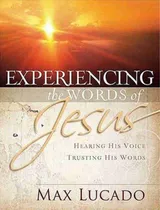
Experiencing The Words Of Jesus
Experiencing The Depths Of Jesus Christ
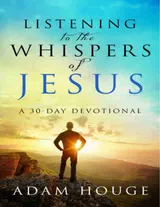
Listening To The Whispers Of Jesus
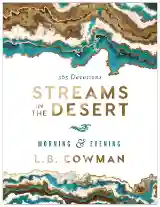
Streams In The Desert: Morning And Evening. 365 Devotions

Center Of The Universe Too
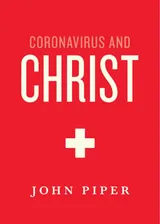
Coronavirus And Christ
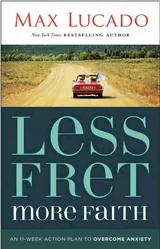
Less Fret, More Faith
Bread For The Journey
Men Of The Bible Devotional

My Utmost For His Highest
About the Book
"Water in the Wilderness" by T.D. Jakes is a spiritual guidebook that explores the concept of finding hope and renewal in times of struggle and uncertainty. Using biblical stories and personal anecdotes, Jakes offers insight into how to navigate difficult seasons in life and emerge stronger and more resilient. The book encourages readers to trust in God's plan and to find sources of spiritual nourishment to sustain them through challenging times.
Mosab Hassan Yousef
Mosab Hassan Yousef (Arabic: مصعب حسن يوسف; nicknamed "The Green Prince"; born 5 May 1978) is a Palestinian who worked undercover for Israel's internal security service Shin Bet from 1997 to 2007.
Shin Bet considered him its most valuable source within the Hamas leadership. The information Yousef supplied prevented dozens of suicide attacks and assassinations of Israelis, exposed numerous Hamas cells, and assisted Israel in hunting down many militants, and incarcerating his own father, Hamas leader Sheikh Hassan Yousef. In March 2010, he published his autobiography titled Son of Hamas.
In 1999, Yousef converted to Christianity, and in 2007 he moved to the United States. His request for political asylum in the United States was granted pending a routine background check in 2010.
Biography
Mosab Hassan Yousef (later Joseph) was born in Ramallah, a city 10 kilometers (6.2 mi) north of Jerusalem. His father, Sheikh Hassan Yousef, was a Hamas leader who spent many years in Israeli prisons. He is the oldest of five brothers and three sisters.
When Yousef was growing up, he wanted to be a fighter because that was according to him what was expected of Palestinian children in the West Bank. Yousef was first arrested when he was ten, during the First Intifada, for throwing rocks at Israeli settlers. He was further arrested and jailed by Israel numerous times. As his father's eldest son, he was seen as his heir apparent, and became an important part of the Hamas organization.
Yousef said he saw the light after a stint with his dad’s comrades in an Israeli jail during the mid-1990s. At Megiddo Prison, he witnessed Hamas inmates leading a brutal year-long campaign to weed out supposed Israeli collaborators. "During that time, Hamas tortured and killed hundreds of prisoners,” he said, recalling vivid memories of needles being inserted under finger nails and bodies charred with burning plastics. Many, if not all, had nothing to do with Israeli intelligence. “I will never forget their screams,” he continued. “I started asking myself a question. What if Hamas succeeded in destroying Israel and building a state. Will they destroy our people in this way?”
Yousef's doubts about Islam and Hamas began forming when he realized Hamas' brutality, and that he hated how Hamas used the lives of suffering civilians and children to achieve its goals. Yousef was held by Shin Bet agents in 1996. While in prison, he was shocked by Shin Bet's interrogation methods, which he considered humane, when compared to how Hamas operatives tortured imprisoned suspected collaborators. He decided to accept a Shin Bet offer to become an informant.
Espionage career
Beginning with his release from prison in 1997, Yousef was considered the Shin Bet's most reliable source in the Hamas leadership, earning himself the nickname "The Green Prince" – using the color of the Islamist group's flag, and "prince" because of his pedigree as the son of one of the movement's founders. The intelligence he supplied to Israel led to the exposure of many Hamas cells, as well as the prevention of dozens of suicide bombings and assassination attempts on Jews. He has claimed that he did not inform for money, but rather that his motivations were ideological and religious, and that he only wanted to save lives.[13] In order to thwart any suspicions of collaboration, the Shin Bet staged an arrest attempt, telling the Israel Defense Forces to launch an operation to arrest him, and then provided him intelligence allowing him to escape at the last minute, after which he went into hiding for the rest of his career.
Yousef says he supplied intelligence only on the condition that the "targets" would not be killed, but arrested. This led to the detention of several key Palestinian leaders, including Ibrahim Hamid, a Hamas commander in the West Bank, and Marwan Barghouti. Also, Yousef claims to have thwarted a 2001 plot to assassinate Shimon Peres, then foreign minister and later President of Israel. According to his former Shin Bet officer, "Many people owe him their lives and don't even know it."
Conversion to Christianity
According to his story, Yousef met a British missionary in 1999 who introduced him to Christianity. Between the years 1999 and 2000, Yousef gradually embraced Christianity. In 2005, he was secretly baptized in Tel Aviv by an unidentified Christian tourist. He left the West Bank for the United States in 2007, and lived some time in San Diego, California, where he joined the Barabbas Road Church.
In August 2008, Yousef publicly revealed his Christianity, and renounced Hamas and the Arab leadership, thereby endangering himself and exposing his family in Ramallah to persecution. Yousef has also claimed that his aim was to bring peace to the Middle East; he hopes to return to his homeland when there is peace.
Yousef has stated that despite his conversion to Christianity, he is "against religion", and does not adhere to any denomination of Christianity. He has stated, "Religion steals freedom, kills creativity, turns us into slaves and against one another. Yes, I am talking about Christianity as well as Islam. Most Christians I have seen, seem to have missed the point, that Jesus redeemed us from religion. Religion is nothing but man's attempts to get back to God. Whether it is Islam, Christianity, Judaism, Buddhism, Hinduism, animism, any ism. Religion can't save mankind. Only Jesus could save mankind through his death and resurrection. And Jesus is the only way to God."
Autobiography
Yousef's co-authored autobiography, Son of Hamas: A Gripping Account of Terror, Betrayal, Political Intrigue, and Unthinkable Choices, written with the assistance of Ron Brackin, was published in March 2010.
Yousef's brother Ouwais denounced the report about his brother's activities, saying: "It was full of lies; it's all lies." Ouwais also revealed that the last contact between his family and Mosab took place more than a year before the news of his spying. Sheikh Hassan Yousef, Mosab's father, while in an Israeli prison, disowned his son for spying for Israel. The Haaretz report on Yousef was described by Hamas MP Mushir al-Masri as "psychological war being waged against the Palestinian people... [it] did not deserve a response".
Deportation threats and political asylum
For a time, Yousef was threatened with deportation from the U.S., after his request for political asylum was denied, since statements in his book about working for Hamas were interpreted as "providing material support to a U.S.-designated terrorist organization", despite Yousef's explanation that they were "intended to undermine the group". His case then proceeded to the deportation stage, despite Yousef's advocates' warning that he would likely be executed by the Palestinian Authority if deported to the West Bank.
On 24 June 2010, Shin Bet handler Gonen Ben Itzhak, who for 10 years worked with Yousef under the cryptonym "Loai", revealed his own identity in order to testify on behalf of Yousef at an immigration hearing in San Diego. Ben-Yitzhak described Yousef as a "true friend", and said, "he risked his life every day in order to prevent violence".
Partially as a result of this, Immigration Court Judge Richard J. Bartolomei, Jr., ruled on 30 June 2010, that Yousef would be allowed to remain in the United States after being fingerprinted and passing a routine background check.
He is a frequent guest speaker on various American news channels, where he talks about the atrocities committed by Hamas.
Films
A documentary adaptation of Son of Hamas titled The Green Prince, directed and written by Nadav Schirman, premiered at the 2014 Sundance Film Festival, where it won the Audience Award for World Cinema: Documentary. The Green Prince will be re-made into a live-action feature film.
Yousef is collaborating with US-based actor and film producer Sam Feuer in the production of two films: a feature film adaptation of Yousef's book Son of Hamas and documentary The Green Prince, and a historical depiction of the life of the Muslim prophet Muhammad based on the accounts of eighth-century historian Ibn Ishaq.
Views and controversies
Some elements of Yousef's story have been questioned. Former Shin Bet Deputy Chief Gideon Ezra described Yousef's claims as "too good to be true", and stated that, "there are hundreds of collaborators like him. He is not unusual. He just decided to write a book about it." The conversion to Christianity narrative promoted by Yousef and his book publishers remains unsubstantiated as well. Critics have alleged that Yousef claimed he was a Christian (for a longer period of time) in order to help secure asylum in the United States. This tactic is common for Muslim immigrants seeking to avoid deportation to countries where apostasy laws exist. However, he has since become an active figure in evangelical non-denominational Christianity in America, and has appeared on programs such as The 700 Club. Interest in the book from Christian readers helped make it a New York Times best-seller. During an appearance on The 700 Club to promote his book "Son of Hamas", he was welcomed and interviewed by host Pat Robertson.
At an "End Times Prophecy" conference in 2010, hosted by California-based evangelist Greg Laurie, Yousef told the crowd in attendance that Islam is "the biggest lie in human history." He further suggested at the conference that the Quran should not be legal in the United States ("banned on American soil").
In May 2016, talking to a Jerusalem Post conference in New York, Yousef claimed that at one time that he was working for, and being paid by, Israel, the United States, the Palestinian Authority, and Hamas, all at the same time. He went on to say that Islam as a whole is comparable to Nazism, and must be defeated.
No Holiness, No Heaven
No one will be in heaven who did not walk in good works on earth. In other words, and in the words of Hebrews 12:14, there is a “holiness without which no one will see the Lord.” Abbreviated, “no holiness, no heaven.” In directness, “Faith without works is dead” (James 2:26 NASB). In confession, “Faith, thus receiving and resting on Christ and his righteousness, is the alone instrument of justification: yet is it not alone in the person justified, but is ever accompanied with all other saving graces, and is no dead faith, but works by love” (Westminster Confession). In commandment: “Work out [literally, produce] your own salvation with fear and trembling” (Philippians 2:12). “No one will be in heaven who did not walk in good works on earth.” In illustration: “Every branch in me that does not bear fruit he takes away . . . and the branches are gathered, thrown into the fire, and burned” (John 15:2, 6). In lyric, “He leads me in paths of righteousness for his name’s sake” (Psalm 23:3). In repetition: no one will be in heaven who did not walk in good works on earth. Two Familiar Heresies Now, to say this, I hasten to avoid a different heresy: no one will be in heaven based upon good works. “By grace you have been saved through faith. And this is not your own doing; it is the gift of God, not a result of works, so that no one may boast” (Ephesians 2:8–9). “A person is not justified by works of the law” (Galatians 2:16). Christ’s righteousness, not ours, justifies entirely. The man, woman, or child who believes in him who justifies the ungodly shall be counted righteous before God. His blood brings us near to God, his righteousness imputed to us is needed. In other words, him, him, him — not us — so that no man may boast. Although the Christian walks into the narrow path full of good works, God prepared them for him to walk in beforehand. So here we have it: no one will be in heaven who did not walk in faith-producing good works on earth — “the obedience of faith” (Romans 1:5; 16:26) or “faith working through love” (Galatians 5:6) — and no one in heaven will be there on the basis of his good works. One heresy says it doesn’t matter if you work, run, or fight at all; the other, that your working, running, and fighting earn your place before a holy God. James calls the first the faith of demons (James 2:19). Paul calls the second the faith of the bewitched (Galatians 3:1). One error sits comfortably among evangelicals; the other among Catholics. It is the dead faith closer to home that I wish to address. Once Saved, Always Saved Dead faith (which produces no works) is not necessarily a silent faith. It often rehearses (and abuses) golden mantras such as, “Once saved, always saved,” putting a jewel, as it were, up a pig’s snout. “Nothing shall separate his true children from the love of God; the Shepherd will lose none of his sheep.” Properly understood, “Once saved, always saved” would stand for the amazing truth that from the vantage point of the eternal mountain of God, his children, predestined to be saved before time began, will not fall away — he will bring them home. He carved their names in the book of life; his Son has atoned for their actual sins; he seals them with his very Spirit as a down payment — the Spirit that shall surely bring his work to completion at the day of Christ Jesus. Nothing shall separate his true children from the love of God; the Shepherd will lose none of his sheep. From this, however, some draw crooked lines. Instead of deducing with Paul, “God’s firm foundation stands, bearing this seal: ‘The Lord knows those who are his,’ and, ‘Let everyone who names the name of the Lord depart from iniquity’” (2 Timothy 2:19), some conclude that the perseverance of the saints is optional. They may imagine God putting souls on a conveyor belt to glory. “Once saved, always saved” — no matter how deeply compromised their lives may be. In so doing they pit the essential doctrine of justification against the blood, sweat, and toil of the essential doctrine of sanctification, judging the first to eclipse the second. We do not need holiness, it is thought, because once saved, always saved. And by “saved” we cannot help but conclude they include “saved from needing to obey.” Texts that speak conditionally of inheriting eternal life (conditions God empowers his true children to meet) bewilder dead faith. They cannot stomach texts about the need to continue stable and steadfast in the faith, to endure to the end, to stand firm through trials, to put the flesh to death by the Spirit, to work out one’s own salvation with fear and trembling, to make our calling and election sure through energetic striving (2 Peter 1:1–11). The shouts of their dead faith cry “Lord, Lord” while they disobey him with their lives. Theirs is a faith I knew too well. A faith soberly depicted by the character Talkative in Bunyan’s animated theology, The Pilgrim’s Progress. Along the Road with Talkative A man named Faithful, in Bunyan’s allegory, possessed a faith that worked, while Talkative possessed a faith that did not. They had a conversation along the way. Faithful: Are you going to the heavenly country? Talkative: I am going to that same place. Talkative believes himself headed to the Celestial City. And what’s more, he speaks very Christianly, possessing excellent Reformed doctrine: By this [profitable talk of the Scriptures] a man may learn the necessity of the new birth; the insufficiency of our works; the need of Christ’s righteousness, and so forth. Besides, by this a man may learn what it is to repent, to believe, to pray, to suffer, or the like; by this also a man may learn what are the great promises and consolations of the Gospel, to his own comfort. Further, by this a man may learn to refute false opinions; to vindicate the truth; and also to instruct the ignorant. Bunyan teaches that proper orthodoxy communicated well is not a sufficient sign in itself of living faith. Faithful, not knowing the report of Talkative, whispers to his companion, Christian, “What a brave companion have we got! Surely this man will make a very excellent pilgrim.” At this, Christian modestly smiles and answers plainly, This man with whom you are so taken will beguile with this tongue of his twenty of them that know him not. . . . He is best abroad; near home he is ugly enough. . . . Religion hath no place in his heart, or house, or conversation; all he hath lieth in his tongue, and his religion is to make a noise therewith. His Christianity lies only in his tongue. How does Christian know this? “I have been in his family and have observed him both at home and abroad.” The tree is known by its fruit. He is “a saint abroad, and a devil at home.” Like the Pharisees of Jesus’s day, he says much, but obeys little (Matthew 23:3). “The new covenant promises Christians with new hearts will hate their sin and feel it to be the shame it is.” It is easy for us to imagine that God has saved us because we know right doctrine. Talkative’s great religion of tongue proved untrue in his loves, his relationships, his life. He talks of truth he was never changed by. The grace he speaks of never trained him to say no to ungodliness and to live a godly life (Titus 2:11–14). Borrowing a phrase from C.S. Lewis, he speaks of new life like “a scholar’s parrot may talk Greek.” He repeats what he overhears without knowing the reality of it, as the parrot listening to a scholar may repeat words like charis and sōtēria. Christian observes what is true of many Talkatives today: “He talks of prayer, of repentance, of faith, and of the new birth; but he knows but only to talk of them.” What a fearful place to be. Questions for Self-Examination Are you like this Talkative? I was, and God woke me from my delusion. I pray he would for others like me. Talkative, in the end, does not venture from the City of Destruction. He labels Christian and Faithful judgmental and parts from them. His words traveled beyond his faith and obedience; in the end, he was lost. He never examined himself to make sure he was in the faith and truly born again. At times, we all ask plainly, Am I born again? Christian counsels Faithful concerning Talkative, “Ask him plainly (when he has approved of it, for that he will) whether this thing be set up in his heart, house, or conversation.” Some questions Faithful and Talkative discuss are still helpful to ask today. Do you hate your sin? Not merely talk about hating it, like a hypocritical pastor who denounces the secret sin he indulges. The new covenant promises Christians with new hearts will hate their sin and feel it to be shameful: “You shall remember your ways and all your deeds with which you have defiled yourselves, and you shall loathe yourselves for all the evils that you have committed” (Ezekiel 20:43). Blessed are those who mourn for their sin (Matthew 5:4); God will not despise the heart broken over its sin (Psalm 51:17). Do you love God? Paul said as plain as day, “If anyone has no love for the Lord, let him be accursed” (1 Corinthians 16:22). Do you love him? Do you desire to know him? Do you love him above father, mother, spouse, child? Can you confess that his steadfast love is better than life? Do you hate your remaining sin because it is against him, your soul’s Treasure? Do you obey what you know? Jesus says, “If you know these things, blessed are you if you do them” (John 13:17). “That servant who knew his master’s will but did not get ready or act according to his will, will receive a severe beating” (Luke 12:47). We can imagine we have advanced much in religion or the love of Christ because we know more and more texts on the subject. But these texts must be believed, obeyed, loved. They must take root in us. If we truly know and love him, we will keep his commandments (John 14:15; 1 John 2:3). What do others see? Bunyan writes, “A work of grace in the soul discovers itself either to him that hath it, or to standers by.” Other Christians’ judgments are not infallible, but they can help to reveal blind spots to us (and signs of grace) we do not see in ourselves. As the Faithfuls and Christians today keep along the narrow way with the Book in their hands and love in their hearts, they will do good in this world. They will because God is working in them to will and to work for his good pleasure, producing the fruit of the Spirit in them. They must do good, in fact, because they have a Book of promises commanding, warning, and wooing them onward to the Celestial City. No one in heaven will be there on the basis of his good works, and no one will be in heaven who did not walk in good works on earth. So, we press onward in holiness toward our heavenly home because Jesus has already made us his own. Article by Greg Morse