
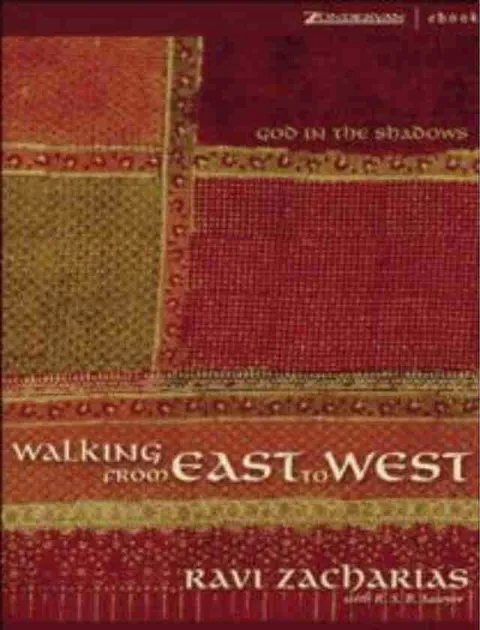

Others like walking from east to west Features >>

The Untold Story Of A Young Billy Graham
God's Generals: The Martyrs
.epub-160.webp)
Daughter Of Destiny: Kathryn Kuhlman

Twelve Extraordinary Women
-160.webp)
Mother Teresa (An Authorized Biography)
Jesus The Son Of Man
Missionary Travels
The Life Of Bunyan, The Pilgrim's Progress And Christiana

Maria Woodworth-Etter

Elisabeth Elliot: Joyful Surrender
About the Book
"Walking from East to West" is an autobiographical account by Ravi Zacharias, a renowned Christian apologist. The book tells the story of Zacharias's journey from a troubled childhood in India to becoming a prominent defender of the Christian faith. It explores his struggles with faith, identity, and purpose, and highlights the transformative power of his spiritual encounters. Through his experiences, Zacharias shares valuable insights on finding meaning and hope in a broken world.
Henry Alline
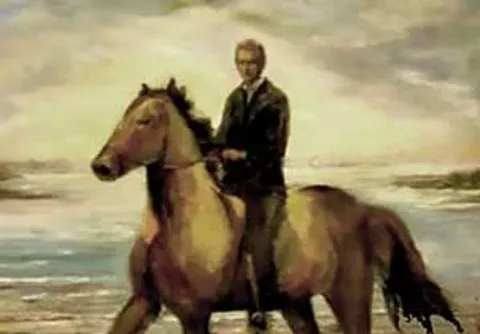 Henry Alline’s early years
He was born and received his early education in Newport, Rhode Island and his family moved to Nova Scotia in 1760, when he was 12 years old. When he was nine he began to read theological works and became somewhat mystical, but after years of soul-searching and spiritual conflict he was powerfully converted in 1775, simultaneously receiving a call to the ministry.
Alone and desperate he prayed until…’redeeming love broke into my soul… with such power that my whole soul seemed to be melted down with love…and my will turned of choice after the infinite God. A year later he began to preach.
His preaching career
His preaching career lasted until his death eight years later. He was an itinerant preacher in Nova Scotia and Prince Edward Island in an ever-widening circuit, beginning what became known as the ‘New Light’ movement and which is still the greatest revival that Canada has ever seen. He preached the new birth powerfully and effectively and his admirers compared him to George Whitefield and John the Baptist.
Considered an emotional and dangerous fanatic by some and a ‘ravager of congregations,’ the Congregationalists withdrew his right to preach in their churches, so he spoke in barns, houses and the open air. In all he began eight ‘New Light’ Congregational churches based on his non-Arminian but anti-Calvinist views of free-will and predestination, and his strong rejection of outward religious form.
Ironically, despite his indifference regarding baptism, his major 19th century influence was amongst the Baptists of eastern Canada, many of whom were his converts.
Despite possibly unorthodox views and methods, his ministry was without doubt that of an extraordinary revivalist.
Alline’s sermon style was always simple and extemporary, using a few simple, understandable points to help the unchurched to grasp the simple truths of the gospel. As with other itinerant revivalists, his objective was to lead the hearers to a point of decision – to accept or reject Christ as Saviour and Lord, which opened the door to the “new birth.”
Doubtless, his sermons were repeated over time, but he was never in one place long enough for his listeners to notice.
Alline also employed the ministry of prayer and of singing, writing many hymns which were helpful in communicating the gospel. A collection was gathered after his death and was reprinted at least four times in the United States, and several were included in the standard hymnals of the 19th century.
Henry Alline’s early years
He was born and received his early education in Newport, Rhode Island and his family moved to Nova Scotia in 1760, when he was 12 years old. When he was nine he began to read theological works and became somewhat mystical, but after years of soul-searching and spiritual conflict he was powerfully converted in 1775, simultaneously receiving a call to the ministry.
Alone and desperate he prayed until…’redeeming love broke into my soul… with such power that my whole soul seemed to be melted down with love…and my will turned of choice after the infinite God. A year later he began to preach.
His preaching career
His preaching career lasted until his death eight years later. He was an itinerant preacher in Nova Scotia and Prince Edward Island in an ever-widening circuit, beginning what became known as the ‘New Light’ movement and which is still the greatest revival that Canada has ever seen. He preached the new birth powerfully and effectively and his admirers compared him to George Whitefield and John the Baptist.
Considered an emotional and dangerous fanatic by some and a ‘ravager of congregations,’ the Congregationalists withdrew his right to preach in their churches, so he spoke in barns, houses and the open air. In all he began eight ‘New Light’ Congregational churches based on his non-Arminian but anti-Calvinist views of free-will and predestination, and his strong rejection of outward religious form.
Ironically, despite his indifference regarding baptism, his major 19th century influence was amongst the Baptists of eastern Canada, many of whom were his converts.
Despite possibly unorthodox views and methods, his ministry was without doubt that of an extraordinary revivalist.
Alline’s sermon style was always simple and extemporary, using a few simple, understandable points to help the unchurched to grasp the simple truths of the gospel. As with other itinerant revivalists, his objective was to lead the hearers to a point of decision – to accept or reject Christ as Saviour and Lord, which opened the door to the “new birth.”
Doubtless, his sermons were repeated over time, but he was never in one place long enough for his listeners to notice.
Alline also employed the ministry of prayer and of singing, writing many hymns which were helpful in communicating the gospel. A collection was gathered after his death and was reprinted at least four times in the United States, and several were included in the standard hymnals of the 19th century.
Time Alone for God
“All of humanity’s problems stem from man’s inability to sit quietly in a room alone.” —Blaise Pascal (1623–1662) It’s a sweeping claim, but it might just be the kind of overstatement we need today to be awakened from our relentless stream of distractions and diversions. How hauntingly true might it be, that we are unable to sit quietly? Four hundred years after Pascal, life may be as hurried and anxious as it has ever been. The competition for our attention is ruthless. We not only hear one distracting Siren call after another, but an endless cacophony of voices barrages us all at once. And yet, long before Pascal, Jesus himself modeled for us the very kind of habits and rhythms of life we need in any age. Even as God in human flesh, he prioritized time alone with his Father. Imagine what “good” he might otherwise have done with all those hours. But he chose again and again, in perfect wisdom and love, to give his first and best moments to seeking his Father’s face. And if Jesus, even Jesus, carved out such space in the demands of his human life, shouldn’t we all the more? “How many of us have the presence of mind, and heart, to discern and prioritize prayer as Jesus did?” We may have but glimpses of Jesus’s habits and personal spiritual practices in the Gospels, but what we do have is by no accident, and it is not scant. We know exactly what God means for us to know, in just the right detail — and we have far more about Jesus’s personal spiritual rhythms than we do about anyone else in Scripture. And the picture we have of Christ’s habits is not one that is foreign to our world and lives and experience. Rather, we find timeless and transcultural postures that can be replicated, and easily applied, by any follower of Jesus, anywhere in the world, at any time in history. Retreat and Reenter For two thousand years, the teachings of Christ have called his people into rhythms of retreating from the world and entering into it. The healthy Christian life is neither wholly solitary nor wholly communal. We withdraw, like Jesus, to “a desolate place” to commune with God (Mark 1:35), and then return to the bustle of daily tasks and the needs of others. We carve out a season for spiritual respite, in some momentarily sacred space, to feed our souls, enjoying God there in the stillness. Then we enter back in, as light and bread, to a hungry, harassed, and helpless world (Matthew 9:36). Quiet Times Without a Bible Before rehearsing Jesus’s patterns in retreating for prayer and then reentering for ministry, we should observe the place of Scripture in his life. Jesus did not have his own personal material copy of the Bible, like almost all of us do today. He heard what was read aloud in the synagogue, and what his mother sang, and he rehearsed what he had put to memory. And yet throughout his recorded ministry, we see evidence of a man utterly captivated by what is written in the text of Scripture. And like Christ, we will do well to make God’s own words, in the Bible, to be the leading edge of our own seeking to draw near to him. At the very outset of his public ministry, Jesus retreated to the wilderness, and there, in the culminating temptations before the devil himself, he leaned on what is written (Matthew 4:4, 6–7, 10; Luke 4:4, 8, 10). Then returning from the wilderness, to his hometown of Nazareth, he stood up to read, took the scroll of Isaiah (61:1–2), and announced, “Today this Scripture has been fulfilled in your hearing” (Luke 4:21). Jesus identified John the Baptist as “he of whom it is written” (Matthew 11:10; Luke 7:27), and he cleared the temple of moneychangers on the grounds of what is written in Isaiah 56:7 (Matthew 21:13; Mark 11:17; Luke 19:46). He rebuked the proud by quoting Scripture (Mark 7:6; Luke 20:17). At every step of the way to Calvary, over and over again, he knew everything would happen “as it is written” (see especially the Gospel of John, 6:31, 45; 8:17; 10:34; 12:14, 16; 15:25). “The Son of Man goes as it is written of him” (Mark 14:21), he said. “See, we are going up to Jerusalem, and everything that is written about the Son of Man by the prophets will be accomplished” (Luke 18:31). “Solitude is an opportunity to open up our lives and souls to him for whom we were made.” Even though Jesus didn’t have his own Bible to page through in his quiet times, let there be no confusion about the central place of God’s written word in his life. He lived by what was written. What an amazing opportunity we now have today, with Old and New Testaments in paper and ink (and with us, everywhere we go, on our phones), to daily give ourselves to the word of God. How Often He Withdrew For Christ, “the wilderness” or “desolate place” often became his momentarily sacred space. He regularly escaped the noise and frenzy of society to be alone with his Father, where he could give him his full attention. After “his fame spread everywhere” (Mark 1:28), and “the whole city was gathered together at the door” (Mark 1:33), Jesus took a remarkable step. He slipped away the following morning to restore his soul in “secret converse” with his Father: Rising very early in the morning, while it was still dark, he departed and went out to a desolate place, and there he prayed. (Mark 1:35) What a ministry opportunity he left behind, some might say. Surely some of us would have skipped or shortened our private disciplines to rush and bless the swelling masses. To be sure, other times would come (as we’ll see) when Jesus would delay his personal habits to meet immediate needs. But how many of us, in such a situation, would have the presence of mind, and heart, to discern and prioritize prayer as Jesus did? Luke also makes it unmistakable that this pattern of retreat and reentry was part of the ongoing dynamic of Christ’s human life. Jesus “departed and went into a desolate place” (Luke 4:42) — not just once but regularly. “He would withdraw to desolate places and pray” (Luke 5:16). So also Matthew. After the death of John the Baptist, Jesus “withdrew from there in a boat to a desolate place by himself” (Matthew 14:13). But even then, the crowds pursued him. He didn’t despise them (here he puts his desire to retreat on hold) but had compassion on them and healed their sick (Matthew 14:14). Then after feeding them, five thousand strong, he withdrew again to a quiet place. “After he had dismissed the crowds, he went up on the mountain by himself to pray” (Matthew 14:23). Praying, Fasting, Teaching What was written animated his life, and when he withdrew, he went to speak to his Father in prayer. At times, he went away by himself, to be alone (Matthew 14:23; Mark 6:46–47; John 6:15). “He went out to the mountain to pray, and all night he continued in prayer to God” (Luke 6:12). His disciples saw him leave to pray, and later return. He also prayed with others. The disciples saw him model prayer at his baptism (Luke 3:21), and as he laid his hands on the children (Matthew 19:13), and when he drove out demons (Mark 9:29). He prayed with his men, and even when he prayed alone, his men might be nearby: “Now it happened that as he was praying alone, the disciples were with him” (Luke 9:18; also 11:1). He took Peter, John, and James “and went up on the mountain to pray” (Luke 9:28). On the night before he died, he said to Peter, “I have prayed for you that your faith may not fail” (Luke 22:32). All of John 17 is his prayer for his disciples, in their hearing. Then they went out from that upper room and saw him pray over and over in the garden (Matthew 26:36, 39, 42, 44). He not only modeled prayer, but instructed them in how to pray. “Pray then like this . . .” (Matthew 6:9–13). “Christ himself modeled for us the very kind of habits and rhythms of life we need in any age.” And he not only assumed they would pray (Matthew 21:22; Mark 11:24–25; Luke 11:2) but commanded it (Matthew 24:20; 26:41; Mark 13:18; 14:38; Luke 21:36; 22:40, 46). “Pray for those who persecute you” (Matthew 5:44). “Pray for those who abuse you” (Luke 6:28). “Pray earnestly to the Lord of the harvest” (Matthew 9:38; Luke 10:2). Pray without show and without posturing (Matthew 6:5–7). He warned against those who “for a pretense make long prayers” (Mark 12:40; Luke 20:47). “He told them a parable to the effect that they ought always to pray and not lose heart” (Luke 18:1). And to accompany prayer, he not only modeled fasting (Matthew 4:2), but assumed his men would fast as well (“when you fast,” not if, Matthew 6:16–18), and even promised they would (“then they will fast,” Matthew 9:15; Mark 2:20; Luke 5:35). Come Away with Me Jesus didn’t only retreat to be alone with God. He also taught his disciples to do the same (Mark 3:7; Luke 9:10). In Mark 6:31–32, he invites his men to join him, saying, “Come away by yourselves to a desolate place and rest a while.” Mark explains, “For many were coming and going, and they had no leisure even to eat. And they went away in the boat to a desolate place by themselves.” So also, in the Gospel of John, Jesus, as his fame spread, retreated from more populated settings to invest in his men in more desolate, less distracting places (John 11:54). In his timeless Sermon on the Mount, Jesus taught all his hearers, including us today, not only to give without show (Matthew 6:3–4), and fast without publicity (Matthew 6:17–18), but also to find our private place to seek our Father’s face: “When you pray, go into your room and shut the door and pray to your Father who is in secret. And your Father who sees in secret will reward you” (Matthew 6:6). And how today might our Father reward us any better than with more of himself through his Son? Converse with God in the Quiet In it all — in receiving his Father’s voice in Scripture, and praying alone (and with company), and at times, when faced with particularly pressing concerns, adding the tool of fasting — Jesus sought communion with his Father. His habits were not demonstrations of will and sheer discipline. His acts of receiving the word, and responding in prayer, were not ends in themselves. In these blessed means, he pursued the end of knowing and enjoying his Father. And so do we today. We don’t retreat from life’s busyness and bustle as an end in itself. “To sit quietly in a room alone,” in Pascal’s words, is not an achievement but an instrument — an opportunity to open up our lives and souls to him for whom we were made. To know him and enjoy him. Article by David Mathis
-480.webp)