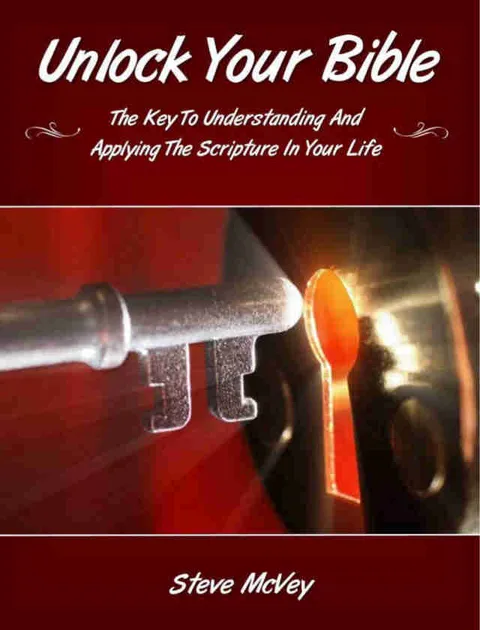

Others like unlock your bible Features >>

Precious Bible Promises
The Missing Link Of Meditation
Sermon On The Mount
2 Minute Wisdom, Volume 4

Kept For The Master's Use
A Million Little Miracles

Comfort In Times Of Trouble
Daily Inspiration For The Purpose Driven Life
Experiencing The Depths Of Jesus Christ
Exploring Worship: A Practical Guide To Praise And Worship
About the Book
"Unlock Your Bible" by Steve Mcvey is a comprehensive guide that helps readers to deepen their understanding of the Bible and its relevance to their lives. Mcvey provides practical insights on how to study, interpret, and apply the teachings of the Bible, enabling readers to truly unlock its wisdom and find personal transformation through its message.
Jerry Bridges
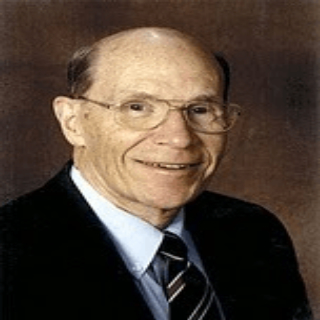 Jerry Bridges entered into the joy of his Master on Sunday evening, March 6, 2016, at Penrose Hospital in Colorado Springs, the day after he suffered cardiac arrest. He was 86 years old.
Childhood
Gerald Dean Bridges was born on December 4, 1929, in a cotton-farming home in Tyler, Texas, to fundamentalist parents, six weeks after the Black Tuesday stock market crash that led to the Great Depression.
Jerry was born with several disabilities: he was cross-eyed, he was deaf in his right ear (which was not fully developed), and he had spine and breastbone deformities. But given his family’s poverty, they were unable to afford medical care for these challenges.
The separatist church in East Texas where the Bridges were members had an altar call after every service. Jerry walked the aisle three times, at the ages of 9, 11, and 13. But he later realized that he had not been born again.
His mother Lillian passed away in 1944 when he was 14.
Conversion
In August of 1948, as an 18-year-old college student right before his sophomore year began, Jerry was home alone one night in bed. He acknowledged to the Lord that he was not truly a Christian, despite growing up in a Christian home and professing faith. He prayed, ”God whatever it takes, I want Christ to be my Savior.”
The next week in his dorm room at the University of Oklahoma he was working on a school assignment and reached for a textbook, when he noticed the little Bible his parents had given him in high school. He figured that since he was now a Christian, he ought to start reading it daily, which he did (and never stopped doing for the rest of his days).
The Navy
After graduating with an engineering degree on a Navy ROTC scholarship, he went on active duty with the Navy, serving as an officer during the Korean conflict (1951-1953). A fellow officer invited him to go to a Navigator Bible study. Jerry went and he was hooked. He had never experienced anything like this before.
When stationed on ship in Japan, he got to know several staff members of the Navigators quite well. One day, after Jerry had been in Japan for six months, a Navy worker asked him why he didn’t just throw in his lot with the Navigators and come to work for them. The very next day, December 26, 1952, Jerry failed a physical exam due to the hearing loss in his right ear, and he was given a medical discharge in July 1953, after being in the Navy for only two years. Jerry was not overly disappointed, surmising that perhaps this was the Lord’s way of steering him to the Navigators.
When he returned to the U.S., he began working for Convair, an airplane manufacturing company in southern California, writing technical papers for shop and flight line personnel. It was there that he learned to write simply and clearly—skills the Lord would later use to instruct and edify thousands of people from his pen.
The Navigators
Jerry was single at the time, living in the home of Navigator Glen Solum, a common practice in the early days of The Navigators. In 1955 Jim invited Jerry to go with him to a staff conference at the headquarters of The Navigators in Glen Eyrie at Colorado Springs. It was there that Jerry sensed a call from the Lord to be involved with vocational ministry. He was resistant to the idea of going on staff, but felt conviction and prayed to the Lord, “Whatever you want.” The following day he met Dawson Trotman, the 49-year-old founder of The Navigators, who wanted to interview Jerry for a position, which he received and accepted. Jerry was put in charge of the correspondence department—answering letters, handling receipts, and mainly the NavLog newsletter to supporters.
When Trotman died in June of 1956 (saving a girl who was drowning), Jim Downing took a position equivalent to a chief operations operator. A Navy man, Jim Downing knew that Jerry had also served in the Navy and tapped him to be his assistant.
Jerry struggled at times in his role, unsure if this was his calling since his position was so different from the typical campus reps. After ten years on staff he told the Lord, “I’m going to do this for the rest of my life. If you want me out of The Navigators you’ll have to let me know.”
Beginning in 1960, Jerry served for three years in Europe as administrative assistant to the Navigators’ Europe Director. In January of 1960, he read a booklet entitled The Doctrine of Election, which he first considered heresy but then embraced the following day.
In October of 1963, at the age of 34, he married his first wife, Eleanor Miller of The Navigators following a long-distance relationship. Two children followed: Kathy in 1966, and Dan in 1967. From 1965 to 1969 Jerry served as office manager for The Navigators’ headquarters office at Glen Eyrie.
From 1969 to 1979 Jerry served as the Secretary-Treasurer for The Navigators. It was during this time that NavPress was founded in 1975. Their first publications began by transcribing and editing audio material from their tape archives and turning them into booklets. They produced one by Jerry on Willpower. Leroy Eims—who started the Collegiate ministry—encouraged Jerry to try his hand at writing new material. Jerry had been teaching at conferences on holiness, so he suggested a book along those lines.
In 1978, NavPress published The Pursuit of Holiness, which has now sold over 1.5 million copies. Jerry assumed it would be his only book. A couple of years later, after reading about putting off the old self and putting on the new self from Ephesians 4, he decided to write The Practice of Godliness—on developing a Christlike character. That book went on to sell over half a million copies, and his 1988 book on Trusting God has sold nearly a million copies.
Jerry served as The Navigators’ Vice President for Corporate Affairs from 1979 to 1994. It was in this season of ministry that Eleanor developed non-Hodgkin’s lymphoma. She went to be with the Lord on November 9, 1988, just three weeks after their 25th wedding anniversary. On November 24, 1989, Jerry married Jane Mallot, who had known the Bridges family since the early ’70s.
Jerry’s final position with The Navigator’s was in the area of staff development with the Collegiate Mission. He saw this ministry as developing people, rather than teaching people how to do ministry. In addition to his work with The Navigators, he also maintained an active writing and teaching ministry, traveling the world to instruct and equip pastors and missionaries and other workers through conferences, seminars, and retreats.
Lessons
In 2014, Jerry published a memoir of his life, tracing the providential hand of God through his own story: God Took Me by the Hand: A Story of God’s Unusual Providence (NavPress, 2014). He closes the work with seven spiritual lessons he learned in his six decades of the Christian life:
The Bible is meant to be applied to specific life situations.
All who trust in Christ as Savior are united to Him in a loving way just as the branches are united to the vine.
The pursuit of holiness and godly character is neither by self-effort nor simply letting Christ “live His life through you.”
The sudden understanding of the doctrine of election was a watershed event for me that significantly affected my entire Christian life.
The representative union of Christ and the believer means that all that Christ did in both His perfect obedience and His death for our sins is credited to us.
The gospel is not just for unbelievers in their coming to Christ.
We are dependent on the Holy Spirit to apply the life of Christ to our lives.
His last book, The Blessing of Humility: Walk within Your Calling, will be published this summer by NavPress.
Legacy
One of the great legacies of Jerry Bridges is that he combined—to borrow some titles from his books—the pursuit of holiness and godliness with an emphasis on transforming grace. He believed that trusting God not only involved believing what he had done for us in the past, but that the gospel empowers daily faith and is transformative for all of life.
In 2009 he explained to interviewer Becky Grosenbach the need for this emphasis within the culture of the ministry he had given his life to:
When I came on staff almost all the leaders had come out of the military and we had pretty much a military culture. We were pretty hard core. We were duty driven. The WWII generation. We believed in hard work. We were motivated by saying “this is what you ought to do.” That’s okay, but it doesn’t serve you over the long haul. And so 30 years ago there was the beginning of a change to emphasize transforming grace, a grace-motivated discipleship.
In the days ahead, many will write tributes of this dear saint (see, e.g., this one from his friend, prayer partner, and sometimes co-author Bob Bevington). I would not be able to improve upon the reflections and remembrances of those who knew him better than I did. But I do know that he received from the Lord the ultimate acclamation as he entered into the joy of his Master and received the words we all long to hear, “Well done, my good and faithful servant.” There was nothing flashy about Jerry Bridges. He was a humble and unassuming man—strong in spirit, if not in voice or frame. And now we can rejoice with him in his full and final healing as he beholds his beloved Savior face to face. Thank you, God, for this man who helped us see and know you more.
Jerry Bridges wrote more than 20 books over the course of nearly 40 years:
The Pursuit of Holiness (NavPress, 1978)
The Practice of Godliness (NavPress, 1983)
True Fellowship (NavPress, 1985) [later published as The Crisis of Caring (P&R, 1992); finally republished with a major revision as True Community (NavPress, 2012)]
Trusting God (NavPress, 1988)
Transforming Grace (NavPress, 1991)
The Discipline of Grace (NavPress, 1994)
The Joy of Fearing God (Waterbrook, 1997)
I Exalt You, O God (Waterbrook, 2000)
I Give You Glory, O God (Waterbrook, 2002)
The Gospel for Real Life (NavPress, 2002)
The Chase (NavPress, 2003) [taken from Pursuit of Holiness]
Growing Your Faith (NavPress, 2004)
Is God Really in Control? (NavPress, 2006)
The Fruitful Life (NavPress, 2006)
Respectable Sins (NavPress, 2007) [student edition, 2013]
The Great Exchange [co-authored with Bob Bevington] (Crossway, 2007)
Holiness Day by Day (NavPress, 2008) [a devotional drawing from his earlier writing on holiness]
The Bookends of the Christian Life [co-authored with Bob Bevington] (Crossway, 2009)
Who Am I? (Cruciform, 2012)
The Transforming Power of the Gospel (NavPress, 2012)
31 Days Toward Trusting God (NavPress, 2013) [abridged from Trusting God]
God Took Me by the Hand (NavPress, 2014)
The Blessing of Humility: Walk within Your Calling (NavPress, 2016)
For an audio library of Jerry Bridges’ talks, go here.
Funeral
Visitation for Jerry Bridges was held on Thursday, March 10, 2016, from 5 to 8 pm, at Shrine of Remembrance (1730 East Fountain Blvd, Colorado Springs, CO 80910).
The memorial service was held on Friday, March 11, 2016, at 2 pm at Village Seven Presbyterian Church (4055 Nonchalant Circle South, Colorado Springs, CO 80917).
Jerry Bridges entered into the joy of his Master on Sunday evening, March 6, 2016, at Penrose Hospital in Colorado Springs, the day after he suffered cardiac arrest. He was 86 years old.
Childhood
Gerald Dean Bridges was born on December 4, 1929, in a cotton-farming home in Tyler, Texas, to fundamentalist parents, six weeks after the Black Tuesday stock market crash that led to the Great Depression.
Jerry was born with several disabilities: he was cross-eyed, he was deaf in his right ear (which was not fully developed), and he had spine and breastbone deformities. But given his family’s poverty, they were unable to afford medical care for these challenges.
The separatist church in East Texas where the Bridges were members had an altar call after every service. Jerry walked the aisle three times, at the ages of 9, 11, and 13. But he later realized that he had not been born again.
His mother Lillian passed away in 1944 when he was 14.
Conversion
In August of 1948, as an 18-year-old college student right before his sophomore year began, Jerry was home alone one night in bed. He acknowledged to the Lord that he was not truly a Christian, despite growing up in a Christian home and professing faith. He prayed, ”God whatever it takes, I want Christ to be my Savior.”
The next week in his dorm room at the University of Oklahoma he was working on a school assignment and reached for a textbook, when he noticed the little Bible his parents had given him in high school. He figured that since he was now a Christian, he ought to start reading it daily, which he did (and never stopped doing for the rest of his days).
The Navy
After graduating with an engineering degree on a Navy ROTC scholarship, he went on active duty with the Navy, serving as an officer during the Korean conflict (1951-1953). A fellow officer invited him to go to a Navigator Bible study. Jerry went and he was hooked. He had never experienced anything like this before.
When stationed on ship in Japan, he got to know several staff members of the Navigators quite well. One day, after Jerry had been in Japan for six months, a Navy worker asked him why he didn’t just throw in his lot with the Navigators and come to work for them. The very next day, December 26, 1952, Jerry failed a physical exam due to the hearing loss in his right ear, and he was given a medical discharge in July 1953, after being in the Navy for only two years. Jerry was not overly disappointed, surmising that perhaps this was the Lord’s way of steering him to the Navigators.
When he returned to the U.S., he began working for Convair, an airplane manufacturing company in southern California, writing technical papers for shop and flight line personnel. It was there that he learned to write simply and clearly—skills the Lord would later use to instruct and edify thousands of people from his pen.
The Navigators
Jerry was single at the time, living in the home of Navigator Glen Solum, a common practice in the early days of The Navigators. In 1955 Jim invited Jerry to go with him to a staff conference at the headquarters of The Navigators in Glen Eyrie at Colorado Springs. It was there that Jerry sensed a call from the Lord to be involved with vocational ministry. He was resistant to the idea of going on staff, but felt conviction and prayed to the Lord, “Whatever you want.” The following day he met Dawson Trotman, the 49-year-old founder of The Navigators, who wanted to interview Jerry for a position, which he received and accepted. Jerry was put in charge of the correspondence department—answering letters, handling receipts, and mainly the NavLog newsletter to supporters.
When Trotman died in June of 1956 (saving a girl who was drowning), Jim Downing took a position equivalent to a chief operations operator. A Navy man, Jim Downing knew that Jerry had also served in the Navy and tapped him to be his assistant.
Jerry struggled at times in his role, unsure if this was his calling since his position was so different from the typical campus reps. After ten years on staff he told the Lord, “I’m going to do this for the rest of my life. If you want me out of The Navigators you’ll have to let me know.”
Beginning in 1960, Jerry served for three years in Europe as administrative assistant to the Navigators’ Europe Director. In January of 1960, he read a booklet entitled The Doctrine of Election, which he first considered heresy but then embraced the following day.
In October of 1963, at the age of 34, he married his first wife, Eleanor Miller of The Navigators following a long-distance relationship. Two children followed: Kathy in 1966, and Dan in 1967. From 1965 to 1969 Jerry served as office manager for The Navigators’ headquarters office at Glen Eyrie.
From 1969 to 1979 Jerry served as the Secretary-Treasurer for The Navigators. It was during this time that NavPress was founded in 1975. Their first publications began by transcribing and editing audio material from their tape archives and turning them into booklets. They produced one by Jerry on Willpower. Leroy Eims—who started the Collegiate ministry—encouraged Jerry to try his hand at writing new material. Jerry had been teaching at conferences on holiness, so he suggested a book along those lines.
In 1978, NavPress published The Pursuit of Holiness, which has now sold over 1.5 million copies. Jerry assumed it would be his only book. A couple of years later, after reading about putting off the old self and putting on the new self from Ephesians 4, he decided to write The Practice of Godliness—on developing a Christlike character. That book went on to sell over half a million copies, and his 1988 book on Trusting God has sold nearly a million copies.
Jerry served as The Navigators’ Vice President for Corporate Affairs from 1979 to 1994. It was in this season of ministry that Eleanor developed non-Hodgkin’s lymphoma. She went to be with the Lord on November 9, 1988, just three weeks after their 25th wedding anniversary. On November 24, 1989, Jerry married Jane Mallot, who had known the Bridges family since the early ’70s.
Jerry’s final position with The Navigator’s was in the area of staff development with the Collegiate Mission. He saw this ministry as developing people, rather than teaching people how to do ministry. In addition to his work with The Navigators, he also maintained an active writing and teaching ministry, traveling the world to instruct and equip pastors and missionaries and other workers through conferences, seminars, and retreats.
Lessons
In 2014, Jerry published a memoir of his life, tracing the providential hand of God through his own story: God Took Me by the Hand: A Story of God’s Unusual Providence (NavPress, 2014). He closes the work with seven spiritual lessons he learned in his six decades of the Christian life:
The Bible is meant to be applied to specific life situations.
All who trust in Christ as Savior are united to Him in a loving way just as the branches are united to the vine.
The pursuit of holiness and godly character is neither by self-effort nor simply letting Christ “live His life through you.”
The sudden understanding of the doctrine of election was a watershed event for me that significantly affected my entire Christian life.
The representative union of Christ and the believer means that all that Christ did in both His perfect obedience and His death for our sins is credited to us.
The gospel is not just for unbelievers in their coming to Christ.
We are dependent on the Holy Spirit to apply the life of Christ to our lives.
His last book, The Blessing of Humility: Walk within Your Calling, will be published this summer by NavPress.
Legacy
One of the great legacies of Jerry Bridges is that he combined—to borrow some titles from his books—the pursuit of holiness and godliness with an emphasis on transforming grace. He believed that trusting God not only involved believing what he had done for us in the past, but that the gospel empowers daily faith and is transformative for all of life.
In 2009 he explained to interviewer Becky Grosenbach the need for this emphasis within the culture of the ministry he had given his life to:
When I came on staff almost all the leaders had come out of the military and we had pretty much a military culture. We were pretty hard core. We were duty driven. The WWII generation. We believed in hard work. We were motivated by saying “this is what you ought to do.” That’s okay, but it doesn’t serve you over the long haul. And so 30 years ago there was the beginning of a change to emphasize transforming grace, a grace-motivated discipleship.
In the days ahead, many will write tributes of this dear saint (see, e.g., this one from his friend, prayer partner, and sometimes co-author Bob Bevington). I would not be able to improve upon the reflections and remembrances of those who knew him better than I did. But I do know that he received from the Lord the ultimate acclamation as he entered into the joy of his Master and received the words we all long to hear, “Well done, my good and faithful servant.” There was nothing flashy about Jerry Bridges. He was a humble and unassuming man—strong in spirit, if not in voice or frame. And now we can rejoice with him in his full and final healing as he beholds his beloved Savior face to face. Thank you, God, for this man who helped us see and know you more.
Jerry Bridges wrote more than 20 books over the course of nearly 40 years:
The Pursuit of Holiness (NavPress, 1978)
The Practice of Godliness (NavPress, 1983)
True Fellowship (NavPress, 1985) [later published as The Crisis of Caring (P&R, 1992); finally republished with a major revision as True Community (NavPress, 2012)]
Trusting God (NavPress, 1988)
Transforming Grace (NavPress, 1991)
The Discipline of Grace (NavPress, 1994)
The Joy of Fearing God (Waterbrook, 1997)
I Exalt You, O God (Waterbrook, 2000)
I Give You Glory, O God (Waterbrook, 2002)
The Gospel for Real Life (NavPress, 2002)
The Chase (NavPress, 2003) [taken from Pursuit of Holiness]
Growing Your Faith (NavPress, 2004)
Is God Really in Control? (NavPress, 2006)
The Fruitful Life (NavPress, 2006)
Respectable Sins (NavPress, 2007) [student edition, 2013]
The Great Exchange [co-authored with Bob Bevington] (Crossway, 2007)
Holiness Day by Day (NavPress, 2008) [a devotional drawing from his earlier writing on holiness]
The Bookends of the Christian Life [co-authored with Bob Bevington] (Crossway, 2009)
Who Am I? (Cruciform, 2012)
The Transforming Power of the Gospel (NavPress, 2012)
31 Days Toward Trusting God (NavPress, 2013) [abridged from Trusting God]
God Took Me by the Hand (NavPress, 2014)
The Blessing of Humility: Walk within Your Calling (NavPress, 2016)
For an audio library of Jerry Bridges’ talks, go here.
Funeral
Visitation for Jerry Bridges was held on Thursday, March 10, 2016, from 5 to 8 pm, at Shrine of Remembrance (1730 East Fountain Blvd, Colorado Springs, CO 80910).
The memorial service was held on Friday, March 11, 2016, at 2 pm at Village Seven Presbyterian Church (4055 Nonchalant Circle South, Colorado Springs, CO 80917).
hero in an unmarked grave - the unusual modesty of john calvin
On May 27, 1564, just after eight o’clock in the evening, a nurse urgently summoned Theodore Beza (1519–1605) to Calvin’s bedside. “We found he had already died,” Calvin’s friend and fellow pastor later wrote. “On that day, then, at the same time with the setting sun, this splendid luminary was withdrawn from us.” 1 Calvin was 54 years old. Calvin’s death sent a shock wave throughout Geneva and beyond. Beza writes, “That night and the following day there was a general lamentation throughout the city . . . all lamenting the loss of one who was, under God, a common parent and comfort.” He records that two days later “the entire city” gathered at the St. Pierre Cathedral to honor their beloved pastor. Despite Calvin’s prominence, the funeral was unusually simple, “with no extraordinary pomp.” 2 But Calvin’s burial was particularly unusual. Unmarked Grave Eighteen years earlier, on February 18, 1546, fellow Reformer Martin Luther died at the age of 63. As was common practice for ministers, Luther’s remains were interred inside the church where he had faithfully served. His casket lies in Wittenberg’s Castle Church, near the pulpit, seven feet below the floor of the nave. Luther’s successor and fellow Reformer, Philip Melanchthon (1490–1560), is buried beside him. So also William Farel (1489–1565), who first called Calvin to Geneva in 1536, is buried in the cathedral of Neuchâtel, where he spent the final years of his ministry. When Calvin’s friend and successor Theodore Beza died in 1605, he was buried next to the pulpit of St. Pierre, the Genevan church in which he and Calvin ministered together. But Calvin’s remains lie elsewhere. Rather than being interred in St. Pierre, Calvin’s body was carried outside the city wall to a marshy burial ground for commoners called Plainpalais. With close friends in attendance, Calvin’s body was wrapped in a simple shroud, enclosed in a rough casket, and lowered into the earth. Beza writes that Calvin’s plot was unlisted and, “as he [had] commanded, without any gravestone.” 3 Why did Calvin command that he be buried, contrary to common practice, in an unmarked grave? Some speculate that he wanted to discourage religious pilgrims from visiting his resting place or to prevent accusations from the Roman church that he desired veneration as a saint. 4 But the answer lies somewhere deeper — in Calvin’s understanding of Christian modesty. Forgotten Meaning of Modesty When we speak of modesty today, we most often mean dressing or behaving in such a way as to avoid impropriety or indecency. But modesty more generally refers to the quality of being unassuming or moderate in the estimation of oneself. For centuries, the church understood the connection. Immodest dress was not simply ostentatious or sexually suggestive; it reflected an overemphasis on appearance. As Jesus warned, outward appearance can mask impiety (Matthew 6:16) or pride (Luke 18:12). This is why both Gentile women converts in Ephesus and the Jewish Christians addressed in Hebrews are urged to consider how their outward appearance relates to the disposition of the heart. Excessive adornment could be evidence of self-importance (1 Timothy 2:9). Acceptable worship requires a posture of reverence, not pretension (Hebrews 12:28). Thus, a modest person represents himself neither too highly nor too meanly because he understands both the dignity and the humility of being transformed by the grace of God. “Modesty is simply the outward reflection of true Christian humility.” Modesty, then, is simply the outward reflection of true Christian humility. It obliterates pride by embracing the reality that a Christian is both creaturely and beloved. In this light, self-importance becomes absurd. Grandiosity becomes laughable. Celebrity becomes monstrous. We Are Not Our Own For Calvin, the gospel radically reshapes our view of self. As those created in God’s image, provisioned by his goodness, redeemed by his mercy, transformed by his grace, and called to his mission, those who belong to Christ no longer live for themselves. “Now the great thing is this,” Calvin writes, “we are consecrated and dedicated to God in order that we may thereafter think, speak, meditate, and do, nothing except to his glory.” Calvin continues, If we, then, are not our own but the Lord’s, it is clear what error we must flee and whither we must direct all the acts of our life. We are not our own : let not our reason nor our will, therefore, sway our plans and deeds. We are not our own : let us not therefore see it as our goal to seek what is expedient for us according to the flesh. We are not our own : in so far as we can, let us therefore forget ourselves and all that is ours. Conversely, we are God’s : let us therefore live for him and die for him. We are God’s : let his wisdom and will therefore rule all our actions. We are God’s : let all the parts of our life accordingly strive toward him as our only lawful goal. Oh how much has that man profited who, having been taught that he is not his own, has taken away dominion and rule from his own reason that he may yield it to God! For, as consulting our self-interest is the pestilence that most effectively leads to our destruction, so the sole haven of salvation is to be wise in nothing through ourselves but to follow the leading of the Lord alone . 5 “Modesty blossoms when we experience the freedom from having to prove ourselves to God or one another.” Modesty and humility flow from a heart transformed by the Spirit of Christ. “As soon as we are convinced that God cares for us,” Calvin writes, “our minds are easily led to patience and humility.” 6 The Spirit shapes us with a kind of moderation that “gives the preference to others” and that guards us from being “easily thrown into agitation.” 7 Modesty blossoms when we experience the freedom from having to prove ourselves to God or one another. ‘Modesty, His Constant Friend’ Calvin’s life reflected this reality. Despite the doors that were opened to him through his writing and network of connections, he was committed to “studiously avoiding celebrity.” 8 When the Institutes was published in 1536, he was so successful in his object to “not acquire fame” that no one in Basel knew that he was its author. For the rest of his life, wherever he went, he took care to “conceal that I was the author of that performance.” 9 Calvin even sought to avoid a wider ministry in Geneva, having “resolved to continue in the same privacy and obscurity.” He was drawn into the limelight only when William Farel warned him “with a dreadful imprecation” that turning down the post would be refusing God’s call to service. 10 In brief autobiographical comments he wrote the year that he died, we see a glimmer of his own surprise over God’s sovereign hand through his life. God so led me about through different turnings and changes that he never permitted me to rest in any place, until, in spite of my natural disposition, he brought me forth to public notice. . . . I was carried, I know not how, as it were by force to the Imperial assemblies, where, willing or unwilling, I was under the necessity of appearing before the eyes of many. 11 It is no surprise, then, that a few days before his death, Calvin exhorted his friends to not be those who “ostentatiously display themselves and, from overweening confidence, insist that all their opinions should be approved by others.” Instead, he pleaded with them to “conduct themselves with modesty, keeping far aloof from all haughtiness of mind.” 12 For Beza, Calvin’s modesty — forged by his vision of God’s glory, Christ’s redeeming love, and the Spirit’s animating power — was his defining characteristic. After Calvin’s burial, Beza captured it in verse: Why in this humble and unnoticed tomb Is Calvin laid — the dread of falling Rome; Mourn’d by the good, and by the wicked fear’d By all who knew his excellence revered? From whom ev’n virtue’s self might virtue learn, And young and old its value may discern? ’Twas modesty, his constant friend on earth, That laid this stone, unsculptured with a name; Oh! happy ground, enrich’d with Calvin’s worth, More lasting far than marble is thy fame! 13 Free to Be Forgotten In old Geneva, on the grounds of the college Calvin founded, stands an immense stone memorial to four leaders of the Protestant Reformation. At its center are towering reliefs of Calvin, Beza, Farel, and John Knox (1513–1572). Calvin would surely detest it. But the monument is a metaphor. We live in a culture that fears obscurity and irrelevance. We measure ourselves against others and build our own platforms in the hope that we will not be forgotten. We attempt to distinguish ourselves at the expense of the humility and modesty that honors Christ. Calvin would have us be free from such striving. For however anyone may be distinguished by illustrious endowments, he ought to consider with himself that they have not been conferred upon him that he might be self-complacent, that he might exalt himself, or even that he might hold himself in esteem. Let him, instead of this, employ himself in correcting and detecting his faults, and he will have abundant occasion for humility. In others, on the other hand, he will regard with honor whatever there is of excellences and will, by means of love, bury their faults. The man who will observe this rule, will feel no difficulty in preferring others before himself. And this, too, Paul meant when he added, that they ought not to have everyone a regard to themselves, but to their neighbors, or that they ought not to be devoted to themselves. Hence it is quite possible that a pious man, even though he should be aware that he is superior, may nevertheless hold others in greater esteem. 14 We may rightly regard Calvin as a hero of the faith, but he didn’t ultimately see himself that way. Humility had taught him to walk modestly before God and others — and, in the end, the freedom to lie down in a forgotten grave. Theodore Beza, “The Life of John Calvin” in Tracts Related to the Reformation (Edinburgh: Calvin Translation Society, 1844), 1:xcv. ↩ Beza, Tracts , 1:xcvi. ↩ Beza, Tracts , 1:xcvi. ↩ Eighteenth-century guidebooks indeed list the disused Plainpalais cemetery as an important stop for tourists, though they warn that pilgrims will search for Calvin’s resting place in vain. By the nineteenth century, keepers of the burial ground staked out a “likely-enough” site for Calvin’s grave (complete with a rudimentary marker) simply to avoid the irritation of being so frequently asked. ↩ John Calvin, Institutes of the Christian Religion , ed. John T. McNeill, trans. Ford Lewis Battles (Louisville, KY: Westminster John Knox Press, 2011), 3.7.1 (emphasis mine). ↩ John Calvin, Commentaries on the Catholic Epistles , trans. John Owen (Edinburgh: T. Constable,1855), 149. ↩ John Calvin, Commentaries on the Epistles of Paul the Apostle to the Philippians, Colossians, and Thessalonians , trans. John Pringle (Edinburgh: T. Constable, 1851) 52–53. ↩ John Calvin, Commentary on the Psalms , trans. James Anderson (Edinburgh: Edinburg Printing Company, 1845), 1:xli, xlii. ↩ Calvin, Psalms , 1:xlii. ↩ Calvin, Psalms , 1:xlii. ↩ Calvin, Psalms , 1:xli, xliii. ↩ Beza, Tracts , 1:xci. ↩ Beza was widely known for his literary works. As a humanist, he became famous for his collection of Latin poems in Juvenilia , published just before his conversion in 1548. He continued to write poetry, satires, and dramas until the end of his life. Francis Sisbon’s nineteenth-century translation attempts to capture the sense of the Latin in a more familiar poetic form (Theodore Beza, The Life of John Calvin , trans. Francis Sibson, [Philadelphia: J. Whetham, 1836], 94). For the original text, see Calvin and Beza, Tracts , 1:xcvi. ↩ Calvin, Commentaries on the Epistles of Paul , 53. ↩