
Others like tongues beyond the upper room Features >>
About the Book
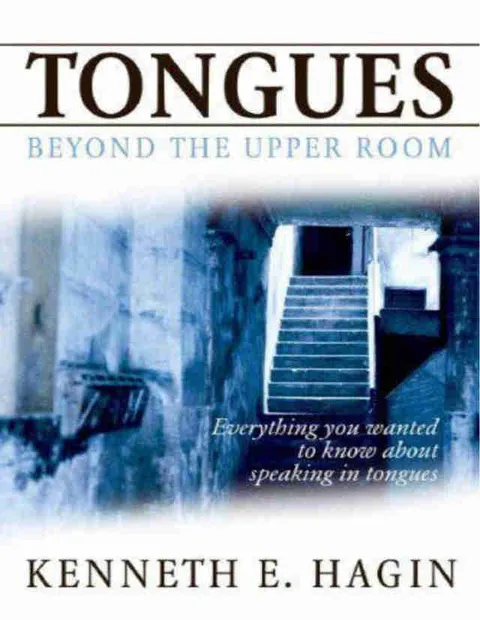
"Tongues Beyond The Upper Room" by Kenneth Hagin explores the purpose and benefits of speaking in tongues as a powerful tool for spiritual growth and connection with God. Hagin emphasizes the importance of praying in tongues not only in personal prayer life but also in ministry and daily living. The book provides valuable insights and practical guidance for Christians seeking to deepen their relationship with God through the gift of speaking in tongues.
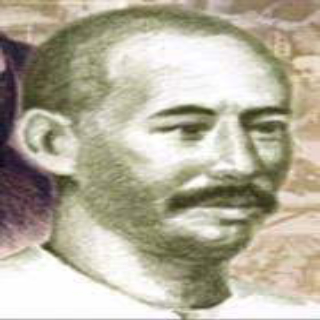
A.W. Pink
Arthur Walkington Pink (1 April 1886 – 15 July 1952) was an English Bible teacher who sparked a renewed interest in the exposition of Calvinism or Reformed Theology. Little known in his own lifetime, Pink became "one of the most influential evangelical authors in the second half of the twentieth century."[1]
Biography Arthur Walkington Pink was born in Nottingham, England, to a corn merchant, a devout non-conformist of uncertain denomination, though probably a Congregationalist.[2] Otherwise, almost nothing is known of Pink's childhood or education except that he had some ability and training in music.[3] As a young man, Pink joined the Theosophical Society, an occult gnostic group in contemporary England, and he apparently rose to enough prominence within its ranks that Annie Besant, its head, offered to admit him to its leadership circle.[4] In 1908 he renounced Theosophy for evangelical Christianity.[5]
Desiring to become a minister but unwilling to attend a liberal theological college in England, Pink very briefly studied at Moody Bible Institute in Chicago in 1910 before taking the pastorate of the Congregational church in Silverton, Colorado. In 1912 Pink left Silverton, probably for California, and then took a joint pastorate of churches in rural Burkesville and Albany, Kentucky.[6] In 1916, he married Vera E. Russell (1893–1962), who had been reared in Bowling Green, Kentucky, and Pink's next pastorate was at Scottsville Baptist Church, Scottsville, Kentucky.[7] Then the newlyweds moved in 1917 to Spartanburg, South Carolina, where Pink became pastor of Northside Baptist Church.[8]
By this time Pink had become acquainted with prominent dispensationalist Fundamentalists, such as Harry Ironside and Arno C. Gaebelein, and his first two books, published in 1917 and 1918, were in agreement with that theological position.[9] Yet Pink's views were changing, and during these years he also wrote the first edition of The Sovereignty of God (1918), which argued that God did not love sinners who had not been predestined unto salvation, and that He had deliberately created "unto damnation" those who would not accept Christ.[10] Whether because of his Calvinistic views, his nearly incredible studiousness, his weakened health, or his lack of sociability, Pink left Spartanburg in 1919 believing that God would "have me give myself to writing."[11] But Pink then seems next to have taught the Bible—with some success—in California for a tent evangelist named Thompson while continuing his intense study of Puritan writings.
In January 1922, Pink published the first issue of Studies in the Scriptures, which by the end of the following year had about a thousand subscribers and which was to occupy most of his time for the remainder of his life and become the source for dozens of books, some arranged from Studies articles after his death.[12] In 1923 Pink suffered a nervous breakdown, and he and his wife lived with friends in Philadelphia until he regained his health. In 1925, the Pinks sailed to Sydney, Australia, where he served as both an evangelist and Bible teacher at the Ashfield Tabernacle. But his impolitic preaching of Calvinist doctrine resulted in a unanimous resolve of the Baptist Fraternal of New South Wales not to endorse him. From 1926 to 1928, Pink served as pastor of two groups of Strict and Particular Baptists.[13]
Returning to England, Pink was invited to preach at a pastorless church in Seaton, Devon; but though he was welcomed by some members, the overseers thought his installation as pastor would split the church.[14] In the spring of 1929, Pink and wife returned to her home state of Kentucky where he intended to become pastor of the Baptist church in Morton's Gap. Once again his hopes were unrealized. To a friend he wrote, "I am more firmly convinced today than I was 14 months ago that our place is on the 'outside of the camp.' That is the place of 'reproach,' of loneliness, and of testing."[15] In 1930 Pink was able to start a Bible class in Glendale, California, while also turning down opportunities to speak in some Fundamentalist churches.[16] The following year, the Pinks rented an unpainted wooden house in Union County, Pennsylvania, where a small group met; then in 1933 they moved to York, Pennsylvania.
Pink decided that if his ministry was to be totally one of writing, he could do that just as well in England. In September 1934 he and his wife moved to Cheltenham, Gloucestershire, near honorary agents of Studies in the Scriptures. Pink seems to have finally given way to despair. To a friend he wrote "that those of my friends who would dearly like to help me are powerless to do so; while those who could, will not. And in a very few years at most it will be too late. What I have gone through the last seven years is so reacting on my physical and mental constitution, that ere long I shall be incapacitated even if doors should be opened unto me. However, I can see nothing else than to attempt to seek grace to bow to the Lord's sovereign pleasure, and say, 'Not my will, but thine be done.'"[17]
In 1936, the Pinks moved to Hove, on the south coast near Brighton. After the death of his father in 1933, Pink received enough of the estate to allow him and his wife to live very simply without financial concerns; and between 1936 until his death in 1952, Pink devoted himself completely to Studies in the Scriptures. Vera believed her husband's almost unrelenting work schedule unhealthy, and she remarkably succeeded in having him take up stamp collecting as a hobby.[18] In 1940, Hove became a regular target of German air raids, and the Pinks moved to Stornoway, Isle of Lewis, Outer Hebrides, Scotland, where they remained for the rest of his life. The island was a bastion of Calvinism, but church services were held mostly in Scots Gaelic, and visitors were not especially welcomed in any case.[19] Pink governed his time in study and writing with "military precision." To a friend he wrote that he went out to shop and get exercise for an hour, six days a week, but that otherwise he never left his study except when working in a small garden. While in Hove, he even published a note in Studies advising subscribers that "it is not convenient for us to receive any visitors, and respectfully ask readers who may visit these parts to kindly refrain from calling upon us, but please note that we are always glad to hear from Christian friends."[20] Rather than attend church, on Sunday mornings, Pink spent time ministering to readers by letter.[21]
In 1951 Vera became aware that Pink was failing. He lost weight and was in pain but refused to take any medicine that might dull his mind and hinder him from completing his work. He died on 15 July 1952. His last words were "The Scriptures explain themselves." Pink left enough written material to allow publication of Studies until December 1953.[22] Vera Pink survived her husband by ten years and after his death made new friends and mingled more freely with others.[23]
Influence
It is alleged that Pink's personality made it difficult for him to have a successful pastoral ministry. He has been criticized for being too individualistic and of too critical a temperament, lacking the benefit of thorough theological discussions with other men of similar gifts. One young pastor, Rev. Robert Harbach who corresponded with Pink for years remembered a very different Pink, who possessed a "pastor's heart." Pink's correspondence with Harbach (until Pink's failing health ended their correspondence in 1949) was warm, heartfelt and fatherly. Early in their correspondence, Pink wrote "I want you to feel perfectly free to call on me for any help I may be able to render you. I am in touch with a number of young pastors, and I deem it part of my work, and a privilege, to offer what advice I can."[24]
Pink's acclaimed contemporary D. Martyn Lloyd-Jones received spiritual benefit from reading Pink and recommended him to others. To one young minister, he said, "Don't waste your time reading Barth and Brunner. You will get nothing from them to aid you with preaching. Read Pink."[25] But Lloyd-Jones also said, "If I had behaved as Pink did, I would have achieved nothing. Nothing at all... I had to be very patient and take a very long-term look at things. Otherwise I would have been dismissed and whole thing would have been finished."[26] Furthermore, without the assistance and companionship of his wife, who dedicated herself completely to him and his work, Pink would have (as he freely admitted) "been overwhelmed" and probably would have achieved little even in writing.[27]
Theologically Pink was rejected during his lifetime because of his opposition to Arminianism; but after his death, there was a major shift of evangelical opinion towards Calvinistic theology. By 1982, Baker Book House had published 22 of Pink's books and sold 350,000 total copies. Nevertheless, it was Pink's Sovereignty of God that did "more than any other in redirecting the thinking of a younger generation." After Banner of Truth Trust republished it in 1961—modifying it to remove Pink's alleged hyper-Calvinism—the book sold 177,000 copies by 2004.[28]
References
7. "NEW LIGHT ON THE EARLY MINISTRY OF A. W. PINK (PART 2)". The Arthur W. Pink Archive. Retrieved 27 June 2020.
13. Murray argues that Pink left the first of these two groups because he was not Calvinistic enough for them because he asserted belief in the "free offer of the gospel and in human responsibility to receive the gospel.", 77-123; R. P. Belcher, "Pink, Arthur Walkington," Timothy Larson, ed., Biographical Dictionary of Evangelicals (Downers Grove, IL: IVP, 2003), 529. Ronald Hanko argues that "Pink never taught that God loves everyone or desires to save everyone, or promises salvation to everyone in the gospel, as the Banner does." Ronald Hanko, "The Forgotten Pink," British Reformed Journal No. 17 (Jan-March 1997), 4.
23. Murray, 283. She was remembered by one of these friends as "an elegant and gracious lady with a radiant expression and a loving and lively interest in people."
28. Murray, 314–15. The Banner of Truth Trust edition has been criticized for omitting nearly half the original work, including three entire chapters. Hanko, "The Forgotten Pink."
The Lost Giant Among Giants - Lessons from Harold John Ockenga
In September of 1966, John Piper was a junior at Wheaton College, studying for a career in medicine. In those days, Wheaton began its fall semesters with “Spiritual Emphasis Week.” Piper could not attend the sessions in person because he was sick with mononucleosis and was quarantined in the health center. However, a local radio station carried the sermons, so he listened while in quarantine. The preacher that week was Harold John Ockenga. Listening to Ockenga’s sermons changed Piper’s trajectory. He has referred to his time in quarantine as some of the “most crucial” weeks of his life. Why? Because this is when he sensed a strong call and desire to the ministry of the word. Piper remembers Ockenga’s preaching as the primary instrument God used that week to birth a sense of “calling” to preach — a calling still undimmed. By the end of that week, Piper’s heart was exploding with a desire to “handle the word of God the way [Ockenga] was handling it.” Soon after, Piper switched from pre-med. After graduating from Wheaton College, he went on to study at Fuller Theological Seminary, the school cofounded by Ockenga. Piper is not the only prominent evangelical leader to have been greatly influenced by Harold Ockenga’s ministry. The famous evangelist Billy Graham once said, “I never met a man among evangelicals who could compare to the mighty intellect and spiritual development of Harold John Ockenga” (Awakening the Evangelical Mind, 66). Ockenga pastored in Boston for more than thirty years. He wrote a dozen books and countless articles. He was the driving force behind the resurgence of evangelical scholarship in the mid-twentieth century, he cofounded two seminaries (Fuller and Gordon-Conwell), and he was a close friend and mentor to several prominent evangelical leaders, including Graham and theologian Carl F.H. Henry. Harold Ockenga may not be a household name today, but it would not be a stretch to put Ockenga among the most influential pastors of the twentieth century. Early Life and Formation Ockenga was born in 1905 in Chicago. From a young age, he demonstrated a sharp mind, great oratory, and natural leadership skills. He professed faith at age 11 but had a life-transforming moment toward the ministry at a conference at age 17. Ockenga had originally planned to attend the University of Chicago to pursue law, but this conference experience led him toward theological studies at Taylor University in Indiana. While at Taylor, he joined the traveling ministry team, which gave him the opportunity to preach more than four hundred times before graduating. It proved to be valuable experience. After graduating from Taylor in 1927, Ockenga attended Princeton Theological Seminary to study under great scholars such as R.D. Wilson, Cornelius Van Til, and J. Gresham Machen. When Ockenga enrolled at Princeton, the institution was in the middle of a controversy that had been going on for nearly a decade between Modernists and Fundamentalists. The Modernists embraced an ideology with roots in the Enlightenment and the liberal theologians of the 1800s. Many questioned the veracity of Scripture, claiming that Christians ought to revise doctrine in the light of modern science. The Fundamentalists, in contrast, were committed to Christian orthodoxy, the authority and infallibility of the Bible, the divinity of Christ, and the priority of evangelism. The battle raged at Princeton throughout the 1920s. Of all the older theological schools and seminaries, Princeton was the only one that still taught orthodoxy. Unfortunately, the Modernists eventually gained control. Ockenga had a front-row seat to a watershed moment in American Christian history. This crucible experience shaped him. In 1929, Machen and a group of scholars left Princeton to launch Westminster Theological Seminary in Philadelphia. Ockenga left Princeton to attend the upstart Westminster and became Machen’s foremost protégé. After graduating from Westminster, Ockenga briefly pastored in New Jersey before moving to Pittsburgh to serve as an assistant pastor for several years. While there, he earned his PhD from the University of Pittsburgh and met his wife, Audrey. Preaching at Park Street Church Ockenga became the pastor of the historic Park Street Church in 1936. Dr. A.Z. Conrad, the former pastor at Park Street, had been a prominent preacher with a successful radio ministry. These were big shoes for Ockenga to fill, but he was up to the task. Biographer Harold Lindsell commented that, immediately upon arriving at Park Street Church, Ockenga established himself as a “preacher’s preacher” (Park Street Prophet, 75). Ockenga continued, and even expanded, Conrad’s radio programming. People from all over New England and even parts of Canada tuned in regularly to hear Ockenga’s powerful expository sermons. His popularity grew as Park Street Church grew — in both numbers and influence. By the mid-1940s, the church had more than two thousand members, supported a horde of missionaries, and had become the most influential church in the region. Ockenga’s ministry was dynamic. He was a faithful and brilliant Bible expositor who engaged in theology, cultural commentary, church history, philosophy, and pulpit evangelism. He was unafraid to publicly rebuke false doctrines and to denounce political ideologies that he believed would impede human flourishing. When describing Ockenga’s preaching, author Owen Strachan says Ockenga preached “that old-style Calvinism; he expounded the glories of aesthetic culture; [and] he threw down the political gauntlet” (Awakening the Evangelical Mind, 63). Ockenga was, as Lindsell stated, “one of the finest preachers and staunchest defenders of the faith this country has ever known” (Park Street Prophet, 11). Birth of Neo-Evangelicalism By the time Ockenga had entered pastoral ministry in the 1930s, most denominational institutions, seminaries, and publishing houses across America were dominated by theological liberals — greatly impeding the propagation of genuine gospel work. Evangelicalism seemed under duress. But in the 1940s, a new brand of evangelicalism was born — a brand that would intentionally engage the academy, that would seek to influence the most influential institutions of culture, and that would cooperate across denominational lines for gospel work. This new brand of evangelicalism — later called “neo-evangelicalism” — was first primarily promoted through the formation of the National Association of Evangelicals (NAE) in 1942. At the gathering where the NAE was formed, Ockenga lamented, “Evangelical Christianity has suffered nothing but a series of defeats for decades.” But Ockenga believed that they could “affect the whole future course of evangelical Christianity in America” if they were willing to rethink their approach to culture and ministry. Ockenga began the charge by serving as the NAE’s first president for three years. He was neo-evangelicalism’s most ardent proponent. He crisscrossed the country, promoting and facilitating dozens of initiatives. Strachan writes, “No figure did more than Ockenga to run, establish, and invigorate the premier institutions of the movement” (Awakening the Evangelical Mind, 23) Theological Scholarship Matters What are some takeaways from Ockenga’s ministry for us today? One of the greatest lessons we learn from Ockenga is that evangelical intellectualism and quality theological training matter deeply. Theologian Al Mohler has written that Ockenga, along with fellow evangelical leader Carl Henry, diagnosed the “conservative Protestant intellectual withdrawal” from the “intellectual life of the nation” as being the primary reason for the collapse of conservative Protestantism in America (Awakening the Evangelical Mind, 14). Evangelicals lost their influence as they retreated from the academic spheres. Ockenga’s first academic initiative was the creation of Boston School of the Bible, which offered classes for laypeople in church history, doctrine, evangelism, missions, and apologetics. The school drew hundreds of students from around the region, including many students from liberal churches. While this looked to many to be a success, it didn’t quite accomplish what Ockenga really wanted — to train church leaders and would-be scholars to engage the institutions of cultural influence. Both Ockenga and Henry believed that Christianity was faltering culturally, not because of a “lack of evangelistic fervor,” as Mohler says, but because of “the absence of intellectual vigor.” This inspired Ockenga to pioneer and host the Plymouth Scholars’ Conferences. These conferences, held every other year, were designed as places where evangelicals could engage with trends and thoughts from the world of academia for the advancement of evangelical scholarship. These conferences were the forerunners of the Evangelical Theological Society, established in 1949. Ockenga also promoted evangelical scholarship by teaming up with radio evangelist Charles Fuller to launch Fuller Theological Seminary in California. Ockenga served as the school’s first president remotely while still pastoring in Boston. The final formal academic initiative of Ockenga’s life came after he retired from pastoring in 1969. Ockenga became the president of Gordon College and Divinity School. He led Gordon’s Divinity School to merge with Conwell School of Theology to form a new seminary. Ockenga spent a decade as the president of Gordon-Conwell. Friendships Matter Another lesson we learn from the life of Harold Ockenga is the importance of friendships in ministry. Whether it’s Calvin and Bucer, Whitefield and Edwards, or even Jonathan and David from the Old Testament, we realize that friendships matter. Ockenga’s friendships with Carl Henry and Billy Graham served as the foundation for many projects. In 1950, Ockenga invited Graham to speak at a youth rally. This event sparked a revival in Boston and a series of subsequent revivals in New England. This amplified Graham’s influence throughout the region. It also solidified a friendship between Ockenga and Graham that would last a lifetime. Ockenga would later serve as one of the directors for the Billy Graham Evangelistic Association and was one of Graham’s closest confidants. Over the course of their lives, Graham and Ockenga, along with Henry, worked together on various ministry initiatives. One of the most notable is Christianity Today. Ockenga served as a contributor, editor, and chairman of the board for the publication for 25 years. Another significant ministry that resulted from Ockenga and Graham’s friendship was the formation of the World Evangelical Fellowship. Both men were passionate about missions. The World Evangelical Fellowship allowed indigenous groups in 21 countries around the globe to cooperate in missions in order to accomplish what Ockenga labeled the “task that had too long been left undone” (The Surprising Work of God, 217). Investing in the Next Generation Last, Ockenga modeled how to leave a lasting legacy. He believed a commitment to mentoring the next generation was essential. Pastor Larry Osborne has written about the importance of investing in “young eagles” — that is, the leaders of the next generation of the church. Ockenga modeled this beautifully. One author observed a time when Ockenga (in his mid-forties) was at an event with an entourage of young men in their twenties and early thirties. He was frequently flanked by young men he was guiding. Due to Ockenga’s presence in Boston, he was well-placed to befriend and mentor many brilliant young minds. Men like Edward Carnell, Wayne Grudem, Kenneth Kantzer, George Eldon Ladd, John Gerstner, Samuel Schultz, Merrill Tenney, Roger Nicole, Gleason Archer, and J. Harold Greenlee were all profoundly influenced by Ockenga while they lived in Boston. These men would go on to become respected evangelical scholars, theologians, and leaders. Giant Among Giants Ockenga’s preaching, leadership, scholarship, and entrepreneurship were outstanding. Few evangelical leaders in the twentieth century were influential as Ockenga. Yet in his final moments on earth, we observe this influential preacher’s humility. When Ockenga was dying of cancer, the elders from Park Street Church came to visit him. One of them said, “Just think of all the things that God has done through you. He allowed you to minister to millions of people, be president of Fuller Theological Seminary and Gordon-Conwell Theological Seminary, be one of the founders of the NAE and the whole evangelical movement, and be one of the people who helped give Billy Graham his start” (Surprising Work, 224). Ockenga didn’t seem impressed with his own resume. Then another elder quietly said, “Well, Harold, I suggest that when you see the Master, just say, ‘God, be merciful to me a sinner.’” Tears flowed down Ockenga’s cheeks. Harold John Ockenga, the man some called the Park Street Prophet, died on February 8, 1985. At the funeral, Billy Graham honored him with these words: “He was a giant among giants. Nobody outside of my family influenced me more than he did. I never made a major decision without first calling and asking his advice and counsel.” Article by Kenneth E. Ortiz