





About the Book
"Time Management" by Marc Mancini offers practical strategies and techniques for effectively managing your time, increasing productivity, and reducing stress. The book provides actionable tips on setting goals, prioritizing tasks, overcoming procrastination, and creating a schedule that works for you. It is a valuable resource for anyone looking to improve their time management skills and achieve greater success in both their personal and professional lives.
Jack Coe
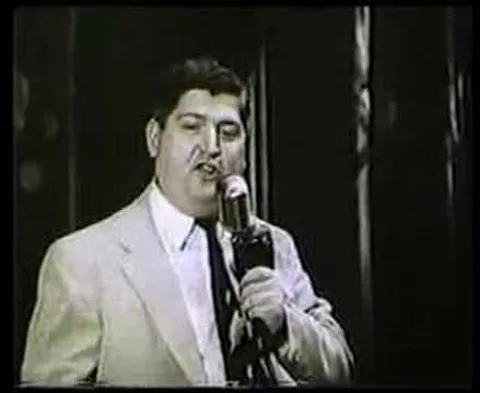 Jack G. Coe was born on March 11, 1918 in Oklahoma City, Oklahoma. His father, George, was a gambler and an alcoholic. His parents, although having been Christians, did not attend church. His grandparents, on his father's side were Christians but they were not able to influence their son's behavior. The couple had seven children in all. When Jack was five his father gambled away all their furniture and their house, leaving his mother Blanche destitute with seven children. They were devastated. His mother tried to make a new life by moving to Pennsylvania, but it was too hard. When Coe's father came to her house promising to change she agreed to reunite. The change did not last, however, and George went back to gambling.
Blanche left George for good, but only took her daughter with her this time. The boys were left with their father, which meant they were essentially left on their own. Often they did not have food to eat. Blanche did return to claim them, but could not care for them on her own. When Jack was nine he and his twelve year old brother was turned over to an orphanage. His older brother ran away, but was hit by a car and died. Jack struggled with rejection and abandonment. At seventeen he left the orphanage and began to drink, becoming an alcoholic like his father. He drank so much he had ulcers and his heart became enlarged. The doctor told him that if he didn't quit drinking he was going to die. Not knowing where else to go he moved to California to be near his mother. When he thought he was near death he promised God he would turn his life around and he was healed for a while. The family moved to Texas and he was drinking again. This time he heard God's voice "This is your last chance". The following Sunday he went to a Nazarene church and accepted Christ. He was radically changed. He went to church meetings almost every night, prayed, and read the Word constantly. After a year and a half he went to a Pentecostal meeting and was filled with the Holy Spirit and had a vision of Jesus.
Jack felt called to the ministry and went to and Assembly of God school called Southwestern Bible Institute, led by P.C. Nelson. He left in 1941 to join the army after the bombing of Pearl Harbor. He was so committed to God's purposes that he went to church every night. His sergeant sent him for psychiatric evaluation This happened several times while he was in the army. One day he was reading a book by P.C. Nelson on Healing when he fell asleep. He had a dream where he saw his sister close to death in a hospital but he saw a bright light come into her room and she was healed. He left immediately to see her and everything was as he'd seen it in a dream. She was healed and he was changed forever.
In 1944 Coe became ill with malaria. He was sent home because the doctors felt they could not help him. He sought the Lord who told him "preach the gospel". God healed him. He went out to preach and three people were saved. That year he was ordained as an Assembly of God minister. His healing experiences caused him to seek God about the gifts of healing. In 1945 he felt God called him to have a healing meeting. He went to Texas and announced in a church that God was going to heal the sick, cause the blind to see, and the deaf to hear. Those were bold words indeed! A woman received her sight that night. His ministry was launched. He began traveling over the country.
In 1946 God spoke to Coe and his wife Juanita to sell their house and start an itinerant ministry. They purchased a beat up truck and a ministry tent and began to live on the road. In 1948 God spoke to Coe to go to Redding, California. A woman, whose leg was about to be amputated, was healed and the news spread throughout the city. God blessed the couple and for the first time had enough money to be ahead on their finances. Healings and miracles regularly occurred in his meetings.
There were some very controversial things about Jack Coe. He believed that he should have a larger tent than other evangelists and went and measured Oral Roberts tent, then he ordered one larger. His style was dramatic and he often hit, slapped, or jerked people. He also would pull people out of wheelchairs. His speaking style was aggressive as he challenged people to believe God. He suggested that people who stood against him would be "struck dead by God". He was anti-medicine and told people not to go to doctors. He also encouraged interracial meetings.
In 1950 Coe began publishing the Herald of Healing magazine. Within six years it was being sent to over 350,000 people. God began to speak to Coe about opening an orphanage. He collected money for the project at every meeting. He sold his own home and began to build the children's home. His own family moved into the partially finished building so they would have a place to live. Coe eventually bought 200 acres outside of Dallas and built four dormitories and established a home farm. They could support 200 abandoned children.
In 1952 Coe began a radio ministry, which eventually was carried on over 100 radio stations. He also began having trouble with the Assembly of God organization. Although initially responsive to suggestions, he felt their goal was to limit the ministry. He suggested that the Assembly of God leadership had lost the belief in the miraculous and felt that they should be replaced. Needless to say this aggravated the situation. In 1953 Coe was expelled from the Assembly of God church. They felt that he was independent, extreme, prone to exaggeration, and they weren't sure about his ministry style. Coe felt that it was an attack against his success. He told people that "one of the officials made the remark to me that he would not rest until every man that was preaching divine healing in a deliverance ministry, separated from the General Council of the Assembly of God."
In 1953 Coe started his own church in Dallas. It was called the Dallas Revival Center. God spoke to him that it was important for those not getting healed to receive teaching about healing from the Word. In 1954 Coe opened a faith home, where people could stay for extended periods of time to receive prayer for healing. Teaching and prayer were given daily. 1956 was a pivotal year. While Coe was preaching in Miami he was arrested for practicing medicine without a license. This brought national attention to him and the ministry, both positive and negative. He was acquitted of practicing medicine without a license when the trial went to court.
At the end of 1956 Coe became ill. He had pushed himself night and day for years. He had poor eating habits and was overweight. He thought it was exhaustion but it was bulbar polio, a form of polio that affects the nerves. He became paralyzed, developed pneumonia, and died December 16, 1956.
Jack G. Coe was born on March 11, 1918 in Oklahoma City, Oklahoma. His father, George, was a gambler and an alcoholic. His parents, although having been Christians, did not attend church. His grandparents, on his father's side were Christians but they were not able to influence their son's behavior. The couple had seven children in all. When Jack was five his father gambled away all their furniture and their house, leaving his mother Blanche destitute with seven children. They were devastated. His mother tried to make a new life by moving to Pennsylvania, but it was too hard. When Coe's father came to her house promising to change she agreed to reunite. The change did not last, however, and George went back to gambling.
Blanche left George for good, but only took her daughter with her this time. The boys were left with their father, which meant they were essentially left on their own. Often they did not have food to eat. Blanche did return to claim them, but could not care for them on her own. When Jack was nine he and his twelve year old brother was turned over to an orphanage. His older brother ran away, but was hit by a car and died. Jack struggled with rejection and abandonment. At seventeen he left the orphanage and began to drink, becoming an alcoholic like his father. He drank so much he had ulcers and his heart became enlarged. The doctor told him that if he didn't quit drinking he was going to die. Not knowing where else to go he moved to California to be near his mother. When he thought he was near death he promised God he would turn his life around and he was healed for a while. The family moved to Texas and he was drinking again. This time he heard God's voice "This is your last chance". The following Sunday he went to a Nazarene church and accepted Christ. He was radically changed. He went to church meetings almost every night, prayed, and read the Word constantly. After a year and a half he went to a Pentecostal meeting and was filled with the Holy Spirit and had a vision of Jesus.
Jack felt called to the ministry and went to and Assembly of God school called Southwestern Bible Institute, led by P.C. Nelson. He left in 1941 to join the army after the bombing of Pearl Harbor. He was so committed to God's purposes that he went to church every night. His sergeant sent him for psychiatric evaluation This happened several times while he was in the army. One day he was reading a book by P.C. Nelson on Healing when he fell asleep. He had a dream where he saw his sister close to death in a hospital but he saw a bright light come into her room and she was healed. He left immediately to see her and everything was as he'd seen it in a dream. She was healed and he was changed forever.
In 1944 Coe became ill with malaria. He was sent home because the doctors felt they could not help him. He sought the Lord who told him "preach the gospel". God healed him. He went out to preach and three people were saved. That year he was ordained as an Assembly of God minister. His healing experiences caused him to seek God about the gifts of healing. In 1945 he felt God called him to have a healing meeting. He went to Texas and announced in a church that God was going to heal the sick, cause the blind to see, and the deaf to hear. Those were bold words indeed! A woman received her sight that night. His ministry was launched. He began traveling over the country.
In 1946 God spoke to Coe and his wife Juanita to sell their house and start an itinerant ministry. They purchased a beat up truck and a ministry tent and began to live on the road. In 1948 God spoke to Coe to go to Redding, California. A woman, whose leg was about to be amputated, was healed and the news spread throughout the city. God blessed the couple and for the first time had enough money to be ahead on their finances. Healings and miracles regularly occurred in his meetings.
There were some very controversial things about Jack Coe. He believed that he should have a larger tent than other evangelists and went and measured Oral Roberts tent, then he ordered one larger. His style was dramatic and he often hit, slapped, or jerked people. He also would pull people out of wheelchairs. His speaking style was aggressive as he challenged people to believe God. He suggested that people who stood against him would be "struck dead by God". He was anti-medicine and told people not to go to doctors. He also encouraged interracial meetings.
In 1950 Coe began publishing the Herald of Healing magazine. Within six years it was being sent to over 350,000 people. God began to speak to Coe about opening an orphanage. He collected money for the project at every meeting. He sold his own home and began to build the children's home. His own family moved into the partially finished building so they would have a place to live. Coe eventually bought 200 acres outside of Dallas and built four dormitories and established a home farm. They could support 200 abandoned children.
In 1952 Coe began a radio ministry, which eventually was carried on over 100 radio stations. He also began having trouble with the Assembly of God organization. Although initially responsive to suggestions, he felt their goal was to limit the ministry. He suggested that the Assembly of God leadership had lost the belief in the miraculous and felt that they should be replaced. Needless to say this aggravated the situation. In 1953 Coe was expelled from the Assembly of God church. They felt that he was independent, extreme, prone to exaggeration, and they weren't sure about his ministry style. Coe felt that it was an attack against his success. He told people that "one of the officials made the remark to me that he would not rest until every man that was preaching divine healing in a deliverance ministry, separated from the General Council of the Assembly of God."
In 1953 Coe started his own church in Dallas. It was called the Dallas Revival Center. God spoke to him that it was important for those not getting healed to receive teaching about healing from the Word. In 1954 Coe opened a faith home, where people could stay for extended periods of time to receive prayer for healing. Teaching and prayer were given daily. 1956 was a pivotal year. While Coe was preaching in Miami he was arrested for practicing medicine without a license. This brought national attention to him and the ministry, both positive and negative. He was acquitted of practicing medicine without a license when the trial went to court.
At the end of 1956 Coe became ill. He had pushed himself night and day for years. He had poor eating habits and was overweight. He thought it was exhaustion but it was bulbar polio, a form of polio that affects the nerves. He became paralyzed, developed pneumonia, and died December 16, 1956.
Some Wounds Never Heal
I didn’t realize how disorienting grief can be. In the aftermath of a dearly loved one’s death, I felt like I was living two worlds at once: one with him, and one without. My grandfather, more like a father, died on a Tuesday this past December. He “died on a Tuesday” summarizes the concussion. He died — no longer will I see him poke his head up from his garden, or sit in the living room as he drinks in classical music. No longer will we go see movies together, study the Bible together, or go hiking up north. Death has hidden his face. And yet, it was a Tuesday . An hour after weeping with family at his side as he took his last breaths, I remember the profane intrusion: What would be for dinner? Life, in one form or fashion, would continue without him. Tuesdays always hurry towards Wednesday. Time does not pay its respects for anyone. Our loved ones, when they die, die on Tuesdays. We Are Not the Same Their deaths, on their Tuesdays, affect our remaining Tuesdays after. Life has changed. We are changed. The death of a loved one is a blade that pierces beneath the armor, an arrow that lodges down in the soul. It brings a hurt we cannot defend, a pain we cannot forget, an injury which will never fully heal. “Alas! there are some wounds that cannot be wholly cured,” said Gandalf. “I fear it may be so with mine,” said Frodo. “There is no real going back. Though I may come to the Shire, it will not seem the same; for I shall not be the same. I am wounded with knife, sting, and tooth, and a long burden. Where shall I find rest?” Gandalf did not answer. “That old wound may never heal in this life, but Jesus will comfort us day by day and glorify our scars in the next.” Though life goes on without noticing our loss — daily broadcasts continue, people shop at grocery stores, buses come and go — we are no longer the same. The ache will not finally leave, the groan not silence, the limp not amend until we remove the tattered garments of this life. They are no longer with us. The loveliness of their memory is a beautiful, but long, burden cast over our remaining days. The streets we walked are haunted with laughter. We glance at their empty-chair out of habit. Though life for us has not ended, it has changed. There is no real going back. Death’s Prolonged Victims Death, I realize, often inflicts its greatest havoc upon its survivors; its primary victims do not yet lie in the grave. When my grandfather departed in the Lord, he went to a place where pain and suffering are forbidden, while our grief, on that same day, deepened. His tears finally wiped away as ours sprung forth. He is healed. Our bleeding goes on. We, not the departed, are left to wonder with the prophet, “Why is my pain unceasing, my wound incurable, refusing to be healed?” (Jeremiah 15:18). Our grief refuses to be healed, as C.S. Lewis describes, after the death of his wife, in A Grief Observed : Tonight all the hells of young grief have opened again. . . . In grief nothing “stays put.” One keeps on emerging from a phase, but it always recurs. Round and round. Everything repeats. . . . How often . . . will vast emptiness astonish me like a complete novelty and make me say, “I never realized my loss till this moment”? The same leg is cut off time after time. The first plunge of the knife into the flesh is felt again and again. Dying can be an ugly thing. But for many, the knife enters once and releases its victim. But for those left behind, the stab is repetitive. Death not only claims its victims but torments their loved ones. Where, if anywhere, shall we find rest? Pierced with Mary This heart-stabbing we feel is owned, not avoided, in the Scriptures. For one, this blade was foretold to pierce Mary decades before its advent. As Mary marveled at the prophesy given by Simeon concerning her newborn son — that he would be a light for the Gentiles and glory for Israel (Luke 2:29–32) — her wonder was interrupted by a prophesy concerning her as well: Behold, this child is appointed for the fall and rising of many in Israel, and for a sign that is opposed (and a sword will pierce through your own soul also), so that thoughts from many hearts may be revealed. (Luke 2:34–35) A sword will pierce through your own soul also. Jesus would be pierced, and Mary also . The blade entered later in the Gospels, “standing by the cross of Jesus were his mother and his mother’s sister, Mary the wife of Clopas, and Mary Magdalene” (John 19:25). She stood with her son and watched the horrible sight — she stood valiantly as the blade went in. Her beloved son, crucified upon a Roman tree in infamy and shame. The child to whom she spoke baby talk now groaned in unforgettable anguish. The child she swaddled, nursed, and held, now wrapped in death, nursed by anguish, and held up by nails which stapled his flesh to wood. “Death brings a hurt we cannot defend, a pain we cannot forget, an injury which will never fully heal.” How far through did it run when she heard him gasp through suffocation one last time on her behalf, “Woman, behold, your son!” Then he said to the disciple, “Behold, your mother!” (John 19:26–27). In his dying breath, under the wrath of men and the wrath of God, he considered her well-being. Nails had pierced his hands and feet, and a spear now pierced his side, while a sword pierced her soul. Where Can We Find Rest? I do not mean to normalize the death of God’s own Son — it has no rival. His death is more horrific, more unthinkable, more grievous than the summation of every other death in history. But we know the soul-piercing effect of this blade when others have died as well. We see its sharpness pierce speech for seven days in the ash heap with Job and climb into the tears of Jesus at the tomb of Lazarus. And yet, while the death of our loved ones in the Lord constitute a heavy blow, it is precious in the eyes of our Father. “Precious in the sight of the Lord is the death of his saints” (Psalm 116:15). And the reason for the preciousness is also foretold in the same verse as the piercing of soul. “Behold, this child is appointed for the fall and rising of many in Israel” (Luke 2:34). The anastasis , the resurrection of many. Death for God’s people is precious only because Mary’s son was appointed for their resurrection. He is the Resurrection and the Life. Death will not hide faces for long. Life After the Sword We may never return to life as it once was. That’s okay. But we must never let the old ache stop us from living. Wednesday must follow Tuesday. Here, John Piper’s counsel is timeless: “Occasionally, weep deeply over the life you hoped would be. Grieve the losses. Then wash your face. Trust God. And embrace the life you have.” Frodo asked what so many of us with missing loved ones do: Where can I find rest? Gandalf did not answer. Jesus does: “Come to me, all who labor and are heavy laden, and I will give you rest. Take my yoke upon you, and learn from me, for I am gentle and lowly in heart, and you will find rest for your souls ” (Matthew 11:28–29). We must go to him moment by moment, groan by groan, tear by tear. That old wound may never heal in this life, but Jesus will comfort us day by day and glorify our scars in the next.