

Others like think and grow rich Features >>

Success Habits

Think And Make Impact

Thinking For A Change

Unstoppable

The Jelly Effect: How To Make Your Communication Stick

Who Switched Off My Brain: Controlling Toxic Thoughts And Emotions

Goals!

12 Ways Your Phone Is Changing You
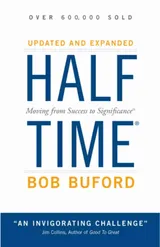
Half Time (Moving From Success To Significance)

How To Live An Extraordinary Life
About the Book
"Think and Grow Rich" by Napoleon Hill is a classic self-help book that outlines the principles for achieving financial success and fulfilling one's dreams. Hill emphasizes the power of positive thinking, goal setting, persistence, and taking action as key elements in achieving wealth and success. Through anecdotes and practical advice, the book offers a blueprint for anyone looking to improve their mindset and achieve their financial goals.
Kathryn Kuhlman
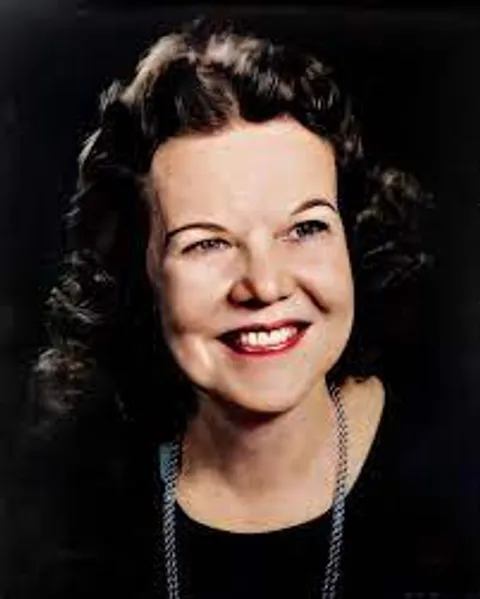 Kathryn Johanna Kuhlman was born on May 9, 1907, in Concordia, Missouri. Her parents were German and she was one of four children. Her mother was a harsh disciplinarian, who showed little love or affection. On the other hand, she had an extremely close and loving relationship with her father. She would describe, as a small child how, her father would come home from work and she would hang on his leg and cling to him. She often said that her relationship with God the Father was extremely real because of her relationship with her own father.
Kuhlman was converted, when she was 14, at an evangelistic meeting held in a small Methodist church. When she was 16 she graduated from high school, which only went to tenth grade in their town. He older sister Myrtle had married an itinerant evangelist, Everett B. Parrott. They spent their time traveling and asked that Kathryn could join them for the summer. Her parents agreed and she went to Oregon to help out. She worked with them, and often gave her testimony. When the summer was over she wanted to stay, and the couple agreed. She ended up working with them for five years.
The evangelistic team was made up of four people, Everette, Myrtle, Kathryn, and pianists named Helen Gulliford. In 1928 Everette missed a meeting in Boise, Idaho. Myrtle and Kathryn preached to cover for Everette. The pastor of the church encouraged Kathryn to step out on her own. Helen agreed to join her. Her first sermon was in a run-down pool hall in Boise, Idaho. The team covered Idaho, Utah, and Colorado for the following five years. In 1933 they moved into Pueblo, Colorado. They set up in an abandoned Montgomery Ward warehouse. They stayed there for six months.
Denver, being a much bigger city, was the next stop. They moved several times but ended up in a paper company's warehouse, which they named the Kuhlman Revival Tabernacle. Then in 1935 they moved once more to an abandoned truck garage they named the Denver Revival Tabernacle. Kathryn was seeing a lot of success in Denver. The church grew to about 2000 members. She began a radio show called "Smiling Through" and invited speakers from all over the country. One of them was Phil Kerr who taught on divine healing. In 1935 another invited evangelist was Burroughs Waltrip.
Waltrip was bad news for Kuhlman. He was a charismatic, handsome man several years older than she was. There was an immediate attraction, and one family claims to have seen the couple embracing in 1935, but he was married and had two children. Waltrip left Denver and went home to Austin, Texas, but the relationship simmered between Kuhlman and Waltrip. In 1937 he was invited back to Denver to take the pulpit for two months. Shortly after he divorced his wife and abandoned his two sons. He then spread the story that his wife had left him. He moved to Mason City, Iowa, where he told everyone he was single, and started a new ministry. Waltrip raised pledges of $70,000 to build a ministry building called Radio Chapel. It was state of the art with a disappearing pulpit and an art deco style. He appeared to be a successful and dynamic preacher.
There was an ongoing relationship between Kuhlman and Waltrip, and they married in September 1938. Kuhlman was naive about the consequences of her choices and the marriage was a disaster. She announced to her church that she and Waltrip were married and they would go between Denver and Mason City preaching at their two churches. Most of the people in her congregation left due to her relationship with Waltrip. She gave up her church in Denver, lost some of her closest associates, and moved to Mason City. Waltrip's success turned out to be a pipe dream as well. The Radio Chapel was completed in June of 1938. By October 1938 Waltrip could not meet his debts. In December Waltrip was demanding a higher salary, even with the shortfall in income. His Board of Directors quit and left him to deal with the finances. His solution was not to pay the mortgage or debts on the Chapel. Radio Chapel went into bankruptcy. Waltrip's last sermon was in May 1939. The Waltrips were on their own. Kathryn's happy vision of she and her husband flying back and forth between Denver and Mason City with a successful preaching careers was utterly demolished.
The next few years were very hard for the couple. They embarked on the road as traveling evangelists, primarily staying in the Midwest. They were not accepted in many places due to their marriage history. Initial advertisements listed Waltrip as the primary evangelist. Then occasionally Mrs. Waltrip was also mentioned. By the early 1940s Kathryn Kuhlman Waltrip was given equal billing. Finally by the mid-1940s Kathryn was using only Kathryn Kuhlman in meetings where she was the primary speaker. In 1944 Kuhlman went on an evangelistic tour on the east coast without Waltrip. It may have been a conscious decision to leave him, or she may also have taken the opportunity to reassess her life. It appears to have been more gradual as Waltrip wrote about them as a couple as late as 1946. Kuhlman never returned to Waltrip and they eventually divorced in 1947. She left her marriage behind and from then on acted as if it never existed in the first place.
In 1946 Kuhlman was asked to speak in Franklin, Pennsylvania. She was well received and decided to stay in the area. Kuhlman began preaching on radio broadcasts in Oil City, Pennsylvania. These became so popular they were picked up in Pittsburgh, and she was preaching throughout the area. She began to preach about the healing power of God. In 1947 a woman was healed of a tumor while listening to Kuhlman preach. Several Sundays later a man was also healed while she was teaching on the Holy Spirit. She was now convinced of God's healing work. One important thing to note is the context and timing of this breakout period in Kuhlman's life. 1947 was the beginning of the Healing Revival (sometimes referred to as the Latter Rain Revival) that would last for the next 10 years. What was happening in Kuhlman's meetings was breaking out across the United States. It was in this time frame that the Voice of Healing Ministry was established and men like William Branham, Oral Roberts, A.A. Allen and many others were propelled onto the public stage. Kuhlman was not associated with those groups, but stepped into the flow of what God's Spirit was doing across the nation and the world.
In 1948 Kuhlman held a series of meetings at Carnegie Hall in Pittsburgh. She eventually moved to Pittsburgh in 1950, and continued to hold meetings at Carnegie Hall until 1971. She was used by God to bring the charismatic message to many denominational churches, including the Catholic Church. (She received a lot of criticism over this and was accused of being a closet Catholic.) These were her best known years. Her style was flamboyant. She would hold her famous miracle services and the auditorium was filled to capacity every time. She was on radio and television shows. She was ordained in 1968 by the Evangelical Church Alliance. Hundreds of people were healed in her meetings, and even while listening to her on the radio or television. People she prayed for would often be hit with the power of God and be "slain in the Spirit." Kuhlman never claimed that she was the healer. She always pointed people to Jesus as their healer.
Kuhlman had been diagnosed with a heart problem in 1955. She kept a very busy schedule and overworked herself, especially in the 1970's. She traveled back and forth from Pittsburgh to Los Angeles frequently, as well as taking trips around the world. Her heart was enlarged and Kuhlman died on February 20, 1976, in Tulsa, following open-heart surgery. Videos of some of her services are still available and continue to be popular today.
Kathryn Johanna Kuhlman was born on May 9, 1907, in Concordia, Missouri. Her parents were German and she was one of four children. Her mother was a harsh disciplinarian, who showed little love or affection. On the other hand, she had an extremely close and loving relationship with her father. She would describe, as a small child how, her father would come home from work and she would hang on his leg and cling to him. She often said that her relationship with God the Father was extremely real because of her relationship with her own father.
Kuhlman was converted, when she was 14, at an evangelistic meeting held in a small Methodist church. When she was 16 she graduated from high school, which only went to tenth grade in their town. He older sister Myrtle had married an itinerant evangelist, Everett B. Parrott. They spent their time traveling and asked that Kathryn could join them for the summer. Her parents agreed and she went to Oregon to help out. She worked with them, and often gave her testimony. When the summer was over she wanted to stay, and the couple agreed. She ended up working with them for five years.
The evangelistic team was made up of four people, Everette, Myrtle, Kathryn, and pianists named Helen Gulliford. In 1928 Everette missed a meeting in Boise, Idaho. Myrtle and Kathryn preached to cover for Everette. The pastor of the church encouraged Kathryn to step out on her own. Helen agreed to join her. Her first sermon was in a run-down pool hall in Boise, Idaho. The team covered Idaho, Utah, and Colorado for the following five years. In 1933 they moved into Pueblo, Colorado. They set up in an abandoned Montgomery Ward warehouse. They stayed there for six months.
Denver, being a much bigger city, was the next stop. They moved several times but ended up in a paper company's warehouse, which they named the Kuhlman Revival Tabernacle. Then in 1935 they moved once more to an abandoned truck garage they named the Denver Revival Tabernacle. Kathryn was seeing a lot of success in Denver. The church grew to about 2000 members. She began a radio show called "Smiling Through" and invited speakers from all over the country. One of them was Phil Kerr who taught on divine healing. In 1935 another invited evangelist was Burroughs Waltrip.
Waltrip was bad news for Kuhlman. He was a charismatic, handsome man several years older than she was. There was an immediate attraction, and one family claims to have seen the couple embracing in 1935, but he was married and had two children. Waltrip left Denver and went home to Austin, Texas, but the relationship simmered between Kuhlman and Waltrip. In 1937 he was invited back to Denver to take the pulpit for two months. Shortly after he divorced his wife and abandoned his two sons. He then spread the story that his wife had left him. He moved to Mason City, Iowa, where he told everyone he was single, and started a new ministry. Waltrip raised pledges of $70,000 to build a ministry building called Radio Chapel. It was state of the art with a disappearing pulpit and an art deco style. He appeared to be a successful and dynamic preacher.
There was an ongoing relationship between Kuhlman and Waltrip, and they married in September 1938. Kuhlman was naive about the consequences of her choices and the marriage was a disaster. She announced to her church that she and Waltrip were married and they would go between Denver and Mason City preaching at their two churches. Most of the people in her congregation left due to her relationship with Waltrip. She gave up her church in Denver, lost some of her closest associates, and moved to Mason City. Waltrip's success turned out to be a pipe dream as well. The Radio Chapel was completed in June of 1938. By October 1938 Waltrip could not meet his debts. In December Waltrip was demanding a higher salary, even with the shortfall in income. His Board of Directors quit and left him to deal with the finances. His solution was not to pay the mortgage or debts on the Chapel. Radio Chapel went into bankruptcy. Waltrip's last sermon was in May 1939. The Waltrips were on their own. Kathryn's happy vision of she and her husband flying back and forth between Denver and Mason City with a successful preaching careers was utterly demolished.
The next few years were very hard for the couple. They embarked on the road as traveling evangelists, primarily staying in the Midwest. They were not accepted in many places due to their marriage history. Initial advertisements listed Waltrip as the primary evangelist. Then occasionally Mrs. Waltrip was also mentioned. By the early 1940s Kathryn Kuhlman Waltrip was given equal billing. Finally by the mid-1940s Kathryn was using only Kathryn Kuhlman in meetings where she was the primary speaker. In 1944 Kuhlman went on an evangelistic tour on the east coast without Waltrip. It may have been a conscious decision to leave him, or she may also have taken the opportunity to reassess her life. It appears to have been more gradual as Waltrip wrote about them as a couple as late as 1946. Kuhlman never returned to Waltrip and they eventually divorced in 1947. She left her marriage behind and from then on acted as if it never existed in the first place.
In 1946 Kuhlman was asked to speak in Franklin, Pennsylvania. She was well received and decided to stay in the area. Kuhlman began preaching on radio broadcasts in Oil City, Pennsylvania. These became so popular they were picked up in Pittsburgh, and she was preaching throughout the area. She began to preach about the healing power of God. In 1947 a woman was healed of a tumor while listening to Kuhlman preach. Several Sundays later a man was also healed while she was teaching on the Holy Spirit. She was now convinced of God's healing work. One important thing to note is the context and timing of this breakout period in Kuhlman's life. 1947 was the beginning of the Healing Revival (sometimes referred to as the Latter Rain Revival) that would last for the next 10 years. What was happening in Kuhlman's meetings was breaking out across the United States. It was in this time frame that the Voice of Healing Ministry was established and men like William Branham, Oral Roberts, A.A. Allen and many others were propelled onto the public stage. Kuhlman was not associated with those groups, but stepped into the flow of what God's Spirit was doing across the nation and the world.
In 1948 Kuhlman held a series of meetings at Carnegie Hall in Pittsburgh. She eventually moved to Pittsburgh in 1950, and continued to hold meetings at Carnegie Hall until 1971. She was used by God to bring the charismatic message to many denominational churches, including the Catholic Church. (She received a lot of criticism over this and was accused of being a closet Catholic.) These were her best known years. Her style was flamboyant. She would hold her famous miracle services and the auditorium was filled to capacity every time. She was on radio and television shows. She was ordained in 1968 by the Evangelical Church Alliance. Hundreds of people were healed in her meetings, and even while listening to her on the radio or television. People she prayed for would often be hit with the power of God and be "slain in the Spirit." Kuhlman never claimed that she was the healer. She always pointed people to Jesus as their healer.
Kuhlman had been diagnosed with a heart problem in 1955. She kept a very busy schedule and overworked herself, especially in the 1970's. She traveled back and forth from Pittsburgh to Los Angeles frequently, as well as taking trips around the world. Her heart was enlarged and Kuhlman died on February 20, 1976, in Tulsa, following open-heart surgery. Videos of some of her services are still available and continue to be popular today.
how to redeem a wasted life
A flower that never bloomed, fruit that never ripened, a womb that never bore, an egg that never hatched: a wasted life. Perhaps little time remains to say and do what you’ve left unsaid and undone. Perhaps you grimace to look back on a life mostly spent and wonder, “What have I done?” or, “Where did it go?” This is the bed you made; so many petals have already fallen. You are left gripping the thorny stems of memories you wish replayed so differently in your mind. You may now, like never before, regret investing your life in a world that now threatens so soon to evict you. Perhaps children, if you have them, now spurn you. Perhaps it’s too late to tell your mother you’re sorry. Perhaps the better life that you expected just around the corner never came. Years wasted by some combination of bad circumstances, bad company, and bad choices, your sand has fallen down the hourglass — what was it all for? No one wants to waste his life — but what if you fear that you have? The thief who died next to Jesus on the cross, and lived a most ravaged and pitiful life two thousand years ago, stands out like a flower grown between cracks in the pavement, showing how, even on life’s final page, even in its final lines, a wasted life can be redeemed. His Final Page What an eerie sensation it must have been to wake up that morning knowing that today would be his last. Unlike most, who do not know precisely when the cold fingers of death will seize them, he knew that within just a few hours he would be dead . His body would be dispossessed, his frame left vacant. His hands would never again clasp the oars of a fishing boat, his eyes would not see the sun fall behind the curtain of the horizon, his voice would no longer be heard in the land of the living. “If you have wasted your life, know that another life exists. There are more pages.” Soon, he would be gone . No more would the birds wake him with their songs, nor the breeze greet him on early mornings. No more would he playfully argue with his mother about her Scriptures — tomorrow did not exist for him. The rays streaming into his prison held no warmth. As for man his days are like grass; he flourishes like the flower of the field. The wind passes over it and it is gone, and its place remembers it no more. The childhood lyrics sang involuntarily in his mind. It was no gentle wind that would soon pass over him, but a Roman tornado. The brutes had sentenced him to a most horrific end, one that made his mother cough up her food: crucifixion. He shuddered to recollect the sights of grown men, naked, squirming as bait on a hook outside of the city for all to see. Bloody, screaming, crying, groaning — he would be one of them . One of Three Of the whips and chains and mockery that escorted him to that dreadful hill, his own conscience joined as an invisible, but not unskilled, torturer. He always thought he would amend his ways eventually. But eventually never came. Now, as he trudged up the hill as a sport for cruel men, a still small voice within reminded him that he now dwelt in a land devoid of second chances. On this day, there were no more do-overs. No time to make things right. The branches would not reattach. The sentence could not be reversed. The shattered vase would not be restored. This world was being pried from his hands. Only hours remained, surely the worst of his already pitiful existence. He would beg for death in the end. As bloodstained nails invaded his wrists, shock waves of pain he had never known overwhelmed him. His mind spasmed at the flood of hurt only to reawaken as the other two nails impaled him. He could scarcely remember being lifted up from the ground but for the earth-shaking, body-convulsing thud as the cross fell in place. Two others erected nearby. Before again submerging below the streams of consciousness, he caught himself wondering why so many stood around them. See Him Through a Wasted Life Many eyes stared at him. He hated each pair. Why did his wretched death have to be attended by such a crowd? Luckily, he was not the main object of their mockery. He played backup in this savage dirge. Who was this man they hated so? Of course, it had to be the same day. The man who walked around stirring up the Pharisees, pretending to be the Messiah hung next to him. Some destination for a Messiah. Escaping the crowd’s displeasure, he joined in deriding him. Maybe it was what he heard from his enemies: “He saved others; let him save himself, if he is the Christ of God, his Chosen One!” (Luke 23:35). Wait, even his enemies admit that he in fact saved others? Could he really be the Christ of God, his Chosen One? If he saved others, could he save me? Maybe it was what he saw. From the throng of weeping women trailing behind him up Golgotha, to a crowd gathering to see whether he would actually save himself, to his enemies surrounding him to hurl assaults at him: Who is this man? A sign above his head, inscribed in three languages read, “This is the King of the Jews” (Luke 23:38). Could he really be? Maybe it was the supernatural event surrounding his death. Three hours of darkness at midday (Matthew 27:45)? What can explain this blackening of the sun? Who is this that even the greater light leaves his throne and turns to flee at his death? Maybe it was what he heard from Jesus himself. As men mocked and tormented him, laughing and insulting him, he met their derision with prayer: “Father, forgive them , for they know not what they do” (Luke 23:34). He had been cursing the crowd, but this man — with nails in his flesh — prayed for their forgiveness. Who is this man calling God “Father” — even from these awful heights? Could I possibly be an answer to this King’s prayer? Can I be forgiven of my many sins and wasted life? With Final Breaths He knew everything had changed in his inner man when he heard himself spending the last of his fleeting strength to make the world his enemy on this man’s behalf. The third criminal railed, “Are you not the Christ? Save yourself and us!” (Luke 23:39). Before he could think, his soul objected: “Do you not fear God, since you are under the same sentence of condemnation? And we indeed justly , for we are receiving the due reward of our deeds; but this man has done nothing wrong ” (Luke 23:40–41). He was guilty, but not this man . He was rightfully condemned, but not this man. He was worthy of death, but not this man. “Only those can die well who perish in peace in the shadow of his cross.” He who wasted millions of breaths throughout his life came to gasp with his final few, “Jesus, remember me when you come into your kingdom” (Luke 23:42). And from the dying King to his unworthy servant came words to overwhelm his wasted existence: “Truly, I say to you, today you will be with me in paradise” (Luke 23:43). At the punctuation of this most miserable existence, he at last found the reason for his life: Jesus Christ. In the Shadow of the Cross Have you wasted your life? Are you on the verge of wasting it? Follow this once wretched man to the Savior. Whether you have been a horrible steward of your faculties through sin or through thoughtlessness, run to him who will even now welcome you. He prays for the forgiveness of his enemies. The moment you believe upon Jesus, angels will shout and rejoice over, yes, even you and your new life in him (Luke 15:7). If you have wasted your life, know that another life exists. There are more pages. Though nothing but regret follows you into glory, you will have lived better than the unbelieving kings and celebrities of this world if you repent of your sin and believe on the Lord Jesus Christ. He is Life itself, and only those can die well who, like this penitent thief, perish in peace in the shadow of his cross.