









About the Book
"The Two Covenants" by Andrew Murray explores the differences between the Old Covenant of law and the New Covenant of grace. Murray contrasts the legalistic approach of the Old Covenant with the freedom and power found in the New Covenant through faith in Jesus Christ. The book emphasizes the importance of living in the grace of the New Covenant and experiencing the fullness of God's love and blessings.
David Brainerd
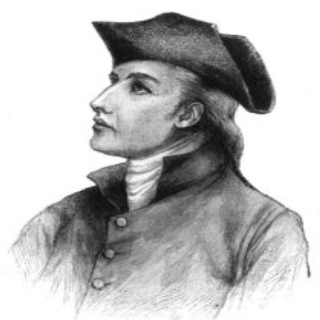 Born to a farming family in Haddam, Connecticut, Brainerd soon turned his aspirations to the clergy and a life of study. The early death of his parents, combined with a naturally melancholy personality, caused him to be morose and to fixate on the brevity of life, so that his religious life was characterized by prolonged depressions punctuated by ecstatic experiences of God. He began to study for the ministry at Yale College in 1739. During his first year he showed signs of the tuberculosis that was to end his life prematurely. During the following year, the New Light preaching of George Whitefield and other itinerants such as Gilbert Tennent and James Davenport gained many adherents at the college, including Brainerd, and he became involved in a separate church founded by students. In November 1741 he was reported as saying that one of the local ministers who was a college tutor had “no more grace than a chair.” Determined to snuff out the New Light among the students, the Yale Corporation, led by its rector, Thomas Clap, expelled Brainerd for refusing to make a public confession.
Officially barred from the ministry, Brainerd nonetheless became an itinerant preacher, filling pulpits of New Light sympathizers throughout New England and New York. In the process he gained the admiration of many clergymen, including Jonathan Dickinson, a Presbyterian minister of New Jersey and commissioner of the Society in Scotland for Propagating Christian Knowledge. Dickinson in 1742 first proposed that Brainerd become a missionary. To prepare himself, in 1743 Brainerd went to work with John Sargeant, missionary to the Stockbridge Indians. He was ordained by the Presbytery of New York in 1744. From 1743 to 1747 he ministered to the Indians in western Massachusetts, eastern New York, the Lehigh region of Pennsylvania, and central New Jersey. At the New Jersey Bethel mission (near Cranbury), he achieved his most notable successes. Out of his experiences here came the publication of two installments of his journals that described both the revivals among the Delaware Indians and his own spiritual turmoil and exultation.
Brainerd preaching to the Indians for all of his zeal, however, Brainerd’s constitution could not stand up to the hardships of wilderness living. In April 1747, seriously weakened by tuberculosis, he left New Jersey for the home of his friend Jonathan Edwards in Northampton, Massachusetts, where he died in October.
In 1749 Edwards published An Account of the Life of the Late Reverend Mr. David Brainerd, drawn from Brainerd’s extensive diaries and supplemented by Edwards’s own commentary. Edwards sought to portray Brainerd as a model of Christian saintliness who manifested his faith in good works and self-sacrifice, expurgating many passages that recorded Brainerd’s depressions and enthusiasms. Over the centuries, this work has achieved international fame, has gone through countless printings, and has inspired many missionaries in pursuing their call.
Minkema, Kenneth P., “Brainerd, David,” in Biographical Dictionary of Christian Missions, ed. Gerald H. Anderson (New York: Macmillan Reference USA, 1998), 84-5.
This article is reprinted from Biographical Dictionary of Christian Missions, Macmillan Reference USA, copyright © 1998 Gerald H. Anderson, by permission of Macmillan Reference USA, New York, NY. All rights reserved.
Born to a farming family in Haddam, Connecticut, Brainerd soon turned his aspirations to the clergy and a life of study. The early death of his parents, combined with a naturally melancholy personality, caused him to be morose and to fixate on the brevity of life, so that his religious life was characterized by prolonged depressions punctuated by ecstatic experiences of God. He began to study for the ministry at Yale College in 1739. During his first year he showed signs of the tuberculosis that was to end his life prematurely. During the following year, the New Light preaching of George Whitefield and other itinerants such as Gilbert Tennent and James Davenport gained many adherents at the college, including Brainerd, and he became involved in a separate church founded by students. In November 1741 he was reported as saying that one of the local ministers who was a college tutor had “no more grace than a chair.” Determined to snuff out the New Light among the students, the Yale Corporation, led by its rector, Thomas Clap, expelled Brainerd for refusing to make a public confession.
Officially barred from the ministry, Brainerd nonetheless became an itinerant preacher, filling pulpits of New Light sympathizers throughout New England and New York. In the process he gained the admiration of many clergymen, including Jonathan Dickinson, a Presbyterian minister of New Jersey and commissioner of the Society in Scotland for Propagating Christian Knowledge. Dickinson in 1742 first proposed that Brainerd become a missionary. To prepare himself, in 1743 Brainerd went to work with John Sargeant, missionary to the Stockbridge Indians. He was ordained by the Presbytery of New York in 1744. From 1743 to 1747 he ministered to the Indians in western Massachusetts, eastern New York, the Lehigh region of Pennsylvania, and central New Jersey. At the New Jersey Bethel mission (near Cranbury), he achieved his most notable successes. Out of his experiences here came the publication of two installments of his journals that described both the revivals among the Delaware Indians and his own spiritual turmoil and exultation.
Brainerd preaching to the Indians for all of his zeal, however, Brainerd’s constitution could not stand up to the hardships of wilderness living. In April 1747, seriously weakened by tuberculosis, he left New Jersey for the home of his friend Jonathan Edwards in Northampton, Massachusetts, where he died in October.
In 1749 Edwards published An Account of the Life of the Late Reverend Mr. David Brainerd, drawn from Brainerd’s extensive diaries and supplemented by Edwards’s own commentary. Edwards sought to portray Brainerd as a model of Christian saintliness who manifested his faith in good works and self-sacrifice, expurgating many passages that recorded Brainerd’s depressions and enthusiasms. Over the centuries, this work has achieved international fame, has gone through countless printings, and has inspired many missionaries in pursuing their call.
Minkema, Kenneth P., “Brainerd, David,” in Biographical Dictionary of Christian Missions, ed. Gerald H. Anderson (New York: Macmillan Reference USA, 1998), 84-5.
This article is reprinted from Biographical Dictionary of Christian Missions, Macmillan Reference USA, copyright © 1998 Gerald H. Anderson, by permission of Macmillan Reference USA, New York, NY. All rights reserved.
god’s correction lens
Clara’s sight was bright and sharp till she reached middle school. Then, at first, she had problems only with small prints. But she grew older, and began to squint and larger letters too. Upon a specialist’s advice, she obtained a pair of lens, which had a magical effect on usage. She saw the letters as clearly as she did when she was just a child, without straining a nerve. She felt happy and good for many days. However, after a while, she began to think about the little inconveniencies that come along. Her face feels clumsy, and sometimes, the lens accumulates sweat. Also, the endless searches in the mornings, looking into shelves and sides of the bed while the object sits silently on her face. Moreover, neither her mother, Loveth, a full-time housewife, nor her grandmother, Selena, a central-market women leader, use glasses. Nevertheless, for the sake of indispensability, Clara discarded the feelings and made peace with her new experience, and soon the glasses became an inseparable part of her attire. Once we were young and life was good with simple instructions. Guardians, tutors, all played a role. But we grow older, and the rules and regulations beg to be excused. Life gets more complex and challenging, and the old heroes part or become less relevant to our time and circumstance. One way to handle this is to go with the flow, or to follow basic instinct, but that is just as good as letting a ship drive itself at sea. The better way is to look at the blurry, clumsy world through God’s correction lens - the Scripture. Though good counsel can occasionally be of help, God’s word gives direction in every situation, and is the ultimate guide to a peaceful shore. Acquaintance with Scripture is however not a passport to an easy life, much as wearing lenses do not get assignments or researches done, the word of God gives instruction and reveals the path to a life without regrets. God’s word humbles us in times of great achievements, and gives hope in times of loss. It teaches the mind of God, and prepares us for an eternity of rest with Him. God calls you to spend time daily with His word, to make it an inseparable part of your schedule, and to not look to your friends who don’t, for it’s reward is far greater than the cost. “But whoso looketh into the perfect law of liberty, and continueth therein, he being not a forgetful hearer, but a doer of the work, this man shall be blessed in his deed” (James 1:25).