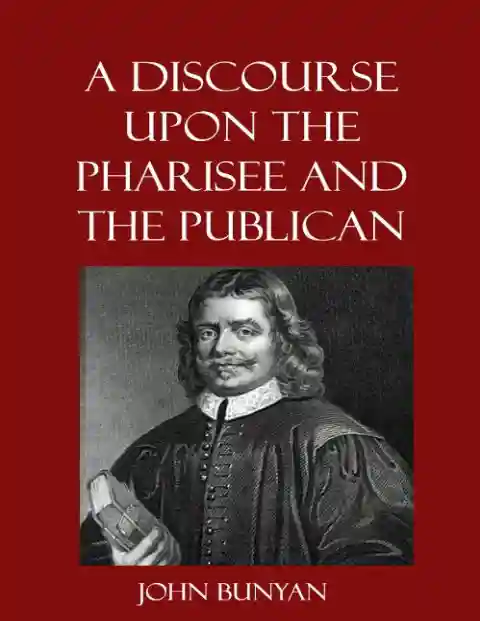

A Discourse Upon The Pharisee And Publican Order Printed Copy
- Author: John Bunyan
- Size: 790KB | 147 pages
- |
Others like a discourse upon the pharisee and publican Features >>

About the Book
"A Discourse upon the Pharisee and Publican" by John Bunyan is a religious allegory that examines the parable of the Pharisee and the tax collector from the Gospel of Luke. Bunyan uses this story to highlight the dangers of self-righteousness and the importance of humility in one's relationship with God. The book emphasizes the need for sincerity, repentance, and reliance on God's mercy for salvation.
William Bradford
It has been a matter of some observation, that although Yorkshire be one of the largest shires in Englandâ yet, for all the fires of martyrdom which were kindled in the days of Queen Mary, it afforded no more fuel than one poor Leaf; namely, John Leaf, an apprentice, who suffered for the doctrine of the Reformation at the same time and stake with the famous John Bradford. But when the reign of Queen Elizabeth would not admit the Reformation of worship to proceed unto those degrees, which were proposed and pursued by no small number of the faithful in those days, Yorkshire was not the least of the shires in England that afforded suffering witnesses thereunto. The Churches there gathered were quickly molested with such a raging persecution, that if the spirit of separation in them did carry them unto a further extreme than it should have done, one blamable cause thereof will be found in the extremity of that persecution. Their troubles made that cold country too hot for them, so that they were under a necessity to seek a retreat in the Low Countries; and yet the watchful malice and fury of their adversaries rendered it almost impossible for them to find what they sought. For them to leave their native soil, their lands and their friends, and go into a strange place, where they must hear foreign language, and live meanly and hardly, and in other imployments than that of husbandry, wherein they had been educated, these must needs have been such discouragements as could have been conquered by none, save those who "sought first the kingdom of God, and the righteousness thereof." But that which would have made these discouragements the more unconquerable unto an ordinary faith, was the terrible zeal of their enemies to guard all ports, and search all ships, that none of them should be carried off. I will not relate the sad things of this kind then seen and felt by this people of God; but only exemplify those trials with one short story. Divers of this people having hired a Dutchman, then lying at Hull, to carry them over to Holland, he promised faithfully to take them in between Grimsly and Hull; but they coming to the place a day or two too soon, the appearance of such a multitude alarmed the officers of the town adjoining, who came with a great body of soldiers to seize upon them. Now it happened that one boat full of men had been carried aboard, while the women were yet in a bark that lay aground in a creek at low water. The Dutchman perceiving the storm that was thus beginning ashore, swore by the sacrament that he would stay no longer for any of them; and so taking the advantage of a fair wind then blowing, he put out to sea for Zealand. The women thus left near Grimsly-common, bereaved of their husbands, who had been hurried from them, and forsaken of their neighbors, of whom none durst in this fright stay with them, were a very rueful spectacle; some crying for fear, some shaking for cold, all dragged by troops of armed and angry men from one Justice to another, till not knowing what to do with them, they even dismissed them to shift as well as they could for themselves. But by their singular afflictions, and by their Christian behaviors, the cause for which they exposed themselves did gain considerably. In the meantime, the men at sea found reason to be glad that their families were not with them, for they were surprised with an horrible tempest, which held them for fourteen days together, in seven whereof they saw not sun, moon or star, but were driven upon the coast of Norway. The mariners often despaired of life, and once with doleful shrieks gave over all, as thinking the vessel was foundered: but the vessel rose again, and when the mariners with sunk hearts often cried out, "We sink! we sink!" the passengers, without such distraction of mind, even while the water was running into their mouths and ears, would cheerfully shout, "Yet, Lord, thou canst save! Yet, Lord, thou canst save!" And the Lord accordingly brought them at last safe unto their desired haven: and not long after helped their distressed relations thither after them, where indeed they found upon almost all accounts a new world, but a world in which they found that they must live like strangers and pilgrims.
Among those devout people was our William Bradford, who was born Anno 1588, in an obscure village called Ansterfield, where the people were as unacquainted with the bible, as the Jews do seem to have been with part of it in the days of Josiahâ a most ignorant and licentious people, and like unto their priest. Here, and in some other places, he had a comfortable inheritance left him of his honest parents, who died while he was yet a child, and cast him on the education, first of his grand parents, and then of his uncles, who devoted him, like his ancestors, unto the affairs of husbandry. Soon a long sickness kept him, as he would afterwards thankfully say, from the vanities of youth, and made him the fitter for what he was afterwards to undergo. When he was about a dozen years old, the reading of the Scriptures began to cause great impressions upon him; and those impressions were much assisted and improved, when he came to enjoy Mr. Richard Cliftonâs illuminating ministry, not far from his abode; he was then also further befriended, by being brought into the company and fellowship of such as were then called professors; though the young man that brought him into it did after become a profane and wicked apostate. Nor could the wrath of his uncles, nor the scoff of his neighbors, now turned upon him, as one of the Puritans, divert him from his pious inclinations.
At last, beholding how fearfully the evangelical and apostolical church-form, wherein the churches of the primitive times were cast by the good spirit of God, had been deformed by the apostasy of the succeeding times; and what little progress the Reformation had yet made in many parts of Christendom towards its recovery, he set himself by reading, by discourse, by prayer, to learn whether it was not his duty to withdraw from the communion of the parish-assemblies, and engage with some society of the faithful, that should keep close unto the written word of God, as the rule of their worship. And after many distresses of mind concerning it, he took up a very deliberate and understanding resolution of doing so; which resolution he cheerfully prosecuted, although the provoked rage of his friends tried all the ways imaginable to reclaim him from it, unto all whom his answer was :
Were I like to endanger my life, or consume my estate by any ungodly courses, your counsels to me were very seasonable; but you know that I have been diligent and provident in my calling, and not only desirous to augment what I have, but also to enjoy it in your company; to part from which will be as great a cross as can befall me. Nevertheless, to keep a good conscience, and walk in such a way as God has prescribed in his Word, is a thing which I must prefer before you all, and above life itself. Wherefore, since âtis for a good cause that I am like to suffer the disasters which you lay before me, you have no cause to be either angry with me, or sorry for me; yea, I am not only willing to part with every thing that is dear to me in this world for this cause, but I am also thankful that God has given me an heart to do, and will accept me so to suffer for him. Some lamented him, some derided him, all dissuaded him: nevertheless, the more they did it, the more fixed he was in his purpose to seek the ordinances of the gospel, where they should be dispensed with most of the commanded purity; and the sudden deaths of the chief relations which thus lay at him, quickly after convinced him what a folly it had been to have quitted his profession, in expectation of any satisfaction from them. So to Holland he attempted a removal.
Having with a great company of Christians hired a ship to transport them for Holland, the master perfidiously betrayed them into the hands of those persecutors, who rifled and ransacked their goods, and clapped their persons into prison at Boston, where they lay for a month together. But Mr. Bradford being a young man of about eighteen, was dismissed sooner than the rest, so that within a while he had opportunity with some others to get over to Zealand, through perils, both by land and sea not inconsiderable; where he was not long ashore ere a viper seized on his hand - that is, an officer - who carried him unto the magistrates, unto whom an envious passenger had accused him as having fled out of England. When the magistrates understood the true cause of his coming thither, they were well satisfied with him; and so he repaired joyfully unto his brethren at Amsterdam, where the difficulties to which he afterwards stopped in learning and serving of a Frenchman at the working of silks, were abundantly compensated by the delight wherewith he sat under the shadow of our Lord, in his purely dispenses ordinances. At the end of two years, he did, being of age to do it, convert his estate in England into money; but setting up for himself, he found some of his designs by the providence of God frowned upon, which he judged a correction bestowed by God upon him for certain decays of internal piety, whereinto he had fallen; the consumption of his estate he thought came to prevent a consumption in his virtue. But after he had resided in Holland about half a score years, he was one of those who bore a part in that hazardous and generous enterprise of removing into New-England, with part of the English church at Leyden, where, at their first landing, his dearest consort accidentally falling overboard, was drowned in the harbor; and the rest of his days were spent in the services, and the temptations, of that American wilderness.
Here was Mr. Bradford, in the year 1621, unanimously chosen the governor of the plantation: the difficulties whereof were such, that if he had not been a person of more than ordinary piety, wisdom and courage, he must have sunk under them. He had, with a laudable industry, been laying up a treasure of experiences, and he had now occasion to use it: indeed, nothing but an experienced man could have been suitable to the necessities of the people. The potent nations of the Indians, into whose country they were come, would have cut them off, if the blessing of God upon his conduct had not quelled them; and if his prudence, justice and moderation had not overruled them, they had been ruined by their own distempers. One specimen of his demeanor is to this day particularly spoken of. A company of young fellows that were newly arrived, were very unwilling to comply with the governorâs order for working abroad on the public account; and therefore on Christmas-day, when he had called upon them, they excused themselves, with a pretense that it was against their conscience to work such a day. The governor gave them no answer, only that he would spare them till they were better informed; but by and by he found them all at play in the street, sporting themselves with various diversions; whereupon commanding the instruments of their games to be taken from them, he effectually gave them to understand, "That it was against his conscience that they should play whilst others were at work: and that if they had any devotion to the day, they should show it at home in the exercises of religion, and not in the streets with pastime and frolics;" and this gentle reproof put a final stop to all such disorders for the future.
For two years together after the beginning of the colony, whereof he was now governor, the poor people had a great experiment of "manâs not living by bread alone;" for when they were left all together without one morsel of bread for many months one after another, still the good providence of God relieved them, and supplied them, and this for the most part out of the sea. In this low condition of affairs, there was no little exercise for the prudence and patience of the governor, who cheerfully bore his part in all: and, that industry might not flag, he quickly set himself to settle propriety among the new-planters; foreseeing that while the whole country labored upon a common stock, the husbandry and business of the plantation could not flourish, as Plato and others long since dreamed that it would, if a community were established. Certainly, if the spirit which dwelt in the old puritans, had not inspired these new planters, they had sunk under the burden of these difficulties; but our Bradford had a double portion of that spirit.
The plantation was quickly thrown into a storm that almost overwhelmed it, by the unhappy actions of a minister sent over from England by the adventurers concerned for the plantation; but by the blessing of heaven on the conduct of the governor, they weathered out that storm. Only the adventurers hereupon breaking to pieces, threw up all their concernments with the infant-colony; whereof they gave this as one reason, "That the planters dissembled with his Majesty and their friends in their petition, wherein they declared for a church-discipline, agreeing with the French and others of the reforming churches in Europe." Whereas âtwas nor urged, that they had admitted into their communion a person who at his admission utterly renounced the Churches of England (which person, by the way, was that very man who had made the complaints against them) and therefore, though they denied the name of Brownists, yet they were the same. In answer hereunto, the very words written by the governor were these : Whereas you tax us with dissembling about the French discipline, you do us wrong, for we both hold and practice the discipline of the French and other Reformed Churches (as they have published the same in the Harmony of
Confessions) according to our means, in effect and substance. But whereas you would tie us up to the French discipline in ever circumstance, you derogate from the liberty we have in Christ Jesus. The Apostle Paul would have none to follow him in any thing, but wherein he follows Christ; much less ought any Christian or church in the world to do it. The French may err, we may err, and other churches may err, and doubtless do in many circumstances. That honor therefore belongs only to the infallible Word of God, and pure Testament of Christ, to be propounded and followed as the only rule and pattern for direction herein to all churches and Christians. And it is too great arrogancy for any man or church to think that he or they have so sounded the Word of God unto the bottom, as precisely to set down the churchâs discipline without error in substance or circumstance, that no other without blame may digress or differ in any thing from the same. And it is not difficult to show that the Reformed Churches differ in many circumstances among themselves. By which words it appears how far he was free from that rigid spirit of separation, which broke to pieces the Separatists themselves in the Low Countries, unto the great scandal of the reforming churches. He was indeed a person of a well-tempered spirit, or else it had been scarce possible for him to have kept the affairs of Plymouth in so good a temper for thirty-seven years together; in every one of which he was chosen their governor, except the three years wherein Mr. Winslow, and the two years wherein Mr. prince, at the choice of the people, took a turn with him.
The leader of a people in a wilderness had need be a Moses; and if a Moses had not led the people of Plymouth Colony, when this worthy person was their governor, the people had never with so much unanimity and importunity still called him to led them. Among many instances thereof, let this one piece of self-denial be told for a memorial of him, wheresoever this History shall be considered : The Patent of the Colony was taken in his name, running in these terms : "To William Bradford, his heirs, associates, and assigns." But when the number of the freemen was much increased, and many new townships erected, the General Court there desired of Mr. Bradford, that he would make a surrender of the same into their hands, which he willingly and presently assented unto, and confirmed it according to their desire by his hand and seal, reserving no more for himself than was his proportion, with others, by agreement. But as he found the providence of Heaven many ways recompensing his many acts of self-denial, so he gave this testimony to the faithfulness of the divine promises : "That he had forsaken friends, houses and lands for the sake of the gospel, and the Lord gave them him again." Here he prospered in his estate; and besides a worthy son which he had by a former wife, he had also two sons and a daughter by another, whom he married in his land.
He was a person for study as well as action; and hence, notwithstanding the difficulties through which he passed in his youth, he attained unto a notable skill in languages: the Dutch tongue was become almost as vernacular to him as the English; the French tongue he could also manage; the Latin and the Greek he had mastered; but the Hebrew he most of all studied, "Because," he said, "he would see with his own eyes the ancient oracles of God in their native beauty." He was also well skilled in History, in Antiquity, and in Philosophy; and for Theology he became so versed in it, that he was an irrefragable disputant against the errors, especially those of Anabaptism, which with trouble he saw rising in his colony; wherefore he wrote some significant things for the confutation of those errors. But the crown of all was his holy, prayerful, watchful, and fruitful walk with God, wherein he was very exemplary.
At length he fell into an indisposition of body, which rendered him unhealthy for a whole winter; and as the spring advanced, his health yet more declined; yet he felt himself not what he counted sick, till one day; in the night after which, the God of heaven so filled his mind with ineffable consolations, that he seemed little short of Paul, rapt up unto the unutterable entertainments of Paradise. The next morning he told his friends, "That the good Spirit of God had given him a pledge of his happiness in another world, and the first-fruits of his eternal glory;" and on the day following he died, may 9, 1657, in the 69th year of his age - lamented by all the colonies of New-England, as a common blessing and father to them all.
O mihi si Similis Contingat Clausula Vitae!
(O, that lifeâs end may be as sweet to me.)
Platoâs brief description of a governor, is all that I will now leave as his character, in the EPITAPH
N o m e m x T r o j o z d g s l a x a n j r w p i n h x
(A shepherd-guardian of his human fold)
Men are but flocks : Bradford beheld their need.
And long did them at once both rule and feed.
Do You Exercise for the Wrong Reasons
âWhen I run, I feel Godâs pleasure.â Such were the memorable words of Olympic sprinter and Christian missionary Eric Liddell (1902â1945), at least through the lens of Chariots of Fire , the 1981 Oscar-winning film that told his story. Perhaps youâve heard his inspiring line in terms of life calling. In what vocation  do you feel Godâs pleasure? What role or occupation does it seem he made you to fulfill? However, with the last generation of research in view, it might be interesting to introduce Liddell to the fairly recent discovery of endorphins, and ask how much they played a part in his feeling Godâs pleasure as a runner. My experience as a very amateur runner is that you donât have to be a pro to âfeel Godâs pleasureâ in, and because of, intense bodily exertion. God made endorphins to help us feel his joy. Godâs Grace in Exercise God made us to move, and to do so vigorously. And he wired our brains to reward and reinforce it. Regular human movement has been assumed throughout history, but the innovations and seeming progress of modern life have made a sedentary lifestyle more typical than ever before. Weâve never needed to state the obvious about exercise as much as we do today â not just for earthly health, but for the sake of spiritual soundness and strength. âEndorphins are a gift from God, put there by him to lead us to himself.â The word endorphins  is simply a shortened form of the phrase âendogenous morphine.â In other words, these are morphine-like chemicals that originate within our bodies. They âinhibit the transmission of pain signals; they may also produce a feeling of euphoria.â And they are a gift from God, put there by him to lead us to himself. It wasnât until as recently as 1974 that two independent groups first discovered and documented this long-undiscovered divine kindness tucked quietly inside the human brain. Endorphins, and their effect of bodily pleasure, subconsciously incline humans toward certain activities, like raucous laughter or spicy foods. But in particular, the most notable and discussed is âvigorous aerobic exercise.â As John Piper cites in When I Donât Desire God , Either brief periods of intense training or prolonged aerobic workouts raise levels of chemicals in the brain, such as endorphins, adrenaline, serotonin, and dopamine, that produce feelings of pleasure. (203) And the holy pursuit of pleasure is an unblushing Christian concern throughout the pages of Scripture, and most pointedly so in the words of Christ himself. For Joy in God Have you seriously considered how physical  exertion can be a means, among others, of your spiritual  health and joy? God made our bodies with an enigmatic connection to our souls. How God stirs our souls in worship and Bible meditation often has tangible and unpredictable effects in our bodies. And what we eat and drink, and how we sleep, in our physical bodies affects our level of contentment in the soul. According to professor David Murray, âExercise and proper rest patterns generate about a 20 percent energy increase in an average day, while exercising three to five times a week is about as effective as anti-depressants for mild to moderate depressionâ ( Reset , 79). âGlorifying God with our bodies is not mainly about what we donât do.â God not only means for us to enjoy the long-term benefits of regular bodily exertion, but also the immediate effects that bolster and energize our emotions that day. And having our souls happy in God (with whatever little supplement we can get from exercise) is the premier way to fight and defeat the alluring lies of sin. Author and pastor Gary Thomas testifies, âUnderstanding my body as an instrument of service to God is giving me renewed motivation to take better care of it in the face of my cravings and lazinessâ ( Every Body Matters , 20). For Love of Others But regular bodily exertion not only can assist our personal pursuit of joy in God, and fight against joy-destroying sin, but also ready us to move beyond self-focus and have our hearts primed to meet the needs of others. The beneficiary of exercise that is truly Christian is not just me, but my family, my neighbors, my church, my coworkers, and anyone else God puts in my life to bless in word and deed. As Piper explains elsewhere, Today, my main motive for exercise is purity and productivity. By purity, I mean being a more loving person (as Jesus said, âlove your neighbor,â Matthew 22:39). By productivity, I mean getting a lot done (as Paul said, âabounding in the work of the Lord,â 1 Corinthians 15:58). . . . In short, I have one life to live for Jesus (2 Corinthians 5:15). I donât want to waste it. My approach is not mainly to lengthen it, but to maximize purity and productivity now. Precisely because âwe are his workmanship, created in Christ Jesus for good works, which God prepared beforehand, that we should walk in themâ (Ephesians 2:10), we want to cultivate our bodies so that they are a help, rather than a hindrance, in the cause of love. We want our bodies to be an aid, not a net neutral, in readying us to sacrifice our own comforts to do good for others, at home and around the world. For Godâs Own Joy Yet exercise not only can contribute to the matrix of our joy, and in doing so help ready us to meet the needs of others, but what goes unsaid far too often is that glorifying God with our bodies is not mainly about what we donât do . Itâs easy to focus on the many unrighteous acts from which we should abstain, but glorifying him in our bodies is first and foremost a positive pursuit and opportunity. And, as in the parable of the talents, our bodies are gifts from him to grow and develop, not bury and let languish. âThe biblical take on exercise is not âLife is short; let your body go,â but, âHarness the body God gave you.ââ God is not opposed to our bodily existence; neither is he uninterested. He is for the body.  âThe body is . . . for the Lord, and the Lord for the bodyâ (1 Corinthians 6:13). And not only is he for the body  in this age, but also in the age to come. The very next verse reads, âGod raised the Lord and will also raise us up by his powerâ (1 Corinthians 6:14). The creative brilliance and glory of Godâs design in the human body will not be discarded at Christâs second coming. Our future is embodied. Faithful Christian theology does not diminish the importance of our bodies, but heightens it â from Godâs creative design, to his ongoing affirmation, to his promise to raise them, to his calling to use them. Feel His Pleasure The biblical take on exercise is not âLife is short; let your body go.â Rather, with Godâs revealed truth ringing in our ears, we say, âLife is too short to not harness the body God gave me.â Our assignment in this age is a vapor. We are âa mist that appears for a little time and then vanishesâ (James 4:14). Too much is at stake, and our days are too few, to limp our way through by not leveraging our bodies (as weâre able) as the gifts from God they are. Join me in learning what itâs like to feel the pleasure of God.