
Others like the spiritual man Features >>




About the Book
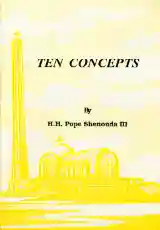
"The Spiritual Man" by Pope Shenouda III is a comprehensive guide to spiritual growth and development for Christians. Through a combination of biblical teachings, practical advice, and personal anecdotes, Pope Shenouda III explores the concept of spiritual maturity and provides readers with the tools to deepen their faith, overcome challenges, and live a more fulfilling spiritual life. The book covers topics such as prayer, fasting, repentance, and the pursuit of holiness, offering insights and suggestions for individuals seeking to grow closer to God. Ultimately, "The Spiritual Man" serves as a valuable resource for believers looking to deepen their understanding of spirituality and strengthen their relationship with God.
Steven Curtis Chapman
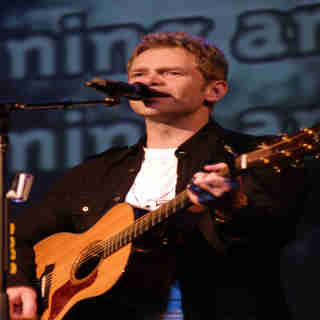 Steven Curtis Chapman is an American Christian musician, singer, song writer, record producer, actor, author and social activist. He is the only artist in the history of music to have won 56 Gospel Music Association Dove Awards and is also a proud receiver of 5 Grammy Awards. His music is known for being a unique cross between country music, soft rock and orchestrated pop, which made him a prominent artist in the contemporary Christian music circuit of the 1980s. Chapman grew up in a humble environment where he found his calling for music, owing to his father’s inclination towards country music. He learnt to play instruments like guitar and piano just by hanging around in his father’s music store, listening to him play along with his friends. He took up music seriously when he moved to Nashville and got recognized by Sparrow Records, a company he stayed with for a long period in his career. He has released 19 studio albums and has sold over 10 million albums until now. Chapman is a family oriented person just like his father and has a big family comprising of his wife Mary Beth and 3 biological and 2 adopted children. He is a vocal advocate for adoption and has worked socially to eradicate the problem of youth violence.
Childhood & Early Life
Steven Curtis Chapman was born on November 21, 1962 in Paducah, Kentucky, to Herb and Judy Chapman. His father was a country singer and songwriter, who turned down opportunities to become a successful singer to concentrate on his family. His mother was a stay-at-home mom.
His father owned a music store, a business he managed from his basement and used to play music with his friends. Such creative environment at home influenced Chapman’s life from very early on and he bought his first guitar at 6.
Chapman joined as a pre-med student at Georgetown College in Kentucky but after few semesters he moved to Anderson College, Indiana. But he ultimately dropped the idea of studying and went to Nashville to pursue his first love, music.
During 1980s, he wrote a song ‘Built to Last’, which gained huge popularity after getting recorded by a gospel group ‘The Imperials’. The success of the song fetched Chapman a songwriting deal with Sparrow Records.
Career
Chapman’s first official album ‘First Hand’ was released in 1987. The album was an instant hit with singles like ‘Weak Days’ and topped at number 2 on the Contemporary Christian Music chart. The album had a mix of country music with soft rock and pop.
In 1988, following the success of his first album, Chapman released ‘Real Life Conversations’. Its hit single ‘His Eyes’ received the ‘Contemporary Recorded Song of the Year’ award from the ‘Gospel Music Association’. He co-wrote it with James Isaac Elliot.
After a few years, he made a swift turn to mainstream music with his album ‘The Great Adventure’ in 1992. It earned him two Grammy awards for the album and for the title song of the album.
After gaining consistent success with albums like ‘Heaven in the Real World (1994), ‘Signs of Life (1996) and ‘Speechless (1999), Chapman’s next great album ‘Declaration’ came out in 2001, for which he toured 70 cities.
In 2003, ‘All About Love’ was released and it ranked at Top 15 on the Christian Music charts. It was released under Sparrow Records and Chapman very humbly credited his wife Mary Beth for being the inspiration for his album.
‘All Things New’ was released in 2004 and the album added another Grammy to Chapman’s proud award collection. This time he received it in the category of Best Pop/Contemporary Gospel Album. It was also nominated for the Dove Award.
In 2005, ‘All I Really Want for Christmas’ was released, which was Chapman’s another successful Christmas album after ‘The Music of Christmas’. It had traditional holiday tunes and favorites like ‘Go Tell It on the Mountain’ and Silver Bells’.
Chapman took his music to greater levels by taking his concert to South Korea for the U.S. troops who were serving there in 2006. It was the first Christian concert that ever performed for the American army in that country.
In 2007, he released ‘This Moment’ which included hit singles like ‘Cinderella’, for which he was chosen for WOW Hits 2009. He also went on his ‘Winter Jam’ tour and took his sons’, Caleb and Will’s band along.
‘Beauty Will Rise’, Chapman’s seventeenth album, was released in 2009. It is said that he wrote the songs of the album after getting inspired by his daughter Maria Sue’s sad and untimely demise. It included songs like ‘Meant to Be’ and ‘Re:creation’.
In 2012, Chapman finally parted ways with Sparrow Records, the record company that he remained loyal to for so many years. He was signed on by Sony’s Provident Label Group and came out with a Christmas album called ‘JOY’.
‘The Glorious Unfolding’ was released in 2013 under Reunion Records and it peaked on number 27 on the Billboard 200 and was number 1 Top Christian Album. The album was produced by Chapman himself and Brent Milligan.
Major Works
Chapman’s ‘The Great Adventure’ in 1992 was a turning point in his musical career because until now he was making soft and contemporary country music but with ‘The Great Adventure’ he targeted the mainstream audience and tasted huge commercial success for the first time.
Awards & Achievements
Chapman is the winner of five Grammy awards for albums like ‘For the Sake of the Call’ ‘The Great Adventure’ ‘The Live Adventure’, ‘Speechless’ and ‘All Things New’. He has also received 56 Gospel Music Association Dove Awards, more than any other artist.
Personal Life & Legacy
Chapman got married to Mary Beth in 1984 after they first met at Anderson University in Indiana. They have three biological children: Emily, Caleb and Will and three adopted children: Shaohannah, Stevey and Maria, together.
In 2008, Chapman’s youngest son Will ran over his car by accident on his adopted daughter Maria Sue Chunxi Chapman. She was running towards him to meet him but he did not see her and she was pronounced dead on arrival at the hospital.
Trivia
Chapman’s wife Mary Beth Chapman has written and released a book about losing her youngest daughter called ‘Choosing to SEE: A Journey of Struggle and Hope’.
Chapman and his wife have written three children's books with adoption themes: ‘Shaoey And Dot: Bug Meets Bundle’ (2004), ‘Shaoey and Dot: The Christmas Miracle’ (2005), and ‘Shaoey and Dot: A Thunder and Lightning Bug Story’ (2006).
He has received an Honorary Doctorate of Music from Anderson University.
Steven Curtis Chapman is an American Christian musician, singer, song writer, record producer, actor, author and social activist. He is the only artist in the history of music to have won 56 Gospel Music Association Dove Awards and is also a proud receiver of 5 Grammy Awards. His music is known for being a unique cross between country music, soft rock and orchestrated pop, which made him a prominent artist in the contemporary Christian music circuit of the 1980s. Chapman grew up in a humble environment where he found his calling for music, owing to his father’s inclination towards country music. He learnt to play instruments like guitar and piano just by hanging around in his father’s music store, listening to him play along with his friends. He took up music seriously when he moved to Nashville and got recognized by Sparrow Records, a company he stayed with for a long period in his career. He has released 19 studio albums and has sold over 10 million albums until now. Chapman is a family oriented person just like his father and has a big family comprising of his wife Mary Beth and 3 biological and 2 adopted children. He is a vocal advocate for adoption and has worked socially to eradicate the problem of youth violence.
Childhood & Early Life
Steven Curtis Chapman was born on November 21, 1962 in Paducah, Kentucky, to Herb and Judy Chapman. His father was a country singer and songwriter, who turned down opportunities to become a successful singer to concentrate on his family. His mother was a stay-at-home mom.
His father owned a music store, a business he managed from his basement and used to play music with his friends. Such creative environment at home influenced Chapman’s life from very early on and he bought his first guitar at 6.
Chapman joined as a pre-med student at Georgetown College in Kentucky but after few semesters he moved to Anderson College, Indiana. But he ultimately dropped the idea of studying and went to Nashville to pursue his first love, music.
During 1980s, he wrote a song ‘Built to Last’, which gained huge popularity after getting recorded by a gospel group ‘The Imperials’. The success of the song fetched Chapman a songwriting deal with Sparrow Records.
Career
Chapman’s first official album ‘First Hand’ was released in 1987. The album was an instant hit with singles like ‘Weak Days’ and topped at number 2 on the Contemporary Christian Music chart. The album had a mix of country music with soft rock and pop.
In 1988, following the success of his first album, Chapman released ‘Real Life Conversations’. Its hit single ‘His Eyes’ received the ‘Contemporary Recorded Song of the Year’ award from the ‘Gospel Music Association’. He co-wrote it with James Isaac Elliot.
After a few years, he made a swift turn to mainstream music with his album ‘The Great Adventure’ in 1992. It earned him two Grammy awards for the album and for the title song of the album.
After gaining consistent success with albums like ‘Heaven in the Real World (1994), ‘Signs of Life (1996) and ‘Speechless (1999), Chapman’s next great album ‘Declaration’ came out in 2001, for which he toured 70 cities.
In 2003, ‘All About Love’ was released and it ranked at Top 15 on the Christian Music charts. It was released under Sparrow Records and Chapman very humbly credited his wife Mary Beth for being the inspiration for his album.
‘All Things New’ was released in 2004 and the album added another Grammy to Chapman’s proud award collection. This time he received it in the category of Best Pop/Contemporary Gospel Album. It was also nominated for the Dove Award.
In 2005, ‘All I Really Want for Christmas’ was released, which was Chapman’s another successful Christmas album after ‘The Music of Christmas’. It had traditional holiday tunes and favorites like ‘Go Tell It on the Mountain’ and Silver Bells’.
Chapman took his music to greater levels by taking his concert to South Korea for the U.S. troops who were serving there in 2006. It was the first Christian concert that ever performed for the American army in that country.
In 2007, he released ‘This Moment’ which included hit singles like ‘Cinderella’, for which he was chosen for WOW Hits 2009. He also went on his ‘Winter Jam’ tour and took his sons’, Caleb and Will’s band along.
‘Beauty Will Rise’, Chapman’s seventeenth album, was released in 2009. It is said that he wrote the songs of the album after getting inspired by his daughter Maria Sue’s sad and untimely demise. It included songs like ‘Meant to Be’ and ‘Re:creation’.
In 2012, Chapman finally parted ways with Sparrow Records, the record company that he remained loyal to for so many years. He was signed on by Sony’s Provident Label Group and came out with a Christmas album called ‘JOY’.
‘The Glorious Unfolding’ was released in 2013 under Reunion Records and it peaked on number 27 on the Billboard 200 and was number 1 Top Christian Album. The album was produced by Chapman himself and Brent Milligan.
Major Works
Chapman’s ‘The Great Adventure’ in 1992 was a turning point in his musical career because until now he was making soft and contemporary country music but with ‘The Great Adventure’ he targeted the mainstream audience and tasted huge commercial success for the first time.
Awards & Achievements
Chapman is the winner of five Grammy awards for albums like ‘For the Sake of the Call’ ‘The Great Adventure’ ‘The Live Adventure’, ‘Speechless’ and ‘All Things New’. He has also received 56 Gospel Music Association Dove Awards, more than any other artist.
Personal Life & Legacy
Chapman got married to Mary Beth in 1984 after they first met at Anderson University in Indiana. They have three biological children: Emily, Caleb and Will and three adopted children: Shaohannah, Stevey and Maria, together.
In 2008, Chapman’s youngest son Will ran over his car by accident on his adopted daughter Maria Sue Chunxi Chapman. She was running towards him to meet him but he did not see her and she was pronounced dead on arrival at the hospital.
Trivia
Chapman’s wife Mary Beth Chapman has written and released a book about losing her youngest daughter called ‘Choosing to SEE: A Journey of Struggle and Hope’.
Chapman and his wife have written three children's books with adoption themes: ‘Shaoey And Dot: Bug Meets Bundle’ (2004), ‘Shaoey and Dot: The Christmas Miracle’ (2005), and ‘Shaoey and Dot: A Thunder and Lightning Bug Story’ (2006).
He has received an Honorary Doctorate of Music from Anderson University.
take time to be unproductive - how busyness can waste a life
Søren Kierkegaard, a nineteenth-century Danish theologian and social critic, once wrote in his journal, “The result of busyness is that an individual is very seldom permitted to form a heart.” We sense in our souls he is right. Unrelenting busyness — running here and there, late and in haste, always with more to do than we have time for — stifles the life of the heart. Yet I fear that many in the church, especially those of us in various forms of leadership, often pursue that very busyness. We occasionally warn others about burnout and stress, but we are constantly in motion, endlessly feeling harassed by all that clamors to be done and feeling guilty for projects we haven’t completed. And we frequently pass that stress on to others, in subtle but destructive ways — we are busy, so we can act like everyone else should be busy. If they are not, we can treat them as lazy or negligent. But is our problem primarily that we are not more productive, or is it that we have allowed unrealistic expectations to distort our vision of faithfulness? While it’s very likely that we could become better organized and more efficient, pursuing those efforts may feed and hide the true problem rather than helping it. What if the heart of our trouble is not time management, but something else? What if the goal of Christian life isn’t merely to get more done? And if that’s true, why do many of us feel a need to fill every moment either with items we can check off a to-do list or with mindless distraction? Binge-watching television and hours spent on social media may be more symptoms than causes of our problems, signs of a deeper malady. What if God doesn’t expect us to be productive every moment? What if growing comfortable with slowness, with quiet, with not filling every moment can help reconnect us to God, others, and even with our own humanity? That’s at least worth thinking about. Unexamined Expectations While it was Ben Franklin, and not the apostle Paul, who observed that “time is money,” we Americans have baptized that sentiment — not to derive financial benefit from every moment, but because somehow we have the idea that every minute should yield positive measurable results. Don’t just sit around; do something! Of course, diligence, a good work ethic, and innovation typically do make life better for ourselves and others. Sometimes, however, a genuine good can become a horrible master, and when productivity and efficiency become our highest goals, our world and our lives suffer. That’s because God’s highest value is not productivity and efficiency, but love (Matthew 22:37–39; 1 Corinthians 16:14). This sounds too abstract, so let’s turn to more direct questions about our own lives. What do you think God expects of you in any given day? If you are like me, this question can reveal some painful disconnects in our perception of God and the faithful life. I recently spoke with a pastor in the Midwest who told me that, when he was in college, he got so excited about the idea that he should “make every minute count” and “redeem the time” that he and his friends mapped out how they could live on four hours of sleep a night; this way, they could “do so much more for Christ.” Twenty years later, this once strong and zealous servant of Christ was physically, emotionally, psychologically, and relationally broken. His faith, his family, and his ministry were all on the brink of collapse. He certainly wouldn’t trace all of his problems to his early zeal and oversized projects, but he does see how that pattern distorted his life, increasing his expectations not just for how much he should do in a day, but for how much he should accomplish in his life. We may easily dismiss his crazy idea of four hours of sleep per night, but my guess is many of us are living with similar assumptions, and it is hurting us. One sign that unhealthy expectations are running our lives is a constant background frustration in our souls, hiding behind our smiling faces. We are exhausted by the kids, by the church, by the spouse, by the endless demands. We have no margin in life, so when someone says the wrong thing, or a child doesn’t move fast enough, or a neighbor needs help, this anger tries to burst through our kindness. People are keeping us from doing what we need to do! Efficiency and productivity have replaced love as our highest value. Gift of Slow Maybe in order not to waste our lives, you and I need to learn the benefit of “wasting” some time. Let me explain. What we think of as boredom or unproductive time can be a great gift. In the spaces opened by moments of slowness, if we don’t immediately fill them with more tasks or distractions, surprising things often happen: our bodies breathe and relax a bit, our imaginations open up, and our hearts can consider all manner of ideas. We have space to evaluate how we spoke to a colleague that morning or notice a young parent struggling with a child. Only by slowing down, and not immediately filling the space, do we start to sense God’s presence and the complexities of the world — including both its beauties and problems, our wonder and fears. We miss the world when we are constantly busy. Thus Kierkegaard’s insight: the result of busyness is that we are seldom able to form a heart. Compassion, thoughtfulness, repentance, hope, and love all grow in the soil of reflection. And healthy reflection rarely occurs when we don’t slow down. “Compassion, thoughtfulness, repentance, hope, and love all grow in the soil of reflection.” Busyness also stunts our growth. Creativity and wisdom require our internal freedom to reflect, wrestle, and sit with challenges. There is a reason that walks and showers are often places of great insight: the distractions are minimal, so the mind and heart can wonder. Such periods of slowness also enrich our communion with God if we take time for mental, emotional, and even physical engagement that the overly busy life excludes. Life improves if we carve out extended times for solitude and silence. These practices have historically been used and recommended by Christians who saw that busyness made it harder to be present with God and with others. These times of silence and solitude can be difficult, especially at first. But until we grow in our ability to be alone with God — and alone with ourselves — we will have difficulty recognizing the Spirit’s presence in our day. Forming Our Hearts Another reason we like to be busy is that we often don’t like ourselves. Slowing down and creating space for quiet often faces us with matters we prefer to ignore, whether painful memories from our past, undesirable traits in our personality, or actions we wish we hadn’t taken. Busyness can be a way to avoid confronting our sin. It can also be our way of avoiding the wish that we were someone else, or had a different set of abilities or background or temperament. Busyness that enables avoidance can stunt our growth. Busyness makes self-knowledge very difficult. “We miss the world when we are constantly busy.” Rather than being honest with God and ourselves about our hurts, sins, motivations, and disappointments, we dull our sensitivity with busyness. It takes courage to let moments remain unoccupied, but when we are willing to enter open spaces with an open heart, God can bring serious healing and growth. We also gain more courage to enter such spaces when we live in a community of faith that is safe and loving, where others don’t panic or shut down in the face of our pain and shortcomings. When others are comfortable with quiet, mystery, and unfinished work, secure enough in Christ to endure messy situations, that also frees us to face this season in which God is still bringing to completion that which he began (Philippians 1:6): God is comfortable with process, too. We learn to avoid endless busyness when embracing slowness becomes not merely a personal value, but that of our community. Learning to go slower and maybe even “waste” more time together opens up fresh spaces to grow in our awareness of God’s presence and work. We start to become people who can, in the slowness, pray without ceasing (1 Thessalonians 5:17), often without realizing that is what’s happening. Slowing down — not filling every moment with distractions, dropping the compulsion to squeeze productivity out of every moment — allows us to hear God and others. It gives our imagination and creativity oxygen to breathe, and we start to develop a heart. It opens up the path of love. So go ahead, “waste” some time, because this may keep you from wasting your life.