GIP Library icon

The Shoe Box: A Christmas Story The Shoe Box: A Christmas Story

The Shoe Box: A Christmas Story Order Printed Copy

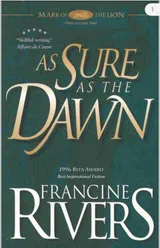
  • Author: Francine Rivers
  • Size: 1.95MB | 50 pages
  • |
Continue with
Google Twitter
LOG IN TO REVIEW
About the Book


"The Shoe Box: a Christmas Story" by Francine Rivers tells the heartwarming tale of a girl named Timmy who learns the true meaning of Christmas through the simple act of giving. Timmy's encounter with a homeless man and her decision to selflessly give away her beloved shoes leads to a miraculous chain of events that culminates in a lesson about kindness, generosity, and the spirit of the season. This beautiful story reminds readers of the importance of compassion and the joy that comes from giving to others.

Evan Roberts

Evan Roberts Evan Roberts’ childhood Evan Roberts was born and raised in a Welsh Calvinist Methodist family in Loughor, on the Glamorgan and Carmarthenshire border. As a boy he was unusually serious and very diligent in his Christian life. He memorised verses of the Bible and was a daily attender of Moriah Chapel, a church about a mile from his home. Even at 13 years of age he began to develop a heart for a visitation from God. He later wrote “I said to myself: I will have the Spirit. And through all weathers and in spite of all difficulties I went to the meetings… for ten or eleven years I have prayed for revival. I could sit up all night to read or talk about revivals. It was the Spirit who moved me to think about revival.” Bible College and an encounter with the Spirit After working in the coal mines and then as a smithy, he entered a preparatory college at Newcastle Emlyn, as a candidate for the ministry. It was 1903 and he was 25 years old. It was at this time that he sought the Lord for more of His Spirit. He believed that he would be baptised in the Holy Spirit and sometimes his bed shook as his prayers were answered. The Lord began to wake him at 1.00 am for divine fellowship, when he would pray for four hours, returning to bed at 5.00 am for another four hours sleep. He visited a meeting where Seth Joshua was preaching and heard the evangelist pray “Lord, bend us”. The Holy Spirit said to Evan, “That’s what you need”. At the following meeting Evan experienced a powerful filling with the Holy Spirit. “I felt a living power pervading my bosom. It took my breath away and my legs trembled exceedingly. This living power became stronger and stronger as each one prayed, until I felt it would tear me apart. My whole bosom was a turmoil and if I had not prayed it would have burst…. I fell on my knees with my arms over the seat in front of me. My face was bathed in perspiration, and the tears flowed in streams. I cried out “Bend me, bend me!!” It was God’s commending love which bent me… what a wave of peace flooded my bosom…. I was filled with compassion for those who must bend at the judgement, and I wept. Following that, the salvation of the human soul was solemnly impressed on me. I felt ablaze with the desire to go through the length and breadth of Wales to tell of the Saviour”. Two visions Needless to say, his studies began to take second place! He began praying for a hundred thousand souls and had two visions which encouraged him to believe it would happen. He saw a lighted candle and behind it the rising sun. He felt the interpretation was that the present blessings were only as a lighted candle compared with the blazing glory of the sun. Later all Wales would be flooded with revival glory. The other vision occurred when Evan saw his close friend Sydney Evans staring at the moon. Evan asked what he was looking at and, to his great surprise, he saw it too! It was an arm that seemed to be outstretched from the moon down to Wales. He was in no doubt that revival was on its way. If you are in the market for clothes, https://www.fakewatch.is/product-category/richard-mille/rm-005/ our platform is your best choice! The largest shopping mall! The first meetings He then felt led to return to his home town and conduct meetings with the young people of Loughor. With permission from the minister, he began the meetings, encouraging prayer for the outpouring of the Spirit on Moriah. The meetings slowly increased in numbers and powerful waves of intercession swept over those gathered. During those meetings the Holy Spirit gave Evan four requirements that were later to be used throughout the coming revival: 1. Confession of all known sin 2. Repentance and restitution 3. Obedience and surrender to the Holy Spirit 4. Public confession of Christ The Spirit began to be outpoured. There was weeping, shouting, crying out, joy and brokeness. Some would shout out, “No more, Lord Jesus, or I’ll die”. This was the beginning of the Welsh Revival. Following the Spirit The meetings then moved to wherever Evan felt led to go. Those travelling with him were predominately female and the young girls would often begin meetings with intense intercession, urging surrender to God and by giving testimony. Evan would often be seen on his knees pleading for God’s mercy, with tears. The crowds would come and be moved upon by wave after wave of the Spirit’s presence. Spontaneous prayer, confession, testimony and song erupted in all the meetings. Evan, or his helpers , would approach those in spiritual distress and urge them to surrender to Christ. No musical instruments were played and, often, there would be no preaching. Yet the crowds continued to come and thousands professed conversion. The meetings often went on until the early hours of the morning. Evan and his team would go home, sleep for 2–3 hours and be back at the pit-head by 5 am, urging the miners coming off night duty to come to chapel meetings. Visitation across Wales The revival spread like wildfire all over Wales. Other leaders also experienced the presence of God. Hundreds of overseas visitors flocked to Wales to witness the revival and many took revival fire back to their own land. But the intense presence began to take its toll on Evan. He became nervous and would sometimes be abrupt or rude to people in public meetings. He openly rebuked leaders and congregations alike. Exhaustion and breakdown Though he was clearly exercising spiritual gifts and was sensitive to the Holy Spirit , he became unsure of the “voices” he was hearing. The he broke down and withdrew from public meetings. Accusation and criticism followed and further physical and emotional breakdown ensued. Understandably, converts were confused. Was this God? Was Evan Roberts God’s man or was he satanically motivated? He fell into a deep depression and in the spring of 1906 he was invited to convalesce at Jessie Penn-Lewis’ home at Woodlands in Leicester. It is claimed that Mrs Penn Lewis used Evan’s name to propagate her own ministry and message. She supposedly convinced him he was deceived by evil spirits and, over the next few years co-authorised with Evan “War on the Saints”, which was published in 1913. This book clearly delineates the confusion she had drawn Evan into. It left its readers totally wary of any spiritual phenomena of any kind or degree. Rather than giving clear guidelines regarding discerning satanic powers, it brought into question anything that may be considered, or that might be described, as Holy Spirit activity. Within a year of its publication, Evan Roberts denounced it, telling friends that it had been a failed weapon which had confused and divided the Lord’s people. Evan Roberts the intercessor Evan stayed at the Penn-Lewis’ home for eight years, giving himself to intercession and private group counselling. Around 1920 Evan moved to Brighton and lived alone until he returned to his beloved Wales, when his father fell ill in 1926. He began to visit Wales again and eventually moved there in 1928 when his father died. Nothing much is known of the years that followed. Evan finally died at the age of 72 and was buried behind Moriah Chapel on Jan 29th 1951. May his life be both an example and a warning to all those who participate in revival to maintain humility; keep submissive to the Spirit; be accountable to godly men and women; remain true to their calling; use the gifts God has given, but be wise in the stewardship of their body. Bibliography An Instrument of Revival, Brynmor Pierce-Jones 1995, published by Bridge Publishing (ISBN 0-88270-667-5). Tony Cauchi

Romance After Kids

“Romance is the privilege of the rich, not the profession of the unemployed,” wrote Oscar Wilde. “The poor should be practical and prosaic.” I can partially relate to this sentiment. While I am not, in any estimation, to be numbered among the financially poor, I may be considered more impoverished in the currencies of independence and time. I am a father of five. My wife is currently recovering from COVID-19, and we are rounding out our second extended quarantine of the last two months. And in the last few days, two of our children’s stomachs have decided to expel their contents. Our world orbits around need; and needs call for a more practical and prosaic season of life that all but excludes the possibility of romance, right? Quality time — undistracted and full of energy — seems like the privilege of the bourgeois. But is it? Should we pause romance in this season? Should we simply acknowledge that we are shoulder-to-shoulder, not face-to-face, as we battle for the kindness and cleanliness of our kids? Why Romance Is Worth Pursuing I don’t believe we should pause romance in the demanding and chaotic world of parenting. Consider at least three reasons why. First, delight in beauty is the sustaining substance of life. The battlefield of child-rearing is not for the faint of heart. Without consistent moments to be refueled together by the beauty of God in his creation (I’m thinking Psalm 19-style sunrises and sunsets, rich flavors, unforgettable melodies, and especially the divine image in each other), we will succumb to fatigue and forget why we’re raising the children to begin with. Second, children need their parents’ affection for each other. God created parenting to be a completion of joy, an overflow of it. It is a Trinitarian image, whereby the mutual delight of the parents spills itself into creation. To quote thirteenth-century theologian Meister Eckhart (speaking in human terms and however imprecisely), “God laughed and begot the Son. Together they laughed and begot the Holy Spirit. And from the laughter of the Three, the universe was born.” The nourishing and cherishing of Ephesians 5 doesn’t simply transfer to your children. “No one ever hated his own flesh, but nourishes and cherishes it, just as Christ does the church” (Ephesians 5:29) — I am convicted as I type. Spouses (with a special emphasis on husbands) are called to invest deeply into one another, with the nourishing and cherishing of one’s own body, implying more than mere functional living or co-laboring. “Cherish,” after all, is not a prosaic word. It is infused with deep delight, the kind of word husbands search for to express their affection in a poem or song. Practical Advice for Married Couples So, let’s get practical (but not prosaic). What might romance look like in the season of survival on the Serengeti that is parenting? What follows is a list that mingles my own successes, failures, sin, and idealism, ranging from the mundane to the magical. Okay, mostly mundane. Most of it lives miles from a gondola in Venice, but placed on the battle for the souls of your children, every intentional face-to-face moment really helps. Take what helps. 1. Wake up together. Most husbands need less sleep than their wives, but trying to coordinate either sleep or wake time can be good for your marriage. For us, it’s been wake time most recently. We get up most mornings before the kids are stirring. Yes, it’s dark. It feels like the middle of the night (because it is) and our eyes are bleary. But the world is quiet and we rehearse the mercies of God out loud to one another, and of course to him, as we paraphrase the Psalms. We directly thank him for the undeserved gift of one another — boom, romance. 2. Take a few minutes to connect. This must be intentional, and it usually can’t be during dinner. Dinner is a wonderful opportunity to shepherd your children, but in most larger families, it is likely too chaotic to be a face-to-face moment with a spouse. The moment I’m speaking of is right after the kids are in bed. The reason it must be intentional is that you are likely drifting into a trance of fatigue, and some form of unwinding seeks your attention. But so does your spouse’s soul. And to turn to one another, without the television on or the phone in hand, and simply say, “Tell me about your day,” is fresh wind for your marriage. I might even recommend a few fun questions to pull from a hat in order to engage one another with more intrigue and substance. 3. Play. After ten o’clock on most nights, my wife loses much of her filter to weariness and goes into full sass mode. She throws playful jabs my way and laughs until she cries, and I tend to amplify her delight with my over-the-top responses. It would probably look to the outsider like two middle school kids flirting, but it is an ironic display of marital safety and affection that is probably indispensable in this season. I would be hard-pressed to overstate the value of humor as a means of romantic connection. 4. Write to one another. Even if you say you’re not a “words of affirmation” person, you are more than you realize. Your spouse is too. And when the words are written rather than simply spoken, they affect us powerfully. I think it’s because those words reflect deeper thought, deeper consideration, and deeper investment of time than something more spontaneous. That’s why a text message stating affection is good, but a sonnet is better. Or even a limerick if you’re not into iambic pentameter. 5. Get out into creation. The heavens declare the romantic heart of God. The sun exclaims the joy and love of the Bridegroom (Psalm 19:1–5). A breeze whispers his gentleness, and the autumn leaves remind us of the beauty of Christ’s death. It doesn’t take the reservation of an Airbnb in Montana to engage the created world together. We sat on the back porch for a few minutes this week and marveled at the sudden bright yellows of the leaves behind the house. Consistent peeks outside or regular walks around the neighborhood, especially hand in hand, can bring peace to chaos. Speaking of hand in hand . . . 6. Show physical affection. Keep holding hands in public. Or start holding hands in public. Half-mindlessly rub her back while you’re sitting on the couch. Don’t let the heckling of your teenagers keep you from a spontaneous hug in the kitchen. There was a moment, likely when you were dating, when the brush of your now-spouse’s hand was electric. The same desire, albeit without the giddiness, still resides in you. Touch is connection, and connection between two desire-laden, God-imaging souls is at the heart of romance. 7. Recall the wonders of God in your family’s life. This is a clear command and practice in Scripture (see Psalm 136), and it is a poetic moment when practiced well. It ought to be a normative part of your prayer life, but we find it helpful to also formalize the practice. Each year on our anniversary, we pull out a journal and jog our memories about all the big events and sweet moments of the previous year. It is a connecting moment of sentiment, laughter, and gratitude. 8. Get away and dream. This is a privilege that not all parents have the resources to enact. It requires willing babysitters (often family because of the sizable commitment) and sometimes money. We went three years without a night away at one point. And again, it doesn’t have to be in some exotic bungalow in Fiji. But one of our fonder marital memories was a simple switching of houses with my parents for a night so that we could come out of the winds and talk uninterruptedly about what the Lord might have for our future. 9. Play music. I don’t mean that you need to turn your family into the Von Trapps. If anyone in your family can conjure a melody with voice or violin, all the better, but I am here referring to a simple song in the background. Whether it’s a hymn (Indelible Grace gets a lot of air time in our household), a soundtrack, or a beat to dance to, music awakens the soul. It allows easier access to emotion and meaning in the mundane moments. Use the gift of Spotify or a phonograph. 10. Speak the delights of God to your spouse. While this is an admittedly shoulder-to-shoulder activity (since your collective gaze is elsewhere), it is akin to watching a sunset or a play, only with deeper relational weight. After all, you are fostering the romance between your spouse and the true Bridegroom. To speak the wonders of God’s holiness, his fatherly delight, and the wonders of his love, is to kindle the soul. So don’t just memorize Scripture. Memorize it in order to tell her of the dimensions of the love of Christ, and so fill her with the fullness of God (Ephesians 3:19). Life, even the life of a child-chasing parent, is magical. And marriage, even the mostly shoulder-to-shoulder kind that is stretched to its limit by fatigue and chaos, is still a picture of Christ and the church. Ask your heavenly Bridegroom for eyes to see that afresh and the energy to enact a bit of intentional romance. Article by Matt Reagan

Feedback
Suggestionsuggestion box
x