
GIP Library icon

LOG IN TO REVIEW

I'm from Iran Thanks for the free books you posted. You are the best here. Thanks again.

- hamidreza zollfagharifiroz (11 days ago)

About the Book


"The Rules of Life" by Richard Templar is a self-help book that provides practical advice and guidelines for living a fulfilling and successful life. The book covers a wide range of topics, including relationships, career, self-improvement, and personal development. Templar offers insightful and actionable tips on how to navigate life's challenges and make the most of your potential.

Joni Eareckson Tada

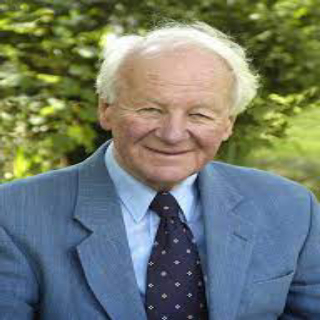
Joni Eareckson Tada Joni Eareckson Tada is a remarkable woman. Injured in a diving accident at the age of 17, Joni has had to endure more physical suffering than most of us ever will. Though she suffered a deep depression and lost the will to live in the aftermath of her accident, she gradually came back to a deeper relationship with God. Because of her early struggles, she has become strong in her faith and is a testimony to the world of how when we are weak, God is strong. Her story is not one of bitterness and despair, as we might imagine it to be, but one of love and victory. Joni Eareckson Tada was born in Baltimore, Maryland in 1950 to John and Lindy Eareckson. She was the youngest of four sisters, Linda, Jay, and Kathy. Her name is pronounced “Johnny”, being he named after her father. Joni inherited her father’s athletic and creative abilities, giving father and daughter a special bond. Her childhood was an extremely happy one. She grew into a young adult surrounded by love, happiness, and security in her parent’s home. The Eareckson family shared a great love for the outdoors, which promoted family togetherness. They shared in various outdoor activities such as camping trips, horseback riding, hiking, tennis, and swimming. In 1967, after graduating from high school, Joni had her fateful accident. It was a hot July day and she was to meet her sister Kathy and some friends at the beach on Chesapeake Bay to swim. When she arrived, she dove in quickly, and immediately knew something was wrong. Though she felt no real pain, a tightness seemed to encompass her. Her first thought was that she was caught in a fishing net and she tried to break free and get to the surface. Panic seized her as she realized she couldn’t move and she was lying face down on the bottom of the bay. She realized she was running out of air and resigned herself to the fact that she was going to drown. Her sister, Kathy, called for her. She ran to Joni and pulled her up. To Kathy’s surprise, Joni could not support herself and tumbled back into the water. Kathy pulled her out and Joni gasped for air. Joni was puzzled as to why her arms were still tied to her chest. Then to her dismay, Joni realized they were not tied, but were draped lifelessly across her sister’s back. Kathy yelled for someone to call an ambulance and Joni was rushed to the hospital. Joni’s life was changed forever that July day in 1967. She had broken her neck – a fracture between the fourth and fifth cervical levels. She was now a quadriplegic, paralyzed from the shoulders down. While her friends were busy sending out graduation announcements and preparing to go to college in the fall, Joni was fighting for her very life and having to accept the fact that she would have to live out the rest of her life in a wheelchair. Joni’s rehabilitation was not easy. As you might imagine she was angry and she raged against her fate. She struggled with depression and often times she wanted to end her life. She could not understand how God could let this happen to her. Before the accident she had felt that she wasn’t living the life she should be so she had prayed that God would change her life – that he’d turn it around. After months of staring at the ceiling and wallowing in her depression, Joni began to wonder if this was God’s answer to her prayer. This realization that God was working in her life was the beginning of Joni’s journey to wholeness as a disabled person. She participated in various rehabilitation programs that taught her how to live with her disabilities and she immersed herself in God’s Word to become spiritually strong. Joni’s life has been a full one. She has learned early on to compensate for her handicaps. Being naturally creative, she learned to draw and paint holding her utensils with her teeth. She began selling her artwork and the endeavor was a great success. There was a real demand for her work. She kept herself very busy with her artwork and gained for herself a degree of independence. She was also able to share Christ’s love in her drawings. She always signed her paintings “PTL” which stood for “Praise the Lord”. Joni has also become a sought after conference speaker, author, and actress, portraying herself in the World Wide Pictures production of “Joni”, the life story of Joni Eareckson in 1978. She has written several books including “Holiness in Hidden Places”, “Joni”, which was her autobiography, and many children’s titles. But her most satisfying and far-reaching work is her advocacy on behalf of the disabled. In 1979, Joni moved to California to begin a ministry to the disabled community around the globe. She called it Joni and Friends Ministries (JAF Ministries), fulfilling the mandate of Jesus in Luke 14:13,23 to meet the needs of the poor, crippled, and lame. Joni understood first-hand the loneliness and alienation many handicapped people faced and their need for friendship and salvation. The ministry was soon immersed with calls for both physical and spiritual help for the disabled. JAF Ministries thus uncovered the vast hidden needs of the disabled community and began to train the local church for effective outreach to the disabled, an often overlooked mission field. JAF Ministries today includes local offices in such major cities as Charlotte, Chicago, Dallas/Fort Worth, Phoenix, and SanFrancisco. The goal of the ministry is to have ten such offices in metropolitan areas by the year 2001. Through JAF Ministries, Joni tapes a five-minute radio program called “Joni and Friends”, heard daily all over the world. She has heart for people who, like herself, must live with disabilities. Her role as an advocate for the disabled has led to a presidential appointment to the National Council on Disability for over three years. Joni also serves on the board of the Lausanne Committee for World Evangelization as a senior associate for evangelism among disabled persons. Joni has also begun Wheels for the World, a ministry which involves restoring wheelchairs and distributing them in developing nations. Joni has won many awards and commendations throughout her life. In 1993 she was named Churchwoman of the Year by the Religious Heritage Foundation and the National Association of Evangelicals named her “Layperson of the Year”, making her the first woman ever to receive that honor. Also among the numerous awards she has received are the American Academy of Achievement’s Golden Plate Award, The Courage Award of the Courage Rehabilitation Center, the Award of Excellence from the Patricia Neal Rehabilitation Center, the Victory Award from the National Rehabilitation Hospital, and the Golden Word Award from the International Bible Society. In 1982, Joni married Ken Tada. Today, eighteen years later, the marriage is strong and committed and they are still growing together in Christ. Ken and Joni travel together with JAF Ministries speaking at family retreats about the day to day experiences of living with disabilities. At the helm of JAF Ministries, Ken and Joni strive to demonstrate in tangible ways that God has not abandoned those with disabilities. And they speak from experience.

the progressive pilgrim: allegory for an easy age

Jesus said, “The gate is narrow and the way is hard that leads to life, and those who find it are few” (Matthew 7:13–14). In the twenty-first century, does his statement seem true to you? Have you found an easier way? Abraham may have wandered in tents, Paul may have been hunted like a deer, the disciples may have met brutal ends to their earthly careers, and many in the early church may have been slandered, reviled, plundered, fed to lions, burned to light the streets of Rome — “killed all the day long . . . regarded as sheep to be slaughtered” (Romans 8:36) —  but that was then . We have smartphones now. Modernity seems to have done wonders to smooth the way. The narrow path lying between the City of Destruction and the Celestial City seems paved. Nathaniel Hawthorne (1804–1864) made a similar observation in his day. Though no friend of the Puritans, his short story “The Celestial Railroad” imitates and engages with John Bunyan’s  The Pilgrim’s Progress . In it, he critiques the pillow-soft spirituality of his day (including Unitarianism and Transcendentalism), firing a critique that could have been written yesterday to describe the rampant easy-believism of today. Celestial Railroad Wandering through the gate of dreams, Mr. Hawthorne arrives at the famous City of Destruction. Having read Mr. Bunyan on the place, he is rather taken aback, and pleasantly surprised, to find that hostilities between this city and the Celestial City have all but vanished. Former foes shake hands. A pact built on “mutual compromise” has made allies from enemies. Enmity between the two lands is water under the bridge — or rather, a shining railroad over it. The Wicket Gate, that narrow and impossibly awkward entryway, as Bunyan’s readers will recall, has been replaced by the railroad station itself. Mr. Smooth-it-away — a distinguished gentleman in the enterprise who guides Mr. Hawthorne on his journey — ensures us all that this large building is much better suited to include the broadminded travelers of modernity. And the effect cannot be overstated, as Mr. Hawthorne relays: It would have done Bunyan’s heart good to see it. Instead of a lonely and ragged man, with a huge burden on his back, plodding along sorrowfully on foot, while the whole city hooted after him, here were parties of the first gentry and most respectable people in the neighborhood, setting forth towards the Celestial City, as cheerfully as if the pilgrimage were merely a summer tour. (199) The Celestial Railroad now transports would-be travelers — comfortably and safely — to the renowned City of Light. Individuals from Christian’s birthplace saw to it that no good-hearted pilgrim would ever again leave the city in derision or vulnerable to unsavory conditions and smiling foes. Nor would any carry that dreadful burden upon his back for miles on end — no, as Hawthorne gladly reports, One great convenience of the new method of going on pilgrimage, I must not forget to mention. Our enormous burdens, instead of being carried on our shoulders, as had been the custom of old, were all snugly deposited in the baggage-car, and, as I was assured, would be delivered to their respective owners at the journey’s end. (200) The travelers are sent off with their backpacks snugly tucked away, “to be delivered to their respective owners at the journey’s end.” Genius. But this, dear reader, is but the start to the innovations of the Celestial Railroad. Let me relay but a few more to you. Old Sites, New Conveniences Lengthy scrolls and books are not needed as tiresome maps along this journey; only a ticket is required. Such is very reasonable and expedient. To begin the journey, the dreadful Slough of Despond — that bog full of past sins and lusts and fears and temptations and doubts, in which Christian sank and at which Pliable flustered, only to return home — has a new sparkling bridge erected overhead. While wholesome teaching could not fill Bunyan’s slough, Hawthorne tells us, books of morality, German rationalism, modern sermons, and extracts of Plato, combined with a few innovative commentaries on Scripture, sufficed to lay the sturdy foundations to erect the bridge upon (198). Traveling farther, one discovers that the Interpreter’s House, while still receiving the occasional pilgrim of the old method, was no stop of the Celestial Railroad. Regretfully, Mr. Smooth-it-away remarks, that grand Interpreter grew rather sour, prudish, and prejudiced in his old age (a similar theme for the likes of Evangelist and Great-heart, the latter even “perpetually at blows” with his new collaborators). He could not keep with the times and got left behind. Hurried Cross Yes, dear reader, I can hear your question: What has become of  the cross  where the burden fell from Christian’s back? Let me cite the firsthand account: We were rushing by the place where Christian’s burden fell from his shoulders, [the] sight of the Cross. This served as a theme for Mr. Smooth-it-away, Mr. Live-for-the-world, Mr. Hide-sin-in-the-heart, Mr. Scaly-conscience, and a knot of gentlemen from the town of Shun-repentance, to descant upon the inestimable advantages resulting from the safety of our baggage. (203) “Crosses must be carried in every age, and the costs must be considered.” Rushing past the cross, the passengers revel in their good fortune at finding a way to travel to the Celestial City without leaving behind their precious habits and secret delights. It would be a shame, after all, to lose such desirable pastimes if they could help it. Yet there are still more improvements upon the old way to display. A tunnel now conveniently travels through Hill Difficult — the excavated ground then used to fill in the Valley of Humiliation. That dreary and gloomy Valley of the Shadow of Death now glows with gas lamps. And should you, with Mr. Hawthorne, regret missing the chance to visit Palace Beautiful — where live the young and fair Piety, Prudence, and Charity — ease your disappointed mind by overhearing, “Young ladies!” cried Mr. Smooth-it-away, as soon as he could speak for laughing. “And charming young ladies! Why, my dear fellow, they are old maids, every soul of them — prim, starched, dry, and angular — and not one of them, I will venture to say, has altered so much as the fashion of her gown, since the days of Christian’s pilgrimage.” (203–204) These fair maidens of yesterday, again, resisted the hard-won improvements, cherishing ancient, rough, and inefficient paths. Vanity Fair What can be said of Vanity Fair? Hear it from Mr. Hawthorne: this wonder of a place has the power to make anyone feel at home. The “great capital of human business and pleasure” stands as the epitome of everything “fascinating beneath the sun.” The people, Hawthorne finds, are most interesting and agreeable. Concerning the hostility that once led to the unfortunate execution of Faithful, Christian’s beloved companion, they’ve come to see the misstep. These noble and charming and wise people now enter into great camaraderie and trade with the passengers of the Celestial Railroad; indeed, many of them have taken to the railway themselves. But of all the wonders of the metropolis, Hawthorne relates one that might outshine them all: The Christian reader, if he had no accounts of the city later than Bunyan’s time, will be surprised to hear that almost every street has its church, and that the reverend clergy are nowhere held in higher respect than at Vanity Fair. (209) Indeed, few places could boast so much religiosity. Hawthorne continues, In justification of this high praise, I need only mention the names of the Rev. Mr. Shallow-deep; the Rev. Mr. Stumble-at-Truth; that fine old clerical character, the Rev. Mr. This-to-day, who expects shortly to resign his pulpit to the Rev. Mr. That-to-morrow; together with the Rev. Mr. Bewilderment; the Rev. Mr. Clog-the-spirit; and, last and greatest, the Rev. Dr. Wind-of-doctrine. (209) Filled with fine-dressing, stimulating people, and endless pleasures to buy, sell, and enjoy — mind you, in such a fine  Christian place  — the only curiosity was that people would just disappear. So common was the occurrence, Hawthorne relates, that the citizens learned to continue on as if nothing had happened. Today’s Celestial Railroad Now, Nathaniel Hawthorne was no Christian, and he wrote antagonistically about the Puritans in other stories (in part due to an infamous family history). But here, he casts stones — almost in sympathy with Bunyan — against the modern religiosity he viewed as shallow, smooth, and deceptive. Any reader of the story sees parallels today. They had Mr. Smooth-it-away; so have we. They had trains leaving every day to what is thought the Celestial City; so have we. They had people tucking their sins under the caboose, deploring the hard way, wanting merely a ticket to heaven; so have we. They hurried past the cross of Christ; so do many who claim to be his followers today. How many sermons, small groups, Christian ministries escape this description? There was much pleasant conversation about the news of the day, topics of business, politics, or the lighter matters of amusement while religion, though indubitably the main thing at heart, was thrown tastefully into the background. Even an infidel would have heard little or nothing to shock his sensibility. (200) “False paths, sliding downward, are smoothest.” Teachers and preachers, once found in the Interpreter’s house, wooing pilgrims with golden crowns and warning them against smooth paths, now create them. Done with the cautions and commands, they converse among friends. His name is not Pastor; it is Jake — just Jake. He does not tell you what God has said; he is there to listen, just another broken sheep like everyone else. He gives comforting homilies and entertaining stories, but the utterance “Thus says the Lord” is far from his lips. And I fear that, just as in the end of Hawthorne’s dream before he awakes, so in our world, Mr. Smooth-it-away leaves many on steam ferryboats traveling to Tophet (hell). False paths, sliding downward, are smoothest. The true path is not easy or broad — even for societies without much physical intimidation. Our Christ, who carried his own cross, leaves his church crosses to be carried in every age, and costs to be considered. This earth will pass away, but Jesus’s word shall not: “The gate is narrow and the way is hard that leads to life, and those who find it are few” (Matthew 7:13–14).

Feedback
Suggestionsuggestion box
x