
Others like the radical cross Features >>
Mystery Of The Holy Sprirt
There's A Crack In Your Armor
The Art Of War For Spiritual Battle
The Judas Goat: How To Deal With False Friendships, Betrayals, And The Temptation Not To Forgive
Free At Last From Oppression
The Armor Of God
Greater Health God's Way
The Lamb In The Midst Of The Throne
This Beautiful Mess
A Life Of Balance
About the Book
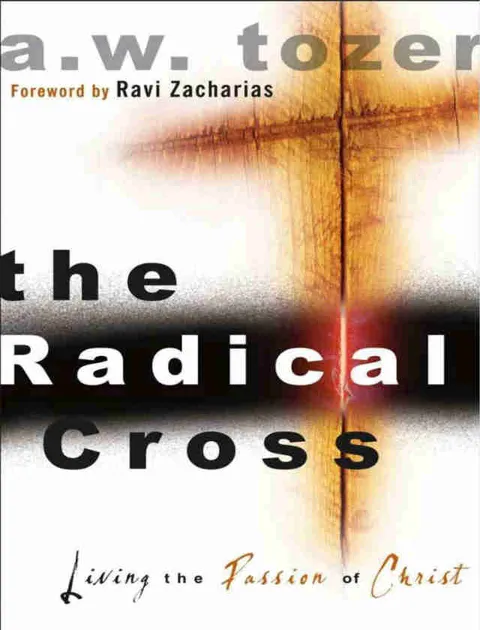
"The Radical Cross" by A. W. Tozer explores the true meaning of the cross in the life of a Christian. Tozer emphasizes the importance of embracing the cross as a central aspect of faith, surrendering oneself fully to Christ. He challenges readers to live a life of radical discipleship, fully committing to following Jesus and taking up their own crosses daily. Through insightful reflections and powerful teachings, Tozer inspires readers to seek a deeper relationship with God through the radical message of the cross.
Martyn Lloyd-Jones
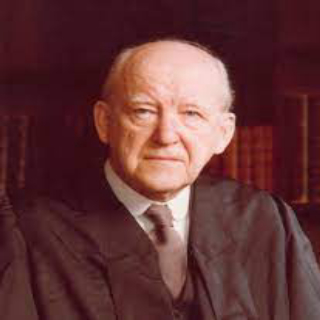
David Martyn Lloyd-Jones (20 December 1899 – 1 March 1981) was a Welsh Protestant minister, preacher and medical doctor who was influential in the Reformed wing of the British evangelical movement in the 20th century. For almost 30 years, he was the minister of Westminster Chapel in London.
Early Life and ministry
Lloyd-Jones was born in Cardiff and raised in Llangeitho, Ceredigion. His father was a grocer, and he had two brothers: Harold died during the 1918 flu pandemic, while Vincent went on to become a High Court judge. Llangeitho is associated with the Welsh Methodist revival, as it was the location of Daniel Rowland's ministry. Attending a London grammar school between 1914 and 1917 and then St Bartholomew's Hospital as a medical student, in 1921 he started work as assistant to the Royal Physician, Sir Thomas Horder. Lloyd-Jones obtained an MD from London University, and became a Member of the Royal College of Physicians. After struggling for two years over what he sensed was a calling to preach, in 1927 Lloyd-Jones returned to Wales, having married Bethan Phillips (with whom he later had two children, Elizabeth and Ann), accepting an invitation to minister at a church in Aberavon (Port Talbot).
Westminster Chapel
After a decade ministering in Aberavon, in 1939 he went back to London, where he had been appointed as associate pastor of Westminster Chapel, working alongside G. Campbell Morgan. The day before he was officially to be accepted into his new position, World War II broke out in Europe. During the same year, he became the president of the Inter-Varsity Fellowship of Students (known today as the Universities and Colleges Christian Fellowship (UK)). During the war he and his family moved to Haslemere, Surrey. In 1943 Morgan retired, leaving Lloyd-Jones as the sole Pastor of Westminster Chapel.
Lloyd-Jones was well known for his style of expository preaching, and the Sunday morning and evening meetings at which he officiated drew crowds of several thousand, as did the Friday evening Bible studies, which were, in effect, sermons in the same style. He would take many months, even years, to expound a chapter of the Bible verse by verse. His sermons would often be around fifty minutes to an hour in length, attracting many students from universities and colleges in London. His sermons were also transcribed and printed (virtually verbatim) in the weekly Westminster Record, which was read avidly by those who enjoyed his preaching.
Later life
Lloyd-Jones retired from his ministry at Westminster Chapel in 1968, following a major operation. For the rest of his life, he concentrated on editing his sermons to be published, counselling other ministers, answering letters and attending conferences. Perhaps his most famous publication is a 14 volume series of commentaries on the Epistle to the Romans, the first volume of which was published in 1970.
Despite spending most of his life living and ministering in England, Lloyd-Jones was proud of his roots in Wales. He best expressed his concern for his home country through his support of the Evangelical Movement of Wales: he was a regular speaker at their conferences, preaching in both English and Welsh. Since his death, the movement has published various books, in English and Welsh, bringing together selections of his sermons and articles.
Lloyd-Jones preached for the last time on 8 June 1980 at Barcombe Baptist Chapel. After a lifetime of work, he died peacefully in his sleep at Ealing on 1 March 1981, St David's Day. He was buried at Newcastle Emlyn, near Cardigan, west Wales. A well-attended thanksgiving service was held at Westminster Chapel on 6 April.
Since his death, there have been various publications regarding Lloyd-Jones and his work, most popularly a biography in two volumes by Iain Murray
God So Loved the World, He Sent You
Long before he made the world, God the Father prepared to send his one and only Son to earth. He loved him “before the foundation of the world” (John 17:24), and yet even then he knew how much the baby born in Bethlehem would suffer. We know the Father knew because our names were “written before the foundation of the world in the book of life of the Lamb who was slain” (Revelation 13:8). Before God planted the first pine tree, the Christmas story had already been planned. Before he lit the sun with fire, he had already begun digging the ground where the cross would one day stand. He always knew that Jesus would one day take on flesh and, eventually, shed his own blood. Can you imagine the all-wise, all-powerful author of life and history preparing his Son to live as one of us — and to die a uniquely horrible death? Even our wildest dreams would look like scratch drawings on a napkin compared with the intimacy they shared in divinity for an eternity before history — before there was even time to count. God So Loved His Son But the sent one himself gives us stunning glimpses into how the Father had prepared him: “I lay down my life for the sheep. And I have other sheep that are not of this fold. I must bring them also, and they will listen to my voice. . . . For this reason the Father loves me, because I lay down my life that I may take it up again. No one takes it from me, but I lay it down of my own accord. I have authority to lay it down, and I have authority to take it up again. This charge I have received from my Father.” (John 10:15–18) When the Son came to earth, he came covered in his Father’s love. When the Father set his love on us, at the excruciating expense of his Son, he did not love his Son less. He loved him more for his sacrifice. Jesus says, “For this reason the Father loves me, because I lay down my life that I may take it up again” (John 10:17). God’s love for his Son didn’t keep him from sending his Son to save us. Love for his Son prompted God to send him. The Father sent Jesus with unparalleled love, and with unrivaled authority. Jesus says, “No one takes it from me, but I lay it down of my own accord. I have authority to lay it down, and I have authority to take it up again” (John 10:18). The Father harnessed all the power of heaven for this mission, and entrusted it to the humble child from Nazareth. He held nothing back. Jesus, who was human in every way that we are, could say the scandalous and unfathomable: “All that the Father has is mine” (John 16:15). As much as he suffered as man, he did not come to earth empty-handed; he came bearing the universe. He came as God. But with the limitless love and unassailable authority of his Father, he was sent to die. Feel the awful heaviness of the full meaning of Christmas in his words: “I lay down my life for the sheep. . . . I lay down my life. . . . This charge I have received from my Father” (John 10:15, 17–18). The Father did not merely send Jesus to take on flesh, but to lay it down. The Spirit conceived a Christ to be crucified. For lost and wandering and helpless sheep — for you and me. Jesus was sent to lose everything that we might gain everything. He became poor — in birth, in life, and in death — that we might inherit his heavenly wealth (2 Corinthians 8:9). Sent in love, sent with authority, sent to die — and to save. As the Father Sent Me The wonder and weight of Christmas — a sending conceived in the mind of God before the foundation of the world, a sending on which every event in history turns and hangs — fills one sentence from Jesus with staggering significance. He prays to the Father, “As you sent me into the world, so I have sent them into the world.” (John 17:18) Nothing compares to the Creator of the universe sending the radiance of his own glory, the exact imprint of his nature into his creation. Until Jesus sends you. After he rises from the dead, he says it again, before he ascends into heaven, “Peace be with you. As the Father has sent me, even so I am sending you” (John 20:21). As the Father sent the Son — planned before the foundation of the world, demonstrating God’s infinite beauty, strength, and worth, paying for the sins of people from every tribe, tongue, people, and nation, with billions and billions of destinies hanging in the balance — so the Son now sends us. As the Father sent his Son on a specific and spectacular mission, so the Son has set us loose on a world in need of hope (John 17:21, 23). As the Father sent his Son with precious words to proclaim, so the Son has given us something to say, a Lord to adore, and a commission to obey (John 17:14; Matthew 28:19–20). As the Father sent the Son to suffer for love, so the Son sends his sheep into the wolf pack (Matthew 10:16). As the Father set joy before his Son, so the Son has promised us his very own joy (John 17:13), now in part, forever in full. As the Father sent his Son with love, so the Son has loved us (John 15:13). And so he has sent us into the world. God So Loved the World We have not descended from heaven, but in Christ we are not of this world. Jesus says of you and me, “They are not of the world, just as I am not of the world” (John 17:16). But while neither he nor we are of this world, he has stationed us here for now. Jesus prays, “I am no longer in the world, but they are in the world” (John 17:11). He is not in the world anymore, but we are. Instead of staying to bring in by himself all the sheep who are not yet of this fold, he ascended to mission control — the throne of the universe — and sent us in after him. Having completed his once-for-all mission of securing redemption — the work only he could do — he entrusted us with telling the whole world what he had done. He says to his disciples, “All authority in heaven and on earth has been given to me. Go therefore and make disciples of all nations” (Matthew 28:18–19). As he had heard the Father say, “Go,” he now sends us into the world — with his authority, his words, his help, his joy, and his own presence: “Behold, I am with you always, to the end of the age” (Matthew 28:20). To whom has God sent you? The people in your family, on your street, near your office are not the offspring of chance. God lovingly placed them within arm’s reach of forgiveness, hope, and joy — by placing you near them. They were not alive a hundred years ago, but they are now. They will not live where they do in a hundred years, but they do now. God arranged and orchestrated every person in your life for his glory (Acts 17:26–27), just as he guided all of human history for thousands of years before Christ came — and then he sent you precisely where you are — with words and joy, in love, to suffer and say and save. As you celebrate the greatest sending again this Christmas, remember God so loved the world, that he also sent you. Article by Marshall Segal