
Others like the pursuit of purpose Features >>
About the Book
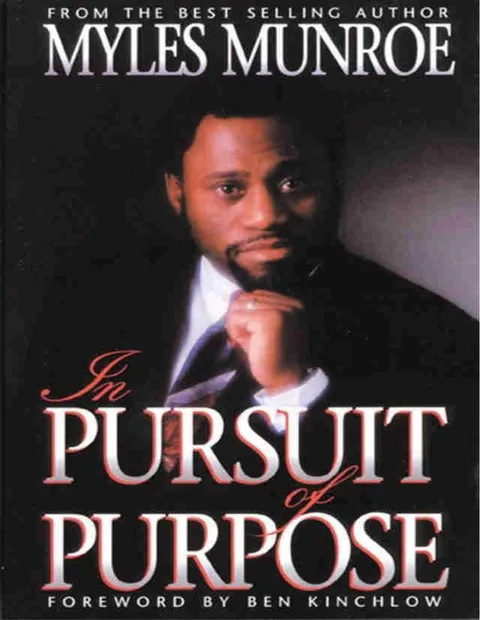
"The Pursuit of Purpose" by Myles Munroe explores the importance of discovering and living out one's purpose in life. Munroe emphasizes that everyone has a unique calling and that fulfilling this purpose leads to a life of fulfillment, happiness, and impact. The book offers practical advice and guidance on how to identify and pursue one's purpose, ultimately leading to a more meaningful and successful life.
Martin Luther
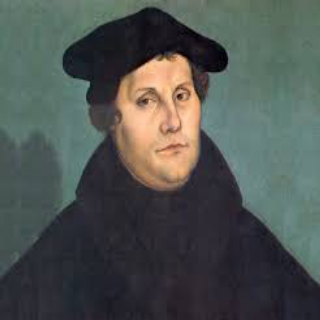
Martin Luther was a German monk who forever changed Christianity when he nailed his '95 Theses' to a church door in 1517, sparking the Protestant Reformation.
Who Was Martin Luther?
Martin Luther was a German monk who began the Protestant Reformation in the 16th century, becoming one of the most influential and controversial figures in the history of Christianity.
Luther called into question some of the basic tenets of Roman Catholicism, and his followers soon split from the Roman Catholic Church to begin the Protestant tradition. His actions set in motion tremendous reform within the Church.
A prominent theologian, Luther’s desire for people to feel closer to God led him to translate the Bible into the language of the people, radically changing the relationship between church leaders and their followers.
Early Life
Luther was born on November 10, 1483, in Eisleben, Saxony, located in modern-day Germany.
His parents, Hans and Margarette Luther, were of peasant lineage. However, Hans had some success as a miner and ore smelter, and in 1484 the family moved from Eisleben to nearby Mansfeld, where Hans held ore deposits.
Hans Luther knew that mining was a tough business and wanted his promising son to have a better career as a lawyer. At age seven, Luther entered school in Mansfeld.
Education
At 14, Luther went north to Magdeburg, where he continued his studies. In 1498, he returned to Eisleben and enrolled in a school, studying grammar, rhetoric and logic. He later compared this experience to purgatory and hell.
In 1501, Luther entered the University of Erfurt, where he received a degree in grammar, logic, rhetoric and metaphysics. At this time, it seemed he was on his way to becoming a lawyer.
Becoming a Monk
In July 1505, Luther had a life-changing experience that set him on a new course to becoming a monk.
Caught in a horrific thunderstorm where he feared for his life, Luther cried out to St. Anne, the patron saint of miners, “Save me, St. Anne, and I’ll become a monk!” The storm subsided and he was saved.
Most historians believe this was not a spontaneous act, but an idea already formulated in Luther’s mind. The decision to become a monk was difficult and greatly disappointed his father, but he felt he must keep a promise.
Luther was also driven by fears of hell and God’s wrath, and felt that life in a monastery would help him find salvation.
The first few years of monastic life were difficult for Luther, as he did not find the religious enlightenment he was seeking. A mentor told him to focus his life exclusively on Jesus Christ and this would later provide him with the guidance he sought.
Disillusionment with Rome
At age 27, Luther was given the opportunity to be a delegate to a Catholic church conference in Rome. He came away more disillusioned, and very discouraged by the immorality and corruption he witnessed there among the Catholic priests.
Upon his return to Germany, he enrolled in the University of Wittenberg in an attempt to suppress his spiritual turmoil. He excelled in his studies and received a doctorate, becoming a professor of theology at the university (known today as Martin Luther University Halle-Wittenberg).
Through his studies of scripture, Luther finally gained religious enlightenment. Beginning in 1513, while preparing lectures, Luther read the first line of Psalm 22, which Christ wailed in his cry for mercy on the cross, a cry similar to Luther’s own disillusionment with God and religion.
Two years later, while preparing a lecture on Paul’s Epistle to the Romans, he read, “The just will live by faith.” He dwelled on this statement for some time.
Finally, he realized the key to spiritual salvation was not to fear God or be enslaved by religious dogma but to believe that faith alone would bring salvation. This period marked a major change in his life and set in motion the Reformation.
Though Luther intended these to be discussion points, the 95 Theses laid out a devastating critique of the indulgences - good works, which often involved monetary donations, that popes could grant to the people to cancel out penance for sins - as corrupting people’s faith.
Luther also sent a copy to Archbishop Albert Albrecht of Mainz, calling on him to end the sale of indulgences. Aided by the printing press, copies of the 95 Theses spread throughout Germany within two weeks and throughout Europe within two months.
The Church eventually moved to stop the act of defiance. In October 1518, at a meeting with Cardinal Thomas Cajetan in Augsburg, Luther was ordered to recant his 95 Theses by the authority of the pope.
Luther said he would not recant unless scripture proved him wrong. He went further, stating he didn’t consider that the papacy had the authority to interpret scripture. The meeting ended in a shouting match and initiated his ultimate excommunication from the Church.
Excommunication
Following the publication of his 95 Theses, Luther continued to lecture and write in Wittenberg. In June and July of 1519 Luther publicly declared that the Bible did not give the pope the exclusive right to interpret scripture, which was a direct attack on the authority of the papacy.
Finally, in 1520, the pope had had enough and on June 15 issued an ultimatum threatening Luther with excommunication.
On December 10, 1520, Luther publicly burned the letter. In January 1521, Luther was officially excommunicated from the Roman Catholic Church.
Diet of Worms
In March 1521, Luther was summoned before the Diet of Worms, a general assembly of secular authorities. Again, Luther refused to recant his statements, demanding he be shown any scripture that would refute his position. There was none.
On May 8, 1521, the council released the Edict of Worms, banning Luther’s writings and declaring him a “convicted heretic.” This made him a condemned and wanted man. Friends helped him hide out at the Wartburg Castle.
While in seclusion, he translated the New Testament into the German language, to give ordinary people the opportunity to read God’s word.
Lutheran Church
Though still under threat of arrest, Luther returned to Wittenberg Castle Church, in Eisenach, in May 1522 to organize a new church, Lutheranism.
He gained many followers, and the Lutheran Church also received considerable support from German princes.
When a peasant revolt began in 1524, Luther denounced the peasants and sided with the rulers, whom he depended on to keep his church growing. Thousands of peasants were killed, but the Lutheran Church grew over the years.
Katharina von Bora
In 1525, Luther married Katharina von Bora, a former nun who had abandoned the convent and taken refuge in Wittenberg.
Born into a noble family that had fallen on hard times, at the age of five Katharina was sent to a convent. She and several other reform-minded nuns decided to escape the rigors of the cloistered life, and after smuggling out a letter pleading for help from the Lutherans, Luther organized a daring plot.
With the help of a fishmonger, Luther had the rebellious nuns hide in herring barrels that were secreted out of the convent after dark - an offense punishable by death. Luther ensured that all the women found employment or marriage prospects, except for the strong-willed Katharina, who refused all suitors except Luther himself.
The scandalous marriage of a disgraced monk to a disgraced nun may have somewhat tarnished the reform movement, but over the next several years, the couple prospered and had six children.
Katharina proved herself a more than a capable wife and ally, as she greatly increased their family's wealth by shrewdly investing in farms, orchards and a brewery. She also converted a former monastery into a dormitory and meeting center for Reformation activists.
Luther later said of his marriage, "I have made the angels laugh and the devils weep." Unusual for its time, Luther in his will entrusted Katharina as his sole inheritor and guardian of their children.
Anti-Semitism
From 1533 to his death in 1546, Luther served as the dean of theology at University of Wittenberg. During this time he suffered from many illnesses, including arthritis, heart problems and digestive disorders.
The physical pain and emotional strain of being a fugitive might have been reflected in his writings.
Some works contained strident and offensive language against several segments of society, particularly Jews and, to a lesser degree, Muslims. Luther's anti-Semitism is on full display in his treatise, The Jews and Their Lies.
Death
Luther died following a stroke on February 18, 1546, at the age of 62 during a trip to his hometown of Eisleben. He was buried in All Saints' Church in Wittenberg, the city he had helped turn into an intellectual center.
Luther's teachings and translations radically changed Christian theology. Thanks in large part to the Gutenberg press, his influence continued to grow after his death, as his message spread across Europe and around the world.
do you wish to be pure
Life calls us to do hard things. Athletes push through tremendous pain to gain victories. Doctors perform long, delicate surgeries to save lives. Soldiers overcome insurmountable odds to protect nations. Mothers endure excruciating pain to bring babies into the world. And Jesus calls us to do even harder things — actually, impossible things. He commanded Peter to step out of the boat, and Peter obeyed and walked on water (Matthew 14:29). Jesus commanded Lazarus, who had been dead for four days, “Come out,” and Lazarus rose and came out, still wrapped in burial clothes (John 11:38–44). When Jesus commands, he also empowers believers to obey. Now, consider Jesus’s call for you to be pure (Matthew 5:8). At times, does it feel impossible to win the battle for purity? We can feel so discouraged that Jesus’s question to a lame man might be asked of us, “Do you want to be healed?” (John 5:6). Seems like a strange question to ask someone who had been lame for almost forty years, right? But perhaps after waiting all those years, the lame man was losing hope of ever being made well. Jesus asked because he wanted everyone to know that as the Messiah, the Savior of the world, the Son of God, he could make anyone well. Jesus could do the impossible. Jesus then commanded the lame man to pick up his pallet and walk, and he did . The point for us is clear: No matter how hard or impossible Jesus’s commands seem to us, Jesus as Lord can empower us to obey. This is encouraging news. So, if you are struggling to stop looking at porn, to finally quit masturbating, to repent of living in an impure relationship, Jesus wants you to honestly answer this question: “Do you want to be pure?” Because he can set you free. As a Christian striving to live purely, arm yourself with the following three biblical admonitions in your war against lust. 1. Hate Your Sin No one who still loves sin will genuinely ask Jesus to empower him to slay it. And Jesus doesn’t answer double-minded prayers. He hears and answers cries from broken, contrite hearts. So, pray that the Spirit will convict you (John 16:7–8) and show you the depth of your sin (Psalm 139:23–24). Pray that the Spirit will help you grow in hatred of what God hates: “Through your precepts I get understanding; therefore I hate every false way” (Psalm 119:104). In his chapter of Secret Sex Wars: A Battle Cry for Purity , H.B. Charles tells the following story: A little child was playing with a very valuable vase that he should not have even been touching. And, of course, he put his hand into it and could not get it out. His father also tried in vain to get the boy’s hand free. His parents considered breaking the vase until the father said, “Son, let’s try one more time to get you free. On the count of three, open your hand and hold your fingers as straight as you can, and then pull.” To their astonishment the little fellow said, “Oh no, Daddy, I can’t put my fingers out like that. If I do, I’ll drop my pennies!” The Holy Spirit stirs in the hearts of believers’ hearts to hate our sin so that we renounce it. This hatred is not a hatred that leaves a person self-loathing and longing to do penance. This hatred of sin produced by the Spirit turns us from the grips of sin to the fountain filled with blood drawn from Immanuel’s veins. It is there that Jesus cleanses our hearts and affections so that we lose all our filthy stains. Spirit-convicted Christians cry out to Jesus, like Paul, “Wretched man that I am! Who will deliver me from this body of death?” (Romans 7:24). From that well of despair, we find soul-rejoicing hope in the forgiveness and victory over sin won by Christ. There, we will exclaim with Paul, “Thanks be to God through Jesus Christ our Lord!” (Romans 7:25). So, don’t be self-deceived. No one can repent of a sin and cherish it at the same time. That is the eternal, profound difference between worldly sorrow and genuine, life-giving repentance (2 Corinthians 7:10). 2. Satisfy Your Soul in Christ The Spirit makes the good news real to convicted sinners. He convinces us that through Jesus’s death and resurrection, Christ has become our Lord, that he saves broken sinners, that his death atoned for our sin, that he does not cast away bruised reeds and flickering wicks. He convinces his chosen people that Jesus has saved us and that he empowers us to become more like him (Galatians 5:22–25). “No one who still loves sin will genuinely ask Jesus to empower him to slay it.” He does this by satisfying us through worship. Jesus saved the immoral Samaritan woman, and in doing so, he gave her the living water that would satisfy her thirst so that she wouldn’t have to yield to the desire for immoral relationships again (John 4:13–14). This same Jesus is alive today. He sits at the right hand of the Father with all authority in heaven and on earth. He still gives his Spirit to all whom he saves (1 Corinthians 12:13) and through the Spirit satisfies the souls of repentant sinners. Jesus says, “These things I speak in the world, that they may have my joy fulfilled in themselves” (John 17:13). Therefore, relish and delight your soul in Christ’s gracious, gospel-purchased gifts. If you are a child of God, delight that you have been reconciled to God. You are forgiven. You have eternal life. You have been born again. You have been delivered from the power of the kingdom of darkness. You have overcome the world. You are loved by God. You will never be left alone or separated from his love. You will be made like him when you see him as he is. And in the meantime, you will be purified by fixing your mind on the hope he offers. “Everyone who has this hope fixed  on Him purifies himself, just as He is pure” (1 John 3:3 NASB). The Spirit daily wants to fix your hope on Jesus and his gospel. He daily wants to satisfy your soul with the banquet of all these gospel blessings and more. So, eat at the banquet of the redeemed, freely. 3. Put to Death the Deeds of the Flesh The word of God commands that we “put to death . . . what is earthly in you: sexual immorality, impurity, passion, evil desire, and covetousness, which is idolatry” (Colossians 3:5). “This is the will of God, your sanctification: that you abstain from sexual immorality” (1 Thessalonians 4:3). But saying “No!” to sexual temptation might sound as easy as walking on water. So, we must believe that Jesus commands, and empowers, us to do the impossible. Let the Helper help you. Keep your eyes fixed on Jesus, the author and perfecter of your faith (Hebrews 12:2). When Peter took his eyes off of Jesus, he started to sink. But dear saint of God, Peter didn’t drown. He cried out to our Lord, “Save me,” and “Jesus immediately reached out his hand and took hold of him.” Then rebuking him, Jesus said, “O you of little faith, why did you doubt?” (Matthew 14:30–31). Don’t doubt that the Spirit empowers you to do what he calls you to do, and don’t believe he will reject you when you need his help. Fighting for your purity isn’t supposed to be easy; it is war. Picking up your cross and dying daily (Luke 9:23) is a slow, painful process. Yet born-again believers can (and will) because Jesus died our death for us (Romans 6:6–7) and gave us his Spirit to empower us (Romans 8:13). Our War Is Winnable Let’s end by asking our opening question in a slightly different way: Do you believe that Jesus’s death and resurrection and the gift of his Spirit  can make you pure? I pray that you do. In an infinitely greater way than D-Day, Jesus’s cross turned the tide for every believer in our war against sin. This is a winnable war — not perfectly winnable, but truly winnable — because of Jesus. Therefore, seek to live by the power of the Spirit today, get accountability, and put to death the deeds of the flesh. Then bask again in Jesus’s gospel-grace tomorrow, and fight for your purity again and for every tomorrow that he gives you. You can win the war for sexual purity.