
Others like the power of the blood of christ Features >>
The Bookends Of The Christian Life
-160.webp)
Gentle And Lowly (The Heart Of Christ For Sinners And Sufferers)
The Precious Blood Of Jesus
The Power Of The Blood
Favor - The Road To Success
The Race, Cross And Christian Bloodlines
Power Of The Blood - Healing For You Spirit, Soul, And Body
Embracing The Love God Wants You To Have
The Force Of Righteousness

The Power Of Forgiveness
About the Book
"The Power of the Blood of Christ" by R.A. Torrey is a Christian book that explores the significance and power of Christ's blood. Torrey discusses how the blood of Christ is the foundation of the Christian faith and how believers can experience its cleansing, healing, and empowering effects in their lives. He emphasizes the importance of understanding and applying the power of Christ's blood in spiritual warfare, prayer, and daily living. Overall, Torrey highlights the transformative and life-giving power of Christ's blood for all believers.
C.S. Lewis
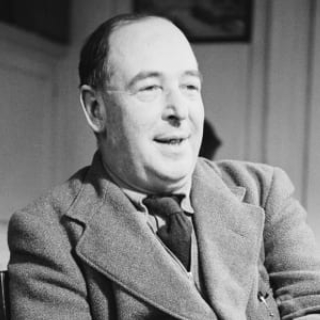 C.S. Lewis was a prolific Irish writer and scholar best known for his 'Chronicles of Narnia' fantasy series and his pro-Christian texts.
Who Was C.S. Lewis?
Writer and scholar C.S. Lewis taught at Oxford University and became a renowned Christian apologist writer, using logic and philosophy to support the tenets of his faith. He is also known throughout the world as the author of The Chronicles of Narnia fantasy series, which have been adapted into various films for the big and small screens.
Early Life
Clive Staples Lewis was born in Belfast, Ireland, on November 29, 1898, to Flora August Hamilton Lewis and Albert J. Lewis. As a toddler, Clive declared that his name was Jack, which is what he was called by family and friends. He was close to his older brother Warren and the two spent much time together as children.
Lewis was enraptured by fantastic animals and tales of gallantry, and hence the brothers created the imaginary land of Boxen, complete with an intricate history that served them for years. Lewis' mother died when he was 10, and he went on to receive his pre-college education at boarding schools and from a tutor. During WWI, he served with the British army and was sent home after being wounded by shrapnel. He then chose to live as a surrogate son with Janie Moore, the mother of a friend of Lewis' who was killed in the war.
Teaching Career at Oxford and Wartime Broadcasts
Lewis graduated from Oxford University with a focus on literature and classic philosophy, and in 1925 he was awarded a fellowship teaching position at Magdalen College, which was part of the university. There, he also joined the group known as The Inklings, an informal collective of writers and intellectuals who counted among their members Lewis' brother Warren and J.R.R. Tolkien. It was through conversations with group members that Lewis found himself re-embracing Christianity after having become disillusioned with the faith as a youth. He would go on to become renowned for his rich apologist texts, in which he explained his spiritual beliefs via platforms of logic and philosophy.
Lewis began publishing work including Spirits in Bondage in 1919 and the satirical Dymer in 1926. After penning other titles — including The Allegory of Love (1936), for which he won the Hawthornden Prize — he released in 1938 his first sci-fi work, Out of the Silent Planet, the first of a space trilogy which dealt sub-textually with concepts of sin and desire. Later, during WWII, Lewis gave highly popular radio broadcasts on Christianity which won many converts; his speeches were collected in the work Mere Christianity.
Books and Film Legacy
Lewis was a prolific author of fiction and nonfiction who wrote dozens of books over the course of his career. His faith-based arguments as seen in texts like The Great Divorce (1946) and Miracles (1947) are held in high regard by many theologians, scholars and general readers. His satirical fiction novel The Screwtape Letters (1942) is also a beloved classic. Lewis also continued his love affair with classic mythology and narratives during his later years: His book Till We Have Faces: A Myth Retold (1956) featured the story of Psyche and Cupid. He also penned an autobiography, Surprised by Joy: The Shape of My Early Life (1955).
Lewis' landmark series, The Chronicles of Narnia, has seen a number of on-screen iterations, including a cartoon version of The Lion, The Witch and the Wardrobe that was released in 1979 and a 1989 film series. Additionally, in 2005, a big-screen adaptation of The Lion, The Witch and the Wardrobe hit movie theaters, starring Tilda Swinton as the witch Jadis and Liam Neeson as the voice of Aslan. Two more Narnia films were brought to theaters as well: Prince Caspian (2008) and The Voyage of the Dawn Treader (2010). A movie version of The Silver Chair was slated to hit theaters in the near future, with filming starting in the winter of 2018.
Lewis' relationship with his wife, Joy, has also been depicted in Shadowlands, presented as a play and two films; one of the film versions was directed by Richard Attenborough and starred Anthony Hopkins as Lewis.
'The Chronicles of Narnia'
During the 1940s, Lewis began writing the seven books that would comprise The Chronicles of Narnia children's series, with The Lion, The Witch and the Wardrobe (1950) being the first release. The story focused on four siblings who, during wartime, walk through an armoire to enter the magical world of Narnia, a land resplendent with mythical creatures and talking animals. Throughout the series, a variety of Biblical themes are presented; one prominent character is Aslan, a lion and the ruler of Narnia, who has been interpreted as a Jesus Christ figure. (Lewis would assert that his Narnia stories weren't a direct allegory to the real world.)
Though the book received some negative reviews, it was generally well-received by readers, and the series retained its international popularity over the following decades.
Marriage
In 1954, Lewis joined the faculty of Cambridge University as a literature professor, and in 1956 he married an American English teacher, Joy Gresham, with whom he had been in correspondence. Lewis was full of happiness during the years of their marriage, though Gresham died of cancer in 1960. Lewis grieved deeply for his wife and shared his thoughts in the book A Grief Observed, using a pen name.
Death
In 1963, Lewis resigned from his Cambridge position after experiencing heart trouble. He died on November 22, 1963, in Headington, Oxford.
C.S. Lewis was a prolific Irish writer and scholar best known for his 'Chronicles of Narnia' fantasy series and his pro-Christian texts.
Who Was C.S. Lewis?
Writer and scholar C.S. Lewis taught at Oxford University and became a renowned Christian apologist writer, using logic and philosophy to support the tenets of his faith. He is also known throughout the world as the author of The Chronicles of Narnia fantasy series, which have been adapted into various films for the big and small screens.
Early Life
Clive Staples Lewis was born in Belfast, Ireland, on November 29, 1898, to Flora August Hamilton Lewis and Albert J. Lewis. As a toddler, Clive declared that his name was Jack, which is what he was called by family and friends. He was close to his older brother Warren and the two spent much time together as children.
Lewis was enraptured by fantastic animals and tales of gallantry, and hence the brothers created the imaginary land of Boxen, complete with an intricate history that served them for years. Lewis' mother died when he was 10, and he went on to receive his pre-college education at boarding schools and from a tutor. During WWI, he served with the British army and was sent home after being wounded by shrapnel. He then chose to live as a surrogate son with Janie Moore, the mother of a friend of Lewis' who was killed in the war.
Teaching Career at Oxford and Wartime Broadcasts
Lewis graduated from Oxford University with a focus on literature and classic philosophy, and in 1925 he was awarded a fellowship teaching position at Magdalen College, which was part of the university. There, he also joined the group known as The Inklings, an informal collective of writers and intellectuals who counted among their members Lewis' brother Warren and J.R.R. Tolkien. It was through conversations with group members that Lewis found himself re-embracing Christianity after having become disillusioned with the faith as a youth. He would go on to become renowned for his rich apologist texts, in which he explained his spiritual beliefs via platforms of logic and philosophy.
Lewis began publishing work including Spirits in Bondage in 1919 and the satirical Dymer in 1926. After penning other titles — including The Allegory of Love (1936), for which he won the Hawthornden Prize — he released in 1938 his first sci-fi work, Out of the Silent Planet, the first of a space trilogy which dealt sub-textually with concepts of sin and desire. Later, during WWII, Lewis gave highly popular radio broadcasts on Christianity which won many converts; his speeches were collected in the work Mere Christianity.
Books and Film Legacy
Lewis was a prolific author of fiction and nonfiction who wrote dozens of books over the course of his career. His faith-based arguments as seen in texts like The Great Divorce (1946) and Miracles (1947) are held in high regard by many theologians, scholars and general readers. His satirical fiction novel The Screwtape Letters (1942) is also a beloved classic. Lewis also continued his love affair with classic mythology and narratives during his later years: His book Till We Have Faces: A Myth Retold (1956) featured the story of Psyche and Cupid. He also penned an autobiography, Surprised by Joy: The Shape of My Early Life (1955).
Lewis' landmark series, The Chronicles of Narnia, has seen a number of on-screen iterations, including a cartoon version of The Lion, The Witch and the Wardrobe that was released in 1979 and a 1989 film series. Additionally, in 2005, a big-screen adaptation of The Lion, The Witch and the Wardrobe hit movie theaters, starring Tilda Swinton as the witch Jadis and Liam Neeson as the voice of Aslan. Two more Narnia films were brought to theaters as well: Prince Caspian (2008) and The Voyage of the Dawn Treader (2010). A movie version of The Silver Chair was slated to hit theaters in the near future, with filming starting in the winter of 2018.
Lewis' relationship with his wife, Joy, has also been depicted in Shadowlands, presented as a play and two films; one of the film versions was directed by Richard Attenborough and starred Anthony Hopkins as Lewis.
'The Chronicles of Narnia'
During the 1940s, Lewis began writing the seven books that would comprise The Chronicles of Narnia children's series, with The Lion, The Witch and the Wardrobe (1950) being the first release. The story focused on four siblings who, during wartime, walk through an armoire to enter the magical world of Narnia, a land resplendent with mythical creatures and talking animals. Throughout the series, a variety of Biblical themes are presented; one prominent character is Aslan, a lion and the ruler of Narnia, who has been interpreted as a Jesus Christ figure. (Lewis would assert that his Narnia stories weren't a direct allegory to the real world.)
Though the book received some negative reviews, it was generally well-received by readers, and the series retained its international popularity over the following decades.
Marriage
In 1954, Lewis joined the faculty of Cambridge University as a literature professor, and in 1956 he married an American English teacher, Joy Gresham, with whom he had been in correspondence. Lewis was full of happiness during the years of their marriage, though Gresham died of cancer in 1960. Lewis grieved deeply for his wife and shared his thoughts in the book A Grief Observed, using a pen name.
Death
In 1963, Lewis resigned from his Cambridge position after experiencing heart trouble. He died on November 22, 1963, in Headington, Oxford.
blessed even in the worst - how to give thanks in every circumstance
A couple of years ago, social media revolted against the hashtag #blessed. It often seemed to be employed to brag about expensive vacations or impressive accomplishments under the guise of humility. But home décor stores do not seem to have gotten the message. They have shelves stocked with all kinds of signs and accessories so we can declare to the world — or at least anyone who comes into our houses — that we are indeed “blessed.” But what do we mean when we say that we are blessed? Is it an expression of gratitude for the things we have, the health we enjoy, or the people we love? Are these things really at the center of what it means to be blessed? The Source of Blessing From the first chapter to the last, the Bible’s story is one of blessing — blessing pronounced, blessing promised, blessing anticipated, and blessing experienced. We begin to get a sense of what it really means to be blessed in Numbers 6:22–27: The Lord spoke to Moses, saying, “Speak to Aaron and his sons, saying, Thus you shall bless the people of Israel: you shall say to them, The Lord bless you and keep you; the Lord make his face to shine upon you and be gracious to you; the Lord lift up his countenance upon you and give you peace. So shall they put my name upon the people of Israel, and I will bless them.” These words were not given for Israel’s priests to use to ask God for his blessing, leaving them to wonder whether or not God would give it. Rather, God took the initiative to assure his people of his settled intention to bless them. He seemed to want to make it clear that he intended to be personally involved in their lives as the source of all the goodness they would enjoy. So the first thing we learn from this blessing is that God is the source of every blessing in our lives. He blesses us by keeping us secure, extending his grace, and flooding our lives with his healing and wholeness. He is fully engaged, fully determined, and fully able to fill our lives with the security, grace, and peace we all long for. The Substance of Blessing But he is more than the source of blessing; God is also the substance of blessing. Experiencing God’s blessing is not merely getting good things from God. The essence of blessing is getting more of God. It is looking up to see affection and approval radiating from his face. To be blessed is to be confident that God has not and will never ignore or abandon us. “Anything and everything good that emerges from our lives will be a result of God’s sovereign presence in it.” Since more of God himself is the substance of blessing, whenever we ask him to bless us, we’re essentially inviting him to pervade all of the ordinary aspects of our lives. When we ask him to bless our plans, we’re inviting him into them, inviting him to even disrupt or change them, believing that his plans are always better than ours. In asking for his blessing we’re confessing that the outcome of our lives will not be the sum of our grand efforts or accomplishments. Instead, anything and everything good that emerges from our lives will be a result of his sovereign presence in it. Blessed Even at the Worst Times If we really believe that God is the substance of blessing, we won’t confess that we’re blessed only in the circumstances that seem good. Instead, when times are hard, and even when the worst things we can imagine are happening to us, we’ll be able to say that we are blessed. We’ll call ourselves blessed and mean it because we’re experiencing the presence of God with us and in us — in ways we were barely aware of when life seemed easy. Because we know the Lord is keeping us and being gracious to us, our sense of security and peace won’t be so tied to our circumstances. In our desperation for him during difficult times, we’ll find ourselves incredibly blessed by an increased sense of his companionship and comfort. The Reason God Can Bless Us So how is it that God can be so good to us? On what basis can God bless us so generously? You and I can anticipate being showered with God’s blessing only because Jesus experienced the full measure of God’s curse in our place. Christ was given what we deserve so that we might be given what Christ deserves. This is the too-good-to-be-trueness of the gospel. “We enjoy God’s blessing only because Jesus experienced the full measure of God’s curse in our place.” We can be sure that the Lord will keep and protect us because Christ was not protected. We can revel in having the Lord’s face turned toward us only because he turned his face away from his own Son as he hung on the cross. We can be sure that the Lord will lift up his countenance upon us only because when he looks at us, he sees us robed in the righteousness of Christ. He is able to grant us his peace only because his anger was exhausted on another. To be blessed is to be joined to Christ so securely that we have an ever-increasing sense that we are being kept by and for God. Because we are recipients of lavish grace, we can be honest with God and other people about our sin. Because the Lord is giving us peace, we can face the future confident that there is therefore now no condemnation for us because we are in Christ Jesus (Romans 8:1). We can shout it for the world to hear, post it for the social media world to read, and nail it to every wall in our home: we are truly, deeply, eternally blessed in Christ.