
Others like the prayer of faith Features >>
The Power Of Persistent Prayer
The Power Of Faith-Filled Words
The Life Of John Praying Hyde
The Desire Of The Righteous Granted
Prayer That Brings Revival

Prayer Altars - A Strategy That Is Changing Nations
The Power Of A Praying Life
The Prayer Of Jabez
The Power Of A Praying Woman
The Power Of A Praying Nation
About the Book
"The Prayer of Faith" by R.A. Torrey is a Christian book that explores the importance and power of prayer in the life of a believer. Torrey discusses the concept of faith-filled prayer, examining how to pray effectively, with confidence and expectation. The book offers practical advice and insights on how to strengthen one's faith and develop a deeper connection with God through prayer. Overall, "The Prayer of Faith" encourages readers to trust in God's promises and approach prayer with boldness and fervor.
Hannah More
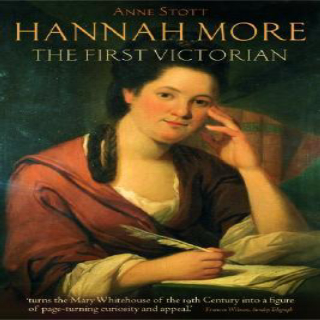 Beyond any doubt, Hannah More was the most influential female member of the Society for Effecting the Abolition of the African Slave Trade. She was educated at Bristol, an important slave-trading town, and began to publish her writing in the 1760s, while she was still a teenager. Her first play, The Inflexible Captive, was staged at Bath in 1775. Later in the 1770s, and for much of the 1780s, she spent time in London and made the acquaintance of many important political and society figures, including Samuel Johnson, Edmund Burke, and Elizabeth Montagu. Her play Percy was produced by David Garrick in 1777, and Fatal Falsehood was staged in 1779, but she came to regard the theatre as morally wrong, especially after the death of her mentors; Garrick and Johnson. She turned to religious writing, beginning with her Sacred Dramas in 1782. In 1784-5, she 'discovered' Ann Yearsley, the so-called 'poetical milkmaid of Bristol', whose poems More helped to publish, although the two later fell out.
In the 1780s, More widened her circle to include religious and philanthropic figures, including John Newton, Beilby Porteus and William Wilberforce. In the summer of 1786, she spent time with Sir Charles and Lady Margaret Middleton at the their home in Teston in Kent. Among their guests were the local vicar James Ramsay and a young Thomas Clarkson, both of whom were central to the early abolition campaign. More and Clarkson met again in Bristol in 1787, while he was on his fact-finding mission to the city, but they did not become close. However, in the same year More met Wilberforce, and their friendship was to become a deep and lasting one. More contributed much to the running of the newly-founded Abolition Society including, in February 1788, her publication of Slavery, a Poem which has been recognised as one of the more important slavery poems of the abolition period. Her relationship with members of the society, especially Wilberforce, was close. For example, she spent the summer of 1789 holidaying with Wilberforce in the Peak District - planning for the abolition campaign, at that time at its height, formed a great deal of their conversation.
By the mid-1790s, More had become closely involved with the 'Clapham Sect' of evangelical Christians, many of whom were involved in the abolition campaign. The group centred on Henry Thornton's home in Clapham and included Wilberforce, James Stephen, and Zachary Macaulay, among others. Throughout the 1790s, she wrote a number of religious tracts, known as the Cheap Repository Tracts, that eventually led to the formation of the Religious Tracts Society. Several of the Tracts oppose slavery and the slave trade, in particular, the poem The Sorrows of Yamba; or, The Negro Woman's Lamentation, which appeared in November 1795 and which was co-authored with Eaglesfield Smith. However, the tracts have also been noted for their encouragement of social quietism in an age of revolution. She continued to oppose slavery throughout her life, but at the time of the Abolition Bill of 1807, her health did not permit her to take as active a role in the movement as she had done in the late 1780s, although she maintained a correspondence with Wilberforce and others. In her later life, she dedicated much time to religious writing. Nevertheless, her most popular work was a novel, Coelebs in Search of a Wife, which appeared in two volumes in 1809 (and which ran to nine editions in 1809 alone). In the 1820s she grew gradually less well, and decreased - but did not entirely halt - the amount of writing she produced. On her death in 1833, she left more than £30,000 to charities and religious societies (equivalent to about £2,000,000 or $3,000,000 in 2004).
© Brycchan Carey 2004
Beyond any doubt, Hannah More was the most influential female member of the Society for Effecting the Abolition of the African Slave Trade. She was educated at Bristol, an important slave-trading town, and began to publish her writing in the 1760s, while she was still a teenager. Her first play, The Inflexible Captive, was staged at Bath in 1775. Later in the 1770s, and for much of the 1780s, she spent time in London and made the acquaintance of many important political and society figures, including Samuel Johnson, Edmund Burke, and Elizabeth Montagu. Her play Percy was produced by David Garrick in 1777, and Fatal Falsehood was staged in 1779, but she came to regard the theatre as morally wrong, especially after the death of her mentors; Garrick and Johnson. She turned to religious writing, beginning with her Sacred Dramas in 1782. In 1784-5, she 'discovered' Ann Yearsley, the so-called 'poetical milkmaid of Bristol', whose poems More helped to publish, although the two later fell out.
In the 1780s, More widened her circle to include religious and philanthropic figures, including John Newton, Beilby Porteus and William Wilberforce. In the summer of 1786, she spent time with Sir Charles and Lady Margaret Middleton at the their home in Teston in Kent. Among their guests were the local vicar James Ramsay and a young Thomas Clarkson, both of whom were central to the early abolition campaign. More and Clarkson met again in Bristol in 1787, while he was on his fact-finding mission to the city, but they did not become close. However, in the same year More met Wilberforce, and their friendship was to become a deep and lasting one. More contributed much to the running of the newly-founded Abolition Society including, in February 1788, her publication of Slavery, a Poem which has been recognised as one of the more important slavery poems of the abolition period. Her relationship with members of the society, especially Wilberforce, was close. For example, she spent the summer of 1789 holidaying with Wilberforce in the Peak District - planning for the abolition campaign, at that time at its height, formed a great deal of their conversation.
By the mid-1790s, More had become closely involved with the 'Clapham Sect' of evangelical Christians, many of whom were involved in the abolition campaign. The group centred on Henry Thornton's home in Clapham and included Wilberforce, James Stephen, and Zachary Macaulay, among others. Throughout the 1790s, she wrote a number of religious tracts, known as the Cheap Repository Tracts, that eventually led to the formation of the Religious Tracts Society. Several of the Tracts oppose slavery and the slave trade, in particular, the poem The Sorrows of Yamba; or, The Negro Woman's Lamentation, which appeared in November 1795 and which was co-authored with Eaglesfield Smith. However, the tracts have also been noted for their encouragement of social quietism in an age of revolution. She continued to oppose slavery throughout her life, but at the time of the Abolition Bill of 1807, her health did not permit her to take as active a role in the movement as she had done in the late 1780s, although she maintained a correspondence with Wilberforce and others. In her later life, she dedicated much time to religious writing. Nevertheless, her most popular work was a novel, Coelebs in Search of a Wife, which appeared in two volumes in 1809 (and which ran to nine editions in 1809 alone). In the 1820s she grew gradually less well, and decreased - but did not entirely halt - the amount of writing she produced. On her death in 1833, she left more than £30,000 to charities and religious societies (equivalent to about £2,000,000 or $3,000,000 in 2004).
© Brycchan Carey 2004
God Always Sets the Table
Perhaps no act of divine provision comes and goes so quietly, so predictably, so almost imperceptibly, like our next meal. Now, for millions of people around the world, the weighty miracle is felt and revered. Unlike many of us, when they pray, “Give us this day our daily bread” (Matthew 6:11), they truly do not know if and how that bread will come. They wait for food like many of us never have. When they lie down at night, having eaten enough to quiet their aching stomachs, they marvel that they did not starve today — that God fed them enough to sustain them for another 24 long hours. How slow the rest of us can be to marvel while we eat. We forget to eat. We sometimes think of meals as interruptions to an otherwise productive day. We miss the wonder, like watching three blazing sunrises every day, that the God of heaven and earth feeds us. He Brings Forth Food Psalm 104 does not miss the dumbfounding beauty of daily bread: You cause the grass to grow for the livestock and plants for man to cultivate, that he may bring forth food from the earth and wine to gladden the heart of man, oil to make his face shine and bread to strengthen man’s heart. (Psalm 104:14–15) You, O God, stretch out the infinite heavens as if it were just a tent (Psalm 104:2). You set the layers of the earth on its foundations, carefully wrapping core with mantle, and mantle with 25,000 miles of crust (Psalm 104:5). You lift the mountains with your hands, some of them 20,000 feet high, and you carve out the depths and crevices of all the valleys (Psalm 104:8). And you feed us. Our next meal stands there right alongside Mount Everest, the Grand Canyon, and the Andromeda Galaxy, among the most breathtaking wonders anywhere in creation. Have you, like me, missed the spectacular mystery laid on the plate before you? Food Is No Footnote Jesus sees what the psalmist saw, the God-sized wonder baked into life-sustaining bread. When he teaches his disciples to pray, he says, Pray then like this: “Our Father in heaven, hallowed be your name. Your kingdom come, your will be done, on earth as it is in heaven. Give us this day our daily bread . . .” (Matthew 6:9–11) Our Lord moves seamlessly from the reaches of heaven, and the ends of the earth, to the wheat on our plate. The transition is not jarring from the cosmos to the kitchen, even in his extremely concise prayer, because he sees how powerfully God must act in both. “God bakes something of himself — his worth, his mouthwatering glory — into everything we eat.” When we pause to pray and give thanks for the food before us, we have to resist thinking that these moments are trivial, peripheral, forgettable. Every meal, God sets the table. He is hallowing his name, extending his kingdom, and doing his will (among other ways) by providing his people with food. What we eat is not a footnote or afterthought for Jesus. Because he wants his Father to be glorified, he does not take his (or our) daily bread for granted. Two Great Ingredients God mixes at least two great ingredients into mealtime worship: First, he bakes something of himself — his worth, his mouthwatering glory — into everything we eat. Nothing we consume is silent about God. Every bite beckons us to enjoy something sweeter, more satisfying, more soul-sustaining: him. “The creation of food, tongues, and the human digestive system is the product of infinite wisdom knitting the world together in a harmonious whole,” writes Joe Rigney. “The variety of tastes creates categories and gives us edible images of divine things” ( The Things of Earth , 81). Second, when God prepares our food for us, he nourishes and strengthens us to do his will — to eat or drink, or whatever we do, to his glory (1 Corinthians 10:31). Man does not live by bread alone, but he will not live long without bread. God chooses us from among all the people of the earth, despite how little we deserved his love, and makes us his witnesses to the ends of the earth, and — wonder of wonders — he sustains us each and every day, hour by hour, by bringing food forth from the earth. As Rigney goes on to say, “Yes, food is given to us for our enjoyment, to enlarge our categories for knowing God. But food is also God’s way of providing us with energy and strength for the work” (85). If you have lost your sense of the mystery of your meals, remember that this food did not come ultimately from the pantry or the fridge, the grocery store or the farmer’s market, from the butcher or the harvest, but from the mind and heart of God. And he did not entrust us with mouths and meals simply to survive. He wants us to eat for more of him — to experience and enjoy more of him ourselves, and to share more of him in and for the world. My Portion Forever We will not truly wonder at our daily supply of food if we do not treasure God more than food. “My flesh and my heart may fail” — my water may dry up and my bread may not come — “but God is the strength of my heart and my portion forever” (Psalms 73:26). He is my portion — three full meals (and more) for hundreds of thousands of years (and more). Rigney writes, Our sense of hunger and thirst are divinely designed to highlight the soul’s hunger for spiritual food. . . . Apart from our experience of empty stomachs and parched throats, of full bellies, quenched thirsts, and the incredible variety of taste, our spiritual lives would be impoverished, and we would have no real vocabulary for spiritual desire, no mental and emotional framework for engaging with God. (81) God wants what we eat to make us hungry for him . We often eat just to make our hunger go away. What if we ate, instead, to try to taste and see and enjoy the God who feeds us? “Slow down and savor the majesty in your next meal.” Our God came, took on our flesh, and ate among us, saying, “I am the bread of life; whoever comes to me shall not hunger, and whoever believes in me shall never thirst” (John 6:35). Then the bread of life was broken on the cross, spilling the wine of his precious blood for us — the hungry, the ungrateful, the wandering — to bring us into his new covenant (1 Corinthians 11:24–26), and secure a seat for us at “the marriage supper of the Lamb” (Revelation 19:9). Slow down and savor the majesty in your next meal. However incidental it may feel, the food is pointing to the Provider, telling his story, and anticipating the forever feast we will enjoy with him.