
The Person And Work Of The Holy Spirit Order Printed Copy
- Author: R. A. Torrey
- Size: 15.43MB | 272 pages
- |
Others like the person and work of the holy spirit Features >>






About the Book
"The Person And Work Of The Holy Spirit" by R. A. Torrey explores the role and importance of the Holy Spirit in the lives of believers. The book examines the nature and characteristics of the Holy Spirit, His role in salvation, sanctification, and empowering believers for ministry. Torrey emphasizes the need for a personal relationship with the Holy Spirit and the transformative power He brings to the lives of believers.
Richard Wurmbrand
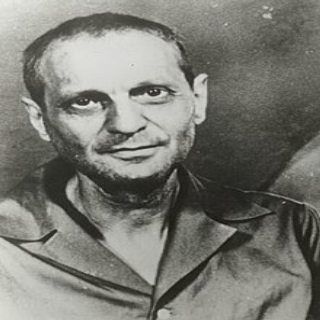 Richard Wurmbrand (1909 – 2001) was born in 1909 in Bucharist in the country of Romania. He was the youngest of four boys born in a Jewish family. He lived with his family in Istanbul for a short time. When he was 9, his father died and the Wurmbrands returned to Romania when he was 15.
He was sent to study Marxism in Moscow. When he returned, he was already a Comintern Agent. A Comintern Agent was a member of the Communist International Organisation which intended to fight:
Like other Romanian Communists, he was arrested and released several times.
He married Sabina Oster on 26th October 1936. Wurmbrand and his wife went to live in an isolated village high in the mountains of Romania. But, as a athiest there was no peace to be found in his heart. So one day, when his heart was in a state of turmoil he cried out:
“God, if perchance you exist, it is Your duty to reveal yourself to me.”
Shorthly after he prayed that prayer, he met a German carpenter in his village who gave him a bible. The carpenter and his wife had been praying earnestly that God would bring a Jew to his village, because the carpenter wanted to bring a Jew to Christ, because Jesus was a Jew. So the carpenter gave him a Bible to read. Wurmbrand said, when he opened that Bible he could not stop weeping. He had read the Bible before but it had meant nothing to him. This time when he opened the Bible he could barely read it because of the copious amount of tears that filled his eyes. Sometime later he found out the carpenter and his wife had been praying earnestly for him. Wurnbrand said that every word that he read were like flames of love burning in his heart. He realized for the first ime in his life that there was a God of love who loved him, even though he had beeen living a bad life and had nurtured a hated towards the concept of a ‘loving’ God.
The Power of Intercessory Prayer
But now for the first time he knew that Jesus had suffered at the cross of Calvary for his sins and he was loved and accepted of God. Richard and his wife became believers in Jesus the Messiah. All the hatred that he had formerly held toward God was washed away under the blood of Christ and Richard and his wife Sabrina were born of the Spirit. That is the power of intercessory prayer!
Richard prepared himself for the ministry. He was ordained as an Anglican minister in 1938 at the start of world war 2. Both Richard and his wife were arrested several times. They were beaten and hauled before a Nazi court. They suffered under the Nazi regime throughout world war 2. But Richard said, it was only a taste of what was to come.
Russian Troups Enter Romania
Towards the end of world war 2, Richard Wurmbrand became a Lutheran and he pastored a Lutheran church in Romania. But, the same year, 1 million Russian troups entered and occupied the entire territory of Romania.
Within a very short space of time the Communists took over Romania. The reign of terror began. Out of fear 4,000 priests, pastors & ministers became Communists overnight. They confessed their allegience and loyalty to the new Communist Government because they all feared for their survival.
Romania’s Resistance
Harsh persecutions of any enemies of the Communist government started with the Soviet occupation in 1945. The Soviet army behaved as an occupation force (although theoretically it was an ally against Nazi Germany), and could arrest virtually anyone at will. Shortly after Soviet occupation, ethnic Germans (who were Romanian citizens and had been living as a community in Romania for 800 years) were deported to the Donbas coal mines. Despite the King’s protest, who pointed out that this was against international law, an estimated 70,000 men and women were forced to leave their homes, starting in January 1945, before the war had even ended. They were loaded in cattle cars and put to work in the Soviet mines for up to ten years as “reparations”, where about one in five died from disease, accidents and malnutrition.
Once the Communist government became more entrenched, the number of arrests increased. All strata of society were involved, but particularly targeted were the pre-war elites, such as intellectuals, clerics, teachers, former politicians (even if they had left-leaning views) and anybody who could potentially form the nucleus of anti-Communist resistance. The existing prisons were filled with political prisoners, and a new system of forced labor camps and prisons was created, modeled after the Soviet Gulag. Some of the most notorious prisons included Sighet, Gherla, Piteşti and Aiud, and forced labor camps were set up at lead mines and in the Danube Delta.
Underground Church
Richard and his wife knew that Christianity and Communism were totally opposed to each other. They knew that a true follower of Christ cannot compromise. So they created an “Underground Church” movement to preach the pure gospel of Christ and to reach out to the unsaved people of Romania and secondly to reach out secretly to the Russian soldiers. They secretly printed thousands of Bibles and Christian literature and distributed it to the Russian soldiers. Many of the Russian soldiers were convicted and they gave their life to Christ.
So the underground church grew. But, in 1948 the Secret Police arrested Wurmbrand and he was placed in solitary confinement for 3 years. He was then transferred to a group cell for the next five years. Whilst in prison he continued to win the other prisoners to Christ. After 8 years in prison he was released and he immediately resumed his work with the undergound church. A few years later, 1959, he was arrested again and was sentenced to 25 years in prison. However, after spending 5 years in prison an organisation called the Christian Alliance negotiated with the Communist Government and they managed to secure his release for a fee of $10,000. They quickly got Richard Wurmbrand out of Romania and took him to England, then to the USA.
In 1966, Richard was called to Washington DC to give his testimony before the United States Senate. He took off his shirt to show the Senate the scars and the wounds that he received whilst he served time in prison under the Communist Government in Romania.
The newspapers throughout the USA, Europe and Asia carried his story all across the world. Christian leaders called him the “Voice of the Underground Church.”
In 1967, with a $100 old typewriter and 500 names and addresses, Richard Wurmbrand published the first issue of THE VOICE OF THE MARTYRS newsletter. This newsletter was dedicated to communicating the testimonies and trails facing our brothers and sisters in restricted nations worldwide. Richard wrote:
“The message I bring from the Underground Church is:
“Don’t abandon us!”
“Don’t forget us!”
“Don’t write us off!”
“Give us the tools we need! We will pay the price for using them!”
“This is the message I have been charged to deliver to the free church.”
Richard Wurmbrand and his wife travelled throughout the world to establish a network of over 30 offices. Their primary aim was to call Christians to shoulder their responsibility and to demonstrate the real substance of their faith by supporting their brothers and sisters in Christ who are being persecuted in heathen lands.
The VOICE OF THE MARTYRS newsletter continues to inform, and lead to action, Christians throughout the free world of the plight of those who suffer for their faith in Jesus Christ. Throughout their network of offices around the world, the newsletter is published in over 30 different languages. To this cause, VOICE OF THE MARTYRS presses on, serving in nearly 40 countries around the world where our brothers and sisters are systematically persecuted.
The writer of the Book of Hebrews brings a convicting word to the Christian church:
” Remember them that are in bonds, as bound with them; and them that suffer adversity, as being yourselves also in the body.”
(Hebrews 13:3)
We have a responsibility to those who suffer for their faith in Christ.
Today, there is an estimated 200 million Christians in heathen nations who are suffering persecution for their faith in Christ.
Richard Wurmbrand (1909 – 2001) was born in 1909 in Bucharist in the country of Romania. He was the youngest of four boys born in a Jewish family. He lived with his family in Istanbul for a short time. When he was 9, his father died and the Wurmbrands returned to Romania when he was 15.
He was sent to study Marxism in Moscow. When he returned, he was already a Comintern Agent. A Comintern Agent was a member of the Communist International Organisation which intended to fight:
Like other Romanian Communists, he was arrested and released several times.
He married Sabina Oster on 26th October 1936. Wurmbrand and his wife went to live in an isolated village high in the mountains of Romania. But, as a athiest there was no peace to be found in his heart. So one day, when his heart was in a state of turmoil he cried out:
“God, if perchance you exist, it is Your duty to reveal yourself to me.”
Shorthly after he prayed that prayer, he met a German carpenter in his village who gave him a bible. The carpenter and his wife had been praying earnestly that God would bring a Jew to his village, because the carpenter wanted to bring a Jew to Christ, because Jesus was a Jew. So the carpenter gave him a Bible to read. Wurmbrand said, when he opened that Bible he could not stop weeping. He had read the Bible before but it had meant nothing to him. This time when he opened the Bible he could barely read it because of the copious amount of tears that filled his eyes. Sometime later he found out the carpenter and his wife had been praying earnestly for him. Wurnbrand said that every word that he read were like flames of love burning in his heart. He realized for the first ime in his life that there was a God of love who loved him, even though he had beeen living a bad life and had nurtured a hated towards the concept of a ‘loving’ God.
The Power of Intercessory Prayer
But now for the first time he knew that Jesus had suffered at the cross of Calvary for his sins and he was loved and accepted of God. Richard and his wife became believers in Jesus the Messiah. All the hatred that he had formerly held toward God was washed away under the blood of Christ and Richard and his wife Sabrina were born of the Spirit. That is the power of intercessory prayer!
Richard prepared himself for the ministry. He was ordained as an Anglican minister in 1938 at the start of world war 2. Both Richard and his wife were arrested several times. They were beaten and hauled before a Nazi court. They suffered under the Nazi regime throughout world war 2. But Richard said, it was only a taste of what was to come.
Russian Troups Enter Romania
Towards the end of world war 2, Richard Wurmbrand became a Lutheran and he pastored a Lutheran church in Romania. But, the same year, 1 million Russian troups entered and occupied the entire territory of Romania.
Within a very short space of time the Communists took over Romania. The reign of terror began. Out of fear 4,000 priests, pastors & ministers became Communists overnight. They confessed their allegience and loyalty to the new Communist Government because they all feared for their survival.
Romania’s Resistance
Harsh persecutions of any enemies of the Communist government started with the Soviet occupation in 1945. The Soviet army behaved as an occupation force (although theoretically it was an ally against Nazi Germany), and could arrest virtually anyone at will. Shortly after Soviet occupation, ethnic Germans (who were Romanian citizens and had been living as a community in Romania for 800 years) were deported to the Donbas coal mines. Despite the King’s protest, who pointed out that this was against international law, an estimated 70,000 men and women were forced to leave their homes, starting in January 1945, before the war had even ended. They were loaded in cattle cars and put to work in the Soviet mines for up to ten years as “reparations”, where about one in five died from disease, accidents and malnutrition.
Once the Communist government became more entrenched, the number of arrests increased. All strata of society were involved, but particularly targeted were the pre-war elites, such as intellectuals, clerics, teachers, former politicians (even if they had left-leaning views) and anybody who could potentially form the nucleus of anti-Communist resistance. The existing prisons were filled with political prisoners, and a new system of forced labor camps and prisons was created, modeled after the Soviet Gulag. Some of the most notorious prisons included Sighet, Gherla, Piteşti and Aiud, and forced labor camps were set up at lead mines and in the Danube Delta.
Underground Church
Richard and his wife knew that Christianity and Communism were totally opposed to each other. They knew that a true follower of Christ cannot compromise. So they created an “Underground Church” movement to preach the pure gospel of Christ and to reach out to the unsaved people of Romania and secondly to reach out secretly to the Russian soldiers. They secretly printed thousands of Bibles and Christian literature and distributed it to the Russian soldiers. Many of the Russian soldiers were convicted and they gave their life to Christ.
So the underground church grew. But, in 1948 the Secret Police arrested Wurmbrand and he was placed in solitary confinement for 3 years. He was then transferred to a group cell for the next five years. Whilst in prison he continued to win the other prisoners to Christ. After 8 years in prison he was released and he immediately resumed his work with the undergound church. A few years later, 1959, he was arrested again and was sentenced to 25 years in prison. However, after spending 5 years in prison an organisation called the Christian Alliance negotiated with the Communist Government and they managed to secure his release for a fee of $10,000. They quickly got Richard Wurmbrand out of Romania and took him to England, then to the USA.
In 1966, Richard was called to Washington DC to give his testimony before the United States Senate. He took off his shirt to show the Senate the scars and the wounds that he received whilst he served time in prison under the Communist Government in Romania.
The newspapers throughout the USA, Europe and Asia carried his story all across the world. Christian leaders called him the “Voice of the Underground Church.”
In 1967, with a $100 old typewriter and 500 names and addresses, Richard Wurmbrand published the first issue of THE VOICE OF THE MARTYRS newsletter. This newsletter was dedicated to communicating the testimonies and trails facing our brothers and sisters in restricted nations worldwide. Richard wrote:
“The message I bring from the Underground Church is:
“Don’t abandon us!”
“Don’t forget us!”
“Don’t write us off!”
“Give us the tools we need! We will pay the price for using them!”
“This is the message I have been charged to deliver to the free church.”
Richard Wurmbrand and his wife travelled throughout the world to establish a network of over 30 offices. Their primary aim was to call Christians to shoulder their responsibility and to demonstrate the real substance of their faith by supporting their brothers and sisters in Christ who are being persecuted in heathen lands.
The VOICE OF THE MARTYRS newsletter continues to inform, and lead to action, Christians throughout the free world of the plight of those who suffer for their faith in Jesus Christ. Throughout their network of offices around the world, the newsletter is published in over 30 different languages. To this cause, VOICE OF THE MARTYRS presses on, serving in nearly 40 countries around the world where our brothers and sisters are systematically persecuted.
The writer of the Book of Hebrews brings a convicting word to the Christian church:
” Remember them that are in bonds, as bound with them; and them that suffer adversity, as being yourselves also in the body.”
(Hebrews 13:3)
We have a responsibility to those who suffer for their faith in Christ.
Today, there is an estimated 200 million Christians in heathen nations who are suffering persecution for their faith in Christ.
when they hurt you with words
The spirit of the old adage “words will never harm me” is not the sentiment of the Scriptures. Words can hurt, even when directed from an unknown profile online. God made a world in which words are powerful. “Death and life are in the power of the tongue” (Proverbs 18:21). And as public discourse falls to new lows in the digital age, God has not left us without a guide for how to respond to the pain when we are persecuted with words. Leaf through the New Testament, and you’ll find verbal attacks on Jesus, his apostles, and his church on nearly every page. At times, these attacks escalate to physical persecution — the stoning of Stephen, the martyrdom of James, the imprisonments of Peter and Paul, the crucifixion of Christ — but what remains constant, and significant, is a torrent of verbal persecution against Jesus and his people. And verbal persecution is not less than persecution because it’s verbal. Have You Been Reviled? Slander and revile are two of the main words for verbal attack in the English New Testament, and both occur frequently. Early Christians were so accustomed to being spoken against that they developed a rich vocabulary (if you call it that) of being slandered, reviled, insulted, maligned, mocked, and spoken evil against (at least six different Greek verbs, along with several related nouns and adjectives). Of the English terms, revile may be the least common in normal usage today. One dictionary defines it as “to criticize in an abusive or angrily insulting manner.” To take our cues from specific biblical texts, revile can mean “to speak evil against” (Matthew 5:11; Mark 9:39; Acts 19:9; 23:4); it is the opposite of verbally honoring someone (Mark 7:10). Reviling is an attempt to injure with words (1 Peter 3:16). We see it at Jesus’s crucifixion, where “those who passed by derided him” with their words, and the chief priests, scribes, and elders “mocked him,” and “the robbers who were crucified with him also reviled him in the same way” (Matthew 27:39–44). But Jesus not only endured it; he prepared us for it as well. He and his apostles, and the early church, model for us how to receive and respond to slander and reviling. 1. Expect the world to say the worst. Amid this rich vocabulary of verbal attack, the New Testament sends no mixed signals as to whether Christians will be maligned. We will. Jews and Gentiles together bombarded Jesus and his disciples with verbal attacks. Physical persecution came and went, but reviling remained constant. When Paul arrived in Rome, the Jews reported to him, about Christianity, “With regard to this sect we know that everywhere it is spoken against” (Acts 28:22). For Christians, being reviled is not a matter of if but when : “when they speak against you” (1 Peter 2:12). Unbelievers “are surprised when you do not join them in the same flood of debauchery” — so what do they do? “They malign you” (1 Peter 4:4). After all, should we not expect the world, under the power of the devil (1 John 5:19; Ephesians 2:2), to lie about us? The Greek for devil ( diabolos ) actually means slanderer (1 Timothy 3:11; Titus 2:3). As Jesus said to his revilers in John 8:44, “You are of your father the devil, and your will is to do your father’s desires. . . . When he lies, he speaks out of his own character, for he is a liar and the father of lies.” 2. Consider the cause. We should not assume that all verbal opposition we receive is good. Being reviled for Jesus’s sake and for his gospel is one thing; being reviled for our own folly and sin is another (1 Peter 3:17; 4:15–16). As far as it depends on us, we want to “give the adversary no occasion for slander” (1 Timothy 5:14). Slander itself is no win for the church. We want to do what we can, within reason and without compromise, to keep God’s name and word and teaching from reviling (1 Timothy 6:1; Titus 2:5). “Do not let what you regard as good be spoken of as evil” (Romans 14:16). But when the world speaks evil against us because of Jesus, we embrace it. “If you are insulted for the name of Christ , you are blessed, because the Spirit of glory and of God rests upon you” (1 Peter 4:14). 3. Do not revile in return. Christ’s calling to his church is crystal clear: Do not respond in kind. Do not stoop to the level of your revilers. “Keep your conduct honorable” (1 Peter 2:12). “Speak evil of no one” (Titus 3:2), including those who have spoken evil of you. Do not become a verbal vigilante, but “entrust yourself to him who judges justly” (1 Peter 2:23). And as his redeemed, taste the joy of walking in his steps: “When he was reviled, he did not revile in return” (1 Peter 2:23). Paul took up the same mantle: “When reviled, we bless; when persecuted, we endure; when slandered, we entreat” (1 Corinthians 4:12–13). So also Peter charges us to respond “with gentleness and respect, having a good conscience, so that, when you are slandered, those who revile your good behavior in Christ may be put to shame” (1 Peter 3:15–16). When we do not “revile in return,” we put our revilers to shame. Christians do not respond in kind. We lose the battle, and undermine our commission, when we let revilers make us into revilers. And it’s not just a matter of strategy, but of spiritual life and death. “Revilers,” 1 Corinthians 6:10 warns, “will not inherit the kingdom of God,” and Christians are instructed “not to associate with anyone who bears the name of brother if he is . . . a reviler” (1 Corinthians 5:11). Christ expects, even demands, that our speech be different from the world’s, even when we respond to the world’s mean words. 4. Leap for joy. Leap for joy? That might seem way over the top. Can’t we just take our cues from the apostles in Acts 5:41? “They left the presence of the council, rejoicing that they were counted worthy to suffer dishonor for the name.” Amen, rejoice. Yes. Jesus’s own words in the Sermon on the Mount guide us: “Blessed are you when others revile you and persecute you and utter all kinds of evil against you falsely on my account. Rejoice and be glad , for your reward is great in heaven, for so they persecuted the prophets who were before you.” (Matthew 5:11–12). But Luke 6:22–23 doesn’t leave it at simply rejoicing: “Blessed are you when people hate you and when they exclude you and revile you and spurn your name as evil, on account of the Son of Man! Rejoice in that day, and leap for joy , for behold, your reward is great in heaven; for so their fathers did to the prophets.” Whether you’re just rejoicing in God deep down, or finding the emotional wherewithal, in the Spirit, to “leap for joy,” the point is clear: When others dishonor you, and exclude you, and utter all manner of evil against you, and even spurn your name as evil — and that on Jesus’s account , not on the account of your own folly — this is not new, and you are not alone (“so their fathers did to the prophets”). You have a great cause for joy. Their reviling you for his sake means you are with him! And you will know him more as you share in the verbal persecution he endured (Philippians 3:10). 5. On the contrary, bless. There is one more shocking possibility for Christians, even more astounding than leaping for joy: “Do not repay evil for evil or reviling for reviling, but on the contrary, bless , for to this you were called, that you may obtain a blessing” (1 Peter 3:9). This indeed is the spirit of Christ, and gives the most striking testimony of the Spirit of Christ at work in us. The grace and power of God not only enable us to expect and evaluate reviling, and not respond in kind but even rejoice, but also repay reviling with blessing . This is Christlikeness. This is Christian maturity (Matthew 5:48). This reflects the magnanimous heart of our Father in heaven (Matthew 5:45). This is the enemy-love to which Jesus not only calls us but works in us by his Spirit. “Love your enemies and pray for those who persecute you” (Matthew 5:44). In Christ, we have found ourselves blessed when we deserved to be cursed. We have come to know a Father who does not revile those who humbly seek him (James 1:5). When reviled, we now have the opportunity to bless undeserving revilers, just as we have been blessed from above — and will be further blessed for doing so (“that you may obtain a blessing,” 1 Peter 3:9). The swelling ocean of reviling in our day is not just an obstacle to be endured. It is an opportunity for gospel advance — and for deeper joy.