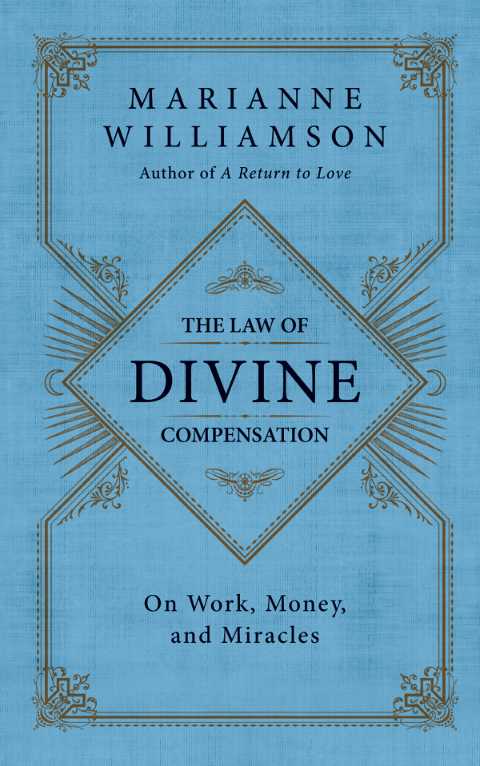

The Law Of Divine Compensation - On Work, Money, And Miracles Order Printed Copy
- Author: Marianne Williamson
- Size: 2.66MB
- |
Others like the law of divine compensation - on work, money, and miracles Features >>
The Laws Of The Harvest
The 10 Pillars Of Wealth: Mind-Sets Of The World's Richest People
-1-160.webp)
Your Money Or Your Life: 9 Steps To Transforming Your Relationship With Money And Achieving Financial Independence
Money Thou Art Loosed

The True Riches
Secrets Of The Richest Man Who Ever Lived
Laws Of Prosperity
The Financial Peace Planner
Are Tithes And Offerings The Same

Thoughts On Stewardship
About the Book
"The Law of Divine Compensation" by Marianne Williamson delves into how individuals can align themselves with spiritual principles to attract abundance and prosperity in their lives. Williamson argues that by focusing on love, forgiveness, gratitude, and faith, one can overcome financial struggles and receive the blessings they deserve. The book emphasizes the importance of shifting one's mindset and beliefs around money in order to experience miracles and fulfillment in all areas of life.
Brother Yun
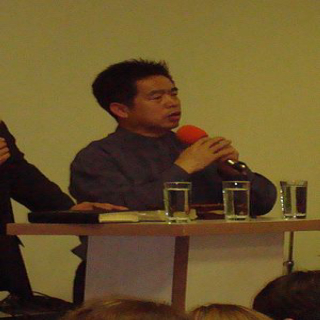 Brother Yun was born in February 1958 in the province of Henan. His original name was Liu Zhenying (刘振营).
Brother Yun became a believer at the age of 16. Soon after he became a Christian, God called him to be His witness in the west and south. As he was obedient to the calling, he eventually became a witness of Christ not just in the western and southern parts of China, but throughout China and in the nations beyond China as well.
Brother Yun was born into a poor family. His family’s financial situation took a turn for the worst when his father became ill with an asthmatic condition that led to lung cancer eventually. His life got worse when he became a Christian as he suffered severe trials and persecutions. In the midst of suffering for the Lord, however, he experienced miracle after miracle, which helped to strengthen his faith.
HOW BROTHER YUN BECAME A BELIEVER
In 1974, Brother Yun’s father became ill with lung cancer. His mother, who had been a Christian for many years but had become spiritually cold after the expulsion of Western missionaries during the Cultural Revolution, felt a deep sense of desperation because if her husband had died then, it would leave the family in dire straits. She thought of committing suicide. One evening, as she was lying in bed, she heard a voice saying to her that Jesus loved her. In tears and in repentance, she rededicated her life to God and gathered her family to pray for her husband. The next morning, her husband got better and as a result, everyone in the family, including Brother Yun, put their faith in God.
HIS HUNGER FOR THE WORD OF GOD
Brother Yun was 16 when he became a Christian. Soon after, he started hungering for the Word of God. However, his family did not have a Bible. He began asking his mother who Jesus was. In response, his mother would tell him that Jesus was the Son of God and that He had recorded all His teachings in the Bible.
Brother Yun wanted a Bible and his mother recalled that there was a man in another village who had one. So she brought him to see the man. The man was too afraid to show Brother Yun his Bible. So he suggested to the latter that he could pray and ask God for one.
Brother Yun decided to fast and pray for a Bible. For the next 100 days, he ate only one bowl of steamed rice everyday. One day at 4am, after fasting for 100 days, he saw a vision. In the vision, he was walking up a steep hill and trying to push a heavy cart at the same time. He was heading towards a village where he intended to beg for food for his family. He struggled greatly as he continued his climb uphill. The cart was about to roll back and fall on him when he saw three men walking down the hill in the opposite direction. One of them was a kind old man and he was pulling a large cart of fresh bread. When the old man saw Brother Yun, he asked him if he was hungry. He said ‘yes’ and started crying. The old man then took a red bag of bread from his cart and asked his two servants to give it to Brother Yun. As he put the bread into his mouth, it immediately turned into a Bible.
Upon waking up, Brother Yun began to search for the Bible. His search, however, was in vain. All of a sudden, he heard a faint knock on the door and someone was calling out his name. Immediately, he recognised the voice – it was the same voice he had heard in the vision. He quickly opened the door and standing before him were the two servants he had seen in the vision. One of them held a red bag in his hand. In this red bag was a Bible.
It was later that Brother Yun found out the names of the two men. One was Brother Wang while the other was Brother Sung. They were sent by an evangelist to give Brother Yun the Bible. The evangelist, who had suffered terribly during the Cultural Revolution and had nearly died while being tortured, had received a vision from God. In the vision, God showed him Brother Yun’s house and the location of his village. He was asked to give his Bible to Brother Yun. However, he did not obey God until three months later.
Brother Yun began to devour the Word of God. Even though he could hardly read, this did not deter him at all. When he had finished reading the entire Bible, he started to memorise one chapter per day. In 28 days, he had memorised the Gospel of Matthew. Then he went on to memorise the Book of Acts and so forth.
OBEDIENT TO THE CALL OF GOD
One morning at 4am, Brother Yun had a dream. In the dream, God asked him to be His witness in the west and south. In the same dream, he saw a young man from the south coming to his house. And so at daybreak, he told his mother to expect the young man’s visit and to ask him to wait for him. Then he sat off to a village he had never heard of in the west. The people in this village had been praying for him to visit as they had heard about how he had prayed for a Bible and got it.
When the meeting at the village concluded and Brother Yun got ready to leave, the villagers refused to let him go. So he stayed on and recited to them the first twelve chapters from the Book of Acts. After that, the villagers finally let him go. From the village to his house, it could take up to 2 hours to walk. Because he did not want to make the young man from the south wait too long, he decided to run home. All of a sudden, he found himself entering his village without any apparent time lapse. What should have taken him a few hours took him just a few moments. It was as if God had supernaturally transported him back to his village.
PERSECUTIONS AND MIRACLES IN HIS LIFE
Brother Yun was arrested by security police numerous times and was thrown into prison three times for sharing the gospel in communist China.
When Brother Yun was arrested the first time, he was only 17 years old. At that time, he was ministering at a meeting far away from home. After he was caught, he was thrown into a freezing cold prison cell. There was no heat in the cell and his winter coat had been thrown into the snow by the security police who had caught him. He began to sing Psalm 150 aloud. The more he sang, the more he was filled with joy. Gradually, his frozen hands and feet regained feeling and he no longer felt cold.
During his first imprisonment in Nanyang, Brother Yun felt that God wanted him to fast without food and water until he could see his family again. This fast lasted 74 days, which was humanly impossible but yet was made possible because he chose to obey God.
During those times when Brother Yun was in the hands of government officials, he was repeatedly beaten and tortured with electric batons. He was also kicked and trampled upon. Furthermore, he had needles being jabbed underneath his fingernails.
Once, Brother Yun was paraded through the streets with a red cross tied behind him for half a day. When night fell, he was locked and left alone inside a large interrogation room. The wooden cross was taken off his back but his hands were still tied up. All of a sudden, the rope that was used to tie his hands snapped by itself. He immediately walked out of the interrogation room and walked through the courtyard in the midst of onlookers. Nobody stopped him or said anything to him. It was as if God had blinded their eyes and they did not even recognise who he was.
Because the front gate was locked, the only way Brother Yun could get out was to climb over an eight-foot high cement wall. He climbed up as much as he could manage. Then he looked over the wall and saw that there was a ten-foot wide open tank directly below. Suddenly, he felt as if someone had lifted him up and thrown him over. He was thrown so far that he did not land in the tank.
Brother Yun’s 3rd imprisonment was a very dark period in his life as the prison guards in the maximum security prison were determined to prevent his escape. So they beat his legs to cripple him permanently. They had him beaten up everyday, even in his crippled state. One day, God instructed him to escape from the prison. This was confirmed by a brother-in-Christ. Thus, on May 5, 1997, he miraculously walked past dozens of prison guards and out of the maximum security prison. It was as if he had become invisible to the guards. He did not realise that his legs had been miraculously healed until later.
Throughout all the horrendous and painful experiences that Brother Yun went through, the word of the Lord kept coming to him, encouraging him and strengthening his faith.
BROTHER YUN’S MINISTRY
Brother Yun eventually escaped China and sought asylum in Germany in 2001. Since then, he has been continuing his ministry from there and has spoken to congregations internationally. He has founded “Back to Jerusalem” Movement and has been sending missionaries out from China to share the gospel in the least-reached nations.
Brother Yun’s life and ministry have impacted many lives. Thousands of people have become Christians through his ministry. It is thus inevitable that fellow Christians have allowed themselves to be used as instruments of wickedness to attack his reputation. The co-author of The Heavenly Man, Paul Hattaway has aptly put it this way, “Many of the great Christian leaders throughout history have been the subject of brutal attacks from other Christians.”
AFTERTHOUGHT
Brother Yun’s childlike faith and his prompt obedience to God’s call are exemplary. It is incredible that he has remained faithful to God despite the tremendous suffering and persecutions he has gone through.
Brother Yun was born in February 1958 in the province of Henan. His original name was Liu Zhenying (刘振营).
Brother Yun became a believer at the age of 16. Soon after he became a Christian, God called him to be His witness in the west and south. As he was obedient to the calling, he eventually became a witness of Christ not just in the western and southern parts of China, but throughout China and in the nations beyond China as well.
Brother Yun was born into a poor family. His family’s financial situation took a turn for the worst when his father became ill with an asthmatic condition that led to lung cancer eventually. His life got worse when he became a Christian as he suffered severe trials and persecutions. In the midst of suffering for the Lord, however, he experienced miracle after miracle, which helped to strengthen his faith.
HOW BROTHER YUN BECAME A BELIEVER
In 1974, Brother Yun’s father became ill with lung cancer. His mother, who had been a Christian for many years but had become spiritually cold after the expulsion of Western missionaries during the Cultural Revolution, felt a deep sense of desperation because if her husband had died then, it would leave the family in dire straits. She thought of committing suicide. One evening, as she was lying in bed, she heard a voice saying to her that Jesus loved her. In tears and in repentance, she rededicated her life to God and gathered her family to pray for her husband. The next morning, her husband got better and as a result, everyone in the family, including Brother Yun, put their faith in God.
HIS HUNGER FOR THE WORD OF GOD
Brother Yun was 16 when he became a Christian. Soon after, he started hungering for the Word of God. However, his family did not have a Bible. He began asking his mother who Jesus was. In response, his mother would tell him that Jesus was the Son of God and that He had recorded all His teachings in the Bible.
Brother Yun wanted a Bible and his mother recalled that there was a man in another village who had one. So she brought him to see the man. The man was too afraid to show Brother Yun his Bible. So he suggested to the latter that he could pray and ask God for one.
Brother Yun decided to fast and pray for a Bible. For the next 100 days, he ate only one bowl of steamed rice everyday. One day at 4am, after fasting for 100 days, he saw a vision. In the vision, he was walking up a steep hill and trying to push a heavy cart at the same time. He was heading towards a village where he intended to beg for food for his family. He struggled greatly as he continued his climb uphill. The cart was about to roll back and fall on him when he saw three men walking down the hill in the opposite direction. One of them was a kind old man and he was pulling a large cart of fresh bread. When the old man saw Brother Yun, he asked him if he was hungry. He said ‘yes’ and started crying. The old man then took a red bag of bread from his cart and asked his two servants to give it to Brother Yun. As he put the bread into his mouth, it immediately turned into a Bible.
Upon waking up, Brother Yun began to search for the Bible. His search, however, was in vain. All of a sudden, he heard a faint knock on the door and someone was calling out his name. Immediately, he recognised the voice – it was the same voice he had heard in the vision. He quickly opened the door and standing before him were the two servants he had seen in the vision. One of them held a red bag in his hand. In this red bag was a Bible.
It was later that Brother Yun found out the names of the two men. One was Brother Wang while the other was Brother Sung. They were sent by an evangelist to give Brother Yun the Bible. The evangelist, who had suffered terribly during the Cultural Revolution and had nearly died while being tortured, had received a vision from God. In the vision, God showed him Brother Yun’s house and the location of his village. He was asked to give his Bible to Brother Yun. However, he did not obey God until three months later.
Brother Yun began to devour the Word of God. Even though he could hardly read, this did not deter him at all. When he had finished reading the entire Bible, he started to memorise one chapter per day. In 28 days, he had memorised the Gospel of Matthew. Then he went on to memorise the Book of Acts and so forth.
OBEDIENT TO THE CALL OF GOD
One morning at 4am, Brother Yun had a dream. In the dream, God asked him to be His witness in the west and south. In the same dream, he saw a young man from the south coming to his house. And so at daybreak, he told his mother to expect the young man’s visit and to ask him to wait for him. Then he sat off to a village he had never heard of in the west. The people in this village had been praying for him to visit as they had heard about how he had prayed for a Bible and got it.
When the meeting at the village concluded and Brother Yun got ready to leave, the villagers refused to let him go. So he stayed on and recited to them the first twelve chapters from the Book of Acts. After that, the villagers finally let him go. From the village to his house, it could take up to 2 hours to walk. Because he did not want to make the young man from the south wait too long, he decided to run home. All of a sudden, he found himself entering his village without any apparent time lapse. What should have taken him a few hours took him just a few moments. It was as if God had supernaturally transported him back to his village.
PERSECUTIONS AND MIRACLES IN HIS LIFE
Brother Yun was arrested by security police numerous times and was thrown into prison three times for sharing the gospel in communist China.
When Brother Yun was arrested the first time, he was only 17 years old. At that time, he was ministering at a meeting far away from home. After he was caught, he was thrown into a freezing cold prison cell. There was no heat in the cell and his winter coat had been thrown into the snow by the security police who had caught him. He began to sing Psalm 150 aloud. The more he sang, the more he was filled with joy. Gradually, his frozen hands and feet regained feeling and he no longer felt cold.
During his first imprisonment in Nanyang, Brother Yun felt that God wanted him to fast without food and water until he could see his family again. This fast lasted 74 days, which was humanly impossible but yet was made possible because he chose to obey God.
During those times when Brother Yun was in the hands of government officials, he was repeatedly beaten and tortured with electric batons. He was also kicked and trampled upon. Furthermore, he had needles being jabbed underneath his fingernails.
Once, Brother Yun was paraded through the streets with a red cross tied behind him for half a day. When night fell, he was locked and left alone inside a large interrogation room. The wooden cross was taken off his back but his hands were still tied up. All of a sudden, the rope that was used to tie his hands snapped by itself. He immediately walked out of the interrogation room and walked through the courtyard in the midst of onlookers. Nobody stopped him or said anything to him. It was as if God had blinded their eyes and they did not even recognise who he was.
Because the front gate was locked, the only way Brother Yun could get out was to climb over an eight-foot high cement wall. He climbed up as much as he could manage. Then he looked over the wall and saw that there was a ten-foot wide open tank directly below. Suddenly, he felt as if someone had lifted him up and thrown him over. He was thrown so far that he did not land in the tank.
Brother Yun’s 3rd imprisonment was a very dark period in his life as the prison guards in the maximum security prison were determined to prevent his escape. So they beat his legs to cripple him permanently. They had him beaten up everyday, even in his crippled state. One day, God instructed him to escape from the prison. This was confirmed by a brother-in-Christ. Thus, on May 5, 1997, he miraculously walked past dozens of prison guards and out of the maximum security prison. It was as if he had become invisible to the guards. He did not realise that his legs had been miraculously healed until later.
Throughout all the horrendous and painful experiences that Brother Yun went through, the word of the Lord kept coming to him, encouraging him and strengthening his faith.
BROTHER YUN’S MINISTRY
Brother Yun eventually escaped China and sought asylum in Germany in 2001. Since then, he has been continuing his ministry from there and has spoken to congregations internationally. He has founded “Back to Jerusalem” Movement and has been sending missionaries out from China to share the gospel in the least-reached nations.
Brother Yun’s life and ministry have impacted many lives. Thousands of people have become Christians through his ministry. It is thus inevitable that fellow Christians have allowed themselves to be used as instruments of wickedness to attack his reputation. The co-author of The Heavenly Man, Paul Hattaway has aptly put it this way, “Many of the great Christian leaders throughout history have been the subject of brutal attacks from other Christians.”
AFTERTHOUGHT
Brother Yun’s childlike faith and his prompt obedience to God’s call are exemplary. It is incredible that he has remained faithful to God despite the tremendous suffering and persecutions he has gone through.
But Have You Prayed
What hasn’t yet changed in your life because you haven’t started praying for it? Prayerlessness, of course, comes in varieties. Some almost never pray, proving that prayer is nothing more than a formality, a greeting card to God when they have time. Others only pray when they have some desperate and immediate need, treating prayer like a crisis-response line (and largely neglecting prayer otherwise). Others may pray regularly, but their prayers slowly devolve into repeated phrases that taste stale, impersonal, removed from real life. Even the best among us can sometimes swing between treasuring prayer when we think we really need it and skipping prayer when life seems to be going well. Prayer, however, is not a last resort, but a first line of defense, because God is not a last resort, but the one to whom we look first. Prayer is powerful because God is the most powerful agent of change in any of our lives. Oh, what peace we often forfeit Oh, what needless pain we bear All because we do not carry Everything to God in prayer. Jesus confronted the threat of prayerlessness in his disciples, and in a way that should land with gravity and hope in the midst of our own trials and burdens. Desperate Situation In Mark 9, a man had come, bearing his self-destructive, demon-oppressed son, searching desperately for Jesus — for healing. “Teacher, I brought my son to you,” the father says, “for he has a spirit that makes him mute. And whenever it seizes him, it throws him down, and he foams and grinds his teeth and becomes rigid” (Mark 9:17–18). Parents of young children can at least begin to imagine how excruciating and debilitating this suffering was. Is there anything this father would not do to see his son whole again? “What hasn’t yet changed in your life because you haven’t yet prayed for it?” By the time Jesus arrives on the scene, his disciples have been attempting to drive out the demon. But they were not able (Mark 9:18), even though they had been given authority over unclean spirits (Mark 6:7). And as they struggled over the helpless boy, the religious leaders emerge with crowds to argue with them (Mark 9:14), surely making the situation all the more stressful and tragic. Nothing but Prayer Jesus asks his father, “How long has this been happening to him?” “From childhood” (Mark 9:21). Not just for several weeks or months, but over years, potentially decades. “And it has often cast him into fire and into water, to destroy him. But if you can do anything, have compassion on us and help us” (Mark 9:22). Jesus, of course, can do anything, literally anything. “‘If you can’! All things are possible for one who believes,” he replies (Mark 9:23). “I believe,” the father famously responds, “help my unbelief!” (Mark 9:24). So, Jesus heals the boy: “You mute and deaf spirit, I command you, come out of him and never enter him again” (Mark 9:25). The same spirit that evaded and overpowered the disciples surrenders immediately (and violently) (Mark 9:26), and at just the sound of his voice. When he is alone with his disciples, who are feeling confused and defeated by their failures, they ask him, “Why could we not cast it out?” (Mark 9:28). A penetrating and ageless question. “This kind,” Jesus says, “cannot be driven out by anything but prayer” (Mark 9:29). Maybe they didn’t pray at all, or maybe they prayed very little, or maybe they prayed formal, empty, heartless prayers, but either way Jesus says prayer — actually asking God — is what was missing. He could have said, This kind cannot be driven out by anyone but me, but instead he said, “This kind cannot be driven out by anything but prayer.” And as surprised as we might be that the disciples didn’t think to pray (or pray more), how often might Jesus say the same to us? What Kept Them from Praying? So, why didn’t the disciples pray? Why didn’t they ask God to help, to intervene, to do what was beyond the disciples’ own ability? We don’t know for sure, but the scene gives us a surprising number of potential reasons, many which might feel surprisingly relevant (and sobering) for own our prayer lives. DISTRACTED BY NOISE “How often have we given up praying because too many days or months or years have passed?” First, a great crowd had gathered to watch (and interfere with) their ministry (Mark 9:14). They weren’t doing spiritual warfare in the privacy of a home. The painful scene had become a stage, and the more the disciples failed and the longer the boy suffered, the more people came to watch. How many of us, with so many curious and suspicious eyes trained on us, would be courageous enough to stop and look toward heaven and pray? Or, how often does the sound of the crowds around us (constantly clawing at our attention through our devices), keep us from hearing Jesus say, “Ask, and it will be given to you; seek, and you will find; knock, and it will be opened to you” (Matthew 7:7)? Distractions, which come in many kinds and ways, often keep us from praying. DOUBTED BY MAN Not all had come simply to watch, though. Religious experts joined the crowd, arguing with the disciples and saying it couldn’t be done (Mark 9:14, 16). The spiritual enemy was obvious, but they had human enemies, as well — doubters, detractors, scoffers. They’re not waiting, like the rest of the crowd, for the disciples to heal the boy; they want nothing more than for followers of Jesus to fail (Mark 11:18). We may not face the same immediate opposition (though many Christians do), but wherever we are in the world, many want our prayers to fail — to prove that Jesus was just a man, the Bible just a book, and our prayers just wishful thinking. We know that faithfulness to Christ will cost us favor and approval from the world, and so the fear of man often keeps us from praying. DEFIED BY SATAN But the scribes were nothing compared with their unseen enemies. The disciples were dealing with an actual demon oppression — a real, destructive, spiritual enemy. A spiritual enemy strong enough to hurl the boy into fire and water, “to destroy him” (Mark 9:22). Maybe worst of all, he made the boy mute (Mark 9:17), unable to cry for help or even explain what was happening to him. What would you do while you watched him being torn apart? Even if we are not experiencing this kind of manifest demonic opposition, we do wrestle, every day, “against the spiritual forces of evil” (Ephesians 6:12). We pray into a downpour of fiery hostility. How often does Satan keep us from praying, doing all he can to keep us from our knees? DISCOURAGED BY INEFFECTIVENESS Though the disciples tried, really tried, to heal the boy, nothing changed. We don’t know what they tried, but we know that they tried (Mark 9:18) and that they had tried everything they knew to do (Mark 9:28). When Jesus says, “This kind cannot be driven out by anything but prayer,” he hints at all their failed attempts. And the boy still writhed and foamed and groaned on the ground — like he had for so long. A sense of futility surely began to set in. They had healed many before, but this spirit wouldn’t surrender. Maybe no one can heal this boy. How often have we given up praying because the outcome seems decided, because too many days or months or years have passed? Discouragement over unanswered prayer often keeps us from praying. Jesus Really Prayed Many barriers keep us from praying, but nothing kept Jesus from asking his Father, because Jesus knew that nothing was more vital and powerful than prayer. And he knew nothing was more vital and powerful than prayer because no one was more vital and powerful than his Father. “Some things will not change unless we humble ourselves, kneel, and plead with our Father in heaven.” When Jesus says, “This kind cannot be driven out by anything but prayer,” he knew so from personal and persistent experience. He was tempted in every way as we are, but without ever indulging in prayerlessness. We know how dependent he was on God — rising early in the morning (Mark 1:35), getting alone with his Father (Mark 6:46), and pouring out his heart (Mark 14:35). And we know he did this regularly (Luke 5:16). He was not distracted by the crowds or undone by the fear of man. He was not intimidated by demonic warfare or discouraged by God’s timing. He knew the soul-sustaining, demon-defeating, mountain-moving power of prayer — and he wanted us to know it too. Some oppression will not lift without prayer. Some wounds will not heal without prayer. Some trials will not end without prayer. Some sins will not die without prayer. Some relationships will not mend without prayer. Some things will not change, things we desperately want to change, unless we consistently and persistently humble ourselves, kneel, and plead with our Father in heaven. The all-wise, all-loving, all-powerful God has chosen to do much in the world through our prayers, because prayer is part of his precious relationship with his children and exalts him as the listening and answering God. So, what hasn’t yet changed in your life because you haven’t yet prayed?