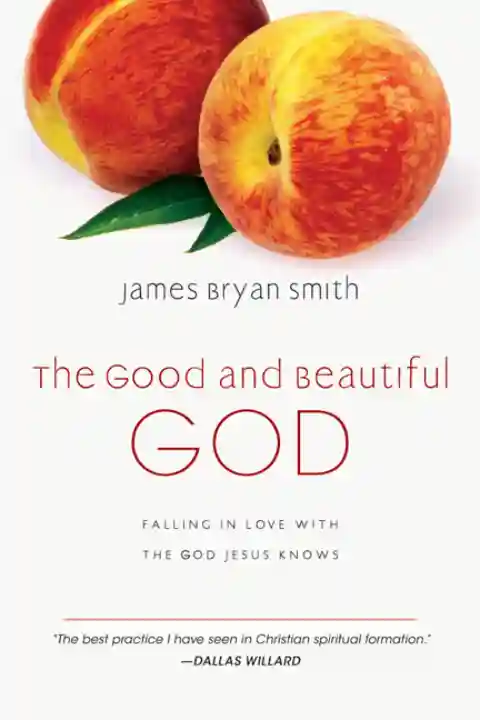

Others like the good and beautiful god Features >>
This Beautiful Mess
The Practice Of Godliness

The Oil And The Mantle

Good And Angry - Redeeming Anger, Irritation, Complaining, And Bitterness

When The Righteous Are In Authority
.mobi-160.webp)
The 3 Most Important Things In Your Life
-160.webp)
Renovation Of The Heart: Putting On The Character Of Christ
-160.webp)
The Power Of Your Words: How God Can Bless Your Life Through The Words You Speak

Exhortation To Unity And Peace
Understanding The Anointing
About the Book
"The Good and Beautiful God" by James Bryan Smith is a Christian book that explores the character of God and challenges readers to rethink their beliefs and assumptions about Him. Smith invites readers to encounter God as loving, gracious, and deeply involved in their lives, and offers practical spiritual exercises to help deepen their relationship with Him. Through personal stories and biblical reflections, Smith encourages readers to embrace a more holistic and transformative understanding of God.
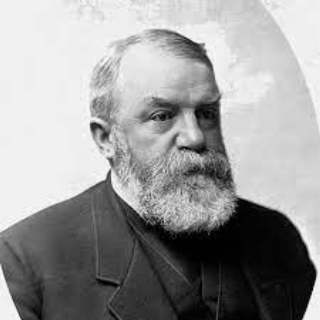
D.L. Moody
the progressive pilgrim: allegory for an easy age
Jesus said, “The gate is narrow and the way is hard that leads to life, and those who find it are few” (Matthew 7:13–14). In the twenty-first century, does his statement seem true to you? Have you found an easier way? Abraham may have wandered in tents, Paul may have been hunted like a deer, the disciples may have met brutal ends to their earthly careers, and many in the early church may have been slandered, reviled, plundered, fed to lions, burned to light the streets of Rome — “killed all the day long . . . regarded as sheep to be slaughtered” (Romans 8:36) — but that was then . We have smartphones now. Modernity seems to have done wonders to smooth the way. The narrow path lying between the City of Destruction and the Celestial City seems paved. Nathaniel Hawthorne (1804–1864) made a similar observation in his day. Though no friend of the Puritans, his short story “The Celestial Railroad” imitates and engages with John Bunyan’s The Pilgrim’s Progress . In it, he critiques the pillow-soft spirituality of his day (including Unitarianism and Transcendentalism), firing a critique that could have been written yesterday to describe the rampant easy-believism of today. Celestial Railroad Wandering through the gate of dreams, Mr. Hawthorne arrives at the famous City of Destruction. Having read Mr. Bunyan on the place, he is rather taken aback, and pleasantly surprised, to find that hostilities between this city and the Celestial City have all but vanished. Former foes shake hands. A pact built on “mutual compromise” has made allies from enemies. Enmity between the two lands is water under the bridge — or rather, a shining railroad over it. The Wicket Gate, that narrow and impossibly awkward entryway, as Bunyan’s readers will recall, has been replaced by the railroad station itself. Mr. Smooth-it-away — a distinguished gentleman in the enterprise who guides Mr. Hawthorne on his journey — ensures us all that this large building is much better suited to include the broadminded travelers of modernity. And the effect cannot be overstated, as Mr. Hawthorne relays: It would have done Bunyan’s heart good to see it. Instead of a lonely and ragged man, with a huge burden on his back, plodding along sorrowfully on foot, while the whole city hooted after him, here were parties of the first gentry and most respectable people in the neighborhood, setting forth towards the Celestial City, as cheerfully as if the pilgrimage were merely a summer tour. (199) The Celestial Railroad now transports would-be travelers — comfortably and safely — to the renowned City of Light. Individuals from Christian’s birthplace saw to it that no good-hearted pilgrim would ever again leave the city in derision or vulnerable to unsavory conditions and smiling foes. Nor would any carry that dreadful burden upon his back for miles on end — no, as Hawthorne gladly reports, One great convenience of the new method of going on pilgrimage, I must not forget to mention. Our enormous burdens, instead of being carried on our shoulders, as had been the custom of old, were all snugly deposited in the baggage-car, and, as I was assured, would be delivered to their respective owners at the journey’s end. (200) The travelers are sent off with their backpacks snugly tucked away, “to be delivered to their respective owners at the journey’s end.” Genius. But this, dear reader, is but the start to the innovations of the Celestial Railroad. Let me relay but a few more to you. Old Sites, New Conveniences Lengthy scrolls and books are not needed as tiresome maps along this journey; only a ticket is required. Such is very reasonable and expedient. To begin the journey, the dreadful Slough of Despond — that bog full of past sins and lusts and fears and temptations and doubts, in which Christian sank and at which Pliable flustered, only to return home — has a new sparkling bridge erected overhead. While wholesome teaching could not fill Bunyan’s slough, Hawthorne tells us, books of morality, German rationalism, modern sermons, and extracts of Plato, combined with a few innovative commentaries on Scripture, sufficed to lay the sturdy foundations to erect the bridge upon (198). Traveling farther, one discovers that the Interpreter’s House, while still receiving the occasional pilgrim of the old method, was no stop of the Celestial Railroad. Regretfully, Mr. Smooth-it-away remarks, that grand Interpreter grew rather sour, prudish, and prejudiced in his old age (a similar theme for the likes of Evangelist and Great-heart, the latter even “perpetually at blows” with his new collaborators). He could not keep with the times and got left behind. Hurried Cross Yes, dear reader, I can hear your question: What has become of the cross where the burden fell from Christian’s back? Let me cite the firsthand account: We were rushing by the place where Christian’s burden fell from his shoulders, [the] sight of the Cross. This served as a theme for Mr. Smooth-it-away, Mr. Live-for-the-world, Mr. Hide-sin-in-the-heart, Mr. Scaly-conscience, and a knot of gentlemen from the town of Shun-repentance, to descant upon the inestimable advantages resulting from the safety of our baggage. (203) “Crosses must be carried in every age, and the costs must be considered.” Rushing past the cross, the passengers revel in their good fortune at finding a way to travel to the Celestial City without leaving behind their precious habits and secret delights. It would be a shame, after all, to lose such desirable pastimes if they could help it. Yet there are still more improvements upon the old way to display. A tunnel now conveniently travels through Hill Difficult — the excavated ground then used to fill in the Valley of Humiliation. That dreary and gloomy Valley of the Shadow of Death now glows with gas lamps. And should you, with Mr. Hawthorne, regret missing the chance to visit Palace Beautiful — where live the young and fair Piety, Prudence, and Charity — ease your disappointed mind by overhearing, “Young ladies!” cried Mr. Smooth-it-away, as soon as he could speak for laughing. “And charming young ladies! Why, my dear fellow, they are old maids, every soul of them — prim, starched, dry, and angular — and not one of them, I will venture to say, has altered so much as the fashion of her gown, since the days of Christian’s pilgrimage.” (203–204) These fair maidens of yesterday, again, resisted the hard-won improvements, cherishing ancient, rough, and inefficient paths. Vanity Fair What can be said of Vanity Fair? Hear it from Mr. Hawthorne: this wonder of a place has the power to make anyone feel at home. The “great capital of human business and pleasure” stands as the epitome of everything “fascinating beneath the sun.” The people, Hawthorne finds, are most interesting and agreeable. Concerning the hostility that once led to the unfortunate execution of Faithful, Christian’s beloved companion, they’ve come to see the misstep. These noble and charming and wise people now enter into great camaraderie and trade with the passengers of the Celestial Railroad; indeed, many of them have taken to the railway themselves. But of all the wonders of the metropolis, Hawthorne relates one that might outshine them all: The Christian reader, if he had no accounts of the city later than Bunyan’s time, will be surprised to hear that almost every street has its church, and that the reverend clergy are nowhere held in higher respect than at Vanity Fair. (209) Indeed, few places could boast so much religiosity. Hawthorne continues, In justification of this high praise, I need only mention the names of the Rev. Mr. Shallow-deep; the Rev. Mr. Stumble-at-Truth; that fine old clerical character, the Rev. Mr. This-to-day, who expects shortly to resign his pulpit to the Rev. Mr. That-to-morrow; together with the Rev. Mr. Bewilderment; the Rev. Mr. Clog-the-spirit; and, last and greatest, the Rev. Dr. Wind-of-doctrine. (209) Filled with fine-dressing, stimulating people, and endless pleasures to buy, sell, and enjoy — mind you, in such a fine Christian place — the only curiosity was that people would just disappear. So common was the occurrence, Hawthorne relates, that the citizens learned to continue on as if nothing had happened. Today’s Celestial Railroad Now, Nathaniel Hawthorne was no Christian, and he wrote antagonistically about the Puritans in other stories (in part due to an infamous family history). But here, he casts stones — almost in sympathy with Bunyan — against the modern religiosity he viewed as shallow, smooth, and deceptive. Any reader of the story sees parallels today. They had Mr. Smooth-it-away; so have we. They had trains leaving every day to what is thought the Celestial City; so have we. They had people tucking their sins under the caboose, deploring the hard way, wanting merely a ticket to heaven; so have we. They hurried past the cross of Christ; so do many who claim to be his followers today. How many sermons, small groups, Christian ministries escape this description? There was much pleasant conversation about the news of the day, topics of business, politics, or the lighter matters of amusement while religion, though indubitably the main thing at heart, was thrown tastefully into the background. Even an infidel would have heard little or nothing to shock his sensibility. (200) “False paths, sliding downward, are smoothest.” Teachers and preachers, once found in the Interpreter’s house, wooing pilgrims with golden crowns and warning them against smooth paths, now create them. Done with the cautions and commands, they converse among friends. His name is not Pastor; it is Jake — just Jake. He does not tell you what God has said; he is there to listen, just another broken sheep like everyone else. He gives comforting homilies and entertaining stories, but the utterance “Thus says the Lord” is far from his lips. And I fear that, just as in the end of Hawthorne’s dream before he awakes, so in our world, Mr. Smooth-it-away leaves many on steam ferryboats traveling to Tophet (hell). False paths, sliding downward, are smoothest. The true path is not easy or broad — even for societies without much physical intimidation. Our Christ, who carried his own cross, leaves his church crosses to be carried in every age, and costs to be considered. This earth will pass away, but Jesus’s word shall not: “The gate is narrow and the way is hard that leads to life, and those who find it are few” (Matthew 7:13–14).