

Others like the finest of the wheat Features >>
-160.webp)
The Ministry Of The Psalmist (Music Ministry)

The Established Heart

The Shelter Of The Most High

The Power Of Thank You
Gleanings In The Fields Of Boaz

Loneliness - How To Be Alone But Not Lonely

The Joyful Heart

Seek And Find

Change Your Words And Choose Them To Heal
Hope For Each Day : 365 Devotions
About the Book
"The Finest of the Wheat" by Watchman Nee is a collection of spiritual writings and teachings that invite readers to deepen their relationship with God through prayer, meditation, and reflection on biblical truths. The book showcases Nee's profound understanding of scripture and offers practical guidance for living a life of faith and obedience.
Henry Alline
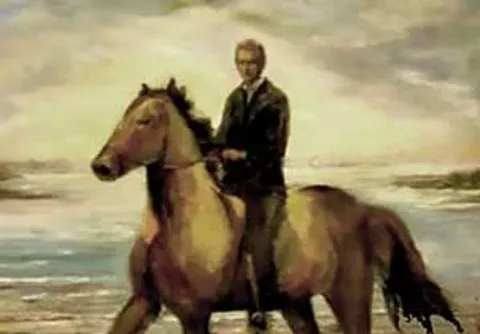 Henry Alline’s early years
He was born and received his early education in Newport, Rhode Island and his family moved to Nova Scotia in 1760, when he was 12 years old. When he was nine he began to read theological works and became somewhat mystical, but after years of soul-searching and spiritual conflict he was powerfully converted in 1775, simultaneously receiving a call to the ministry.
Alone and desperate he prayed until…’redeeming love broke into my soul… with such power that my whole soul seemed to be melted down with love…and my will turned of choice after the infinite God. A year later he began to preach.
His preaching career
His preaching career lasted until his death eight years later. He was an itinerant preacher in Nova Scotia and Prince Edward Island in an ever-widening circuit, beginning what became known as the ‘New Light’ movement and which is still the greatest revival that Canada has ever seen. He preached the new birth powerfully and effectively and his admirers compared him to George Whitefield and John the Baptist.
Considered an emotional and dangerous fanatic by some and a ‘ravager of congregations,’ the Congregationalists withdrew his right to preach in their churches, so he spoke in barns, houses and the open air. In all he began eight ‘New Light’ Congregational churches based on his non-Arminian but anti-Calvinist views of free-will and predestination, and his strong rejection of outward religious form.
Ironically, despite his indifference regarding baptism, his major 19th century influence was amongst the Baptists of eastern Canada, many of whom were his converts.
Despite possibly unorthodox views and methods, his ministry was without doubt that of an extraordinary revivalist.
Alline’s sermon style was always simple and extemporary, using a few simple, understandable points to help the unchurched to grasp the simple truths of the gospel. As with other itinerant revivalists, his objective was to lead the hearers to a point of decision – to accept or reject Christ as Saviour and Lord, which opened the door to the “new birth.”
Doubtless, his sermons were repeated over time, but he was never in one place long enough for his listeners to notice.
Alline also employed the ministry of prayer and of singing, writing many hymns which were helpful in communicating the gospel. A collection was gathered after his death and was reprinted at least four times in the United States, and several were included in the standard hymnals of the 19th century.
Henry Alline’s early years
He was born and received his early education in Newport, Rhode Island and his family moved to Nova Scotia in 1760, when he was 12 years old. When he was nine he began to read theological works and became somewhat mystical, but after years of soul-searching and spiritual conflict he was powerfully converted in 1775, simultaneously receiving a call to the ministry.
Alone and desperate he prayed until…’redeeming love broke into my soul… with such power that my whole soul seemed to be melted down with love…and my will turned of choice after the infinite God. A year later he began to preach.
His preaching career
His preaching career lasted until his death eight years later. He was an itinerant preacher in Nova Scotia and Prince Edward Island in an ever-widening circuit, beginning what became known as the ‘New Light’ movement and which is still the greatest revival that Canada has ever seen. He preached the new birth powerfully and effectively and his admirers compared him to George Whitefield and John the Baptist.
Considered an emotional and dangerous fanatic by some and a ‘ravager of congregations,’ the Congregationalists withdrew his right to preach in their churches, so he spoke in barns, houses and the open air. In all he began eight ‘New Light’ Congregational churches based on his non-Arminian but anti-Calvinist views of free-will and predestination, and his strong rejection of outward religious form.
Ironically, despite his indifference regarding baptism, his major 19th century influence was amongst the Baptists of eastern Canada, many of whom were his converts.
Despite possibly unorthodox views and methods, his ministry was without doubt that of an extraordinary revivalist.
Alline’s sermon style was always simple and extemporary, using a few simple, understandable points to help the unchurched to grasp the simple truths of the gospel. As with other itinerant revivalists, his objective was to lead the hearers to a point of decision – to accept or reject Christ as Saviour and Lord, which opened the door to the “new birth.”
Doubtless, his sermons were repeated over time, but he was never in one place long enough for his listeners to notice.
Alline also employed the ministry of prayer and of singing, writing many hymns which were helpful in communicating the gospel. A collection was gathered after his death and was reprinted at least four times in the United States, and several were included in the standard hymnals of the 19th century.
Kindness in a World Gone Mad
I was waiting in line with my sons for a roller coaster when the T-shirt caught my eye: Kindness is free — so sprinkle that stuff everywhere . I’m sympathetic to the message at one level. To many, the world feels meaner in recent years, and perhaps especially so since the last election cycle, COVID-19, and civil unrest. Yes, genuine human kindness, in the most basic of senses, has often been sorely lacking. More kindness would indeed be nice, and perhaps shine in new ways in times when we’re coming to expect meanness and outrage everywhere. But as admirable as the instincts behind the message are, the initial claim is badly mistaken. No, real kindness — the kind we really long for and need — is not free. And perhaps it would help us all to come to terms with that up front. Real kindness is costly. This Harsh World Deep down, we know that we live in a mean world — too mean to keep the meanness constantly at the forefront of our minds. Yet at times — more frequent for some than others — the meanness, the evil afoot in this world, accosts us. Even as bright as some days appear, there is a “present darkness” ( Ephesians 6:12 ), still under the sway of “the god of this world” ( 2 Corinthians 4:4 ). Pretender though he is, and numbered his days, his “domain of darkness” ( Colossians 1:13 ) is real, and “the power of darkness” ( Luke 22:53 ) treacherous. And not only has the world out there gone mad, but far too often the sway of the world, and the indwelling sin in us all, brings that meanness in here , into the people who profess to be Christ’s. Tragically, the very people who are to make Jesus known by their love for each other ( John 13:35 ) can be harsh, quarrelsome, impatient, shrill, nasty. It’s only human to respond in kind. But Christ requires of his church what is more than human: respond in kindness . Virtue in a Vacuum? In part, internal conflict in the Ephesian church prompted Paul’s second letter to Timothy. At the letter’s heart, the aging apostle gives his protégé this arresting charge: The Lord’s servant must not be quarrelsome but kind to everyone , able to teach, patiently enduring evil, correcting his opponents with gentleness. God may perhaps grant them repentance leading to a knowledge of the truth, and they may come to their senses and escape from the snare of the devil, after being captured by him to do his will. ( 2 Timothy 2:24–26 ) Christians have long celebrated kindness as one of the heavenly virtues . Yet we live in a day that often makes very little of kindness. We assume it’s free. We celebrate “random acts of kindness.” We think of kindness without context . Of course, in our mean world, it is pleasant to be surprised by a stranger’s kindness, free and random as it may seem. Sure, sprinkle that stuff everywhere. But the Christian vision of kindness is far deeper, more significant, and contextualized. “Kindness is not random or free, but a costly, counter-intuitive response to meanness, rather than responding in kind.” Christian kindness is no common courtesy or virtue in a vacuum, but a surprising response to mistreatment and hurt. It is not random or free, but a costly, counterintuitive response to meanness, to outrage, rather than responding in kind. As Don Carson comments on 1 Corinthians 13:4 , “Love is kind — not merely patient or long-suffering in the face of injury, but quick to pay back with kindness what it received in hurt” ( Showing the Spirit , 79). Companions of Kindness One way to see that Christian kindness is not random is to observe the kind of company it keeps, especially in the letters of Paul — who would be “the apostle of kindness,” if there were one. No one sprinkles costly kindness like Paul. Among other graces, kindness often appears hand in hand with patience and compassion. Patience appears side by side with kindness, and in the same order, in 2 Corinthians 6:6 and Galatians 5:22 : “patience, kindness.” So also, Paul presses them together in Romans 2:4 , in speaking of divine patience and kindness: “Do you presume on the riches of his kindness and forbearance and patience, not knowing that God’s kindness is meant to lead you to repentance?” So too, as we’ve seen, Christian pastors — “the Lord’s servant” in the midst of conflict — “must not be quarrelsome but kind to everyone, . . . patiently enduring evil” ( 2 Timothy 2:24 ). Kind to everyone — isn’t that surprising? The opponents here are false teachers. They must not be coddled or encouraged. Rather, they must be exposed and corrected — and yet that is no license to treat them harshly or with meanness. Opponents can be patiently endured and gently corrected. In fact, it would not be kind to a false teacher, or the church, to let him continue in error. Exposing his error and gently correcting him is kindness. As for compassion, Ephesians 4:32 memorably explains the command to “be kind to one another” with the word “tenderhearted” (or “compassionate,” Greek eusplanchnos ). Kindness is an expression of a tender, compassionate heart. Colossians 3:12 puts all three together, with humility and meekness: “Put on then, as God’s chosen ones, holy and beloved, compassionate hearts, kindness, humility, meekness, and patience.” Kindness, we might say, is a kind of secondary virtue. Compassion and patience, in various ways, make kindness possible. A compassionate heart leads to kindness, and external actions that give expression to that kindness. So also, patience makes internal kindness and its external acts possible. Patience gives emotional and practical space for kindness to ripen and move outward in physical acts. True kindness and its expressions (which are not random or free) complete and extend its companion virtues. The fruit of kindness needs the roots of patience and compassion, and they need kindness. Costly Kind Our young kids are still honest enough with themselves, and us, to admit to how costly kindness can be. When a sibling is mean, or someone on the playground, their natural response (and ours) is not to be kind, but to respond in kind. Which is why we consider kindness a Christian virtue — which doesn’t just happen spontaneously without practice and the enabling of the Holy Spirit. Kindness, Paul says, is the produce of the Spirit ( Galatians 5:22–23 ; 2 Corinthians 6:6 ), not of the natural human heart. Real kindness requires intervention from the outside, both from God’s Spirit and also his divine Son stepping into our mean world, showing us a different way, and doing it, climactically, to our eternal salvation and joy. As my wife and I have learned in almost fifteen years of marriage, kindness toward each other begins with God’s kindness toward us in Christ. Only then can we really find the resources to overcome evil with good, triumph over annoyance with patience, and rise above meanness with kindness. In other words, the heart of how we become kinder — not with free, random, imitation kindness, but with thick, genuine, Christian kindness — is knowing and enjoying the kindness of God toward us, and doing so specifically by feeding on, and taking our cues from, the very words of God. Behold His Kindness Our world, in its rebellion and cosmic treason, is no meaner than in its meanness to God himself — God who is holy and just. And yet what shocking kindness he displays, even toward the unbelieving. Our heavenly Father “is kind to the ungrateful and the evil” ( Luke 6:35 ). Even those who live the hardest, meanest of lives are surrounded by rays of God’s common kindness , as we might call it: beautiful days, human minds and bodies and words, friends and family, food and shelter, the everyday divine kindnesses we take for granted until they’re gone. “Even those who live the hardest, meanest of lives are surrounded by rays of God’s common kindness.” As Paul preached at Lystra, even “in past generations,” before Christ, when God “allowed all the nations to walk in their own ways,” he showed the unbelieving his common kindness, and “did not leave himself without witness, for he did good by giving you rains from heaven and fruitful seasons, satisfying your hearts with food and gladness” ( Acts 14:16–17 ). Such kindness even in our day, gratuitous as it may seem to us, is not wasted. It is not random but has purpose: “meant to lead you to repentance” ( Romans 2:4 ). Yet in the fullness of time, “the goodness and loving kindness of God our Savior appeared” ( Titus 3:4 ), bringing salvation — God’s special kindness — through faith in Christ. Such divine kindness not only brought eternal rescue for God’s long-chosen people, but it engrafts even strangers into God’s ancient tree of blessing through faith ( Romans 11:22 ). Jesus is Kindness incarnate, whose yoke is not severe, but (literally) kind ( Matthew 11:30 ). He is the Lord whom we, with new Spirit-given palates, taste as kind ( 1 Peter 2:3 ). Kindness Coming As Christ, by his Spirit, shows kindness to us, in his word and in our lives, he also forms us into instruments of his kindness to others. “God in Christ forgave you,” Paul says in Ephesians 4:32 . Therefore, “Be kind to one another, tenderhearted, forgiving one another.” Ultimately, it is the kindness of God that melts an unforgiving spirit, softens a hard heart, and transforms unkind actions. In Christ, we become the kind of people who see others , and have compassion for them, and exercise patience toward them, and show kindness to them, knowing not only that we ourselves have been shown kindness but that “in the coming ages [God himself will] show the immeasurable riches of his grace in kindness toward us in Christ Jesus” ( Ephesians 2:7 ). We have only begun to taste the kindness of our God.