
-480.webp)

The Fifteen Percent (Overcoming Hardships And Achieving Lasting Success) Order Printed Copy
- Author: Terry Giles
- Size: 8.94MB | 183 pages
- |
Others like the fifteen percent (overcoming hardships and achieving lasting success) Features >>
The Difference Maker
Three Feet From Gold
The Little Red Book Of Wisdom
When Life's Not Working - 7 Simple Choices
-160.webp)
The Principles And Power Of Vision (Keys To Achieving Personal And Corporate Destiny)
20 Tips From The World's Greatest Success Coach
The Art Of Laziness
Tools Of Titans
The Secrets Of Ceos
Value Investing
About the Book
"The Fifteen Percent" by Terry Giles is a motivational book that offers advice on how to overcome obstacles and achieve lasting success. Giles draws upon his own personal experiences to highlight the importance of perseverance, resilience, and taking risks in order to reach your goals. He emphasizes the significance of maintaining integrity and humility, while also stressing the value of hard work and determination. Overall, Giles' book serves as a guide for individuals looking to overcome hardships and achieve success in their personal and professional lives.
William Booth
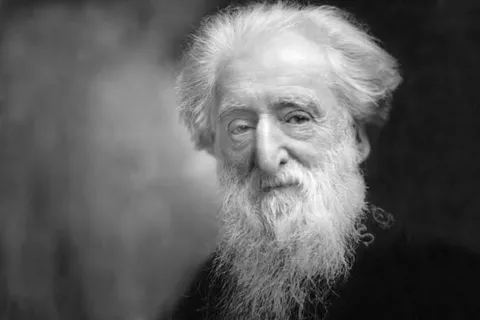 General William Booth’s early life
William Booth was born in Nottingham in 1829 of well-bred parents who had become poor. He was a lively lad nicknamed Wilful Wil. At the age of fifteen he was converted in the Methodist chapel and became the leader of a band of teenage evangelists who called him Captain and held street meetings with remarkable success.
In 1851 he began full-time Christian work among the Methodist Reformers in London and later in Lincolnshire. After a period in a theological college he became a minister of the Methodist New Connexion. His heart however was with the poor people unreached by his church, and in 1861 he left the Methodists to give himself freely to the work of evangelism. Joined by Catherine, his devoted wife, they saw their ministry break out into real revival, which in Cornwall spread far and wide.
One memorable day in July 1865, after exploring the streets in an East End district where he was to conduct a mission, the terrible poverty, vice and degradation of these needy people struck home to his heart. He arrived at his Hammersmith home just before midnight and greeted his waiting Catherine with these words: “Darling, I have found my destiny!” She understood him. Together they had ministered God’s grace to God’s poor in many places.
Now they were to spend their lives bringing deliverance to Satan”s captives in the evil jungle of London”s slums. One day William took Bramwell, his son, into an East End pub which was crammed full of dirty, intoxicated creatures. Seeing the appalled look on his son”s face, he said gently, “Bramwell, these are our people—the people I want you to live for.”
William and Catherine loved each other passionately all their lives. And no less passionately did they love their Lord together. Now, although penniless, together with their dedicated children, they moved out in great faith to bring Christ”s abundant life to London”s poverty-stricken, devil-oppressed millions.
At first their organisation was called the Christian Mission. In spite of brutal opposition and much cruel hardship, the Lord blessed this work, and it spread rapidly.
William Booth was the dynamic leader who called young men and women to join him in this full-time crusade. With enthusiastic abandon, hundreds gave up all to follow him.
“Make your will, pack your box, kiss your girl and be ready in a week”, he told one young volunteer.
Salvation Army born
One day as William was dictating a report on the work to George Railton, his secretary, he said, “We are a volunteer army,”
“No”, said Bramwell, “I am a regular or nothing.”
His father stopped in his stride, bent over Railton, took the pen from his hand, and crossing out the word “volunteer”, wrote “salvation”. The two young men stared at the phrase “a salvation army”, then both exclaimed “Hallelujah”. So the Salvation Army was born.
As these dedicated, Spirit-filled soldiers of the cross flung themselves into the battle against evil under their blood and fire banner, amazing miracles of deliverance occurred. Alcoholics, prostitutes and criminals were set free and changed into workaday saints.
Cecil Rhodes once visited the Salvation Army farm colony for men at Hadleigh, Essex, and asked after a notorious criminal who had been converted and rehabilitated there.
“Oh”, was the answer, “He has left the colony and has had a regular job outside now for twelve months.”
“Well” said Rhodes in astonishment, “if you have kept that man working for a year, I will believe in miracles.”
Slave traffic
The power that changed and delivered was the power of the Holy Spirit. Bramwell Booth in his book Echoes and Memories describes how this power operated, especially after whole nights of prayer. Persons hostile to the Army would come under deep conviction and fall prostrate to the ground, afterward to rise penitent, forgiven and changed. Healings often occurred and all the gifts of the Spirit were manifested as the Lord operated through His revived Body under William Booth’s leadership.
Terrible evils lay hidden under the curtain of Victorian social life in the nineteenth century. The Salvation Army unmasked and fought them. Its work among prostitutes soon revealed the appalling wickedness of the white slave traffic, in which girls of thirteen were sold by their parents to the pimps who used them in their profitable brothels, or who traded them on the Continent.
“Thousands of innocent girls, most of them under sixteen, were shipped as regularly as cattle to the state-regulated brothels of Brussels and Antwerp.” (Collier).
Imprisoned
In order to expose this vile trade, W. T. Stead (editor of The Pall Mall Gazette) and Bramwell Booth plotted to buy such a child in order to shock the Victorians into facing the fact of this hidden moral cancer in their society. This thirteen-year-old girl, Eliza Armstrong, was bought from her mother for £5 and placed in the care of Salvationists in France.
W. T. Stead told the story in a series of explosive articles in The Pall Mall Gazette which raised such a furore that Parliament passed a law raising the age of consent from thirteen to sixteen. However, Booth and Stead were prosecuted for abduction, and Stead was imprisoned for three months.
William Booth always believed the essential cause of social evil and suffering was sin, and that salvation from sin was its essential cure. But as his work progressed, he became increasingly convinced that social redemption and reform should be an integral part of Christian mission.
So at the age of sixty he startled England with the publication of the massive volume entitled In Darkest England, and the Way Out. It was packed with facts and statistics concerning Britain’s submerged corruption, and proved that a large proportion of her population was homeless, destitute and starving. It also outlined Booth’s answer to the problem — his own attempt to begin to build the welfare state.
All this was the result of two years” laborious research by many people, including the loyal W. T. Stead. On the day the volume was finished and ready for publication, Stead was conning its final pages in the home of the Booths. At last he said, “That work will echo round the world. I rejoice with an exceeding great joy.”
“And I”, whispered Catherine, dying of cancer in a corner of the room, “And I most of all thank God. Thank God!” As the work of the Salvation Army spread throughout Britain and into many countries overseas, it met with brutal hostility. In many places Skeleton Armies were organised to sabotage this work of God. Hundreds of officers were attacked and injured (some for life). Halls and offices were smashed and fired. Meetings were broken up by gangs organised by brothel keepers and hostile publicans.
One sympathiser in Worthing defended his life and property with a revolver. But Booth’s soldiers endured the persecution for many years, often winning over their opponents by their own offensive of Christian love.
The Army that William Booth created under God was an extension of his own dedicated personality. It expressed his own resolve in his words which Collier places on the first page of his book:
“While women weep as they do now, I’ll fight; while little children go hungry as they do now, I’ll fight; while men go to prison, in and out, in and out, as they do now, I’ll fight—I’ll fight to the very end!”
Toward the end of his life, he became blind. When he heard the doctor’s verdict that he would never see again, he said to his son: “Bramwell, I have done what I could for God and the people with my eyes. Now I shall see what I can do for God and the people without my eyes.”
But the old warrior had finally laid down his sword. His daughter, Eva, head of the Army’s work in America, came home to say her last farewell. Standing at the window she described to her father the glory of that evening’s sunset.
“I cannot see it,” said the General, “but I shall see the dawn.”
General William Booth’s early life
William Booth was born in Nottingham in 1829 of well-bred parents who had become poor. He was a lively lad nicknamed Wilful Wil. At the age of fifteen he was converted in the Methodist chapel and became the leader of a band of teenage evangelists who called him Captain and held street meetings with remarkable success.
In 1851 he began full-time Christian work among the Methodist Reformers in London and later in Lincolnshire. After a period in a theological college he became a minister of the Methodist New Connexion. His heart however was with the poor people unreached by his church, and in 1861 he left the Methodists to give himself freely to the work of evangelism. Joined by Catherine, his devoted wife, they saw their ministry break out into real revival, which in Cornwall spread far and wide.
One memorable day in July 1865, after exploring the streets in an East End district where he was to conduct a mission, the terrible poverty, vice and degradation of these needy people struck home to his heart. He arrived at his Hammersmith home just before midnight and greeted his waiting Catherine with these words: “Darling, I have found my destiny!” She understood him. Together they had ministered God’s grace to God’s poor in many places.
Now they were to spend their lives bringing deliverance to Satan”s captives in the evil jungle of London”s slums. One day William took Bramwell, his son, into an East End pub which was crammed full of dirty, intoxicated creatures. Seeing the appalled look on his son”s face, he said gently, “Bramwell, these are our people—the people I want you to live for.”
William and Catherine loved each other passionately all their lives. And no less passionately did they love their Lord together. Now, although penniless, together with their dedicated children, they moved out in great faith to bring Christ”s abundant life to London”s poverty-stricken, devil-oppressed millions.
At first their organisation was called the Christian Mission. In spite of brutal opposition and much cruel hardship, the Lord blessed this work, and it spread rapidly.
William Booth was the dynamic leader who called young men and women to join him in this full-time crusade. With enthusiastic abandon, hundreds gave up all to follow him.
“Make your will, pack your box, kiss your girl and be ready in a week”, he told one young volunteer.
Salvation Army born
One day as William was dictating a report on the work to George Railton, his secretary, he said, “We are a volunteer army,”
“No”, said Bramwell, “I am a regular or nothing.”
His father stopped in his stride, bent over Railton, took the pen from his hand, and crossing out the word “volunteer”, wrote “salvation”. The two young men stared at the phrase “a salvation army”, then both exclaimed “Hallelujah”. So the Salvation Army was born.
As these dedicated, Spirit-filled soldiers of the cross flung themselves into the battle against evil under their blood and fire banner, amazing miracles of deliverance occurred. Alcoholics, prostitutes and criminals were set free and changed into workaday saints.
Cecil Rhodes once visited the Salvation Army farm colony for men at Hadleigh, Essex, and asked after a notorious criminal who had been converted and rehabilitated there.
“Oh”, was the answer, “He has left the colony and has had a regular job outside now for twelve months.”
“Well” said Rhodes in astonishment, “if you have kept that man working for a year, I will believe in miracles.”
Slave traffic
The power that changed and delivered was the power of the Holy Spirit. Bramwell Booth in his book Echoes and Memories describes how this power operated, especially after whole nights of prayer. Persons hostile to the Army would come under deep conviction and fall prostrate to the ground, afterward to rise penitent, forgiven and changed. Healings often occurred and all the gifts of the Spirit were manifested as the Lord operated through His revived Body under William Booth’s leadership.
Terrible evils lay hidden under the curtain of Victorian social life in the nineteenth century. The Salvation Army unmasked and fought them. Its work among prostitutes soon revealed the appalling wickedness of the white slave traffic, in which girls of thirteen were sold by their parents to the pimps who used them in their profitable brothels, or who traded them on the Continent.
“Thousands of innocent girls, most of them under sixteen, were shipped as regularly as cattle to the state-regulated brothels of Brussels and Antwerp.” (Collier).
Imprisoned
In order to expose this vile trade, W. T. Stead (editor of The Pall Mall Gazette) and Bramwell Booth plotted to buy such a child in order to shock the Victorians into facing the fact of this hidden moral cancer in their society. This thirteen-year-old girl, Eliza Armstrong, was bought from her mother for £5 and placed in the care of Salvationists in France.
W. T. Stead told the story in a series of explosive articles in The Pall Mall Gazette which raised such a furore that Parliament passed a law raising the age of consent from thirteen to sixteen. However, Booth and Stead were prosecuted for abduction, and Stead was imprisoned for three months.
William Booth always believed the essential cause of social evil and suffering was sin, and that salvation from sin was its essential cure. But as his work progressed, he became increasingly convinced that social redemption and reform should be an integral part of Christian mission.
So at the age of sixty he startled England with the publication of the massive volume entitled In Darkest England, and the Way Out. It was packed with facts and statistics concerning Britain’s submerged corruption, and proved that a large proportion of her population was homeless, destitute and starving. It also outlined Booth’s answer to the problem — his own attempt to begin to build the welfare state.
All this was the result of two years” laborious research by many people, including the loyal W. T. Stead. On the day the volume was finished and ready for publication, Stead was conning its final pages in the home of the Booths. At last he said, “That work will echo round the world. I rejoice with an exceeding great joy.”
“And I”, whispered Catherine, dying of cancer in a corner of the room, “And I most of all thank God. Thank God!” As the work of the Salvation Army spread throughout Britain and into many countries overseas, it met with brutal hostility. In many places Skeleton Armies were organised to sabotage this work of God. Hundreds of officers were attacked and injured (some for life). Halls and offices were smashed and fired. Meetings were broken up by gangs organised by brothel keepers and hostile publicans.
One sympathiser in Worthing defended his life and property with a revolver. But Booth’s soldiers endured the persecution for many years, often winning over their opponents by their own offensive of Christian love.
The Army that William Booth created under God was an extension of his own dedicated personality. It expressed his own resolve in his words which Collier places on the first page of his book:
“While women weep as they do now, I’ll fight; while little children go hungry as they do now, I’ll fight; while men go to prison, in and out, in and out, as they do now, I’ll fight—I’ll fight to the very end!”
Toward the end of his life, he became blind. When he heard the doctor’s verdict that he would never see again, he said to his son: “Bramwell, I have done what I could for God and the people with my eyes. Now I shall see what I can do for God and the people without my eyes.”
But the old warrior had finally laid down his sword. His daughter, Eva, head of the Army’s work in America, came home to say her last farewell. Standing at the window she described to her father the glory of that evening’s sunset.
“I cannot see it,” said the General, “but I shall see the dawn.”
The Brave Stunt That Brought Down Slavery
Have you ever heard about the extraordinary effect that the life of David Livingstone (1813–1873) had on the East African slave trade? It received only a passing sentence in an article I wrote two years ago. Then that summer, another world opened to me. I read Jay Milbrandt’s The Daring Heart of David Livingstone: Exile, African Slavery, and the Publicity Stunt That Saved Millions. I would like to give you a window into that world. Milbrandt’s subtitle is not only provocative; it prepares you for what’s coming. “Exile” refers to the long stretches of time Livingstone spent in the eastern interior of Africa, cut off from his homeland — sending, in one season, over forty letters, only to have one get through. “African Slavery” refers to “the devilish traffic in human flesh” feeding not the American plantations from West Africa, but the plantations of Arabia, Persia, and India, especially via the routes through the island of Zanzibar off the eastern coast of today’s Tanzania. “The Publicity Stunt” refers to Livingstone’s internationally hyped expedition to find the headwaters of the Nile. Milbrandt calls it a “stunt” because Livingstone’s deeper motive was not the Nile. “Livingstone was no longer mounting a Nile expedition, but a grand publicity stunt. The Nile quest provided the platform he needed to campaign against the slave trade” (118). The final phrase of the subtitle, “That Saved Millions,” carries more than one meaning. Not only was slavery declared illegal in colonial East Africa 36 days after Livingstone’s death, but his larger dream to see a “Christian Africa” was in one sense realized 140 years later, because “as of 2012, a Pew Foundation study reported 63% of Sub-Saharan Africa as identifiably Christian” (247). Missionary, Doctor, Advocate David Livingstone did not set out to be a global voice for the healing of the “open sore of the world” — the East African slave trade. He set out to heal the disease of sin with the gospel, and the diseases of the body with medical training — all the while believing the Africans were not subhuman. As a young man, he heard Robert Moffat, a missionary to South Africa, say, “I had sometimes seen in the morning sun the smoke of a thousand villages where no missionary had ever been.” This image captured him. God’s call emerged as Moffat’s testimony mingled with Livingstone’s confidence that the word of God would do its saving work: The Word written shall find its own mysterious tortuous way into every region, dialect, and language of the earth; and men shall be convinced of sin, as well as taught their need of a Saviour by its life-giving power. It shall whisper peace to the agitated conscience, and tell of the love of a Father reconciling the world to himself by the blood of his Son. (Dr. Livingstone’s Cambridge Lectures, 179) Then two more pieces of Livingstone’s calling were put in place. One was his conviction that medical training was crucial. Waiting to be sent by the London Missionary Society, Livingstone studied medicine at the Charing Cross Hospital Medical School. He said, My great object was to be like Him, to imitate Him as far as He could be imitated. We have not the power of working miracles, but we can do a little in the way of healing the sick, and I sought medical education in order that I might be like Him. (Daring Heart, 21) The other piece of his calling was the conviction that Africans were fully human — as he would discover, to his horror, the slave traders did not believe, with murderous results. In answer to objectors, we would say, Were not the ancient Egyptians true Negroes? They were masters of the civilization of the world. When Greece was just emerging from the shades of barbarism, and before the name of Rome was known, the negro-land of Mizraim was proficient in science and art, and Thebes, the wonder city of the world. Solon, Plato, and a host of our Greek and Roman intellectual masters confess their obligation to the stupendous “learning of the Egyptians” in which Moses was so apt and able a scholar; notwithstanding, too often does the white man of the present day undervalue the humble descendant of that giant who helped to make him what he is! (Dr. Livingstone’s Cambridge Lectures, 124) The seeds were all sown for the fury and perseverance Livingstone would repeatedly experience in the years to come, as he came closer and closer to “the open sore of the world.” ‘Establishing Trade, Destroying Slavery’ At first, he was optimistic that legitimate commerce with East Africa would dry up the need for slave capturing and trading. “I believe we can by legitimate commerce, in the course of a few years, put an entire stop to the traffic of slaves over a large extent of territory” (Daring Heart, 23). He believed this would even have profound effects on West African slave trading with America: England has, unfortunately, been compelled to obtain cotton and other raw material from the slave States, and has thus been the mainstay and support of slavery in America. Surely, then, it follows that if we can succeed in obtaining the raw material from other sources than from the slave States of America, we should strike a heavy blow at the system of slavery itself. (36) Over time, Livingstone came to see that “establishing trade and destroying slavery,” though connected, would not be achieved without working to turn the hearts of the entire British establishment, at home and in the colonies, against a trade that they were almost totally ignorant of. Hence his “stunt.” Picking Up His Pen At great cost to himself, Livingstone probed deeper and deeper into the darkness of the Arab and Portuguese slave trade, with indirect British support. On humanitarian grounds, the expedition had also uncovered the immense and devastating Arab slave trade and its routes through the Nyassa region to Zanzibar. These findings were new, informing the world and the British foreign office of unresolved horrors. (104) In 1864, he returned to England and took up his pen. In his earlier book Missionary Travels, he had written cautiously about the slave trade. But in recent years, in his travels along the Zambezi River, he had seen unspeakable cruelty. So in the preface to A Narrative of an Expedition to the Zambezi and Its Tributaries, he wrote, “It has been my object . . . to bring before my countrymen, and all others interested in the cause of humanity, the misery entailed by the slave-trade in its inland phases” (110). He had set his face to return to Africa and press on with his explorations and his exposure of the “gigantic evil” of the slave trade. “I am going out again. . . . It is only by holding on bulldog fashion one can succeed in doing anything against that gigantic evil, the slave trade” (121). ‘Sick of Human Blood’ What he saw as the years went by got worse. He describes one experience in which four hundred villagers — men and women — were gunned down. A slave trader named Dugumbe wanted complete control of the area without competing traders. One village was complicit in trading with others. Violence broke out. As the assailants continued their indiscriminate slaughter in the marketplace, an armed party near the Creek opened fire on those dashing toward the water. Even as the villagers, mostly unarmed women, attempted to flee across the nearby river, the attackers continued to fire on them. Aiming for their exposed heads, they shot those trying to swim to safety. . . . Dugumbe’s men had gunned down 400 men and women, all unarmed, and even killed two of their own. Then they followed the people back to their homes. The warfare continued. Livingstone counted 12 burning villages. (174) Livingstone wrote with great heaviness, “The prospects of getting slaves overpowers all else, and blood flows in horrid streams. I am heartsore, and sick of human blood” (172). Seeking the Nile, Finding a Mouth In a letter to his brother, Livingstone reasserted the terms of the “stunt”: If the good Lord permits me to put a stop to the enormous evils of the inland slave-trade, I shall not grudge my hunger and toils. I shall bless His name with all my heart. The Nile sources are valuable to me only as a means of enabling me to open my mouth with power among men. (210) In fact, the “stunt” worked. Both in England and America, Livingstone’s “mouth” — that is, his correspondence — was being heard with power. The famous Henry Stanley (“Dr. Livingstone, I presume”) had been sent by the American newspaper the New York Herald to find Livingstone after six years of being out of touch. He found him in November 1871, spent four months with him, came to love and admire him, and gave him a global voice by publishing his letters about the slave trade. On July 2, 1872, Livingstone wrote in the Herald, If my disclosures regarding the terrible Ujijian slavery should lead to the suppression of the east coast slave trade, I shall regard that as a greater matter by far than the discovery of all the Nile sources together. (201) Stanley’s book How I Found Livingstone was very popular both in America and England. It made Livingstone not just a British hero, but a transatlantic one. In another letter to the Herald, he repeated his life priorities: It would be better to lessen this great human woe than to discover the sources of the Nile. . . . May Heaven’s rich blessing come down on everyone, American, English, or Turk, who will help to heal this open sore of the world. (207) The Awakening of Parliament The effect of Livingstone’s communications in Britain was more than popular. It was political. Livingstone was informed by the head of the Royal Geographic Society, H.C. Rawlinson, that British intervention in Zanzibar was imminent: You will no doubt have heard of Sir Bartle Frere’s deputation to Zanzibar long before you receive this, and you will have learned with heartfelt satisfaction that there is now a definite prospect of the infamous East African slave-trade being suppressed. For this great end, if it be achieved, we shall be mainly indebted to your recent letters, which have had a powerful effect on the public mind in England, and have thus stimulated the action of the government. (214) The sultan of Zanzibar was given an ultimatum: “Consent immediately to the terms of the slave-trade-suppressing treaty, or face a blockade by British naval forces” (215). A little over a month after Livingstone’s death, the Zanzibar slave market closed forever. Queen Victoria announced the success to parliament: “Treaties have been concluded with the Sultan of Zanzibar . . . which provide means for the more effectual repression of the slave trade on the east coast of Africa” (221). Entering Glory on His Knees On May 1, 1873, David Livingstone was found dead, kneeling beside his bed with his face in his hands on the pillow. His longtime African servants and friends removed his vital organs in preparing the body for preservation and return to England. They buried his heart in a tin flour box under a mvula tree. Jacob Wainwright read Scripture and carved Livingstone’s name into the tree (217). After nine harrowing months of an extraordinary labor of love, Livingstone’s body reached the coast of Africa. It arrived in England on April 15, 1874, to a national day of mourning. The April 18 funeral was paid for by the British government. Amid huge crowds, his body was laid to rest in Westminster Abbey. His epitaph reads, in part, For 30 years his life was spent in an unwearied effort to evangelize the native races, to explore the undiscovered secrets, to abolish the desolating slave trade . . . this open sore of the world. Punch, a London magazine, muted its satire to bid farewell to David Livingstone: He knew not that the trumpet he had blown Out of the darkness of that dismal land Had reached and roused an army of its own To strike the chains from the slaves fettered hand. . . . He needs no epitaph to guard a name Which men shall prize while worthy work is known He lived and died for good be that his fame Let marble crumble this is Living stone. (228) Article by John Piper
-480.webp)