
-480.webp)

The Fifteen Percent (Overcoming Hardships And Achieving Lasting Success) Order Printed Copy
- Author: Terry Giles
- Size: 8.94MB | 183 pages
- |
Others like the fifteen percent (overcoming hardships and achieving lasting success) Features >>
The Difference Maker
Three Feet From Gold
The Little Red Book Of Wisdom
When Life's Not Working - 7 Simple Choices
-160.webp)
The Principles And Power Of Vision (Keys To Achieving Personal And Corporate Destiny)

20 Tips From The World's Greatest Success Coach
The Art Of Laziness

Tools Of Titans

The Secrets Of Ceos
Value Investing
About the Book
"The Fifteen Percent" by Terry Giles is a motivational book that offers advice on how to overcome obstacles and achieve lasting success. Giles draws upon his own personal experiences to highlight the importance of perseverance, resilience, and taking risks in order to reach your goals. He emphasizes the significance of maintaining integrity and humility, while also stressing the value of hard work and determination. Overall, Giles' book serves as a guide for individuals looking to overcome hardships and achieve success in their personal and professional lives.
Kenneth E. Hagin
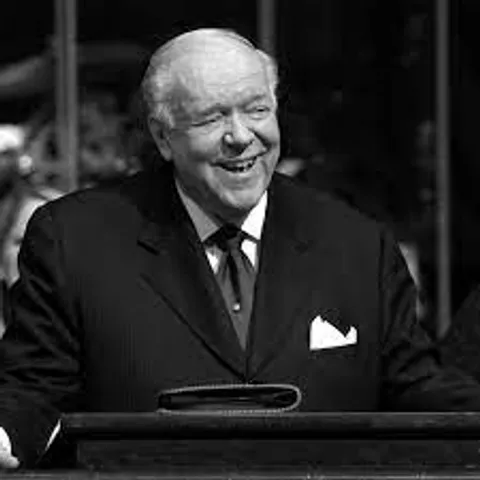 Rev. Kenneth Erwin Hagin was born on Aug. 20, 1917, in McKinney, Texas. Rev. Hagin was sickly as a child, suffering from a deformed heart and an incurable blood disease. He was not expected to live and became bedfast at age 15. In April 1933 during a dramatic conversion experience, he reported dying three times in 10 minutes, each time seeing the horrors of hell and then returning to life.
In August 1934, Rev. Hagin was miraculously healed, raised off a deathbed by the power of God and the revelation of faith in God’s Word. Jesus appeared to Rev. Hagin eight times over the next several years in visions that changed the course of his ministry. In 1967, he began a regular radio broadcast that continues today as Rhema for Today.
In 1968 Rev. Hagin published the first issues of The Word of Faith. That magazine, now produced nine times a year, has a circulation of over 200,000. The publishing outreach he founded, Faith Library Publications, has circulated worldwide more than 75 million copies of books by Rev. Hagin, Kenneth W. Hagin, Lynette Hagin, Craig W. Hagin, and several other authors. Faith Library Publications also has produced millions of audio and video teachings.
Other outreaches of Kenneth Hagin Ministries include Rhema Praise, a weekly television broadcast hosted by Revs. Kenneth and Lynette Hagin; Rhema Correspondence Bible School; Rhema Alumni Association; Rhema Ministerial Association International; the Rhema Prayer and Healing Center; and the Rhema prison ministry.
In 1974 Rev. Hagin founded what is now Rhema Bible Training College. The school has campuses all over the world and continues to expand.
Until shortly before his death, Rev. Hagin continued to travel and teach throughout the United States and into Canada conducting All Faiths’ Crusades and other special meetings.
Known as the “father of the modern faith movement,” Rev. Hagin was a dynamic preacher, teacher, and prophet. His teachings and books are filled with vivid stories that show God’s power and truth working in his life and the lives of others. He will be remembered not only as a great minister but as a great family man—for his family was his heart. He was there at every milestone ready to talk, to answer, to pray. He was a man whose belly laugh filled the room at the sight of one of his grandchildren or great-grandchildren.
Rev. Kenneth Erwin Hagin was born on Aug. 20, 1917, in McKinney, Texas. Rev. Hagin was sickly as a child, suffering from a deformed heart and an incurable blood disease. He was not expected to live and became bedfast at age 15. In April 1933 during a dramatic conversion experience, he reported dying three times in 10 minutes, each time seeing the horrors of hell and then returning to life.
In August 1934, Rev. Hagin was miraculously healed, raised off a deathbed by the power of God and the revelation of faith in God’s Word. Jesus appeared to Rev. Hagin eight times over the next several years in visions that changed the course of his ministry. In 1967, he began a regular radio broadcast that continues today as Rhema for Today.
In 1968 Rev. Hagin published the first issues of The Word of Faith. That magazine, now produced nine times a year, has a circulation of over 200,000. The publishing outreach he founded, Faith Library Publications, has circulated worldwide more than 75 million copies of books by Rev. Hagin, Kenneth W. Hagin, Lynette Hagin, Craig W. Hagin, and several other authors. Faith Library Publications also has produced millions of audio and video teachings.
Other outreaches of Kenneth Hagin Ministries include Rhema Praise, a weekly television broadcast hosted by Revs. Kenneth and Lynette Hagin; Rhema Correspondence Bible School; Rhema Alumni Association; Rhema Ministerial Association International; the Rhema Prayer and Healing Center; and the Rhema prison ministry.
In 1974 Rev. Hagin founded what is now Rhema Bible Training College. The school has campuses all over the world and continues to expand.
Until shortly before his death, Rev. Hagin continued to travel and teach throughout the United States and into Canada conducting All Faiths’ Crusades and other special meetings.
Known as the “father of the modern faith movement,” Rev. Hagin was a dynamic preacher, teacher, and prophet. His teachings and books are filled with vivid stories that show God’s power and truth working in his life and the lives of others. He will be remembered not only as a great minister but as a great family man—for his family was his heart. He was there at every milestone ready to talk, to answer, to pray. He was a man whose belly laugh filled the room at the sight of one of his grandchildren or great-grandchildren.
Lord, Teach Us to Work
One human life in all the Scriptures towers above the others. All who came before anticipated him, and all who follow after orient to him. And thanks to the biographical sketches found in the four Gospels of the New Testament, we know more details about Jesus’s everyday life than any other biblical figure. Moses and David, and Peter and Paul, who all both wrote much and had much written about them, are not unveiled with the same richness, depth, and detail as Christ. And for good reason. None compares to God himself dwelling among us in fully human soul and body. And no one accomplished the work that he accomplished. “The Gospels not only show us a man who worked, but also one who didn’t only work.” All four accounts are Gospels, driving toward his final week, his arrest, his trial, his death, the long pause of Holy Saturday, and then, at last, his resurrection. And so, as careful readers of the Gospels, we beware gathering up details about Jesus’s life and unhitching them from where his whole life was going. Still, we do have more to learn from the life of Christ than the events of his final week (which comprise less than half the Gospels). One theme, especially pronounced in the Gospel of John, is what we might see as the “work ethic” of Christ. Jesus Worked Observe, first, that Jesus did work — and consider what he meant by work rather than what we might assume. The night before he died, he prayed to his Father, as his men listened, “I glorified you on earth, having accomplished the work that you gave me to do” (John 17:4). In a sense, his whole life had been a single work — a “life’s work” we might say. He had a calling and commission. His Father gave him work to do. And this was good — a blessing, not a curse. Jesus did not begrudge this work. Instead, he experienced a kind of satisfaction in doing the work his Father had assigned him. In fact, his soul fed on accomplishing his Father’s work, as he testified standing by the well in Samaria. “My food is to do the will of him who sent me and to accomplish his work” (John 4:34). Jesus also speaks in John 9 about stewarding time in such a life. Here he sounds like Moses’s prayer to “teach us to number our days” (Psalm 90:12) and Paul’s exhortation to “[make] the best use of the time” (Ephesians 5:15–16). “Night is coming, when no one can work,” he says, and knowing that, “we must work the works of him who sent me while it is day” (John 9:4). He had an appointed season of earthly life. Eternity would come, but for now, he was on the clock. He had work to accomplish. “As long as I am in the world, I am the light of the world” (John 9:5). He even “worked” on the Sabbath, or at least was accused of it. And he answered the charge not by saying he wasn’t working, but that “My Father is working until now, and I am working” (John 5:17). He Didn’t Only Work The Gospels not only show us a man who worked, but also one who didn’t only work. His life was more than his work. He rested and retreated, and called his weary disciples away to rest with him. When they had returned from their commission, and “told him all that they had done and taught” (and teaching, done well, can be really hard work), he said to them, “Come away by yourselves to a desolate place and rest a while.” For many were coming and going, and they had no leisure even to eat. And they went away in the boat to a desolate place by themselves. (Mark 6:30–32) Jesus also slept. He may have stayed up all night to pray before choosing his twelve, and eschewed sleep to pray in the garden, but those were unusual circumstances. He slept in peace on a storm-tossed ship until his disciples frantically woke him, and as the great personal fulfillment of the Psalms, he did not despise Solomon’s wisdom in Psalm 127:2, It is in vain that you rise up early and go late to rest, eating the bread of anxious toil; for he gives to his beloved sleep. What His Work Accomplished That Jesus worked (and didn’t only work) is plain enough, but what did his work mean? Much of what we have from the Gospels about his work is from his own mouth. First, he was conscious that his work bore witness to his Father. Indeed, his life-work was to glorify his Father, to make him known truly and admired duly (John 17:4, 6, 26). “Every indication we have of Jesus’s life and ministry is that he was (and was known as) a worker, not an idler.” And Jesus’s works demonstrated that the Father had sent him. “The works that the Father has given me to accomplish, the very works that I am doing, bear witness about me that the Father has sent me” (John 5:36; also John 10:25, 32). Not just that he was sent as a mere man. The way he taught (with authority, Matthew 7:29; Mark 1:22, 27; Luke 4:32; John 7:17), and the miracles he performed, pointed to his being more than a prophet — to the almost unspeakable truth that this is God himself. Even though you do not believe me, believe the works, that you may know and understand that the Father is in me and I am in the Father. (John 10:38) Do you not believe that I am in the Father and the Father is in me? The words that I say to you I do not speak on my own authority, but the Father who dwells in me does his works. Believe me that I am in the Father and the Father is in me, or else believe on account of the works themselves. (John 14:10–11) His works, performed in the world with human words and hands, showed who he was, and whose he was — just as those who rejected him showed through their works who was their father (John 8:38–41). Industry Without Frenzy Every indication we have of Jesus’s life and ministry is that he was (and was known as) a worker, not an idler. Not only did he labor in obscurity as a tradesman for thirty years, supporting his family as the man of the house after the death of Joseph, but the tenor of his ministry was one of energy and industry, not laziness or lethargy. His life was not without weariness (John 4:6); nor was it without physical rest and spiritual retreat (Mark 6:31). He did not think of his work as his own but as his Father’s. And for the sake of the faith of the people his Father had given him, he expended the energy God gave him, day in and day out, to carry out his calling. We get the clear impression from the Gospels that he was busy. He was in great demand. His days were long. Yet we never get the sense that he was anxious or frenzied (even when a desperate father tries to whisk him away to save a dying daughter, Mark 5:22–36). His life was busy but not hurried. He knew his calling and gave himself to it. Not without sleep or leisure, but he didn’t live to rest. We Work for Good For those of us who claim him as Lord, it is sobering to realize that on multiple occasions Jesus calls us “laborers” (Matthew 20:1, 2, 8, 14). Not only did he say the gospel “laborer deserves his wages” (Luke 10:7; Matthew 10:10), but he instructed us, as his workmen, to pray for more: The harvest is plentiful, but the laborers are few; therefore pray earnestly to the Lord of the harvest to send out laborers into his harvest. (Matthew 9:37–38; Luke 10:2) Jesus calls us to work, to expend energy and effort, for the good of others. This is what makes our acts good works: that our work is good for others, not just self. “Let your light shine before others, so that they may see your good works and give glory to your Father who is in heaven” (Matthew 5:16). We Learn Humble Limits In Christ, we work, but we quickly learn, and happily acknowledge, the limits of our labors. We learn, with Peter, that Christ’s word is effective in a way that our work is not. “Master, we toiled all night and took nothing! But at your word I will let down the nets” (Luke 5:5). Our work in this world depends on his to be genuinely fruitful and of lasting value. In fact, in particular times and ways, our not working (as in justification by faith alone) is a way to accentuate Christ’s provision and work for us (Romans 4:5). There is a time to flee, in his grace, with our own feet for freedom from Egypt, and a time to stand back “and see the salvation of the Lord, which he will work for you today. . . . The Lord will fight for you, and you have only to be silent” (Exodus 14:13–14). Our work is fruit. His work is root. At bottom, we are like lilies of the field that “neither toil nor spin,” says Jesus, “yet I tell you, even Solomon in all his glory was not arrayed like one of these” (Matthew 6:28–29; Luke 12:27). “Jesus had a call and gave himself to it. Not without sleep or leisure, but he didn’t live to rest.” The foundation of Jesus’s work ethic as an example to us is the uniqueness of his work for us. The culmination of his work was his death and resurrection for sinners in a way we cannot imitate. There is a completed course (Luke 13:32), a unique finished work (John 19:30), an inimitable work we dare not seek to replace with our own. Christ does indeed call us to be laborers but not first and foremost. And when he does summon us into the fields, he invites us into a kind of rest: Come to me, all who labor and are heavy laden, and I will give you rest. Take my yoke upon you, and learn from me, for I am gentle and lowly in heart, and you will find rest for your souls. For my yoke is easy, and my burden is light. (Matthew 11:28–30) Don’t misunderstand. He doesn’t call us merely into rest. But into a kind of labor, in him, that is true rest — into a kind of rest in which we receive his yoke and burden, and yet they are easy and light. While he himself works so diligently, he is gentle toward us, and lowly in heart. So, the labor into which we enter, in his service, is humble work. We acknowledge and admit, however pioneering and enterprising our work may seem, that where it counts most, we are building on the work, and reaping the harvest, of others — first Christ himself, and also our fellows in him. “I sent you to reap that for which you did not labor,” he says to his disciples. “Others have labored, and you have entered into their labor” (John 4:38). In humility, we do not pretend to start kingdom work from scratch, claim it as our own, and make ourselves out to be the hero. Rather, God calls us to build upon the faithful labors of others. Our work is not a tribute to our greatness. In humility, we embrace the context into which God calls us, and do our level best to build, to take the next modest steps. How We Work Finally, what might the life and work of Christ teach us for how we are to work? First, we own that our working and Jesus’s giving (grace) are not at odds. We work because he is at work. “Whoever does what is true comes to the light, so that it may be clearly seen that his works have been carried out in God” (John 3:21), that is, in “the strength that God supplies” (1 Peter 4:11). Our works, yet carried out in the work of God. And we can hardly say enough about what it means for us, in Christ, to have his Holy Spirit. In fact, Jesus empowers us to do “greater works,” in some sense, than he did because he goes to his Father to send us his Spirit. “Truly, truly, I say to you, whoever believes in me will also do the works that I do; and greater works than these will he do, because I am going to the Father” (John 14:12). Then, he teaches us to look to the reward, as he himself did (Hebrews 12:1–2). As the apostle Paul reminds us, in the context of “working hard,” Jesus himself said, “It is more blessed to give than to receive” (Acts 20:35). He not only said it, but lived it, and commends it. We learn to embrace the costs of hard work, looking past the friction and barriers in the moment, to the blessing to come. In His Work In Christ, we work — and we do so in his own energy. No one modeled this quite like Paul. Or spoke about it as often as Paul. There is a strength in Christ in which he calls us to work. Christ himself was the source of Paul’s own strength: “I thank him who has given me strength, Christ Jesus our Lord” (1 Timothy 1:12). So, Paul writes to his protégé, “My child, be strengthened by the grace that is in Christ Jesus” (2 Timothy 2:1). And to the Ephesians, “Be strong in the Lord and in the strength of his might” (Ephesians 6:10). And to the Philippians he testifies, “I can do all things through him who strengthens me” (Philippians 4:13). Not just a strength in Christ but a strength of Christ. Jesus, the God-man, gives his own divine-human energy by his Spirit to empower our work. When Paul toils, as he says in Colossians 1:29, he is “struggling with all [Christ’s] energy that he powerfully works within me.” So, in Christ, and for him, and by him, we work, and do so in a strength that Christ himself provides. For justification before God, we lay down our efforts, and in the everyday Christian life, we take up the energy of the God-man himself and we walk. Because “we are his workmanship, created in Christ Jesus for good works, which God prepared beforehand, that we should walk in them” (Ephesians 2:10). Article by David Mathis
-480.webp)