





About the Book
"The Fearless Life" by Jentezen Franklin is a motivational and inspiring guide to overcoming fear and living boldly in faith. Through personal anecdotes and biblical teachings, Franklin explores how to break free from the grip of fear and step into a life of courage and confidence. The book offers practical tips and encouragement for facing obstacles, taking risks, and trusting in God's plan for your life. Franklin's message is one of empowerment and encouragement for those seeking to live a fearless life.
William and Catherine Booth
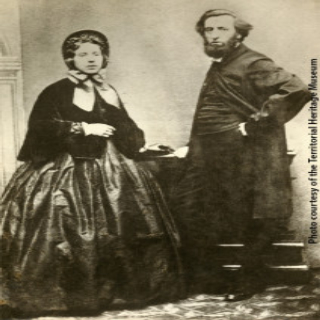 William Booth
The Salvation Army founder, William Booth was born in Nottingham, England, on 10 April 1829.
Salvation Army founder General William BoothFrom his earliest years, William was no stranger to poverty. He was just 14 when his father died and was already working as a pawnbroker’s apprentice to supplement the family’s income.
As a pawnbroker, William saw poverty and suffering on a daily basis. By the time he finished his six-year apprenticeship, he had developed a deep hatred of it.
William, a fiery and impulsive teenager, became a Christian at 15 and began attending the local Wesleyan Chapel. There, he developed the passion that would be the driving force in his life; to reach the down and out of Britain's cities through the Gospel of Christ.
William, a talented preacher from a young age, went on to work as a travelling evangelist with the Methodist church. But it was through preaching in the streets of London's slums that he discovered his life's purpose and The Salvation Army was born.
Catherine Booth
The Salvation Army "mother", Catherine Mumford was born in Ashbourne, Derbyshire, on 17 January 1829.
The Salvation Army founder and Army mother Catherine BoothFrom an early age, she was a serious and sensitive girl with a strong Christian upbringing. By the age of 12, it's said that she had read the Bible through eight times.
At 14, Catherine became ill and spent a great deal of time in bed. She kept herself busy, especially concerned about the problems of alcohol. She wrote articles for a magazine, encouraging people not to drink.
But at 16, she came wholly into her faith. Reading the words, 'My God I am Thine, what a comfort Divine' in her hymn book, she realised the truth of them for herself.
A gentle woman with powerful appeal, Catherine would go on to co-found The Salvation Army and prove an inspiration to women in a harsh time.
Life together
Catherine and William met when he came to preach at her church. They soon fell in love and became engaged. During their three-year engagement, William continued his work as a travelling evangelist. Catherine was a constant support to William, writing him letters of encouragement on his travels.
They married on 16 June 1855.
Together, William and Catherine embarked on a lifelong journey to answer the call of God to bring the Gospel to the people. While William was a natural speaker, Catherine was a quiet woman and not at all accustomed to speaking at gatherings. It took time for her to find her voice, but she was driven by a conviction that woman had the same rights as men to speak. She grew into a courageous speaker, known for her gentle manner but powerful appeal, counselling alcoholics in their homes and holding cottage meetings for new faithfuls.
They were also parents to a growing family of eight children, who were brought up with a firm Christian education and a great love for their God’s mission. Two of their children, Bramwell and Evangeline would go on to be Generals of The Salvation Army.
In 1865, William, by now an independent evangelist, along with Catherine founded The Christian Mission. William preached to the poor while Catherine spoke to the wealthy to gain support for their financially demanding work. In time, she began to hold her own fundraising campaigns.
It was not until 1878 that The Christian Mission became known as The Salvation Army. Modelled after the military with William and his fellow ministers a part of God’s Army, seeking salvation for the masses. William was appointed the first General and his ministers became “officers”.
Catherine became known as “The Army Mother” and remained a strong voice on The Salvation Army’s ideas on social issues and matters of belief.
With its strong focus on the downtrodden and dispossessed, The Salvation Army began to grow beyond Britain’s borders. In William’s lifetime, the Army would be established in 58 countries and colonies. Its mission was and is still guided by William’s book “In Darkest England and the Way Out”, which maps out a revoluntionary approach to social engagement never before undertaken by a church.
Both Catherine and William worked tirelessly to bring the Gospel to all, establishing a movement in the form of The Salvation Army. But, on 4th October 1890, Catherine lost her ongoing battle with ill health. Her son, Bramwell, described her passing as “a warrior laid down her sword to receive her crown”.
William continued on for many years, traveling all over the world to oversee his growing Army. On 20th August 1912, William Booth was, in Salvation Army terms, promoted to glory.
Though passed, both William and Catherine continue to be guiding influences in The Salvation Army and stand as the mightiest examples of how God uses the ordinary to create the extraordinary.
William Booth
The Salvation Army founder, William Booth was born in Nottingham, England, on 10 April 1829.
Salvation Army founder General William BoothFrom his earliest years, William was no stranger to poverty. He was just 14 when his father died and was already working as a pawnbroker’s apprentice to supplement the family’s income.
As a pawnbroker, William saw poverty and suffering on a daily basis. By the time he finished his six-year apprenticeship, he had developed a deep hatred of it.
William, a fiery and impulsive teenager, became a Christian at 15 and began attending the local Wesleyan Chapel. There, he developed the passion that would be the driving force in his life; to reach the down and out of Britain's cities through the Gospel of Christ.
William, a talented preacher from a young age, went on to work as a travelling evangelist with the Methodist church. But it was through preaching in the streets of London's slums that he discovered his life's purpose and The Salvation Army was born.
Catherine Booth
The Salvation Army "mother", Catherine Mumford was born in Ashbourne, Derbyshire, on 17 January 1829.
The Salvation Army founder and Army mother Catherine BoothFrom an early age, she was a serious and sensitive girl with a strong Christian upbringing. By the age of 12, it's said that she had read the Bible through eight times.
At 14, Catherine became ill and spent a great deal of time in bed. She kept herself busy, especially concerned about the problems of alcohol. She wrote articles for a magazine, encouraging people not to drink.
But at 16, she came wholly into her faith. Reading the words, 'My God I am Thine, what a comfort Divine' in her hymn book, she realised the truth of them for herself.
A gentle woman with powerful appeal, Catherine would go on to co-found The Salvation Army and prove an inspiration to women in a harsh time.
Life together
Catherine and William met when he came to preach at her church. They soon fell in love and became engaged. During their three-year engagement, William continued his work as a travelling evangelist. Catherine was a constant support to William, writing him letters of encouragement on his travels.
They married on 16 June 1855.
Together, William and Catherine embarked on a lifelong journey to answer the call of God to bring the Gospel to the people. While William was a natural speaker, Catherine was a quiet woman and not at all accustomed to speaking at gatherings. It took time for her to find her voice, but she was driven by a conviction that woman had the same rights as men to speak. She grew into a courageous speaker, known for her gentle manner but powerful appeal, counselling alcoholics in their homes and holding cottage meetings for new faithfuls.
They were also parents to a growing family of eight children, who were brought up with a firm Christian education and a great love for their God’s mission. Two of their children, Bramwell and Evangeline would go on to be Generals of The Salvation Army.
In 1865, William, by now an independent evangelist, along with Catherine founded The Christian Mission. William preached to the poor while Catherine spoke to the wealthy to gain support for their financially demanding work. In time, she began to hold her own fundraising campaigns.
It was not until 1878 that The Christian Mission became known as The Salvation Army. Modelled after the military with William and his fellow ministers a part of God’s Army, seeking salvation for the masses. William was appointed the first General and his ministers became “officers”.
Catherine became known as “The Army Mother” and remained a strong voice on The Salvation Army’s ideas on social issues and matters of belief.
With its strong focus on the downtrodden and dispossessed, The Salvation Army began to grow beyond Britain’s borders. In William’s lifetime, the Army would be established in 58 countries and colonies. Its mission was and is still guided by William’s book “In Darkest England and the Way Out”, which maps out a revoluntionary approach to social engagement never before undertaken by a church.
Both Catherine and William worked tirelessly to bring the Gospel to all, establishing a movement in the form of The Salvation Army. But, on 4th October 1890, Catherine lost her ongoing battle with ill health. Her son, Bramwell, described her passing as “a warrior laid down her sword to receive her crown”.
William continued on for many years, traveling all over the world to oversee his growing Army. On 20th August 1912, William Booth was, in Salvation Army terms, promoted to glory.
Though passed, both William and Catherine continue to be guiding influences in The Salvation Army and stand as the mightiest examples of how God uses the ordinary to create the extraordinary.
Walk the War Before You - What It Means to Live by the Spirit
Walk by the Spirit, and you will not gratify the desires of the flesh. For the desires of the flesh are against the Spirit, and the desires of the Spirit are against the flesh, for these are opposed to each other, to keep you from doing the things you want to do. –Galatians 5:16–17 In seminary, this passage reshaped my vision of the Christian life. At one level, the passage is simple. It contains an exhortation (“walk by the Spirit”), a promise (“and you will not gratify the desires of the flesh”), and an explanation or rationale (the conflict described in verse 17). But as we meditate on this passage, we discover that it also offers a threefold vision for the Christian life as a whole. Acknowledge the War Within First, Paul insists that the starting point for the Christian life is recognizing the war between the flesh and the Spirit. I say “starting point” because of the logic of verses 16 and 17. In seminary, I was taught that one way to clarify the logic of a passage like this is to read the verses in reverse order while keeping the logical relationship intact. In other words, turn an “A, because B” argument into a “B, therefore A” argument. “I eat, because I am hungry” becomes “I am hungry, therefore I eat.” When we do that, the passage looks like this: (Verse 17) The desires of the flesh are against the Spirit, and the desires of the Spirit are against the flesh, for these are opposed to each other, to keep you from doing the things you want to do. (Verse 16) Therefore (that’s the logical connection) walk by the Spirit, and you will certainly not gratify the desires of the flesh. As Christians, we wake up every day in the midst of a war. Fleshly desires pull us in one direction; the desires of the Spirit pull us in the other. The status quo is a frustrated stalemate in which we are kept from doing what we want to do. Spiritual desires frustrate fleshly desires, and fleshly desires frustrate spiritual desires. Starting with this recognition means we can be realistic about the difficulty of the war. The frustration we feel in the face of the passions of the flesh is real, and Paul encourages us to be honest about it. That’s where we begin as Christians. Staggering Promise of Not But according to Paul, we don’t have to stay there, because, second, we have a new destination. We don’t have to surrender. We can live a life in which we absolutely don’t gratify the desires of the flesh. This is a staggering promise. The “not” in verse 16 is intensified in the original Greek; it’s what’s called an emphatic negation. Paul essentially says, “If you walk by the Spirit, you will absolutely and certainly not gratify the desires of the flesh.” Now, it’s important to be clear about what Paul is and isn’t promising. He’s not saying that our fleshly desires disappear altogether. Instead, he promises that we will not gratify or complete those desires. In other words, the desires may still be present and still at war with our spiritual desires, but now, as we walk by the Spirit, we won’t indulge them. The basic idea is that all desires have a direction, a destination, a trajectory. They incline us towards some perceived good, some object that we believe will satisfy. In short, desires want to take us somewhere. Where Do Desires Lead? In Galatians 5, the desires of the flesh lead to the works of the flesh: “sexual immorality, impurity, sensuality, idolatry, sorcery, enmity, strife, jealousy, fits of anger, rivalries, dissensions, divisions, envy, drunkenness, orgies, and things like these.” Paul is clear that those who practice such things — by habitually gratifying those desires — will not inherit God’s kingdom. On the other hand, the desires of the Spirit lead to the fruit of the Spirit: “love, joy, peace, patience, kindness, goodness, faithfulness, gentleness, self-control.” So again, desires, whether of the Spirit or the flesh, have a destination, and when that destination is reached, the desire has been gratified. The itch has been scratched. Notice, however, the critical assumption Paul makes: the presence of the fleshly desire doesn’t mean that we have to indulge it. It’s possible to resist where our desires want to take us. For Paul, walking by the Spirit doesn’t remove all fleshly tendencies and inclinations in this life. Instead, it interrupts them. It redirects them and reorders them so that they no longer dishonor God or harm people. It’s important to be clear on this point so that we don’t erect impossible and unrealistic expectations for the Christian life. In this life, the desires may still rise up, but according to Paul, they don’t have to master us. They don’t have to rule us. We don’t have to gratify or indulge them. We don’t have to scratch. We can be free. But only if we walk by the Spirit. Essential Bridge Walking by the Spirit is the third element in this vision of the Christian life, and the bridge between our present struggle and the future victory. It’s the path that gets us from frustration to freedom. Which means that the pressing question for us is this: What exactly does it mean to “walk by the Spirit”? The image is clear enough. Walking is a form of movement. It’s neither standing still nor running. It’s steady movement, in a particular direction, under a particular power (in this case, the Spirit). Galatians 5:24–25 sheds further light on the image: And those who belong to Christ Jesus have crucified the flesh with its passions and desires. If we live by the Spirit, let us also keep in step with the Spirit. “Walk by the Spirit” corresponds to “keep in step with the Spirit.” It’s as though the Spirit sets the pace and we keep up. There’s a rhythm to our walking. Like a drummer, the Spirit lays down the beat, and we march along. This basic idea appears in various forms throughout Paul’s letters: Walk rightly with the truth of the gospel (Galatians 2:13). Walk by the Spirit (Galatians 5:16). Be led by the Spirit (Galatians 5:18). Keep in step with the Spirit (Galatians 5:26). Walk in a manner worthy of the calling to which you have been called (Ephesians 4:1). Walk in a manner worthy of the Lord (Colossians 1:10). “Walking by the Spirit is the bridge between our present struggle and the future victory.” Other phrases that appear throughout the New Testament include walking in love, walking in the light, walking as children of the light, walking according to Paul’s example, and walking in the truth. In all of these examples, the idea is the same: there is a conduct, a “walking,” that accords with the gospel, the Spirit, and the truth. There is a way of life that fits the gospel. Before We Can Walk Walking by the Spirit flows from something more fundamental, though, and this is crucial. Before we can keep in step with the Spirit, we must first “live by the Spirit.” That is, we must possess life by the Spirit. The life in question is resurrection life. We possess it because we belong to Jesus and have crucified the flesh with its passions and desires. It’s what Paul elsewhere describes as “being made alive with Christ” (Ephesians 2:4). This is conversion, when God raises us from spiritual death by grace through faith in Christ. He elaborates on this reality in the great gospel passage of Galatians 2:19–20: I have been crucified with Christ. It is no longer I who live, but Christ who lives in me. And the life I now live in the flesh I live by faith in the Son of God, who loved me and gave himself for me. “The Spirit is the animating power in our lives, shaping our daily decisions as we wake up in spiritual war.” Crucified with Christ so that the flesh has been killed. Raised with Christ so that he lives on our behalf and we possess life by his Spirit. This is the good news which so transformed Paul and is able to transform us. So, then, walking by the Spirit refers to our daily conduct, rooted in our union with Christ in his death and resurrection and empowered by the Spirit who redirects our desires to godly fruitfulness. The Spirit is the animating power in our lives, shaping our daily decisions as we wake up in the midst of the spiritual war. Paul’s call is for us to daily take up arms in the battle, to encourage and gratify our spiritual desires, and to keep in step with the Spirit because we belong to Jesus. Article by Joe Rigney Teacher, desiringGod.org