

Others like the conquest of the mind Features >>










About the Book
"The Conquest of the Mind" by Ashish Raichur is a practical guide that offers insights and techniques to help readers overcome negative thought patterns, develop mental discipline, and cultivate a positive mindset. The book emphasizes the importance of self-awareness, mindfulness, and spiritual growth in achieving mental mastery and finding inner peace. It provides practical strategies for transforming thoughts, emotions, and behaviors to live a more fulfilling and meaningful life.
Martin and Gracia Burnham
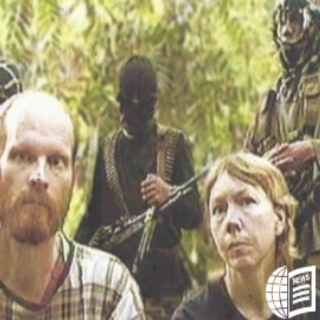 Martin Burnham and Gracia were missionaries who served for 17 years in the Philippines. After their marriage, they underwent hard training in the jungle to prepare themselves to serve in jungle parts. Martin, being a pilot missionary, supported other missionaries who were working among the tribals in jungles. He delivered groceries and medicines to missionaries and tribals and transported sick people to medical facilities. He always had a big heart for tribals and missionaries. Gracia supported him well in the work.
On May 29, 2001, while relaxing at a resort after Martin’s one overseas mission, a Muslim militant group called the Abu Sayyaf Group attacked the resort and abducted the missionary couple and few others for ransom. The missionaries were kept captive for more than a year.
During that one year, the couple went through terrible experiences. They suffered starvation, sleeplessness and sickness, witnessed atrocities of militants and experienced gun battles between militants and the military. Amidst suffering, God was their only hope and strength.
At some point, Gracia was so depressed that although she believed that Christ died for her, she felt God doesn’t love her anymore. Martin said to her “either you believe it all or don’t believe it at all.” They encouraged one another to stand firm in the faith.
Martin Burnham and Gracia ministry in Philippines
Finally, on June 7, 2002, in a rescue operation by the Philippine military, wounded Gracia was rescued. But 42 years old Martin died in the gunfight during the rescue. Later, Gracia went back to America and joined her children.
Gracia did not let her painful experiences depress her and move her away from God. But she used those experiences to encourage others who are going through hardships. She founded the Martin and Gracia Burnham Foundation, which supports missionary aviation and tribal mission work around the world. It also focuses on ministries among Muslims. She forgave who abducted them, visited them in jail and shared Christ’s love. Some of them accepted Christ. Gracia believes that this may be God’s great purpose behind their suffering.
Martin Burnham and Gracia were missionaries who served for 17 years in the Philippines. After their marriage, they underwent hard training in the jungle to prepare themselves to serve in jungle parts. Martin, being a pilot missionary, supported other missionaries who were working among the tribals in jungles. He delivered groceries and medicines to missionaries and tribals and transported sick people to medical facilities. He always had a big heart for tribals and missionaries. Gracia supported him well in the work.
On May 29, 2001, while relaxing at a resort after Martin’s one overseas mission, a Muslim militant group called the Abu Sayyaf Group attacked the resort and abducted the missionary couple and few others for ransom. The missionaries were kept captive for more than a year.
During that one year, the couple went through terrible experiences. They suffered starvation, sleeplessness and sickness, witnessed atrocities of militants and experienced gun battles between militants and the military. Amidst suffering, God was their only hope and strength.
At some point, Gracia was so depressed that although she believed that Christ died for her, she felt God doesn’t love her anymore. Martin said to her “either you believe it all or don’t believe it at all.” They encouraged one another to stand firm in the faith.
Martin Burnham and Gracia ministry in Philippines
Finally, on June 7, 2002, in a rescue operation by the Philippine military, wounded Gracia was rescued. But 42 years old Martin died in the gunfight during the rescue. Later, Gracia went back to America and joined her children.
Gracia did not let her painful experiences depress her and move her away from God. But she used those experiences to encourage others who are going through hardships. She founded the Martin and Gracia Burnham Foundation, which supports missionary aviation and tribal mission work around the world. It also focuses on ministries among Muslims. She forgave who abducted them, visited them in jail and shared Christ’s love. Some of them accepted Christ. Gracia believes that this may be God’s great purpose behind their suffering.
satan: his work and destiny
Two errors regarding Satan are current and since he alone is advantaged by them it is reasonable to conclude that he is the author of them. 1. Many believe that Satan does not really exist and that the supposed person of Satan is no more than an evil principle, or influence, which is in man and in the world. This conception is proved to be wrong by the fact that there is the same abundant evidence that Satan is a person as there is that Christ is a person. The Scriptures, which alone are authoritative on these matters, treat one to be a person as much as the other, and if the personality of Christ is accepted on the testimony of the Bible, the personality of Satan must also be accepted on the same testimony. 2. Likewise, others believe that Satan is the direct cause of sin in every person. This impression is not true (1) because Satan is not aiming to promote sin in the world. He did not purpose to be a fiend, but rather to be "like the most High" (Isa. 14:14); he is not aiming to destroy, so much as he is to construct, and to realize his own ambition for authority over this world system, which system proposes culture, morality, and religion (2 Cor. 11:13-15). The impression that Satan is the direct cause of sin is not true (2) because human sin is said to come directly from the fallen human heart (Mark 7:18-23; Jas. 1:13-16; Gen. 6:5). I. The Work of Satan The following are only a few of the many passages bearing on the work of Satan: Isaiah 14:12-17. This passage reveals Satan's original and supreme purpose. He would ascend into Heaven, exalt his throne above the stars of God, and be like the most High. To this end he will use his unmeasured wisdom and power; he will weaken the nations, make the earth to tremble, make the world as a wilderness, destroy the cities thereof, and refuse to release his prisoners. Though every phrase of this passage is a startling disclosure, two in particular may be noted: 1. "I will he like the most High." As recorded in the Scriptures, the activities of Satan following his moral fall can be traced only in the line of this supreme motive. It was this purpose which in all seriousness he recommended to Adam and Eve (Gen. 3:5), and they, by adopting Satan's ideal, became self-centered, self-sufficient, and independent of God. This attitude on the part of Adam and Eve became their very nature and has been transmitted to all their posterity to the extent that their posterity are called the "children of wrath" (Eph. 2:3; 5:6; Rom. 1:18), they must be born again (John 3:3), and, when saved, have a struggle to be yielded wholly to the will of God. Again, Satan's desire to be "like the most High" is seen in his passion to be worshiped by Christ (Luke 4:5-7). When the Man of Sin enters the holy place and is worshiped as God (2 Thess. 2:3, 4; Dan. 9:27; Matt. 24:15; Rev. 13:4-8), for a brief moment, Satan's supreme desire will be realized under the permissive will of God. 2. He "opened not the house of his prisoners." The entire prophecy from which this phrase is taken is concerning the work of Satan as it will have been completed in the days of his final judgment. Doubtless there is a larger fulfillment yet future; however, we know that Satan is now doing all in his power to keep the unsaved from being delivered from the power of darkness and translated into the kingdom of God's dear Son (Col. 1:13). Satan is the one who energizes the children of disobedience (Eph. 2:2), blinds the minds of the unsaved lest the light of the Gospel shall reach them (2 Cor. 4:3, 4), and holds the unconscious world in his arms (1 John 5:19, R.V.). It is also revealed that Satan in his warfare will counterfeit the things of God, which undertaking will likewise be in accord with his purpose to be "like the most High." He will promote extensive religious systems (1 Tim. 4:1-3; 2 Cor. 11:13-15). In this connection, it should be observed that Satan can promote forms of religion which are based on selected Bible texts, which elevate Christ as the leader, and which incorporate every phase of the Christian faith excepting one — the doctrine of salvation by grace alone on the ground of the shed blood of Christ. Such satanic delusions are now in the world and multitudes are being deceived by them. Such false systems are always to be tested by the attitude they take toward the saving grace of God through the efficacious blood of Christ (Rev. 12:11). Satan's enmity is evidently against God alone. He is in no way at enmity with the unsaved, and when he aims his "fiery darts" at the children of God, he attacks them only because of the fact that they are indwelt by the divine nature, and through them he is enabled to secure a thrust at God. Likewise, the attack against the children of God is not in the sphere of "flesh and blood," but in the sphere of their heavenly association with Christ. That is, the believer may not be drawn away into immorality, but he may utterly fail in prayer, in testimony and in spiritual victory. Such failure, it should be seen, is as much defeat and dishonor in the sight of God as those sins which are freely condemned by the world. II. The Destiny of Satan As the Word of God is explicit regarding the origin of Satan, so it is explicit regarding his career and destiny. Five progressive judgments of Satan are to be distinguished: 1. Satan's Moral Fall. Though the time in the dateless past is not disclosed, Satan's moral fall, with its necessary separation from God, is clearly indicated (Ezek. 28:15; 1 Tim. 3:6). It is evident, however, that he did not lose his heavenly position, the larger portion of his power, or his access to God. 2. Satan's Judgment through the Cross. Through the cross a perfect judgment has been secured (John 12:31; 16:11; Col. 2:14, 15), but the execution of that sentence is yet future. This sentence with its execution was predicted in the Garden of Eden (Gen. 3:15). 3. Satan will be cast out of Heaven. In the midst of the coming Tribulation and as a result of a war in Heaven, Satan will be cast out of Heaven and be limited to the earth. He will then act in great wrath knowing that he has but a short time to continue (Rev. 12:7-12. Note, also, Isa. 14:12; Luke 10:18). 4. Satan will be confined, to the Abyss. For the thousand-year reign of Christ upon the earth, Satan will be sealed in the abyss, after which he must be loosed for a "little season" (Rev. 20:1-3, 7). 5. Satan's Final Doom. Having promoted an open rebellion against God during the "little season," Satan is then cast into the lake of fire to be tormented day and night for ever and ever (Rev. 20:10). From Major Bible Themes... by Lewis Sperry Chafer. Chicago: The Bible Institute Colportage, 1937, ©1926.