The Day I Was Crucified As Told By Jesus The Christ Order Printed Copy
- Author: Gene Edwards
- Size: 2.88MB | 224 pages
- |
Others like the day i was crucified as told by jesus the christ Features >>




.epub-160.webp)


About the Book
"The Day I Was Crucified As Told By Jesus The Christ" by Gene Edwards is a fictional account of the crucifixion of Jesus Christ from his perspective. The book offers a unique and personal insight into this pivotal moment in Christian theology, providing readers with a fresh interpretation of the events leading up to and following the crucifixion. Through this narrative, readers are given a deeper understanding of Jesus' sacrifice and the impact it has had on the world.
David Brainerd
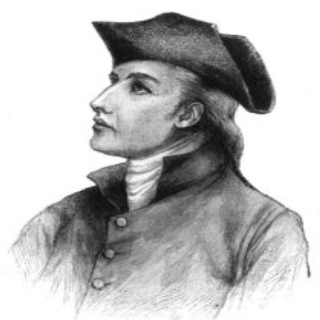 Born to a farming family in Haddam, Connecticut, Brainerd soon turned his aspirations to the clergy and a life of study. The early death of his parents, combined with a naturally melancholy personality, caused him to be morose and to fixate on the brevity of life, so that his religious life was characterized by prolonged depressions punctuated by ecstatic experiences of God. He began to study for the ministry at Yale College in 1739. During his first year he showed signs of the tuberculosis that was to end his life prematurely. During the following year, the New Light preaching of George Whitefield and other itinerants such as Gilbert Tennent and James Davenport gained many adherents at the college, including Brainerd, and he became involved in a separate church founded by students. In November 1741 he was reported as saying that one of the local ministers who was a college tutor had “no more grace than a chair.” Determined to snuff out the New Light among the students, the Yale Corporation, led by its rector, Thomas Clap, expelled Brainerd for refusing to make a public confession.
Officially barred from the ministry, Brainerd nonetheless became an itinerant preacher, filling pulpits of New Light sympathizers throughout New England and New York. In the process he gained the admiration of many clergymen, including Jonathan Dickinson, a Presbyterian minister of New Jersey and commissioner of the Society in Scotland for Propagating Christian Knowledge. Dickinson in 1742 first proposed that Brainerd become a missionary. To prepare himself, in 1743 Brainerd went to work with John Sargeant, missionary to the Stockbridge Indians. He was ordained by the Presbytery of New York in 1744. From 1743 to 1747 he ministered to the Indians in western Massachusetts, eastern New York, the Lehigh region of Pennsylvania, and central New Jersey. At the New Jersey Bethel mission (near Cranbury), he achieved his most notable successes. Out of his experiences here came the publication of two installments of his journals that described both the revivals among the Delaware Indians and his own spiritual turmoil and exultation.
Brainerd preaching to the Indians for all of his zeal, however, Brainerd’s constitution could not stand up to the hardships of wilderness living. In April 1747, seriously weakened by tuberculosis, he left New Jersey for the home of his friend Jonathan Edwards in Northampton, Massachusetts, where he died in October.
In 1749 Edwards published An Account of the Life of the Late Reverend Mr. David Brainerd, drawn from Brainerd’s extensive diaries and supplemented by Edwards’s own commentary. Edwards sought to portray Brainerd as a model of Christian saintliness who manifested his faith in good works and self-sacrifice, expurgating many passages that recorded Brainerd’s depressions and enthusiasms. Over the centuries, this work has achieved international fame, has gone through countless printings, and has inspired many missionaries in pursuing their call.
Minkema, Kenneth P., “Brainerd, David,” in Biographical Dictionary of Christian Missions, ed. Gerald H. Anderson (New York: Macmillan Reference USA, 1998), 84-5.
This article is reprinted from Biographical Dictionary of Christian Missions, Macmillan Reference USA, copyright © 1998 Gerald H. Anderson, by permission of Macmillan Reference USA, New York, NY. All rights reserved.
Born to a farming family in Haddam, Connecticut, Brainerd soon turned his aspirations to the clergy and a life of study. The early death of his parents, combined with a naturally melancholy personality, caused him to be morose and to fixate on the brevity of life, so that his religious life was characterized by prolonged depressions punctuated by ecstatic experiences of God. He began to study for the ministry at Yale College in 1739. During his first year he showed signs of the tuberculosis that was to end his life prematurely. During the following year, the New Light preaching of George Whitefield and other itinerants such as Gilbert Tennent and James Davenport gained many adherents at the college, including Brainerd, and he became involved in a separate church founded by students. In November 1741 he was reported as saying that one of the local ministers who was a college tutor had “no more grace than a chair.” Determined to snuff out the New Light among the students, the Yale Corporation, led by its rector, Thomas Clap, expelled Brainerd for refusing to make a public confession.
Officially barred from the ministry, Brainerd nonetheless became an itinerant preacher, filling pulpits of New Light sympathizers throughout New England and New York. In the process he gained the admiration of many clergymen, including Jonathan Dickinson, a Presbyterian minister of New Jersey and commissioner of the Society in Scotland for Propagating Christian Knowledge. Dickinson in 1742 first proposed that Brainerd become a missionary. To prepare himself, in 1743 Brainerd went to work with John Sargeant, missionary to the Stockbridge Indians. He was ordained by the Presbytery of New York in 1744. From 1743 to 1747 he ministered to the Indians in western Massachusetts, eastern New York, the Lehigh region of Pennsylvania, and central New Jersey. At the New Jersey Bethel mission (near Cranbury), he achieved his most notable successes. Out of his experiences here came the publication of two installments of his journals that described both the revivals among the Delaware Indians and his own spiritual turmoil and exultation.
Brainerd preaching to the Indians for all of his zeal, however, Brainerd’s constitution could not stand up to the hardships of wilderness living. In April 1747, seriously weakened by tuberculosis, he left New Jersey for the home of his friend Jonathan Edwards in Northampton, Massachusetts, where he died in October.
In 1749 Edwards published An Account of the Life of the Late Reverend Mr. David Brainerd, drawn from Brainerd’s extensive diaries and supplemented by Edwards’s own commentary. Edwards sought to portray Brainerd as a model of Christian saintliness who manifested his faith in good works and self-sacrifice, expurgating many passages that recorded Brainerd’s depressions and enthusiasms. Over the centuries, this work has achieved international fame, has gone through countless printings, and has inspired many missionaries in pursuing their call.
Minkema, Kenneth P., “Brainerd, David,” in Biographical Dictionary of Christian Missions, ed. Gerald H. Anderson (New York: Macmillan Reference USA, 1998), 84-5.
This article is reprinted from Biographical Dictionary of Christian Missions, Macmillan Reference USA, copyright © 1998 Gerald H. Anderson, by permission of Macmillan Reference USA, New York, NY. All rights reserved.
God Always Sets the Table
Perhaps no act of divine provision comes and goes so quietly, so predictably, so almost imperceptibly, like our next meal. Now, for millions of people around the world, the weighty miracle is felt and revered. Unlike many of us, when they pray, “Give us this day our daily bread” (Matthew 6:11), they truly do not know if and how that bread will come. They wait for food like many of us never have. When they lie down at night, having eaten enough to quiet their aching stomachs, they marvel that they did not starve today — that God fed them enough to sustain them for another 24 long hours. How slow the rest of us can be to marvel while we eat. We forget to eat. We sometimes think of meals as interruptions to an otherwise productive day. We miss the wonder, like watching three blazing sunrises every day, that the God of heaven and earth feeds us. He Brings Forth Food Psalm 104 does not miss the dumbfounding beauty of daily bread: You cause the grass to grow for the livestock and plants for man to cultivate, that he may bring forth food from the earth and wine to gladden the heart of man, oil to make his face shine and bread to strengthen man’s heart. (Psalm 104:14–15) You, O God, stretch out the infinite heavens as if it were just a tent (Psalm 104:2). You set the layers of the earth on its foundations, carefully wrapping core with mantle, and mantle with 25,000 miles of crust (Psalm 104:5). You lift the mountains with your hands, some of them 20,000 feet high, and you carve out the depths and crevices of all the valleys (Psalm 104:8). And you feed us. Our next meal stands there right alongside Mount Everest, the Grand Canyon, and the Andromeda Galaxy, among the most breathtaking wonders anywhere in creation. Have you, like me, missed the spectacular mystery laid on the plate before you? Food Is No Footnote Jesus sees what the psalmist saw, the God-sized wonder baked into life-sustaining bread. When he teaches his disciples to pray, he says, Pray then like this: “Our Father in heaven, hallowed be your name. Your kingdom come, your will be done, on earth as it is in heaven. Give us this day our daily bread . . .” (Matthew 6:9–11) Our Lord moves seamlessly from the reaches of heaven, and the ends of the earth, to the wheat on our plate. The transition is not jarring from the cosmos to the kitchen, even in his extremely concise prayer, because he sees how powerfully God must act in both. “God bakes something of himself — his worth, his mouthwatering glory — into everything we eat.” When we pause to pray and give thanks for the food before us, we have to resist thinking that these moments are trivial, peripheral, forgettable. Every meal, God sets the table. He is hallowing his name, extending his kingdom, and doing his will (among other ways) by providing his people with food. What we eat is not a footnote or afterthought for Jesus. Because he wants his Father to be glorified, he does not take his (or our) daily bread for granted. Two Great Ingredients God mixes at least two great ingredients into mealtime worship: First, he bakes something of himself — his worth, his mouthwatering glory — into everything we eat. Nothing we consume is silent about God. Every bite beckons us to enjoy something sweeter, more satisfying, more soul-sustaining: him. “The creation of food, tongues, and the human digestive system is the product of infinite wisdom knitting the world together in a harmonious whole,” writes Joe Rigney. “The variety of tastes creates categories and gives us edible images of divine things” ( The Things of Earth , 81). Second, when God prepares our food for us, he nourishes and strengthens us to do his will — to eat or drink, or whatever we do, to his glory (1 Corinthians 10:31). Man does not live by bread alone, but he will not live long without bread. God chooses us from among all the people of the earth, despite how little we deserved his love, and makes us his witnesses to the ends of the earth, and — wonder of wonders — he sustains us each and every day, hour by hour, by bringing food forth from the earth. As Rigney goes on to say, “Yes, food is given to us for our enjoyment, to enlarge our categories for knowing God. But food is also God’s way of providing us with energy and strength for the work” (85). If you have lost your sense of the mystery of your meals, remember that this food did not come ultimately from the pantry or the fridge, the grocery store or the farmer’s market, from the butcher or the harvest, but from the mind and heart of God. And he did not entrust us with mouths and meals simply to survive. He wants us to eat for more of him — to experience and enjoy more of him ourselves, and to share more of him in and for the world. My Portion Forever We will not truly wonder at our daily supply of food if we do not treasure God more than food. “My flesh and my heart may fail” — my water may dry up and my bread may not come — “but God is the strength of my heart and my portion forever” (Psalms 73:26). He is my portion — three full meals (and more) for hundreds of thousands of years (and more). Rigney writes, Our sense of hunger and thirst are divinely designed to highlight the soul’s hunger for spiritual food. . . . Apart from our experience of empty stomachs and parched throats, of full bellies, quenched thirsts, and the incredible variety of taste, our spiritual lives would be impoverished, and we would have no real vocabulary for spiritual desire, no mental and emotional framework for engaging with God. (81) God wants what we eat to make us hungry for him . We often eat just to make our hunger go away. What if we ate, instead, to try to taste and see and enjoy the God who feeds us? “Slow down and savor the majesty in your next meal.” Our God came, took on our flesh, and ate among us, saying, “I am the bread of life; whoever comes to me shall not hunger, and whoever believes in me shall never thirst” (John 6:35). Then the bread of life was broken on the cross, spilling the wine of his precious blood for us — the hungry, the ungrateful, the wandering — to bring us into his new covenant (1 Corinthians 11:24–26), and secure a seat for us at “the marriage supper of the Lamb” (Revelation 19:9). Slow down and savor the majesty in your next meal. However incidental it may feel, the food is pointing to the Provider, telling his story, and anticipating the forever feast we will enjoy with him.