









GIP Library icon

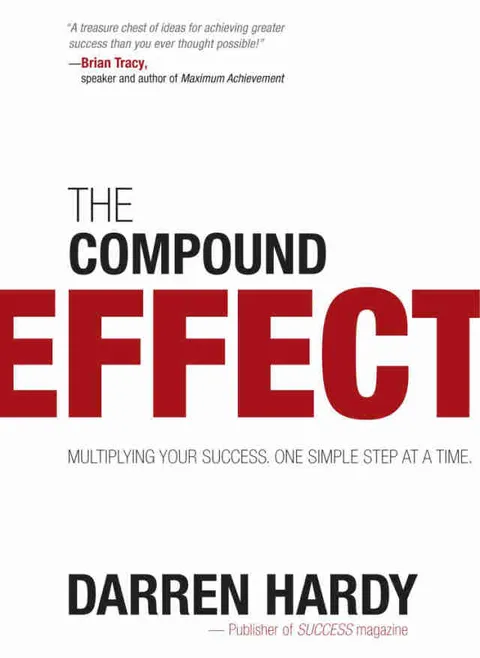
The Compound Effect The Compound Effect

The Compound Effect Order Printed Copy

  • Author: Darren Hardy
  • Size: 5.04MB | 195 pages
  • |
Continue with
Google Twitter
LOG IN TO REVIEW
About the Book


In "The Compound Effect," Darren Hardy explains the power of small, consistent actions in achieving success over time. He discusses how making small, positive changes and habits can lead to significant results and how taking personal responsibility for our actions is key to reaching our goals. Hardy emphasizes the importance of discipline, mindset, and perseverance in creating lasting change and success in our lives.

Johnny Cash

Johnny Cash Johnny Cash, the Man in Black, was a singer, guitarist and songwriter whose music innovatively mixed country, rock, blues and gospel influences. Who Was Johnny Cash? Johnny Cash grew up in a poor farming community and joined the Air Force in 1950. He co-founded a band following his discharge, and within a few years Johnny Cash and the Tennessee Two had scored hits with songs like "Walk the Line." Cash's career was nearly derailed in the 1960s by a serious substance-abuse problem, but his marriage to June Carter and acclaimed album Johnny Cash at Folsom Prison (1968) put him back on track. In later years, Cash joined the country supergroup the Highwaymen and released a series of recordings with producer Rick Rubin. Early Life Cash was born on February 26, 1932, in Kingsland, Arkansas. The son of poor Southern Baptist sharecroppers, Cash, one of seven children born to Ray and Carrie Rivers Cash, moved with his family at the age of 3 to Dyess, Arkansas, so that his father could take advantage of the New Deal farming programs instituted by President Franklin Roosevelt. There, the Cash clan lived in a five-room house and farmed 20 acres of cotton and other seasonal crops. Cash spent much of the next 15 years out in the fields, working alongside his parents and siblings to help pay off their debts. It wasn't an easy life, and music was one of the ways the Cash family found escape from some of the hardships. Songs surrounded the young Cash, be it his mother's folk and hymn ballads, or the working music people sang out in the fields. From an early age Cash, who began writing songs at age 12, showed a love for the music that enveloped his life. Sensing her boy's gift for song, Carrie scraped together enough money so that he could take singing lessons. However, after just three lessons his teacher, enthralled with Cash's already unique singing style, told him to stop taking lessons and to never deviate from his natural voice. Religion, too, had a strong impact on Cash's childhood. His mother was a devout member of the Pentecostal Church of God, and his older brother Jack seemed committed to joining the priesthood until his tragic death in 1944 in an electric-saw accident. The experiences of his early farming life and religion became recurring themes in Cash's career. Military Service and Musical Aspirations In 1950, Cash graduated high school and left Dyess to seek employment, venturing to Pontiac, Michigan, for a brief stint at an auto body plant. That summer he enlisted in the U.S. Air Force as "John R. Cash"—military regulations required a full first name—and he was sent for training at Lackland Air Force Base in San Antonio, Texas, where he met future wife Vivian Liberto. For the bulk of his four years in the Air Force, Cash was stationed in Landsberg, West Germany, where he worked as a radio intercept officer, eavesdropping on Soviet radio traffic. It was also in Germany that Cash began to turn more of his attention toward music. With a few of his Air Force buddies, he formed the Landsberg Barbarians, giving Cash a chance to play live shows, teach himself more of the guitar and take a shot at songwriting. "We were terrible," he said later, "but that Lowenbrau beer will make you feel like you're great. We'd take our instruments to these honky-tonks and play until they threw us out or a fight started." After his discharge in July 1954, Cash married Vivian and settled with her in Memphis, Tennessee, where he worked, as best he could, as an appliance salesman. Pursuing music on the side, Cash teamed up with a couple of mechanics, Marshall Grant and Luther Perkins, who worked with Cash's older brother Roy. The young musicians soon formed a tight bond, with the crew and their wives often heading over to one of their houses to play music, much of it gospel. Cash, who banged away on an old $5 guitar he'd purchased in Germany, became the frontman for the group, and they honed their unique synthesis of blues and country-and-western music through live performances. "He was a decent singer, not a great one," wrote Marshall Grant, in his 2006 autobiography, I Was There When it Happened: My Life with Johnny Cash. "But there was power and presence in his voice." Johnny Cash and the Tennessee Two In July 1954, another Memphis musician, Elvis Presley, cut his first record, sparking a wave of Elvis-mania as well as an interest in the local producer, Sun Records owner Sam Phillips, who had issued the record. Later that year Cash, Grant and Perkins made an unannounced visit to Sun to ask Phillips for an audition. The Sun Records owner gave in and Cash and the boys soon returned to show off their skills. Phillips liked their sound but not their gospel-driven song choices, which he felt would have a limited market, and asked them to return with an original song. The trio did just that, beginning work on the Cash-written "Hey Porter," shortly that first Sun session. Phillips liked that song, as well as the group's follow-up effort, "Cry, Cry, Cry," and signed the newly branded Johnny Cash and the Tennessee Two. "Hey Porter" was released in May 1955 and later that year "Cry, Cry, Cry" peaked at No. 14 on the Billboard charts. Other hits followed, including the Top 10 tracks "So Doggone Lonesome" and "Folsom Prison Blues." But true fame arrived in 1956 when Cash wrote and released "I Walk The Line," which catapulted to No. 1 on the country music charts and sold 2 million copies. He released his debut album, Johnny Cash with His Hot & Blue Guitar in 1957, and cemented his fame with chart-toppers like "Ballad of a Teenage Queen" and "Don't Take Your Guns to Town." Drugs and Divorce By the early 1960s, Cash, who had relocated his family to California and left Sun for Columbia Records, was a musical superstar. On the road for 300 nights a year with the group now known as the Tennessee Three, he was often accompanied by June Carter, who co-wrote what became one of the Man in Black's signature songs, "Ring of Fire" (1963). Cash also sought to establish himself as an actor, starring in the movie Five Minutes to Live (1961) and a few Western-themed TV programs. But the schedule and the pressures that faced him took a toll on his personal life. Drugs and alcohol were frequent tour companions while Vivian, left home to take care of their family, which now included daughters Rosanne (b. 1955), Kathy (b. 1956), Cindy (b. 1959) and Tara (b. 1961) grew increasingly frustrated with her husband's absence. In 1966, she finally filed for divorce. Cash's personal life continued to spiral out of control. The following year, after a serious drug binge, Cash was discovered in a near-death state by a policeman in a small village in Georgia. There were other incidents, too, including an arrest for smuggling amphetamines into the United States across the Mexican border, and for starting a forest fire in a California park. "I took all the drugs there are to take, and I drank," Cash recalled. "Everybody said that Johnny Cash was through 'cause I was walkin' around town 150 pounds. I looked like walking death." Remarriage and Revival Cash got the lifeline he needed from his old touring companion, June Carter, who helped him refocus on his Christian faith and get the drug addiction treatment he needed. The two were married on March 1, 1968. With his new wife, Cash embarked on a remarkable turnaround. In 1969, he began hosting The Johnny Cash Show, a TV variety series that showcased contemporary musicians ranging from Bob Dylan to Louis Armstrong. It also provided a forum for Cash to explore a number of social issues, tackling discussions that ranged from the war in Vietnam to prison reform to the rights of Native Americans. The same year his show debuted, Cash also took home two Grammy Awards for the live album Johnny Cash at Folsom Prison (1968). A critical and commercial success, the album was credited with helping to revive the artist's popularity. In early 1970, Cash and Carter experienced more joy with the birth of their first and only child, John Carter Cash. The ensuing decade offered up more success for the artist, as Cash's music career flourished with the release of hit singles like "A Thing Called Love" (1972) and "One Piece at a Time" (1976). He also co-starred with Kirk Douglas in A Gunfight (1970), wrote music for the feature Little Fauss and Big Halsy (1970) and published a best-selling autobiography, Man in Black (1975). In 1980, he became the youngest living person to be elected to the Country Music Hall of Fame. Cash continued to maintain a busy schedule, and he increasingly teamed up with other musicians. In 1986, he banded with old Sun Records colleagues Carl Perkins, Jerry Lee Lewis and Roy Orbison to record the widely popular compilation The Class Of '55. Meanwhile, he joined forces with fellow country stalwarts Kris Kristofferson, Willie Nelson and Waylon Jennings to form the Highwaymen, which released three studio albums between 1985 and 1995. In the early 1990s, Cash stepped into the studio with U2 to record The Wanderer, a track that would appear on the group's 1993 release, Zooropa. Throughout this time, though, Cash's health problems and his continued battles with addiction were nearby. After undergoing abdominal surgery in 1983, he checked himself into the Betty Ford Clinic. In 1988, Cash again went under the knife, this time for double-bypass heart surgery. But, like always, Cash pushed on. He was inducted into the Rock and Roll Hall of Fame in 1992, and in 1994 he teamed with music producer Rick Rubin to release American Recordings. A 13-track acoustic album that mixed traditional ballads with modern compositions, American Recordings earned Cash a new audience and a 1995 Grammy Award for Best Contemporary Folk Album. He followed with another Rubin-produced album, Unchained (1996), and in 1997 he published his second memoir, Cash: The Autobiography. Final Years, Death and Legacy Cash's physical health became more of an issue in the late 1990s. He was diagnosed with the neurodegenerative disease Shy-Drager syndrome—a misdiagnosis that was later corrected to autonomic neuropathy—and was hospitalized for pneumonia in 1998. Still, the artist continued making music. In 2002, he released American IV: The Man Comes Around, a mix of originals and covers, including songs from the Beatles to Trent Reznor of Nine Inch Nails. The album, recorded at the Cash Cabin Studio in Hendersonville, Tennessee, was the fourth Cash-Rubin compilation. Over the next year, Cash's health continued to decline. He was devastated when his longtime love, June Carter, died in May 2003, but he continued to work. With Rubin at his side, the singer recorded what would become American V: A Hundred Highways. Just a week before his death on September 12, 2003, from complications associated with diabetes, Cash wrapped up his final track. "Once June passed, he had the will to live long enough to record, but that was pretty much all," Rubin later recalled. "A day after June passed, he said, 'I need to have something to do every day. Otherwise, there's no reason for me to be here.'" That November, Cash was posthumously honored at the CMA annual awards, winning best album for American IV, best single and best video. In 2005, the story of his life and career through the late 1960s was made into a feature film, Walk the Line, starring Joaquin Phoenix as Cash and Reese Witherspoon as Carter. In 2006, fans were treated to new music from the late artist. May brought Personal File, a two-CD set of unreleased material recorded decades earlier. In July, American V: A Hundred Highways was unveiled. Starkly arranged and sometimes mournful, the songs highlighted Cash's older and rougher sounding voice, which seared with a raw honesty. Not surprisingly, Cash's influence continued to resonate. In 2007, the community of Starkville, Mississippi, paid honor to the performer and his arrest there in 1965 for public intoxication with the Johnny Cash Flower Pickin' Festival. The following year, the late artist won another Grammy, for Best Short Form Music Video for God's Gonna Cut You Down. "I think he'll be remembered for the way he grew as a person and an artist," wrote Kris Kristofferson in 2010, upon Cash's selection by Rolling Stone magazine as the 31st greatest artist of all time. "He went from being this guy who was as wild as Hank Williams to being almost as respected as one of the fathers of our country. He was friends with presidents and with Billy Graham. You felt like he should've had his face on Mount Rushmore." In 2010, additional material from recording sessions with Rubin were released as American VI: Ain't No Grave. In December 2013, it was revealed that another album from Cash had been unearthed. Out Among the Stars, which had been recorded in the early 1980s but never released by Columbia Records, was discovered by John Carter Cash in his father's archives. Underscoring the singer's sustained popularity, the album became a chart-topper following its release in March 2014.

the real battle for sexual purity

I used to look at pornography nearly every day for a decade. But for the past twelve years, by God’s grace, I have not visited a single porn site. For many battling addiction, that sentence embodies what we’re striving for. That sentence, however, is not a success story. As we all know by now, lust manifesting in addiction to pornography is rampant in our tech-savvy culture, and sadly it’s little different among Christians. I’m in weekly conversations with college guys at our church who are fighting hard against lust and porn addiction. It’s interesting for me to hear how people talk about their struggle. Often when they share, they frame it in terms of “how long it’s been” since their last encounter with porn. The room rejoices with those who haven’t had an incident in a while, and we spout off advice to the ones who have. You can almost see the ranking system build before your eyes: The most recent sinner cowers on the bottom with the lowest score, while the one with the longest record of abstinence stands tall at the top. But we may have it more wrong than we think. Why? Because our actions don’t always reveal our hearts. Dirty Dishes If you were looking for the most  moral  people of Christ’s day, you would look no further than the Pharisees — fasting, tithing, praying, obeying. Yet when Jesus has a chance to speak to them he says this: “Woe to you, scribes and Pharisees, hypocrites! For you clean the outside of the cup and the plate, but inside they are full of greed and self-indulgence. You blind Pharisee! First clean the inside of the cup and the plate, that the outside also may be clean.” (Matthew 23:25–26) For these religious leaders, holiness was only skin-deep. Their deeds were moral, but their hearts were evil. Jesus understood that what you could  see  in a person’s life often says very little about the condition of a person’s  spiritual  life. If God was merely after behavior modification, Jesus would have praised the Pharisees. Instead, they received some of Jesus’s harshest words of all. One way to tell if you’re measuring success by an outer-cleanness versus an inner-cleanness is if you obsess over how many days it’s been since you last sinned. That mentality presupposes that your issue is one primarily of behavior, and not of the heart. But God always seeks a change deeper than our behavior. Superficial Celebrations This isn’t just a porn issue. We see this in other areas. For example, it’s not necessarily grounds for celebration if an obese person loses a hundred pounds. On a superficial level we can certainly say that proper diet and exercise is better for their health, and therefore a good thing. But is it worth celebrating if that weight loss was motivated by vanity? Or if it produced a heart of self-righteousness or self-worship? Perhaps they dealt the decisive blow to their gluttony, only to have narcissism sprout in its place. The new state of the person might be worse than the first! The Puritan John Owen said it well when speaking on the fight against sin: “He that changes pride for worldliness, sensuality for Pharisaism, vanity in himself to the contempt of others, let him not think that he has mortified the sin that he seems to have left. He has changed his master, but is a servant still.” Obedience from the Heart If it’s true that God looks at the heart first, what are some markers of that  inner -cleanness he desires beyond the changes in our behavior? A sense of neediness and dependence on the grace of God. Christianity is nothing if not the religion of the helpless. The godliest thing any of us can do in our fight against sin is to admit we cannot fight against sin on our own. We need the power of the Holy Spirit working within us. If you feel defeated in your struggle against lust, let that sense of defeat push you further into the arms of your strong Savior today, and push you to lean on his strength and help, again. A steady gaze at Christ as our treasure and satisfaction. Most of our efforts in sanctification fall short of seeing Christ this way. But Scripture is clear: There is no legitimate conquering of sin without a pursuit of Christ in its place (2 Timothy 2:22; Romans 13:14; John 6:35). Jesus is a good meal for our soul. The battle for purity is really a battle to delight in God. Don’t mistake what I’m saying. God absolutely wants external, visible life-change: “[Christ] gave himself for us to redeem us from all lawlessness and to purify for himself a people for his own possession who are zealous for good works” (Titus 2:14). But a change of behavior is only God-glorifying if it is motivated by a change of heart. As you war against your flesh, as you fight against lust and addiction, as you counsel others in the battle, aim higher and deeper than outer moral conformity. Feel your inability to produce lasting life change apart from the work of God’s Spirit. Pray for a heart that is so enamored with the beauty of Christ that it despises the temptations of sin. Win the inner victory with Christ’s help, and the external victories will not be far off.

Feedback
Suggestionsuggestion box
x