
Others like the blood of jesus: blood power Features >>

The Precious Blood Of Jesus
The Power Of The Blood
The Three Most Powerful Words

The Blessing Of The Lord

The Bookends Of The Christian Life

The Work Of The Holy Spirit In Regeneration

10 Things Jesus Never Said: And Why You Should Stop Believing Them

Power Of The Blood - Healing For You Spirit, Soul, And Body

Repercussions From Sexual Sins
Weighed And Found Wanting
About the Book
The book "THE BLOOD OF JESUS: BLOOD POWER" by Dag Heward-Mills explores the significance and power of the blood of Jesus in the lives of believers. It discusses the spiritual implications of the blood shed by Jesus Christ and how it can bring victory, protection, and forgiveness to those who believe in it. The book emphasizes the importance of understanding and applying the blood of Jesus in daily living as a source of strength and salvation.
Amy Carmichael
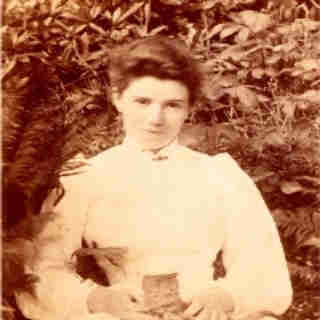 Born in Belfast Ireland, to a devout family of Scottish ancestry, Carmichael was educated at home and in England, where she lived with the familt of Robert Wilson after her father’s death. While never officially adopted, she used the hyphenated name Wilson-Carmichael as late as 1912. Her missionary call came through contacts with the Keswick movement. In 1892 she volunteered to the China Inland Mission but was refused on health grounds. However, in 1893 she sailed for Japan as the first Keswick missionary to join the Church Missionary Society (CMS) work led by Barclay Buxton. After less than two years in Japan and Ceylon, she was back in England before the end of 1894. The next year she volunteered to the Church of England Zenana Missionary Society, and in November 1895 she arrived in South India, never to leave. While still learning the difficult Tamil language, she commenced itinerant evangelism with a band of Indian Christian women, guided by the CMS missionary Thomas Walker. She soon found herself responsible for Indian women converts, and in 1901, she, the Walkers, and their Indian colleagues settled in Dohnavur. During her village itinerations, she had become increasingly aware of the fact that many Indian children were dedicated to the gods by their parents or guardians, became temple children, and lived in moral and spiritual danger. It became her mission to rescue and raise these children, and so the Dohnavur Fellowship came into being (registered 1927). Known at Dohnavur as Amma (Mother), Carmichael was the leader, and the work became well known through her writing. Workers volunteered and financial support was received, though money was never solicited. In 1931 she had a serious fall, and this, with arthritis, kept her an invalid for the rest of her life. She continued to write, and identified leaders, missionary and Indian, to take her place. The Dohnavur Fellowship still continues today.
Jocelyn Murray, “Carmichael, Amy Beatrice,” in Biographical Dictionary of Christian Missions, ed. Gerald H. Anderson (New York: Macmillan Reference USA, 1998), 116.
This article is reprinted from Biographical Dictionary of Christian Missions, Macmillan Reference USA, copyright © 1998 Gerald H. Anderson, by permission of Macmillan Reference USA, New York, NY. All rights reserved.
“Ammai” of orphans and holiness author
Amy Carmichael was born in Ireland in 1867, the oldest of seven children. As a teen, she attended a Wesleyan Methodist girls boarding school, until her father died when she was 18. Carmichael twice attended Keswick Conventions and experienced a holiness conversion which led her to work among the poor in Belfast. Through the Keswick Conventions, Carmichael met Robert Wilson. He developed a close relationship with the young woman, and invited her to live with his family. Carmichael soon felt a call to mission work and applied to the China Inland Mission as Amy Carmichael-Wilson. Although she did not go to China due to health reasons, Carmichael did go to Japan for a brief period of time. There she dressed in kimonos and began to learn Japanese. Her letters home from Japan became the basis for her first book, From Sunrise Land. Carmichael left Japan due to health reasons, eventually returning to England. She soon accepted a position with the Church of England’s Zenana Missionary Society, serving in India. From 1895 to 1925, her work with orphans in Tinnevelly (now Tirunelveli) was supported by the Church of England. After that time, Carmichael continued her work in the faith mission style, establishing an orphanage in Dohnavur. The orphanage first cared for girls who had been temple girls, who would eventually become temple prostitutes. Later the orphanage accepted boys as well.
Carmichael never returned to England after arriving in India. She wrote prolifically, publishing nearly 40 books. In her personal devotions, she relied on scripture and poetry. She wrote many of her own poems and songs. Carmichael had a bad fall in 1931, which restricted her movement. She stayed in her room, writing and studying. She often quoted Julian of Norwich when she wrote of suffering and patience. Many of Carmichael’s books have stories of Dohnavur children, interspersed with scripture, verses, and photographs of the children or nature. Carmichael never directly asked for funding, but the mission continued to be supported through donations. In 1951 Carmichael died at Dohnavur. Her headstone is inscribed “Ammai”, revered mother, which the children of Dohnavur called Carmichael.
Carmichael’s lengthy ministry at Dohnavur was sustained through her strong reliance upon scripture and prayer. Her early dedication to holiness practices and her roots in the Keswick tradition helped to guide her strong will and determination in her mission to the children of southern India.
by Rev. Lisa Beth White
Born in Belfast Ireland, to a devout family of Scottish ancestry, Carmichael was educated at home and in England, where she lived with the familt of Robert Wilson after her father’s death. While never officially adopted, she used the hyphenated name Wilson-Carmichael as late as 1912. Her missionary call came through contacts with the Keswick movement. In 1892 she volunteered to the China Inland Mission but was refused on health grounds. However, in 1893 she sailed for Japan as the first Keswick missionary to join the Church Missionary Society (CMS) work led by Barclay Buxton. After less than two years in Japan and Ceylon, she was back in England before the end of 1894. The next year she volunteered to the Church of England Zenana Missionary Society, and in November 1895 she arrived in South India, never to leave. While still learning the difficult Tamil language, she commenced itinerant evangelism with a band of Indian Christian women, guided by the CMS missionary Thomas Walker. She soon found herself responsible for Indian women converts, and in 1901, she, the Walkers, and their Indian colleagues settled in Dohnavur. During her village itinerations, she had become increasingly aware of the fact that many Indian children were dedicated to the gods by their parents or guardians, became temple children, and lived in moral and spiritual danger. It became her mission to rescue and raise these children, and so the Dohnavur Fellowship came into being (registered 1927). Known at Dohnavur as Amma (Mother), Carmichael was the leader, and the work became well known through her writing. Workers volunteered and financial support was received, though money was never solicited. In 1931 she had a serious fall, and this, with arthritis, kept her an invalid for the rest of her life. She continued to write, and identified leaders, missionary and Indian, to take her place. The Dohnavur Fellowship still continues today.
Jocelyn Murray, “Carmichael, Amy Beatrice,” in Biographical Dictionary of Christian Missions, ed. Gerald H. Anderson (New York: Macmillan Reference USA, 1998), 116.
This article is reprinted from Biographical Dictionary of Christian Missions, Macmillan Reference USA, copyright © 1998 Gerald H. Anderson, by permission of Macmillan Reference USA, New York, NY. All rights reserved.
“Ammai” of orphans and holiness author
Amy Carmichael was born in Ireland in 1867, the oldest of seven children. As a teen, she attended a Wesleyan Methodist girls boarding school, until her father died when she was 18. Carmichael twice attended Keswick Conventions and experienced a holiness conversion which led her to work among the poor in Belfast. Through the Keswick Conventions, Carmichael met Robert Wilson. He developed a close relationship with the young woman, and invited her to live with his family. Carmichael soon felt a call to mission work and applied to the China Inland Mission as Amy Carmichael-Wilson. Although she did not go to China due to health reasons, Carmichael did go to Japan for a brief period of time. There she dressed in kimonos and began to learn Japanese. Her letters home from Japan became the basis for her first book, From Sunrise Land. Carmichael left Japan due to health reasons, eventually returning to England. She soon accepted a position with the Church of England’s Zenana Missionary Society, serving in India. From 1895 to 1925, her work with orphans in Tinnevelly (now Tirunelveli) was supported by the Church of England. After that time, Carmichael continued her work in the faith mission style, establishing an orphanage in Dohnavur. The orphanage first cared for girls who had been temple girls, who would eventually become temple prostitutes. Later the orphanage accepted boys as well.
Carmichael never returned to England after arriving in India. She wrote prolifically, publishing nearly 40 books. In her personal devotions, she relied on scripture and poetry. She wrote many of her own poems and songs. Carmichael had a bad fall in 1931, which restricted her movement. She stayed in her room, writing and studying. She often quoted Julian of Norwich when she wrote of suffering and patience. Many of Carmichael’s books have stories of Dohnavur children, interspersed with scripture, verses, and photographs of the children or nature. Carmichael never directly asked for funding, but the mission continued to be supported through donations. In 1951 Carmichael died at Dohnavur. Her headstone is inscribed “Ammai”, revered mother, which the children of Dohnavur called Carmichael.
Carmichael’s lengthy ministry at Dohnavur was sustained through her strong reliance upon scripture and prayer. Her early dedication to holiness practices and her roots in the Keswick tradition helped to guide her strong will and determination in her mission to the children of southern India.
by Rev. Lisa Beth White
Are You a Friend to the Poor
God’s heart is for the least of these: the suffering, lost, and lonely. "Do you know the name of a poor person?" a young man in his twenties who was sharing about his experiences as a missionary in Moldova posed the question to me in church. His phrase was tricky because if he'd said, "Do you care about the poor?" I might have tossed it in that drawer where you keep all the stuff you've heard a million times and are supposed to ponder but probably won't do much with. When he asked if I knew the name of a poor person he exposed a glaring gap in my Christianity: Whose name did I know? Not whose face had I passed on 21st Street on my way to grab coffee; not what homeless man had I handed a dollar for the paper he peddles at the stoplight; not what anonymous tsunami victim had received an online donation I'd made. Whose name did I know? I was left to consider this very important question because if I didn't know the name of a poor person, I didn't really know a poor person. (This is one of the biggest problems with going to church — the possibility of getting all convicted and stuff.) I always knew that if God's heart was for anything it was for the least of these: the suffering, sick, needy, uneducated, foreigner, lost, lonely — this much was clear. And it's true that these were people I cared about, prayed for, and on whose behalf I tithed, but how many of them called me friend? Who had my phone number, been to dinner at my house, or sat beside me at church? Without condemnation, I had to recognize that I was someone who cared for the poor mostly from a distance but who had yet to intimately involve herself. My first step: Learn a name. In the Law of Moses God commanded the Israelites to leave their extra sheaves, olives, and grapes for the alien, fatherless, and widow — for all the people who didn't have what the Israelites had and who didn't have the means to get what they had. At the end of this recurring command the Lord gave His people an intriguing reason for why He required this, "Remember that you were slaves in Egypt. That is why I command you to do this" (Deut. 24:22, NIV). Didn't God want them to leave their excess food for the poor and outsider because these people were hungry, because they needed community, because they couldn't provide for themselves, because He loved them? Wasn't that why? Oh I'm sure those were all reasons, but I believe God first had to deal with that sneaky mind-set, the one that tries to trick us into thinking that when we step over a stalk of wheat to leave it for the poor we're doing something really noble, plain over-the-top gracious. That we're going above and beyond by giving away what is rightfully "ours." The Lord was staving off this kind of thinking by saying, "Hold your fancy horses. Remember you used to be slaves too! Don't forget to tap into what that felt like." The Israelites were no strangers to poverty, oppression, or powerlessness as ones who had once been enslaved in Egypt. It was only because of God's deliverance they were now free, only because of His goodness they were blessed with flourishing fields and bursting branches. By remembering their once low estate, they were poised to welcome the foreigner, fatherless, and widow, not out of self-righteousness, guilt, or duty, but out of the love God had shown them. Last night I served dinner to an Iraqi couple and their 2-year-old daughter, a family some of my friends and I have gotten to know. I'd hoped that chicken, broccoli, and couscous were safe selections to serve these well-dressed Middle Easterners, though I sensed I may have been pushing it with the hot apple cider. I was going for the American autumn experience, and judging by their first and only sip, this went over moderately. As we settled around the table I asked them why they'd left Baghdad to come to America. The husband replied, "Because there are less car bombings here," and then he broke out into hysterical laughter. (Safwat's a sanguine.) His wife was less buoyant, confiding that the war had been devastating and that they'd fled here as refugees hoping to find jobs but so far without any success. My eyes welled up as she spoke because her suffering was not that of a nameless Iraqi, but it belonged to her, a real-life woman with a name, Rida. As the adults carried on, Rubaa fingered the icing on her cupcake and tapped her shoes on the hardwood floors, just like any other baby girl in a bright red dress who wanted the room to be enchanted with her — some things are the same everywhere. When it was time for them to leave, Safwat shook my hand, Rubaa blew me a kiss at her mother's urging, and Rida kissed my right cheek, left cheek, and then back to my right cheek again (it's that third one I always forget). As we said our good-byes I realized what a privilege it was to know their names, because knowing their names meant I was getting to know their stories. And knowing their stories reminded me in deeply spiritual and emotional places that I, too, was once a foreigner outside of God's kingdom, but because of Christ, I am now a daughter. Kelly Minter