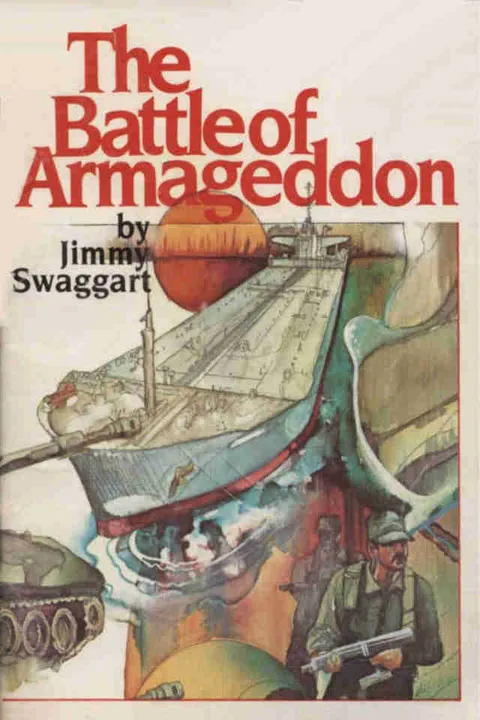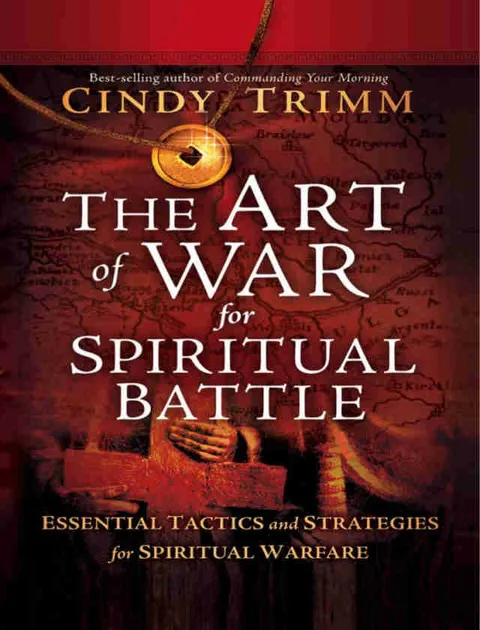

The Art Of War For Spiritual Battle Order Printed Copy
- Author: Cindy Trimm
- Size: 1.19MB | 199 pages
- |
Others like the art of war for spiritual battle Features >>

The Holy Spirit — The Missing Ingredient
Saints At War: Spiritual Warfare
-160.webp)
The Spiritual Man
Smith Wigglesworth On Spiritual Gifts
The Spiritual Man
Dressed To Kill (Spiritual Warfare And Armour)
.epub-160.webp)
The Price Of Spiritual Power
.epub-160.webp)
Falling Upward: A Spirituality For The Two Halves Of Life
The Release Of Spirit

Mystery Of The Holy Sprirt
About the Book
"The Art of War for Spiritual Battle" by Cindy Trimm provides insightful strategies for engaging in spiritual warfare, offering practical guidance on how to overcome spiritual obstacles and achieve victory in our lives through prayer, faith, and the power of God. Drawing on principles from Sun Tzu's "The Art of War," Trimm equips readers with tools to fight spiritual battles and live a victorious life.
C.S. Lewis
 C.S. Lewis was a prolific Irish writer and scholar best known for his 'Chronicles of Narnia' fantasy series and his pro-Christian texts.
Who Was C.S. Lewis?
Writer and scholar C.S. Lewis taught at Oxford University and became a renowned Christian apologist writer, using logic and philosophy to support the tenets of his faith. He is also known throughout the world as the author of The Chronicles of Narnia fantasy series, which have been adapted into various films for the big and small screens.
Early Life
Clive Staples Lewis was born in Belfast, Ireland, on November 29, 1898, to Flora August Hamilton Lewis and Albert J. Lewis. As a toddler, Clive declared that his name was Jack, which is what he was called by family and friends. He was close to his older brother Warren and the two spent much time together as children.
Lewis was enraptured by fantastic animals and tales of gallantry, and hence the brothers created the imaginary land of Boxen, complete with an intricate history that served them for years. Lewis' mother died when he was 10, and he went on to receive his pre-college education at boarding schools and from a tutor. During WWI, he served with the British army and was sent home after being wounded by shrapnel. He then chose to live as a surrogate son with Janie Moore, the mother of a friend of Lewis' who was killed in the war.
Teaching Career at Oxford and Wartime Broadcasts
Lewis graduated from Oxford University with a focus on literature and classic philosophy, and in 1925 he was awarded a fellowship teaching position at Magdalen College, which was part of the university. There, he also joined the group known as The Inklings, an informal collective of writers and intellectuals who counted among their members Lewis' brother Warren and J.R.R. Tolkien. It was through conversations with group members that Lewis found himself re-embracing Christianity after having become disillusioned with the faith as a youth. He would go on to become renowned for his rich apologist texts, in which he explained his spiritual beliefs via platforms of logic and philosophy.
Lewis began publishing work including Spirits in Bondage in 1919 and the satirical Dymer in 1926. After penning other titles — including The Allegory of Love (1936), for which he won the Hawthornden Prize — he released in 1938 his first sci-fi work, Out of the Silent Planet, the first of a space trilogy which dealt sub-textually with concepts of sin and desire. Later, during WWII, Lewis gave highly popular radio broadcasts on Christianity which won many converts; his speeches were collected in the work Mere Christianity.
Books and Film Legacy
Lewis was a prolific author of fiction and nonfiction who wrote dozens of books over the course of his career. His faith-based arguments as seen in texts like The Great Divorce (1946) and Miracles (1947) are held in high regard by many theologians, scholars and general readers. His satirical fiction novel The Screwtape Letters (1942) is also a beloved classic. Lewis also continued his love affair with classic mythology and narratives during his later years: His book Till We Have Faces: A Myth Retold (1956) featured the story of Psyche and Cupid. He also penned an autobiography, Surprised by Joy: The Shape of My Early Life (1955).
Lewis' landmark series, The Chronicles of Narnia, has seen a number of on-screen iterations, including a cartoon version of The Lion, The Witch and the Wardrobe that was released in 1979 and a 1989 film series. Additionally, in 2005, a big-screen adaptation of The Lion, The Witch and the Wardrobe hit movie theaters, starring Tilda Swinton as the witch Jadis and Liam Neeson as the voice of Aslan. Two more Narnia films were brought to theaters as well: Prince Caspian (2008) and The Voyage of the Dawn Treader (2010). A movie version of The Silver Chair was slated to hit theaters in the near future, with filming starting in the winter of 2018.
Lewis' relationship with his wife, Joy, has also been depicted in Shadowlands, presented as a play and two films; one of the film versions was directed by Richard Attenborough and starred Anthony Hopkins as Lewis.
'The Chronicles of Narnia'
During the 1940s, Lewis began writing the seven books that would comprise The Chronicles of Narnia children's series, with The Lion, The Witch and the Wardrobe (1950) being the first release. The story focused on four siblings who, during wartime, walk through an armoire to enter the magical world of Narnia, a land resplendent with mythical creatures and talking animals. Throughout the series, a variety of Biblical themes are presented; one prominent character is Aslan, a lion and the ruler of Narnia, who has been interpreted as a Jesus Christ figure. (Lewis would assert that his Narnia stories weren't a direct allegory to the real world.)
Though the book received some negative reviews, it was generally well-received by readers, and the series retained its international popularity over the following decades.
Marriage
In 1954, Lewis joined the faculty of Cambridge University as a literature professor, and in 1956 he married an American English teacher, Joy Gresham, with whom he had been in correspondence. Lewis was full of happiness during the years of their marriage, though Gresham died of cancer in 1960. Lewis grieved deeply for his wife and shared his thoughts in the book A Grief Observed, using a pen name.
Death
In 1963, Lewis resigned from his Cambridge position after experiencing heart trouble. He died on November 22, 1963, in Headington, Oxford.
C.S. Lewis was a prolific Irish writer and scholar best known for his 'Chronicles of Narnia' fantasy series and his pro-Christian texts.
Who Was C.S. Lewis?
Writer and scholar C.S. Lewis taught at Oxford University and became a renowned Christian apologist writer, using logic and philosophy to support the tenets of his faith. He is also known throughout the world as the author of The Chronicles of Narnia fantasy series, which have been adapted into various films for the big and small screens.
Early Life
Clive Staples Lewis was born in Belfast, Ireland, on November 29, 1898, to Flora August Hamilton Lewis and Albert J. Lewis. As a toddler, Clive declared that his name was Jack, which is what he was called by family and friends. He was close to his older brother Warren and the two spent much time together as children.
Lewis was enraptured by fantastic animals and tales of gallantry, and hence the brothers created the imaginary land of Boxen, complete with an intricate history that served them for years. Lewis' mother died when he was 10, and he went on to receive his pre-college education at boarding schools and from a tutor. During WWI, he served with the British army and was sent home after being wounded by shrapnel. He then chose to live as a surrogate son with Janie Moore, the mother of a friend of Lewis' who was killed in the war.
Teaching Career at Oxford and Wartime Broadcasts
Lewis graduated from Oxford University with a focus on literature and classic philosophy, and in 1925 he was awarded a fellowship teaching position at Magdalen College, which was part of the university. There, he also joined the group known as The Inklings, an informal collective of writers and intellectuals who counted among their members Lewis' brother Warren and J.R.R. Tolkien. It was through conversations with group members that Lewis found himself re-embracing Christianity after having become disillusioned with the faith as a youth. He would go on to become renowned for his rich apologist texts, in which he explained his spiritual beliefs via platforms of logic and philosophy.
Lewis began publishing work including Spirits in Bondage in 1919 and the satirical Dymer in 1926. After penning other titles — including The Allegory of Love (1936), for which he won the Hawthornden Prize — he released in 1938 his first sci-fi work, Out of the Silent Planet, the first of a space trilogy which dealt sub-textually with concepts of sin and desire. Later, during WWII, Lewis gave highly popular radio broadcasts on Christianity which won many converts; his speeches were collected in the work Mere Christianity.
Books and Film Legacy
Lewis was a prolific author of fiction and nonfiction who wrote dozens of books over the course of his career. His faith-based arguments as seen in texts like The Great Divorce (1946) and Miracles (1947) are held in high regard by many theologians, scholars and general readers. His satirical fiction novel The Screwtape Letters (1942) is also a beloved classic. Lewis also continued his love affair with classic mythology and narratives during his later years: His book Till We Have Faces: A Myth Retold (1956) featured the story of Psyche and Cupid. He also penned an autobiography, Surprised by Joy: The Shape of My Early Life (1955).
Lewis' landmark series, The Chronicles of Narnia, has seen a number of on-screen iterations, including a cartoon version of The Lion, The Witch and the Wardrobe that was released in 1979 and a 1989 film series. Additionally, in 2005, a big-screen adaptation of The Lion, The Witch and the Wardrobe hit movie theaters, starring Tilda Swinton as the witch Jadis and Liam Neeson as the voice of Aslan. Two more Narnia films were brought to theaters as well: Prince Caspian (2008) and The Voyage of the Dawn Treader (2010). A movie version of The Silver Chair was slated to hit theaters in the near future, with filming starting in the winter of 2018.
Lewis' relationship with his wife, Joy, has also been depicted in Shadowlands, presented as a play and two films; one of the film versions was directed by Richard Attenborough and starred Anthony Hopkins as Lewis.
'The Chronicles of Narnia'
During the 1940s, Lewis began writing the seven books that would comprise The Chronicles of Narnia children's series, with The Lion, The Witch and the Wardrobe (1950) being the first release. The story focused on four siblings who, during wartime, walk through an armoire to enter the magical world of Narnia, a land resplendent with mythical creatures and talking animals. Throughout the series, a variety of Biblical themes are presented; one prominent character is Aslan, a lion and the ruler of Narnia, who has been interpreted as a Jesus Christ figure. (Lewis would assert that his Narnia stories weren't a direct allegory to the real world.)
Though the book received some negative reviews, it was generally well-received by readers, and the series retained its international popularity over the following decades.
Marriage
In 1954, Lewis joined the faculty of Cambridge University as a literature professor, and in 1956 he married an American English teacher, Joy Gresham, with whom he had been in correspondence. Lewis was full of happiness during the years of their marriage, though Gresham died of cancer in 1960. Lewis grieved deeply for his wife and shared his thoughts in the book A Grief Observed, using a pen name.
Death
In 1963, Lewis resigned from his Cambridge position after experiencing heart trouble. He died on November 22, 1963, in Headington, Oxford.
date differently this year - four resolutions for better relationships
It takes extraordinary courage to change how you date. It’s not easy to reset boundaries, communicate better, flee sexual immorality, confess failures, and end the relationship that needs to end. But you will never regret making the right changes. There were moments through high school and college when I knew with crystal clarity that things needed to change, but the costs kept me from changing sooner. What will others think about me when I confess how I’ve failed? What if I fail again, and things never get better? What if the change I need means I’m single and alone again? Like a merciless lawyer, Satan piled up every conceivable reason not to do what I knew I had to do — to make excuses, to put off decisions, to be almost honest with friends and family, to stay in unhealthy relationships, to avoid Christ and indulge in sin. I have prayed that the four resolutions that follow might give some the courage to do what you’ve been afraid to do for weeks, for months, maybe even for years. To lay down your excuses. To take up your cross. To welcome what it will cost you today to pursue love in light of eternity. To date differently this year, in a way that says something stunning about your God. 1. Above all else, I will look for Jesus. “Welcome what it will cost you today to pursue love in light of eternity.” If you resolve to change nothing else about your patterns in relationships, resolve to make Jesus the most important thing in your dating. Raise Philippians 1:21 over your next relationship: “To me to live is Christ, and to die is gain.” If to live is Christ, then to date is Christ. To marry is Christ. To remain single is Christ. He is our reason for living and working, growing and learning, dating and marrying. Above every other priority in dating, look for Jesus. It may sound simple and easy, but Satan wages an all-out war on our hearts and minds to keep us from single-minded devotion. Nothing could be harder. It is emotionally impossible to put Christ before our desires for intimacy and marriage — unless we have the Spirit of Christ. Unless it is no longer we who live and date, but Christ who lives in and through us (Galatians 2:20). Before you entrust your heart to someone else, resolve to love Jesus with all your heart. Before you let yourself daydream about potential futures with him or her, resolve to love Jesus with all your mind. Before you think about knitting your soul with another, resolve to love Jesus with all of your soul first. Before you risk, sacrifice, and work for love, resolve to love Jesus with all your strength. Resolve to love him more than love. And as you give your heart first and foremost to Christ, make sure your boyfriend (or girlfriend) has too — in the deepest places of who he is and what he wants. His faith is not a box to check along with lots of others; it should be the ink that shapes every other box. Whether you are currently in a relationship or might begin one this year, decide right now to date from a deeper, wider, higher love for the Lord. 2. I will grow where I have failed before. One reason we fail in the same ways year after year is that we fail to admit and address our failures. If you have a sexual past or a trail of mistakes behind you, you need to know there is nowhere safer to deal with your failures than in Christ. Someone may have led you to suspect that how you’ve dated has disqualified you from his love, but Christ came and died precisely for the things you’re most ashamed of. The apostle Paul says, The saying is trustworthy and deserving of full acceptance, that Christ Jesus came into the world to save sinners, of whom I am the foremost. But I received mercy for this reason, that in me, as the foremost, Jesus Christ might display his perfect patience as an example to those who were to believe in him for eternal life. (1 Timothy 1:15–16) “If you resolve to change nothing else, resolve to make Jesus the most important thing in your dating.” Guilt and shame qualify us for his love. He wants to put his patience and mercy on display for the world by showering you with mercy and being patient with you . He wants you to step forward, like Paul, to experience what he died to give you. The process begins by boldly bringing our failures before his feet (1 John 1:9), knowing he loves to forgive our wrongs, heal our wounds, and restore our brokenness. If we draw our darkness into his light, he will not only cover our darkness, but dispel it. He will make us someone new, someone different from the stains of our dating history (2 Corinthians 5:17). The process begins at the feet of Jesus, but it does not end there. Those who truly want to change where we have fallen before resolve to seek flesh-and-blood accountability in the specific areas where we have failed (Hebrews 3:12–13). A resolve to grow is a resolve to share with others — to consistently confess our failures, seek out counsel, embrace hard questions, and fold others into our dating relationships. Everyone expects this to happen naturally, and in a few rare instances, it might. In the vast majority of cases, though, this will require extraordinary effort and sacrifice. You will have to care about what other believers think about your relationships more than even they care about what they think. Resolve to grow where you have failed in relationships — to bring your specific failures to your perfectly patient Savior, to confess your specific failures to another believer, and to pursue specific steps, with God’s help, to overcome temptation and cultivate godliness. 3. I will pursue clarity, and postpone intimacy. Likely you have asked yourself (over and over again) what you’re looking for in a significant other. Most people, no matter who they are or what they believe, ask that question. The more important question that fewer of us ask is this: What am I looking for from dating? “Christ came and died precisely for the things you’re most ashamed of. Guilt and shame qualify you for his love.” For many, the answer is simply intimacy. In the fantasies of our imagination, intimacy may look like a thousand different experiences and sensations, but intimacy is often the grail of great price. Unfortunately, when intimacy becomes the great prize, it also becomes the great price we pay. When intimacy fails to materialize, or fails to satisfy us, or fails to last for long, we have only bartered precious pieces of our hearts for painful regret and deeper longings. Beware of letting your dating be driven by the pursuit of intimacy this year. Date to find precious clarity from God about whether to marry. The great prize in marriage is Christ-centered intimacy. The great prize in dating is Christ-centered clarity. This does not mean marry the next person you date, or only date someone you’re certain you would marry; it means make Christ-centered clarity toward marriage the measure of your romance. Am I increasingly confident over time that this is someone I can marry in the Lord? A new resolve to pursue clarity in dating cuts against our impulses toward flirtation, ambiguity, and enticement, and flows into clear and loving communication. Any relationship that cuts against flirtation, ambiguity, and enticement, that intentionally postpones physical intimacy for the covenant of marriage, swims against the current, at least in America today. It will seem strange and awkward to others your age — and beautiful to God. Date for something far more satisfying than physical and emotional intimacy. Date for a deeper purpose. Not because everyone else is doing it. Not because it’s fun. Not because he’s cute. Date because of God. Date for God. Let your love life stem from seeing and enjoying and sharing more of him. 4. I will ask God for help. The most important change in your love life may not be between you and your significant other, but between you and God. Before we try to establish healthy boundaries in our relationship, we need direction from God. Before we go looking for love, we need to seek the Lord. Before we address our communication in dating, we need to address our communication with our Father. Better relationships will begin with God in prayer. “Date for a deeper purpose. Not because everyone else is doing it. Not because it’s fun. Date because of God.” Unless the Lord builds (or rebuilds) our relationships, we date in vain (Psalm 127:1). Unless the Lord watches over you and your girlfriend (or boyfriend), you risk, worry, and date in vain. He knows exactly what you need (Matthew 6:32), where you are weak, and how you will glorify him. Refuse to date anyone unless, like Moses, God goes up with you (Exodus 33:15). And then talk to him about your relationships as much as you talk with anyone else. When passion rises within you, or anxiety creeps in, or confusion clouds your mind and heart, run first to God. No one will help you, keep you, or hear you like him. The best way to discern what God is doing, and how he is directing you, in a relationship this year is to stay close to him. The greater the intimacy you have with him, the greater clarity you will have about who to pursue, what to change, and when to marry.