

Others like spirit, soul & body Features >>


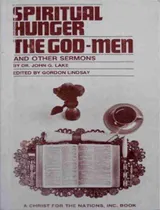
About the Book
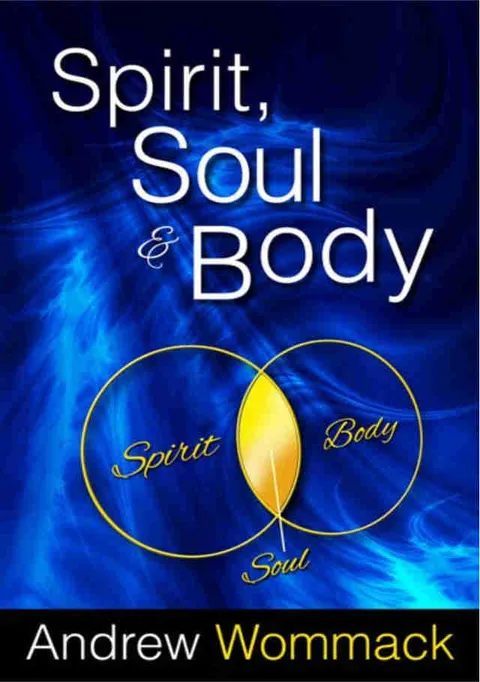
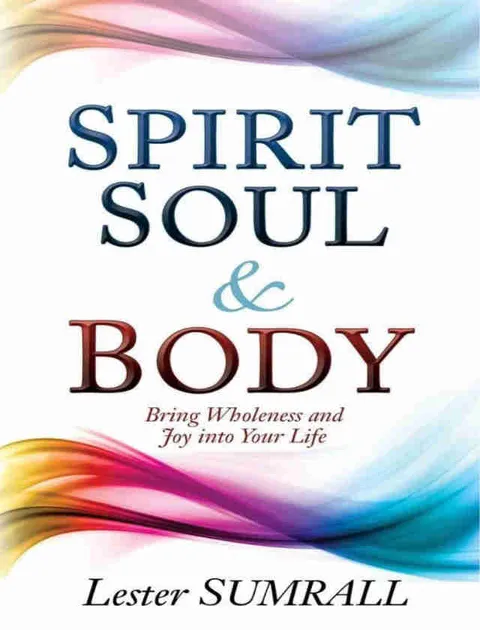
"Spirit, Soul & Body" by Andrew Wommack explores the relationship between the spirit, soul, and body and how understanding this connection can lead to a more fulfilling and abundant life. Wommack delves into the importance of maintaining a strong spirit and soul in order to achieve overall health and well-being. Through practical insights and biblical principles, he guides readers on how to develop a deeper understanding of their spiritual identity and purpose.
John G. Lake
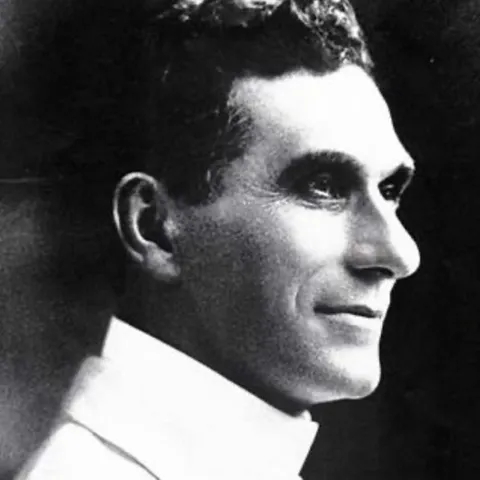 John G. Lake was born in Ontario, Canada on March 18th, 1870. He was a family man, person of integrity, honor, a savvy businessman and a good father. If you knew him you wouldn’t otherwise know that he would soon become one of the greatest men of God the world would ever know. He had a genuine love for the Lord Jesus and was known by his friends as a man who dedicated himself to intimacy with The Lord. It was out of this place that he loved his wife, was a man of integrity and built a very successful business career. To give you perspective, by 1905 John G Lake was making $50,000 per year this sum would be like upwards of 1.3 million dollars per year annually today. John grew up in a family environment which was plagued with sickness and death, it is said that his earliest memories were of sickness, death and funerals. Lake was from a large family, he had 16 siblings, 8 of which tragically died of various diseases. It is no coincidence that “the man of healing” was tormented from a young age with death and disease. The enemy will often oppose destinies with radical circumstances through a distortion of the very thing that we are called to walk in. Lake Was exposed to dramatic healing when he visited John Alexander Dowie’s ministry and was, in prayer, instantly healed of a rheumatism which had caused his legs to grow incorrectly. Just two short years into their marriage, Jennie Lake was diagnosed with tuberculosis and heart disease. Over the next couple of years, the condition worsened and the doctors resigned to the fact that it was only a matter of time before she would die. John allowed this situation to provoke him into faith, after being exposed to such death and disease from a young age he had a hatred for such things. When he would read the word of God he saw that his Christian experience was less than the promised “power of the Holy Spirit”. As Jennie was on her deathbed and perhaps taking her final breaths Lake was overcome with anger over sickness and threw his bible against the fireplace mantle! When he went to pick up his bible it was opened to Acts chapter 10:38 which says: "God anointed Jesus of Nazareth with the Holy Ghost and with power: who went about doing good, and healing all that were oppressed of the devil; for God was with him.” Lake had a surge of faith in that moment and sent a telegram to Dowie asking him to pray. Within an hour of Dowie praying she was fully healed! Not long after Jennie was healed, God began to speak to Lake about going into full time ministry. After some time of contemplation and seeking the Lord, God confirmed to John and Jennie separately that they were to move to South Africa to begin their life of ministry. John and Jennie then gave away all that they had, John forsook his mega-salary and they went on their way alongside some of their friends as ministry partners.
When they arrived in South Africa, they had no money. The problem was, that they needed at least $125 in order to clear customs. they nervously waited for their turn in line, rehearsing what they would say to the immigration officer They were in desperate need of a miracle, as the law read that they would be subject to deportation as quickly as they arrived in South Africa. Just as they were about the get to the front of the line, John felt a tap on his shoulder… A man was standing behind John and said “excuse me sir, can I have a word with you?” John nervously steps out of line at the man’s request and the man said “when I saw you and your family in line, the Lord told me to give you $200 cash”. The Lord provided just enough money for John and his family to enter the country. But their needs didn’t stop there. The Lakes and their crew had no ministry contact in Johannesburg. Soon after they cleared customs, a woman approached John’s friends and asked how many people are in their family, when they told her, she responded “no, not you” and went over to John and asked the same question. John replied “9” and she said “you’re the ones!” She went on to tell John that the Lord had spoken to her last night that she was to give her home to a family of 9 people who are coming from America to do God’s work. John, Jennie and their crew rejoiced in the dramatic provision of the Lord. Their time in South Africa was marked with waves of revival, there were multitudes saved, healed and delivered over the course of their 5 year ministry tour in South Africa.
By far my favorite story from this season of Revival takes place shortly after the Lake family and their team arrived in South Africa. A mighty plague was sweeping through the nation, the death count was climbing dramatically. So much so that there was a surplus of corpses who were victims of the plague and there was no one to bury the dead; if someone was to come in contact with a dead body they would most certainly become infected and their death sentence would immediately begin. John G. Lake astounded the medical officials because he, without any gloves or protective clothing began burying the dead. Physicians in a panic approached John and rebuked him for coming in contact with the dead, John boldly responded "when the disease comes in contact with my skin, you can watch it die". The doctors thought he was insane, so he challenged them to put a drop of the plague on his skin and watch it under a microscope. When they did so, John was right! The plague cells literally burned up the second they came in contact with his skin!
It is tough to understand what would happen towards the end of the Lake’s missionary journey in Africa. One day while John was away on a ministry trip, his wife Jennie suddenly passed away. The cause of her death was malnutrition and exhaustion. It wasn’t uncommon for the sick and broken to line the lawn of John G Lake’s home and Jennie, as an act of sacrifice, gave away all their food and any resources she could to the broken which frequented their house.
Although John and Jennie’s faith and sacrifice is commendable we must learn from this fatal mistake. John’s priorities clearly became altered as the demand for ministry raged on. He failed to guard and keep the very precious gift that God had given him, he allowed the demands of ministry to distract him from the needs of his family unto the tragic and preventable death of his wife. In the wake of Jennie’s death their children became bitter with John and subsequently God. Some of his children left the faith and the most recent accounts of them suggest that they died not following Christ. To this day some of John’s great grandchildren do not follow the Lord. John’s failure to obey the basic command of scripture for “husbands to love their wives as Christ loves the church” and his preoccupation with the demands of ministry opened up the door for the enemy to ravage his family. After Jennie’s death John moved back to the United States and remarried. He would then pioneer his famous healing ministry based out of Spokane Washington. Unfortunately John did not learn his lesson the first time, in the midst of more flames of revival he continued to be a poor father, emotionally disconnected from his children.
John G. Lake was born in Ontario, Canada on March 18th, 1870. He was a family man, person of integrity, honor, a savvy businessman and a good father. If you knew him you wouldn’t otherwise know that he would soon become one of the greatest men of God the world would ever know. He had a genuine love for the Lord Jesus and was known by his friends as a man who dedicated himself to intimacy with The Lord. It was out of this place that he loved his wife, was a man of integrity and built a very successful business career. To give you perspective, by 1905 John G Lake was making $50,000 per year this sum would be like upwards of 1.3 million dollars per year annually today. John grew up in a family environment which was plagued with sickness and death, it is said that his earliest memories were of sickness, death and funerals. Lake was from a large family, he had 16 siblings, 8 of which tragically died of various diseases. It is no coincidence that “the man of healing” was tormented from a young age with death and disease. The enemy will often oppose destinies with radical circumstances through a distortion of the very thing that we are called to walk in. Lake Was exposed to dramatic healing when he visited John Alexander Dowie’s ministry and was, in prayer, instantly healed of a rheumatism which had caused his legs to grow incorrectly. Just two short years into their marriage, Jennie Lake was diagnosed with tuberculosis and heart disease. Over the next couple of years, the condition worsened and the doctors resigned to the fact that it was only a matter of time before she would die. John allowed this situation to provoke him into faith, after being exposed to such death and disease from a young age he had a hatred for such things. When he would read the word of God he saw that his Christian experience was less than the promised “power of the Holy Spirit”. As Jennie was on her deathbed and perhaps taking her final breaths Lake was overcome with anger over sickness and threw his bible against the fireplace mantle! When he went to pick up his bible it was opened to Acts chapter 10:38 which says: "God anointed Jesus of Nazareth with the Holy Ghost and with power: who went about doing good, and healing all that were oppressed of the devil; for God was with him.” Lake had a surge of faith in that moment and sent a telegram to Dowie asking him to pray. Within an hour of Dowie praying she was fully healed! Not long after Jennie was healed, God began to speak to Lake about going into full time ministry. After some time of contemplation and seeking the Lord, God confirmed to John and Jennie separately that they were to move to South Africa to begin their life of ministry. John and Jennie then gave away all that they had, John forsook his mega-salary and they went on their way alongside some of their friends as ministry partners.
When they arrived in South Africa, they had no money. The problem was, that they needed at least $125 in order to clear customs. they nervously waited for their turn in line, rehearsing what they would say to the immigration officer They were in desperate need of a miracle, as the law read that they would be subject to deportation as quickly as they arrived in South Africa. Just as they were about the get to the front of the line, John felt a tap on his shoulder… A man was standing behind John and said “excuse me sir, can I have a word with you?” John nervously steps out of line at the man’s request and the man said “when I saw you and your family in line, the Lord told me to give you $200 cash”. The Lord provided just enough money for John and his family to enter the country. But their needs didn’t stop there. The Lakes and their crew had no ministry contact in Johannesburg. Soon after they cleared customs, a woman approached John’s friends and asked how many people are in their family, when they told her, she responded “no, not you” and went over to John and asked the same question. John replied “9” and she said “you’re the ones!” She went on to tell John that the Lord had spoken to her last night that she was to give her home to a family of 9 people who are coming from America to do God’s work. John, Jennie and their crew rejoiced in the dramatic provision of the Lord. Their time in South Africa was marked with waves of revival, there were multitudes saved, healed and delivered over the course of their 5 year ministry tour in South Africa.
By far my favorite story from this season of Revival takes place shortly after the Lake family and their team arrived in South Africa. A mighty plague was sweeping through the nation, the death count was climbing dramatically. So much so that there was a surplus of corpses who were victims of the plague and there was no one to bury the dead; if someone was to come in contact with a dead body they would most certainly become infected and their death sentence would immediately begin. John G. Lake astounded the medical officials because he, without any gloves or protective clothing began burying the dead. Physicians in a panic approached John and rebuked him for coming in contact with the dead, John boldly responded "when the disease comes in contact with my skin, you can watch it die". The doctors thought he was insane, so he challenged them to put a drop of the plague on his skin and watch it under a microscope. When they did so, John was right! The plague cells literally burned up the second they came in contact with his skin!
It is tough to understand what would happen towards the end of the Lake’s missionary journey in Africa. One day while John was away on a ministry trip, his wife Jennie suddenly passed away. The cause of her death was malnutrition and exhaustion. It wasn’t uncommon for the sick and broken to line the lawn of John G Lake’s home and Jennie, as an act of sacrifice, gave away all their food and any resources she could to the broken which frequented their house.
Although John and Jennie’s faith and sacrifice is commendable we must learn from this fatal mistake. John’s priorities clearly became altered as the demand for ministry raged on. He failed to guard and keep the very precious gift that God had given him, he allowed the demands of ministry to distract him from the needs of his family unto the tragic and preventable death of his wife. In the wake of Jennie’s death their children became bitter with John and subsequently God. Some of his children left the faith and the most recent accounts of them suggest that they died not following Christ. To this day some of John’s great grandchildren do not follow the Lord. John’s failure to obey the basic command of scripture for “husbands to love their wives as Christ loves the church” and his preoccupation with the demands of ministry opened up the door for the enemy to ravage his family. After Jennie’s death John moved back to the United States and remarried. He would then pioneer his famous healing ministry based out of Spokane Washington. Unfortunately John did not learn his lesson the first time, in the midst of more flames of revival he continued to be a poor father, emotionally disconnected from his children.
Death Is Not the End
“And they lived happily ever after. The end.” That’s a common way to end a story that begins “Once upon a time.” We call those stories fairy tales. Fairy tales are imaginary stories for children, filled with magic and with fanciful people and places. We love a good fairy tale because it echoes the real story of the Bible. God has wired us to love stories that resolve — stories that end with not only justice but with exuberant joy. “God will transform your natural, earthly body into a supernatural, heavenly body.” This conviction was held by two friends who wrote some of the most iconic fiction of the twentieth century: C.S. Lewis and J.R.R. Tolkien. After the great battle at the end of Lewis’s Chronicles of Narnia, the characters discover that the new Narnia has been their real country the whole time, and they have nothing left now but to travel further up and further in. Tolkien, in Lord of the Rings, enlists Sam Gamgee to ask, after the ring has been destroyed, whether everything sad would come untrue. Tolkien even coined a term for a sudden happy turn in the story toward this blissful resolve: eucatastrophe. We can summarize the story line of the Bible as “Kill the dragon, and get the girl.” That joyful resolution is what the final two phrases of the Apostles’ Creed capture: “the resurrection of the body” and “the life everlasting.” Resurrection of the Body God will raise the corpses of Christians. That is the main point of 1 Corinthians 15, the Bible’s most famous passage on the resurrection of believers. “How can some of you say,” Paul asks the Corinthians, “that there is no resurrection of the dead?” (1 Corinthians 15:12). The Corinthians believed that God resurrected Christ (1 Corinthians 15:1–2, 4, 11), but some of them denied that God will resurrect the corpses of Christians. “Resurrection” translates the Greek word anastasis (1 Corinthians 15:12–13, 21, 42), which does not ambiguously refer to “life after death,” as if it could be a non-bodily existence. It specifically refers to bodily life after a person has died. The idea that God would resurrect a human corpse revolted Greco-Roman pagans (Acts 17:32). They believed that the material body has no future beyond the grave and that only the immaterial soul is immortal. They valued the soul over the physical body. Consequently, some applied that philosophy to ethics — namely, that what you do now in your physical body does not matter (1 Corinthians 15:32–34). So, Paul corrects the Corinthians who had adopted worldly assumptions about resurrection from their pagan culture. He asserts that God will certainly resurrect the corpses of believers (1 Corinthians 15:12–34). Such a belief is reasonable given two analogies from nature: seeds that die and rise to life, and different kinds of bodies, like the sun and the moon, heavenly and earthly (1 Corinthians 15:35–44). He argues that the analogy of Adam and Christ proves that resurrecting the corpses of believers is certain (1 Corinthians 15:45–49). Finally, he writes that God must transform the perishable, mortal bodies of dead and living believers into imperishable, immortal bodies to triumphantly defeat death (1 Corinthians 15:50–58). God created a material universe. He created humans with physical bodies. Jesus took on flesh and will have his physical, resurrected body forever. God will transform the current physical earth into a new and better one. And God will transform your natural, earthly body into a supernatural, heavenly body. “‘The life everlasting’ is so glorious and satisfying because we get to enjoy the triune God more and more. Forever!” That is wonderful news for us believers in earthly bodies, because our bodies are deteriorating and groaning (1 Corinthians 15:42–44; Romans 8:18–25). Your earthly body is perishable, but your heavenly body will be “imperishable” (1 Corinthians 15:42, 50, 52–54). Christ’s resurrection guarantees that death will die. So, we look forward to enjoying a supernatural body like Christ’s resurrected body: “Our citizenship is in heaven, and from it we await a Savior, the Lord Jesus Christ, who will transform our lowly body to be like his glorious body, by the power that enables him even to subject all things to himself” (Philippians 3:20–21). Life Everlasting All humans will exist forever, but only some will enjoy what the Apostles’ Creed calls “the life everlasting.” That refers specifically to the resurrection life of the age to come, which believers experience in some measure now (John 3:15; 17:3). We will fully experience “the life everlasting” after Jesus says to each of us, “Well done, good and faithful servant. . . . Enter into the joy of your master” (Matthew 25:23). In his book God Is the Gospel, John Piper asks a piercing question, If you could have heaven, with no sickness, and with all the friends you ever had on earth, and all the food you ever liked, and all the leisure activities you ever enjoyed, and all the natural beauties you ever saw, all the physical pleasures you ever tasted, and no human conflict or any natural disasters, could you be satisfied with heaven, if Christ were not there? (15) The gospel is good news not merely because God will rescue us from hell and because we can enjoy the pleasures of heaven. It is good news ultimately because we can enjoy God himself like we never could in our shackles of sin. “The life everlasting” is so glorious and satisfying because we get to enjoy the triune God more and more. Forever! We can experience now what David wrote in Psalm 16:11, You make known to me the path of life; in your presence there is fullness of joy; at your right hand are pleasures forevermore. We long for the resurrection of the body and the life everlasting because then we will eternally and increasingly experience Psalm 16:11 like never before. Only the Beginning In C.S. Lewis’s The Last Battle (the seventh and final book of The Chronicles of Narnia), Aslan explains, “The term is over: the holidays have begun. The dream is ended: this is the morning.” Lewis continues, And as He spoke He no longer looked to them like a lion; but the things that began to happen after that were so great and beautiful that I cannot write them. And for us this is the end of all the stories, and we can most truly say that they all lived happily ever after. But for them it was only the beginning of the real story. All their life in this world and all their adventures in Narnia had only been the cover and the title page: now at last they were beginning Chapter One of the Great Story which no one on earth has read: which goes on forever: in which every chapter is better than the one before. (210–11) “The end” of the story of the Bible is “the beginning of a never-ending, ever-increasing happiness in the hearts of the redeemed, as God displays more and more of his infinite and inexhaustible greatness and glory for the enjoyment of his people” (Desiring God: An Affirmation of Faith 14.3). For now, we need not fear death. Indeed, we should be able to say with the apostle Paul, “My desire is to depart and be with Christ, for that is far better” (Philippians 1:23). And if it is far better even now than remaining in a natural, earthly, non-glorified body, it will be far better still to experience the resurrection of the body and the life everlasting with Christ in the new heavens and new earth. So, we pray, “Now to him who is able to keep [us] from stumbling and to present [us] blameless before the presence of his glory with great joy, to the only God, our Savior, through Jesus Christ our Lord, be glory, majesty, dominion, and authority, before all time and now and forever. Amen” (Jude 24–25). Article by Andy Naselli Professor, Bethlehem College & Seminary
-480.webp)