
GIP Library icon

LOG IN TO REVIEW
About the Book


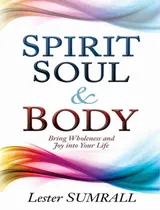
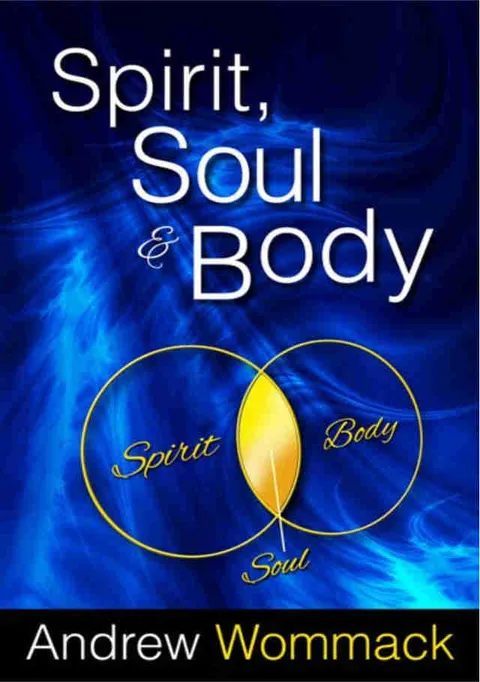
"Spirit, Soul & Body" by Andrew Wommack explores the relationship between the spirit, soul, and body and how understanding this connection can lead to a more fulfilling and abundant life. Wommack delves into the importance of maintaining a strong spirit and soul in order to achieve overall health and well-being. Through practical insights and biblical principles, he guides readers on how to develop a deeper understanding of their spiritual identity and purpose.

Sophie Scholl

Sophie Scholl Sophia Scholl was a German student, active in the White Rose – a non-violent resistance group to Hitler and the Nazi party. In 1943, she was caught delivering anti-war propaganda and, with her brother Hans Scholl, was executed for high treason. Sophie Scholl has become an important symbol of anti-Nazi resistance in Germany. Sophie Scholl was born in Forchtenberg, Germany on 9 May 1921. She was the fourth out of six children. Her father Robert was the Burgermeister (Mayor) of Forchtenberg am Kocher, in Baden-Württemberg. She was brought up as a Lutheran Christian, and her childhood was relatively happy and carefree. However, in 1933, Hitler came to power and began controlling all aspects of German society. Initially, Sophie was unaffected, but her father and brothers were critical of the Nazi regime and this political criticism filtered through to leave a strong impression on the young Sophie. At the age of twelve, she joined a pseudo-Nazi organisation, the League of German Girls. Initially, Sophie enjoyed the activities of the group, and she was promoted to Squad Leader. However, after her initial enthusiasm with the activities of the group, Sophie became uneasy about the conflict between her conscience and the creeping Nazi ideology of the organisation. In 1935, Nuremberg Laws were passed which increased the discrimination against Jews, banning them from many public places. Sophie complained when two of her young Jewish friends were barred from joining the League of German Girls. She was also reprimanded for reading from the ‘Book of Songs’ by the banned Jewish writer Heinrich Heine. Scholl indicated her rebelliousness by replying, that Heine was essential for understanding German literature. These incidents and the bans against Jews led to Sophie taking a much more critical attitude to the Nazi regime. She began choosing friends more carefully – people who were politically sympathetic to her viewpoint. In 1937, her brothers and some of her friends were arrested for participating in the German Youth Movement. This incident left a strong impression on Sophie and helped to crystallise her opposition to the Nazi regime. In 1942, her father was later sent to prison for making a critical remark about Hitler. He referred to Hitler as “God’s Scourge.” Sophie was an avid reader and developed an interest in philosophy and theology. She developed a strong Christian faith which emphasised the underlying dignity of every human being. This religious faith proved an important cornerstone of her opposition to the increasingly all-pervading Nazi ideology of German society. Sophie also developed a talent for art – drawing and painting, and she became acquainted with artistic circles which, in Nazi terms, were labelled degenerate. In 1940, after the start of the Second World War, she graduated from her Secondary School and became a kindergarten teacher at the Frobel Institute. However, in 1941, she was conscripted into the auxiliary war service working as a nursery teacher in Blumberg. Sophie disliked the military regime of war service and started to become involved in passive resistance to the war effort. After six months in the National Labour Service, in May 1942, she enrolled in the University of Munich as a student of biology and philosophy. With her brother Hans, she became associated with a group of friends who shared similar artistic and cultural interests but also developed shared political views, which increasingly opposed the Nazi regime they lived in. She came into contact with philosophers such as Theodor Haecker, who posed questions of how individuals should behave under a dictatorship. The White Rose Movement The White Rose was an informal group who sought to oppose the war and Nazi regime. It was founded in early 1942 by Hans Scholl, Willia Graf and Christoph Probst. They wrote six anti-Nazi resistance leaflets and distributed them across Munich. Initially, Sophie was not aware of the group, but when she found out her brother’s activities, she was keen to take part. Sophie participated in distributing leaflets and carrying messages. As a woman, she was less likely to be stopped by the SS. The leaflets of the White Rose contained messages, such as “Nothing is so unworthy of a nation as allowing itself to be governed without opposition by a clique that has yielded to base instinct…Western civilization must defend itself against fascism and offer passive resistance, before the nation’s last young man has given his blood on some battlefield.” However, there was a pervasive police state which kept a high degree of surveillance on any resistance activity. After leaflets had been found at the University of Munich, the local Gestapo stepped up its efforts to catch the resistors. Hans, Willi and Alex also began painting anti-Nazi slogans on buildings in Munich. On 18 February 1943, Sophie and other members of the White Rose were arrested for distributing anti-war leaflets. The leaflets were seen by Jakob Schmidt, a local Nazi party member. Sophie and Hans were interrogated by Nazi officials and, despite trying to protect each other, just four days later were sent to court. The trial was presided over by Roland Freisler, chief justice of the People’s Court of the Greater German Reich. Freisler was an ardent Nazi; with great vigour and a manic intensity, he frequently roared denunciations at the accused. Despite the hostility and appearing in court with a broken leg after her interrogation. Sophie replied to the court: “Somebody, after all, had to make a start. What we wrote and said is also believed by many others. They just don’t dare express themselves as we did.” She also said: “You know the war is lost. Why don’t you have the courage to face it?” No defence witnesses were called and, after a very short trial, the judge passed a guilty verdict, with a sentence of death. The sentence was to be carried out early the next morning by guillotine. Walter Roemer, the chief of the Munich district court, supervised the execution, he later described Sophie’s courage in facing her execution. He reports that Sophie’s last words were: “How can we expect righteousness to prevail when there is hardly anyone willing to give himself up individually to a righteous cause. Such a fine, sunny day, and I have to go, but what does my death matter, if through us, thousands of people are awakened and stirred to action?” The guards were impressed with the courage of the resistors and relaxed the rules to allow Hans, Christoph and Sophie to meet before their execution. After the execution of Sophie, Hans and Christoph, the Gestapo continued their relentless investigation. Other members of the White Rose were caught and executed. Many students from the University of Hamburg were either executed or sent to concentration camps. Legacy of Sophie Scholl In a poll to find the greatest German, Sophie and her brother were voted to be fourth. Amongst the young generation, under 40, they were the most popular. On February 22, 2003, a bust of Sophie Scholl was unveiled by the government of Bavaria in the Walhalla temple. In 2005, a movie about Sophie Scholl’s last days was made featuring Julia Jentsch (Sophie Scholl: The Final Days) Motivations of Sophie Scholl Several factors inspired Sophie Scholl to take part in this highly dangerous resistance. Firstly, her family shared a dislike of the Nazi regime. Both her brothers and father had been arrested for making critical comments. Her father said to the family: “What I want for you is to live in uprightness and freedom of spirit, no matter how difficult that proves to be,” (link) She lived in a family environment which encouraged opposition to Hitler. Sophie had a strong Christian faith and was motivated after hearing speeches by anti-Nazi pastors. She read two volumes of Cardinal John Henry Newman’s sermons which made a strong impression on Sophie, especially his sermon on the ‘theology of conscience.’ During her interrogation, she referred to this ideology as a defence. “I am, now as before, of the opinion that I did the best that I could do for my nation. I, therefore, do not regret my conduct and will bear the consequences that result from my conduct.” Official examination transcripts (February 1943); Bundesarchiv Berlin, ZC 13267, Bd. 3 Her boyfriend Fritz Hartnagel was on the Eastern Front; he reported to Sophie the dreadful conditions of war, the German failure at Stalingrad and also witnessing war crimes undertaken by German and SS forces. Reports of mass killings of Jews were also widely shared amongst members of the White Rose. This features in the second White Rose pamphlet. “Since the conquest of Poland 300,000 Jews have been murdered, a crime against human dignity…Germans encourage fascist criminals if no chord within them cries out at the sight of such deeds. An end in terror is preferable to terror without end.” Sophie Scholl and other members of the White Rose remain a potent symbol of how people can take a courageous action to resist, even the most brutal totalitarian regime. Citation: Pettinger, Tejvan. “Biography of Sophie Scholl”, Oxford, UK – www.biographyonline.net. Published 12th Aug 2014. Last updated 8th March 2017.

how to love people you don’t like

“Nothing makes me more unsure whether I will persevere until the end like spending too long in his presence.” Months had gone by, interactions multiplied, and good intentions no longer were strong enough to sustain my friend. According to him, this particular gentleman was the type to complain incessantly, listen sparingly, intermingle belligerently, receive presumptuously, smile seldomly, and gossip freely (even when food still lingered half-eaten in his mouth). Like the pre-converted Augustine who took pleasure in senseless offenses, he was a cyclist — not because he enjoyed the exercise — but he peddled leisurely down the middle of the street, prodded along by honking horns, because he took delight in their displeasure. He was the type to stick gum under tables. My friend tried in vain to enjoy his company. But after a year, he still wondered piously in the words of Jesus, “How long am I to bear with you?” (Mark 9:19). He even began praying, “Lord, allow him to obey your word and live quietly and mind his own affairs” (1 Thessalonians 4:11). He lamented that his love was so small as to only cover handfuls of faults. My friend didn’t want to admit it, he felt unchristian acknowledging it — and he knew God had placed the man in his life — but he didn’t like him. He preferred a hangnail or wet socks. He wondered how he could obey God’s call to love this man he no longer could stand to be around. An Unpleasant Command It is unmistakable that Jesus calls his own to love those we don’t like — within the church and without. The love he taught us is not grounded on natural affinities or common interests. We do not stare at our neighbor, as some squint at the shapeless clouds, trying to make out something lovable in them before we act. All it takes to summon our care towards anyone on the planet is our Master’s command, “Love your neighbor as yourself” (Luke 10:27). And vexingly, we do not get to choose who moves next door or who lies bleeding on the side of the road (Luke 10:25–37). God’s expectations for love, indeed, the whole point of commanding it, is that we might extend it to those we wouldn’t love naturally. Jesus even goes so far as to call us to love those we have the most cause to dislike: our enemies (Luke 6:35). While even unbelievers love those who love them in return — while they invite over the funny, the wealthy, the attractive — God calls his people to love the hard to like, requiring no reciprocation. But, like my friend, we ask the genuine question,  How?  Jesus and Paul let us in on the secret. Rehearse Our Hope Paul imparts the divine recipe that the Colossians had discovered: We always thank God, the Father of our Lord Jesus Christ, when we pray for you, since we heard of your faith in Christ Jesus and of the love that you have for all the saints,  because of the hope laid up for you in heaven . (Colossians 1:3–5) The Colossians loved “all the saints” not because “all the saints” were easy to love. Later Paul would call these same Colossians to continue to bear with one another and forgive each other (Colossians 3:13). Paul did not live in the clouds. He knew that you will have to “bear with” some people, and forgive many others. But notice that they didn’t wait for these others to clean up their act, become worthy of love, or do kind deeds that make loving easy. No, their motivation was untouchable. They loved  because of the hope laid up for them in heaven . Serve the Undeserving Jesus also taught this way. Expanding our call to love beyond the realms of the faithful, he says, “If you then, who are evil, know how to give good gifts to your children, how much more will your Father who is in heaven give good things to those who ask him!  So  whatever you wish that others would do to you, do also to them, for this is the Law and the Prophets.” (Matthew 7:11–12) The Father will give good gifts to his children. Convinced of this — assured of his eternal provision and unceasing care, “because of the hope laid up for you in heaven” — love others and do them good. The Golden Rule is forged in the fires of trust in our Father’s temporal and eternal provision. And Jesus practiced what he preached. Notice the indispensable truth motivating our Lord to stoop down to serve those who — within hours — would collectively betray, abandon, and disown him: During supper, when the devil had already put it into the heart of Judas Iscariot, Simon’s son, to betray him, Jesus,  knowing that the Father had given all things into his hands, and that he had come from God and was going back to God , rose from supper. He laid aside his outer garments, and taking a towel, tied it around his waist. Then he poured water into a basin and began to wash the disciples’ feet and to wipe them with the towel that was wrapped around him. (John 13:2–5) Jesus did not get up and start doing it out of willpower. Their benevolence did not move him. The text says he knew something, he considered something, he held a truth in mind that braced his back to kneel down and wash his disciples’ feet — an act which anticipated his coming cross (John 13:6–11). He knew that all was his. He knew he was his Father’s Beloved. He rehearsed the hope laid up for him in heaven. His hope in the everlasting tomorrow overwhelmed him with resources to love today. God Moved Towards the Unlikeable Jesus did not merely preach this way or serve this way. He girded up his loins to die this way. He did not look at us and choose the cross because we were so attractive. He did not squint to find a strain of loveliness to move towards the cross for us. He left heaven and came to die a shameful, bloody, brutal death, bearing the Almighty weight of punishment for our sin, while we breathed to disregard him. When we were most unlovable, “while we were still sinners, Christ died for us” (Romans 5:8). While we esteemed him not, he esteemed us. His hands were pierced by our unloveliness, but his love remained unscarred. “Father, forgive them” was his cry. And Isaiah foretold what came to pass: Amidst his soul-crushing anguish, he would see something to satisfy him and sustain his love until the end (Isaiah 53:11). What did he see? Love himself looked beyond the whips, the nails, the cross. He heard something other than the taunts, the laughter, the cries of “Crucify him!” He saw more than just betrayal, dereliction, wrath. He saw the eternal bliss of his Father’s smile and the eternal destiny of his people propped against the backside of the cross. And for the joy, the reward, the prize that lay before him, he took up his cross (Hebrews 12:2), despised its shame, and conquered death for his own. He saw beyond the unlikeable to make them his beloved. Grabbing Our Towels Our love also looks past our neighbor to the promises of heaven and, having our hearts warmed there, looks upon them afresh with a resoluteness to care. We do not love past them, around them, above them;  we love them  — despite their annoyances, oddities, shortcomings, ungratefulness. We repay them with love, not because they have earned it, but because we hadn’t either and yet are inheritors of the world. Giving kindness, sacrifice, and consideration to those who cannot (or for whatever reason, will not) repay us, does not bankrupt us. Our reward is “imperishable, undefiled, and unfading,” kept for us in heaven (1 Peter 1:4). With the pockets of our minds filled with heavenly gold and chests brimming with imperishable treasures, we are wealthy enough to spend time with the irritating, the exasperating, the mostly tiresome and vexing. Knowing that we are born of God, and going back to him, we can rise, wrap a towel around our waists, and bend low to serve others we might otherwise find impossible to love.

Feedback
Suggestionsuggestion box
x