


-160.webp)

About the Book
"Soul Cure" by Gregory Dickow is a guide to finding spiritual healing and inner peace through faith and self-reflection. It explores how to overcome negative emotions, insecurities, and self-doubt by tapping into the power of God's love and forgiveness. The book offers practical advice and biblical teachings to help readers transform their mindset and find true fulfillment in life.
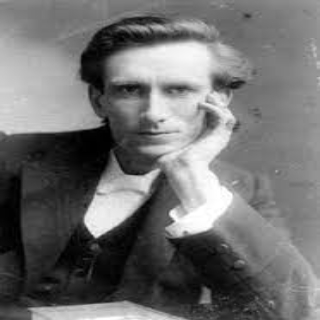
Oswald Chambers
A Strange and Holy Calm
My wife and I are investing in calmness therapy for our twin 11-year-old boys. It’s called youth baseball. The financial expenses pale in comparison to the deposits of time. Baseball not only facilitates brain and body development, and teaches teamwork, but also produces contexts for learning to handle pressure and deal with failure. In other words, it provides avenues to cultivate self-control — the one virtue the apostle Paul saw fit to set before young men in Titus 2. After multiple charges each for older men, older women, and younger women (Titus 2:2–5), he gives a single focus for the young men: “urge the younger men to be self-controlled” (Titus 2:6). Do not misunderstand. We do not want our boys to be unemotional; and they are not. They’re competitive, and they’re kids, prone to react without proper emotional restraint. Which is why youth baseball can be one valuable tool, among others, in seeking to build men. We want them to learn how to be composed under pressure, when the moment requires it, and give release to their emotions in the proper time and place. We want them to learn to keep their head when others are losing theirs, to not lose control in outrage or self-pity but keep a sober mind, aware that how they carry themselves and treat teammates, umpires, and the opposing team is far more important than winning a game. At times, we cheer, and celebrate a win after the final out has been made. At other moments, we process the disappointment of errors, strikeouts, and losses. But in the ups and downs of the game — and in life off the field — our passions can push us to celebrate prematurely, or wallow extensively. We want our boys to learn how to stay calm in the storm, not by repressing emotions but learning to master them. In the heat of the moment, we want them to keep their wits, tell themselves truth, and stay calm enough to faithfully take the next step for their own good, and the good of others. More than baseball players, we want our boys to become Christian men. He held his peace In a day when outbursts of emotion are not only accepted, but respected, and encouraged, it can be more difficult to raise men who learn to righteously “hold their peace.” It’s a curious phrase at key junctures in the history of God’s people. Some outburst of rage, or rash expression of anger or retaliation, is expected, yet a man of God, we’re told, “held his peace.” First, we see it in the patriarch Jacob, when he hears that Shechem, prince of the land, “had defiled his daughter Dinah.” We expect an explosion. But “Jacob held his peace” until his sons could come in from the field (Genesis 34:5). It’s not that Jacob ignores or minimizes this outrageous act against his daughter, and family, but he maintains self-control until his counselors can gather and decide how to respond. Two of his sons, Simeon and Levi, do not exercise the same restraint and become Jacob’s foil. They come against Shechem with swords, and in doing so, bring “trouble on [Jacob] by making [him] stink to the inhabitants of the land” (Genesis 34:30). So also Aaron, Moses’s brother and the first high priest. When his sons “offered unauthorized fire” before God and were consumed (Leviticus 10:1–2), we might expect Aaron to erupt with rage against heaven at the loss of his sons. Instead, Moses reports, “Aaron held his peace” (Leviticus 10:3) — not because he didn’t care, or wasn’t severely grieved, but because he revered God with a righteous fear and trusted God’s goodness, that he had done no wrong, painful as Aaron’s loss was. King Saul, at the outset of his reign, before his falls from grace, demonstrated admirable restraint when dishonored. As the rest of the nation acknowledges and embraces him as its first king, the critics emerge, “some worthless fellows,” with their cynicism: “How can this man save us?” As king, Saul now has the power to dispose of such men, quickly and quietly. “But he held his peace,” reports Samuel, in an admirable demonstration of his early magnanimity (1 Samuel 10:27). Slow to Anger Most noteworthy, though, is God himself. He says, through Isaiah, to his rebellious people, “For a long time I have held my peace; I have kept still and restrained myself” (Isaiah 42:14). God has not ignored or discounted their sin; nor has he raged in an outburst of unrestrained fury against them. Later he pleads, “Have I not held my peace, even for a long time, and you do not fear me?” (Isaiah 57:11). Now he will act in justice, giving vent to his righteous anger, but none may reasonably charge him with rushing to judgment or the slightest impatience. “In times that socialize us for outrage and outbursts, we need men who know how to hold their peace.” In times that socialize us for outrage and outbursts, we need men not just like Jacob, Aaron, and a young Saul — who know how to hold their peace when the moment requires it — but also like God himself, who the Scriptures describe repeatedly as “slow to anger.” Significantly, when God reveals himself to Moses in response to the request “Show me your glory,” the first words the prophet hears are “a God merciful and gracious, slow to anger” (Exodus 34:6). Such divine composure , as we might call it, would become a legacy for the Israelites, that their God was slow to anger. Not without anger . He clearly stood ready to punish the guilty in time. And never before it was time, and never with an intensity that was unjust or in any way that wronged those he punished or disciplined. Yet, given the rebellion of his people, often outrageous, he was enduringly patient and markedly “slow to anger,” as prophets and psalmists alike would cherish (Nehemiah 9:17; Joel 2:13; Psalms 86:15; 103:8; 145:8). So Too His People The collected Proverbs of the nation made this striking application: As your God, so too his people . If God himself, by all accounts and remembrances, is indeed slow to anger, how can his people not seek to be like him? Whoever is slow to anger has great understanding, but he who has a hasty temper exalts folly. (Proverbs 14:29) A hot-tempered man stirs up strife, but he who is slow to anger quiets contention. (Proverbs 15:18) Whoever is slow to anger is better than the mighty, and he who rules his spirit than he who takes a city. (Proverbs 16:32) Good sense makes one slow to anger, and it is his glory to overlook an offense. (Proverbs 19:11) Here we see how God is forming and shaping his people: to have “great understanding”; to “quiet contention”; to be “better than the mighty”; to manifest “good sense” and the rare glory, in a world like ours, to overlook an offense. This God would save his people from hasty tempers, from exalting folly, from stirring up strife. So too in the New Testament, James extends this legacy to his Christian readers: “Let every person be quick to hear, slow to speak, slow to anger” (James 1:19). Jesus whipped and wept But what of Christ himself, God incarnate? In Jesus, we find full and holy humanity, along with expressions we might not label “calm,” yet are manifestly righteous. We do not picture Christ as calm when he made a whip of cords, cleared the temple, and overturned tables (John 2:15) — actions that prompted his disciples to remember Psalm 69:9: “Zeal for your house will consume me.” Nor would we call him “calm” when he came to Bethany in the wake of Lazarus’s death. “Deeply moved in his spirit and greatly troubled” (John 11:33), Jesus wept — visibly enough that onlookers said, “See how he loved him!” (John 11:35–36). Then he came to the tomb and was “deeply moved again” (John 11:38). Nor would we think of his anguish in the garden as serenity. “Being in agony he prayed more earnestly; and his sweat became like great drops of blood falling down to the ground” (Luke 22:44). We don’t typically think of calmness as accompanied by “loud cries and tears” — but even here in Gethsemane, in his distress, he did not abandon reverence but was heard because of it (Hebrews 5:7). We would go too far to pretend that Christ was always calm. There were moments he was righteously and manifestly moved by holy emotions. Though neither in the temple, nor in Bethany, nor in the garden, did he lose control. Apart from a few exceptions, the Christ we encounter in the Gospels is stunningly calm. What composure, what self-control, what holy calmness he shows again and again when failed by his disciples, interrupted by the sick, imposed upon by the well-meaning, challenged by the sophisticated, and disrespected by the authorities. The one to whom our Christian growth conforms is one who was decidedly, manifestly calm, with only the rarest of, and most fitting, exceptions. Not stressed to rule the stars But just as helpful today, as we seek to live with the pattern of holy calm that echoes our Lord’s, is his unshakable composure right now, seated on heaven’s throne. Indeed, we are not yet fully glorified. We are not yet beyond the reach of earthly storms, injuries, strange behavior, and surprising acts of evil in this unreasonable world. But our captain is. As his soldiers, we draw on his calmness as absolute sovereign and utterly invincible. His holy composure and admirable serenity are not only our model to follow but also, and most significantly, our hope to lean on. Unlike the priests in the first covenant, standing daily in God’s service, ever in motion, “offering repeatedly the same sacrifices, which can never take away sins . . . when Christ had offered for all time a single sacrifice for sins, he sat down at the right hand of God” (Hebrews 10:11–12). The priests stood, but as John Piper comments, Christ is not standing. He is not in perpetual motion. . . . He does happen to rule the world. And care for his church. But he doesn’t need to stand up to do it. According to Psalm 8:3, he made the stars with his fingers. It is no stress for him to rule one, infinitesimal planet without jumping out of his seat like a basketball coach, or pacing back and forth like a general waiting for news from the front lines. The accession of Christ to the throne of the universe — and his sitting on his throne with complete equanimity — is a signal to all his enemies, and to us, that this war has been won. “The enemies of Christ hate calm and fearless responses in Christ’s people.” The enemies of Christ hate calm and fearless responses in Christ’s people. They signal to Christ’s foes that their destruction is coming (Philippians 1:28). But more than that, holy calm, in the midst of our storms, makes us available to love others in the thick of crises, rather than being absorbed in our reaction. Oh, for Christians like this in our day of outrage and outburst. And for men like this especially — for husbands and fathers and pastors — to be a non-anxious presence in our homes and churches. For men who lean on the stressless, complete equanimity of Christ, showing holy calmness through the emotionally trying and explosive moments in life and leadership, ready to be responsive without being reactive, engaged and even industrious without being frantic, able to hold their peace when needed, and bring genuine concord in our skirmishes, knowing the war has been won.