
Others like repercussions from sexual sins Features >>
Undefiled (Redemption From Sexual Sin, Restoration For Broken Relationships)
Living The Better Covenant
Now That I Believe
The Price Is Not Greater Than God's Grace
The Power Of The Communion Table
Romans: Grace And Glory
The Transforming Power Of The Gospel
Amazing Facts
The Grace And Truth Paradox
And Jesus Healed Them All
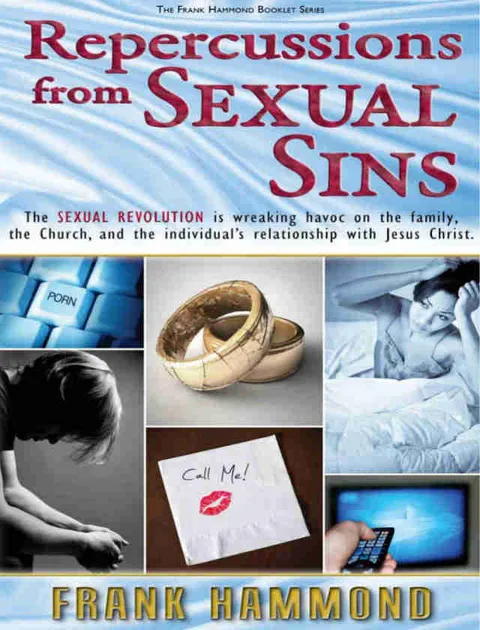
About the Book
"Repercussions from Sexual Sins" by Frank Hammond explores the spiritual and emotional consequences of engaging in sexual sin. The book offers insights and practical strategies for overcoming issues related to sexual immorality and finding healing and restoration. It delves into the damaging effects of sexual sin on individuals and relationships and provides guidance on how to break free from its destructive patterns.
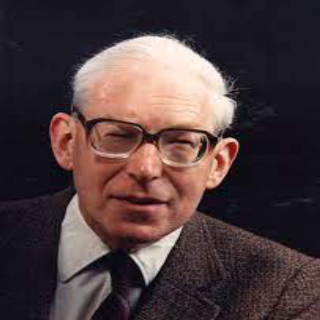
C.S. Lewis
C.S. Lewis was a prolific Irish writer and scholar best known for his 'Chronicles of Narnia' fantasy series and his pro-Christian texts.
Who Was C.S. Lewis?
Writer and scholar C.S. Lewis taught at Oxford University and became a renowned Christian apologist writer, using logic and philosophy to support the tenets of his faith. He is also known throughout the world as the author of The Chronicles of Narnia fantasy series, which have been adapted into various films for the big and small screens.
Early Life
Clive Staples Lewis was born in Belfast, Ireland, on November 29, 1898, to Flora August Hamilton Lewis and Albert J. Lewis. As a toddler, Clive declared that his name was Jack, which is what he was called by family and friends. He was close to his older brother Warren and the two spent much time together as children.
Lewis was enraptured by fantastic animals and tales of gallantry, and hence the brothers created the imaginary land of Boxen, complete with an intricate history that served them for years. Lewis' mother died when he was 10, and he went on to receive his pre-college education at boarding schools and from a tutor. During WWI, he served with the British army and was sent home after being wounded by shrapnel. He then chose to live as a surrogate son with Janie Moore, the mother of a friend of Lewis' who was killed in the war.
Teaching Career at Oxford and Wartime Broadcasts
Lewis graduated from Oxford University with a focus on literature and classic philosophy, and in 1925 he was awarded a fellowship teaching position at Magdalen College, which was part of the university. There, he also joined the group known as The Inklings, an informal collective of writers and intellectuals who counted among their members Lewis' brother Warren and J.R.R. Tolkien. It was through conversations with group members that Lewis found himself re-embracing Christianity after having become disillusioned with the faith as a youth. He would go on to become renowned for his rich apologist texts, in which he explained his spiritual beliefs via platforms of logic and philosophy.
Lewis began publishing work including Spirits in Bondage in 1919 and the satirical Dymer in 1926. After penning other titles — including The Allegory of Love (1936), for which he won the Hawthornden Prize — he released in 1938 his first sci-fi work, Out of the Silent Planet, the first of a space trilogy which dealt sub-textually with concepts of sin and desire. Later, during WWII, Lewis gave highly popular radio broadcasts on Christianity which won many converts; his speeches were collected in the work Mere Christianity.
Books and Film Legacy
Lewis was a prolific author of fiction and nonfiction who wrote dozens of books over the course of his career. His faith-based arguments as seen in texts like The Great Divorce (1946) and Miracles (1947) are held in high regard by many theologians, scholars and general readers. His satirical fiction novel The Screwtape Letters (1942) is also a beloved classic. Lewis also continued his love affair with classic mythology and narratives during his later years: His book Till We Have Faces: A Myth Retold (1956) featured the story of Psyche and Cupid. He also penned an autobiography, Surprised by Joy: The Shape of My Early Life (1955).
Lewis' landmark series, The Chronicles of Narnia, has seen a number of on-screen iterations, including a cartoon version of The Lion, The Witch and the Wardrobe that was released in 1979 and a 1989 film series. Additionally, in 2005, a big-screen adaptation of The Lion, The Witch and the Wardrobe hit movie theaters, starring Tilda Swinton as the witch Jadis and Liam Neeson as the voice of Aslan. Two more Narnia films were brought to theaters as well: Prince Caspian (2008) and The Voyage of the Dawn Treader (2010). A movie version of The Silver Chair was slated to hit theaters in the near future, with filming starting in the winter of 2018.
Lewis' relationship with his wife, Joy, has also been depicted in Shadowlands, presented as a play and two films; one of the film versions was directed by Richard Attenborough and starred Anthony Hopkins as Lewis.
'The Chronicles of Narnia'
During the 1940s, Lewis began writing the seven books that would comprise The Chronicles of Narnia children's series, with The Lion, The Witch and the Wardrobe (1950) being the first release. The story focused on four siblings who, during wartime, walk through an armoire to enter the magical world of Narnia, a land resplendent with mythical creatures and talking animals. Throughout the series, a variety of Biblical themes are presented; one prominent character is Aslan, a lion and the ruler of Narnia, who has been interpreted as a Jesus Christ figure. (Lewis would assert that his Narnia stories weren't a direct allegory to the real world.)
Though the book received some negative reviews, it was generally well-received by readers, and the series retained its international popularity over the following decades.
Marriage
In 1954, Lewis joined the faculty of Cambridge University as a literature professor, and in 1956 he married an American English teacher, Joy Gresham, with whom he had been in correspondence. Lewis was full of happiness during the years of their marriage, though Gresham died of cancer in 1960. Lewis grieved deeply for his wife and shared his thoughts in the book A Grief Observed, using a pen name.
Death
In 1963, Lewis resigned from his Cambridge position after experiencing heart trouble. He died on November 22, 1963, in Headington, Oxford.
the great prize in christian dating - pursue clarity and postpone intimacy
I got lots of things wrong in dating, but as I think back over my mistakes and failures — dating too young, jumping from relationship to relationship, not being honest with myself or with others, failing to set or keep boundaries, not listening to friends and family, not prizing and pursuing purity — one error rises above the others, and in many ways explains the others: My dating relationships were mainly a pursuit of intimacy with a girlfriend, not clarity about whether to marry her. In my best moments, I was pursuing clarity through  intimacy, but in a lot of other moments, if I’m honest, I just wanted intimacy at whatever cost. “The pursuit of marriage” was a warm and justifying pullover to wear over my conscience when things started to go too far physically and emotionally. But even clarity through  intimacy misses the point and gets it backwards. I should have been pursuing clarity in dating, and then  intimacy in marriage. That simple equation would have saved me and the girls I dated all kinds of grief, heartache, and regret. Your Last First Kiss Most of us date because we want intimacy. We want to feel close to someone. We want to be known deeply and loved deeply. We want sex. We want to share life with someone of the opposite sex who will be involved and invested in what we’re doing and what we care about. With the right heart, and in the right measure, and at the right time, these are all good desires. God made many of us to want these things, and therefore wants us to want these things — with the right heart, in the right measure, and at the right time. Think about your last first kiss in a relationship (if you’ve already kissed someone). Why did you do it? You knew you were risking something, that this wasn’t the safest way to give yourself to someone. What was driving you most in those brief moments before you let your lips touch? For me, every first kiss was driven more by my own desires than by God’s desires for me. Every first kiss until I kissed my wife for the first time, seconds after asking her to be my wife. Before Faye, I had let what I wanted outweigh what I knew God wanted, and what I knew was best for the girl I was dating. I craved intimacy, and I knew I would find it in marriage. So, I punched “marriage” into Google Maps, jumped on the highway, and ignored the speed limits. Instead of waiting to get to my destination to enjoy emotional and physical intimacy, I pulled over and bought something quicker and cheaper on the side of the road. Intimacy — romantic or otherwise — is a beautiful and precious gift God has given to his children. But like so many of God’s good gifts, because of our sin, intimacy can be dangerous. The human heart is wired to want intimacy, but it is also wired to corrupt intimacy — to demand intimacy in the wrong ways or at the wrong time, and to expect the wrong things from intimacy. That means intimacy between sinners is dangerous, because we’re prone, by nature, to hurt one another — to do what feels good, instead of caring for the other person; to promise too much too soon, instead of being patient and slow to speak; to put our hope, identity, and worth in one another, instead of in God. Intimacy makes us vulnerable, and sin makes us dangerous. The two together, without covenant promises, can be a formula for disaster in dating. Different Prizes in Marriage and Dating God is the greatest prize in life for any believer — at whatever age, in whatever stage of life, and whatever our relationship status. But is there a unique prize for the believer in marriage? Yes, it is Christ-centered emotional and sexual intimacy with another believer. Before God, within the covenant of marriage, two lives, two hearts, two bodies become one . A husband and wife experience everything in life as one  new person. “Couple” doesn’t describe them well enough anymore. Yes, they’re each still themselves, but they’re too close now to ever be separated again (Mark 10:9). God has made them one. Their things are not their own. Their time is not their own. Even their bodies are not their own (1 Corinthians 7:4). They share all and enjoy all together  now. Sex is the intense experience and picture of their new union, but it’s only a small slice of all the intimacy they enjoy together now. Safety for Intimacy The reason that kind of intimacy is the prize of marriage and not  of our not-yet-married relationships is because that kind of intimacy is never safe anywhere outside of the lifelong covenant called marriage. Never . There are lots of contexts in which romantic intimacy feels  safe outside of marriage, but it never is. There is too much at stake with our hearts, and too many risks involved, without a ring and public vows. Without promises before God, the further we walk into intimacy with another person, the further we expose ourselves to the possibility of being abandoned, betrayed, and crushed. In a Christ-centered marriage , those same risks do not exist. We are together — in sickness and health, in peace and conflict, in disappointment, tragedy, and even failure — until death do us part. When God unites us, death is the only thing strong enough to separate us. That means intimacy is a safe and appropriate experience in marriage . For sure, marriage is not perfectly safe. Married people are still sinners, capable of hurting one another, even to the point of abuse or divorce. But faithful married people are not leaving people. Just like God is not a leaving God. Dating’s Great Prize While the great prize in marriage  is Christ-centered intimacy, the great prize in dating  is Christ-centered clarity. Intimacy is safest in the context of marriage, and marriage is safest in the context of clarity. If we want to have and enjoy Christ-centered intimacy, we need to get married. And if we want to get married, we need to pursue clarity about whom to marry. We don’t pursue clarity by diving into intimacy. The right kind of clarity is a means to the right kind of intimacy, not the other way around. Careful, prayerful, thoughtful clarity will produce healthy, lasting, passionate intimacy. Any other road to intimacy will sabotage it, leaving it shallow, fragile, and unreliable. Much of the heartache and confusion we feel in dating stems from treating dating as practice for marriage (clarity through  intimacy), instead of as discernment toward marriage (clarity now, intimacy later). In dating, we often experiment with intimacy until it basically feels like marriage, and then we get married. The risks may seem worth it (even necessary) because of how much we want to be married (or at least everything that comes with being married). But in reality, the risks are not worth it, and they’re certainly not necessary. God did not mean for us to risk so much in our pursuit of marriage. For sure, we always make ourselves vulnerable to some degree as we get to know someone and develop a relationship, but God wants us to enjoy the fullness of intimacy within a covenant, not in some science lab of love. In Christian dating, we’re not trying marriage on for size, but trying to find someone to marry. Questions We Ask Pursue clarity, and postpone intimacy. What does that look like practically? One test for whether you are pursuing clarity or intimacy is to study the questions we ask in dating. We ask different questions when we’re pursuing clarity more than intimacy. How far can we go? How late should we hang out? What kind of touching is allowed? Is he Christian enough for me to date him? Versus: Does he love Jesus more than he loves me? Does she follow through on her promises? Do I see him showing self-control, or compromising to get what he wants? Is she willing to lovingly tell me when I’m wrong? Healthy relationships may still need to ask questions in the first set, but they’ll be way down the list. When we’re after intimacy without clarity, we ask the first set and often overlook or minimize the second. But when we’re pursuing clarity, we’ll start asking new questions. Here are some examples of questions you could ask in your pursuit of clarity: What have you learned about each other lately — stories, habits, character traits? How have you each grown in your relationship with Jesus since you started dating? Are you both committed to abstaining from any form of sexual immorality? What flags, if any, have others raised about your relationship? What obstacles are keeping the two of you from getting married? Are you each being driven by your own desires, or by God’s desires for you? In what ways is your relationship different from non-Christian relationships? Questions like these — and countless more like them — uncover what we really want in dating, and where we’re likely to leave Jesus behind. They’re the bumpers that keep us out of the gutter, guarding us from impatience and impurity. But they’re also instruments of true love — the well-made parts that keep our car on the highway to marriage. They keep us focused on where we are headed and what really matters. They’re the agents of clarity.