
GIP Library icon

LOG IN TO REVIEW
About the Book


"Remembrance" by Dag Heward-Mills is a spiritual guide that encourages believers to remember and reflect on the blessings and teachings of God. The book emphasizes the importance of gratitude and remembrance in deepening one's relationship with God and living a fulfilling Christian life. Through personal anecdotes and biblical examples, the author highlights the power of remembrance in experiencing God's love, favor, and miracles. Ultimately, "Remembrance" serves as a reminder to be thankful for God's goodness and to continually reflect on His faithfulness in our lives.

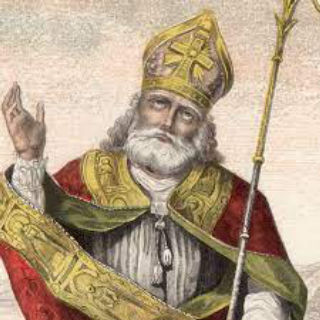
Dietrich Bonhoeffer

Dietrich Bonhoeffer "Cheap grace is preaching forgiveness without requiring repentance, baptism without church discipline, Communion without confession. … Cheap grace is grace without discipleship, grace without the cross, grace without Jesus Christ, living and incarnate." "The time is fulfilled for the German people of Hitler. It is because of Hitler that Christ, God the helper and redeemer, has become effective among us. … Hitler is the way of the Spirit and the will of God for the German people to enter the Church of Christ." So spoke German pastor Hermann Gruner. Another pastor put it more succinctly: "Christ has come to us through Adolph Hitler." So despondent had been the German people after the defeat of World War I and the subsequent economic depression that the charismatic Hitler appeared to be the nation's answer to prayer—at least to most Germans. One exception was theologian Dietrich Bonhoeffer, who was determined not only to refute this idea but also to topple Hitler, even if it meant killing him. From pacifist to co-conspirator Bonhoeffer was not raised in a particularly radical environment. He was born into an aristocratic family. His mother was daughter of the preacher at the court of Kaiser Wilhelm II, and his father was a prominent neurologist and professor of psychiatry at the University of Berlin. All eight children were raised in a liberal, nominally religious environment and were encouraged to dabble in great literature and the fine arts. Bonhoeffer's skill at the piano, in fact, led some in his family to believe he was headed for a career in music. When at age 14, Dietrich announced he intended to become a minister and theologian, the family was not pleased. Bonhoeffer graduated from the University of Berlin in 1927, at age 21, and then spent some months in Spain as an assistant pastor to a German congregation. Then it was back to Germany to write a dissertation, which would grant him the right to a university appointment. He then spent a year in America, at New York's Union Theological Seminary, before returning to the post of lecturer at the University of Berlin. During these years, Hitler rose in power, becoming chancellor of Germany in January 1933, and president a year and a half later. Hitler's anti-Semitic rhetoric and actions intensified—as did his opposition, which included the likes of theologian Karl Barth, pastor Martin Niemoller, and the young Bonhoeffer. Together with other pastors and theologians, they organized the Confessing Church, which announced publicly in its Barmen Declaration (1934) its allegiance first to Jesus Christ: "We repudiate the false teaching that the church can and must recognize yet other happenings and powers, personalities and truths as divine revelation alongside this one Word of God. … " In the meantime, Bonhoeffer had written The Cost of Discipleship (1937), a call to more faithful and radical obedience to Christ and a severe rebuke of comfortable Christianity: "Cheap grace is preaching forgiveness without requiring repentance, baptism without church discipline, Communion without confession. … Cheap grace is grace without discipleship, grace without the cross, grace without Jesus Christ, living and incarnate." During this time, Bonhoeffer was teaching pastors in an underground seminary, Finkenwalde (the government had banned him from teaching openly). But after the seminary was discovered and closed, the Confessing Church became increasingly reluctant to speak out against Hitler, and moral opposition proved increasingly ineffective, so Bonhoeffer began to change his strategy. To this point he had been a pacifist, and he had tried to oppose the Nazis through religious action and moral persuasion. Now he signed up with the German secret service (to serve as a double agent—while traveling to church conferences over Europe, he was supposed to be collecting information about the places he visited, but he was, instead, trying to help Jews escape Nazi oppression). Bonhoeffer also became a part of a plot to overthrow, and later to assassinate, Hitler. As his tactics were changing, he had gone to America to become a guest lecturer. But he couldn't shake a feeling of responsibility for his country. Within months of his arrival, he wrote theologian Reinhold Niebuhr, "I have made a mistake in coming to America. I must live through this difficult period in our national history with the Christian people of Germany. I will have no right to participate in the reconstruction of Christian life in Germany after the war if I do not share the trials of this time with my people." Bonhoeffer, though privy to various plots on Hitler's life, was never at the center of the plans. Eventually his resistance efforts (mainly his role in rescuing Jews) was discovered. On an April afternoon in 1943, two men arrived in a black Mercedes, put Bonhoeffer in the car, and drove him to Tegel prison. Radical reflections Bonhoeffer spent two years in prison, corresponding with family and friends, pastoring fellow prisoners, and reflecting on the meaning of "Jesus Christ for today." As the months progressed, be began outlining a new theology, penning enigmatic lines that had been inspired by his reflections on the nature of Christian action in history. "God lets himself be pushed out of the world on to the cross," he wrote. "He is weak and powerless in the world, and that is precisely the way, the only way, in which he is with us and helps us. [The Bible] … makes quite clear that Christ helps us, not by virtue of his omnipotence, but by virtue of his weakness and suffering. … The Bible directs man to God's powerlessness and suffering; only the suffering God can help." In another passage, he said, "To be a Christian does not mean to be religious in a particular way, to make something of oneself (a sinner, a penitent, or a saint) on the basis of some method or other, but to be a man—not a type of man, but the man that Christ creates in us. It is not the religious act that makes the Christian, but participation in the sufferings of God in the secular life." Eventually, Bonhoeffer was transferred from Tegel to Buchenwald and then to the extermination camp at Flossenbürg. On April 9, 1945, one month before Germany surrendered, he was hanged with six other resisters. A decade later, a camp doctor who witnessed Bonhoeffer's hanging described the scene: "The prisoners … were taken from their cells, and the verdicts of court martial read out to them. Through the half-open door in one room of the huts, I saw Pastor Bonhoeffer, before taking off his prison garb, kneeling on the floor praying fervently to his God. I was most deeply moved by the way this lovable man prayed, so devout and so certain that God heard his prayer. At the place of execution, he again said a prayer and then climbed the steps to the gallows, brave and composed. His death ensued in a few seconds. In the almost 50 years that I have worked as a doctor, I have hardly ever seen a man die so entirely submissive to the will of God." Bonhoeffer's prison correspondence was eventually edited and published as Letters and Papers from Prison, which inspired much controversy and the "death of God" movement of the 1960s (though Bonhoeffer's close friend and chief biographer, Eberhard Bethge, said Bonhoeffer implied no such thing). His Cost of Discipleship, as well as Life Together (about Christian community, based on his teaching at the underground seminary), have remained devotional classics.

The Very First Prayer

From the opening chapters of the Bible, God makes it clear that humanity was created to enjoy life with God, and God in life — to experience the radiance of his presence and listen to him speak “close up.” Adam and Eve walked with God in the garden, which God himself has provided for this very purpose. And they are charged to turn the whole of creation into a place where God can be known and enjoyed (see Genesis 1:28 and 2:15–16). Relating to God, for them, was natural and unhindered. After the events of Genesis 3, of course, everything gets so much harder. “From the opening chapters of the Bible, God makes it clear that humanity was created to enjoy life with God.” God’s grand plan for his people and his world remains the same, but suddenly the way to God is littered with obstacles, as the ease of relating to God is replaced with struggle. In fact, it’s not altogether clear how our first parents are supposed to relate to God as they leave the now inaccessible garden behind (Genesis 3:24). The task they were commissioned to do in Genesis 1:28 remains, but it now will be tackled against the grain of a broken creation and without the immediate presence of the Creator. Which brings us to Genesis 4. First Recorded Prayer After the exclusion of the original couple from Eden, the narrative immediately jumps to the birth of Cain and then Abel. The intriguing note of Genesis 3:15 has set us up to expect an individual who is able to undo the recently created chaos of sin. Both brothers are pictured bringing offerings to God (the awareness of our obligation to the one who made us remains intact), but the violent events which follow do little beyond showing that the hope of humanity must be found elsewhere — and yet, remarkably, God has continued to speak to his people. Cain’s evil quickly spirals further out of control, as he settles down in a city (Genesis 4:17), rather than continuing to “fill the earth and subdue it,” and then fathers a dynasty of self-reliant men, culminating in the brutality of Lamech, who boasts to his wives that if anyone messes with him, he will exact disproportionate revenge (Genesis 4:24). At this point in the tragic narrative, we find these words: And Adam knew his wife again, and she bore a son and called his name Seth, for she said, “God has appointed for me another offspring instead of Abel, for Cain killed him.” To Seth also a son was born, and he called his name Enosh. At that time people began to call upon the name of the Lord. (Genesis 4:25–26) Initially, Genesis 4:25 raises our hopes. Cain and Abel are not to be the sole heirs of Adam — there is another son, Seth. Eve’s own words, highlighting that he is another “offspring” (same word in Genesis 3:15), lead us to expect more detail, and hopefully a bright counterpoint to the darkness of Cain and his line. However, we get no details whatsoever about Seth. He is born, and then his sole contribution to the unfolding plan of God is to sire a son, Enosh. Like his father, Enosh makes no contribution to the narrative beyond providing a descendant. All this makes it doubly puzzling when the birth of Enosh leads people to begin calling on the name of the Lord, apparently for the first time. Why Pray Now? The phrase “at that time” in the first five books of the Bible tends to introduce significant incidents (for example, Genesis 12:6; 38:1; Deuteronomy 1:9). In this case, the striking nature of the action (calling on the name of the Lord) is a further signal that something important is going on. But it is puzzling — what could possibly have occasioned this “new start” in humanity’s relationship with God? Seth is born, but does nothing else. Now Enosh is born, and similarly, there appears to be nothing remarkable about his birth. So what are we to make of this? What prompted them to seek God in this way now? It’s theoretically possible that this is simply a chronological note. Given the fact, however, that not one word is wasted in the opening chapters of the Bible, and every phrase seems loaded with significance for the unfolding narrative, this seems highly unlikely. Rather, it seems that starting to “call on the name of the Lord” is the right response to the fact that Cain and Abel, Seth and Enosh have all shown up, but there is, as yet, no sign of the promised Serpent-Crusher of Genesis 3:15. The waiting — and the appealing to God to act — has begun. We Ask for What He Promised This is the first address to God after the fall — and it is a cry to God to act by fulfilling his promises. In the Institutes, John Calvin says, “Just as faith is born from the gospel, so through it our hearts are trained to call upon God’s name” (III XX.21). I think that’s what’s going on here in Genesis 4. The announcement of Genesis 3:15 has brought gospel hope to life, which in turn leads God’s people to ask God to act. The gospel gives birth to gospel-shaped prayer. “Prayer is a means of communion with God, but far more often it is simply asking God to do what he has promised to do.” As we look at prayers throughout the Bible, it becomes increasingly apparent that they are dominated by this single concern: to see God act to fulfill his promises as he advances his plan of redemption in our world. That’s not to say, of course, that our relationship with God can be reduced to this one thing. There are lots of activities that we are invited or commanded to engage in as part of our relationship with God (like praise, or repentance, or intercession, or lament, or thanks). When it comes to prayer, however, the Bible seems to have a much narrower focus than we would normally allow. Prayer is a means of communion with God, but far more often it is simply asking God to do what he has promised to do. Until Prayer Is Unnecessary This simple observation, which flows naturally from Genesis 4:25–26, does cut through much of the guilt and confusion we often feel about prayer. Prayer begins with asking God to do his gospel work. This is presumably why Jesus can encourage us to pray unhypocritical, to-the-point kingdom prayers (Matthew 5:5–14). Prayer isn’t primarily communing with God, let alone twisting his arm, but asking God to do what he is already committed to doing (see Luke 11:5–13). It is easy to miss the significance of Genesis 4:25–26, but that doesn’t mean that it isn’t a beautifully gospel-shaped clue to how people like you and me are to relate to the God who loves us this side of the fall. We are to pray — asking God to do what he has promised — until that day when prayer is no longer needed, because all things have already been made new and all his promises have been brought to perfect fruition. But until then? We keep praying like people of the day of Seth and Enosh, asking God to act for our good and his glory. Article by Gary Millar

Feedback
Suggestionsuggestion box
x