

Others like raising capital Features >>





About the Book
"Raising Capital" by Andrew Shareman is a comprehensive guide for entrepreneurs and business owners looking to secure funding for their ventures. The book covers various methods of raising capital, including traditional bank loans, venture capital, and crowdfunding. Shareman offers practical tips and strategies for preparing a successful funding pitch and building strong relationships with potential investors. Overall, "Raising Capital" provides valuable insights and tools for navigating the complex world of fundraising.
Keith Green
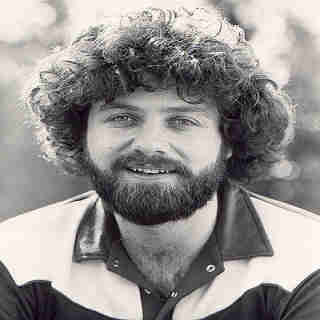 Born on October 21, 1953, in Sheepshead Bay, NY; died on July 28, 1982, in Lindale, TX; married Melody Steiner, 1973; children: Josiah (deceased), Keith, Bethany (deceased), Rebekah. Addresses: Record company--Sparrow Records, P.O. Box 5085, Brentwood, TN 37024. Website--Keith Green Official Website: http://www.lastdaysministries.org.
Known for his uncompromising approach to both his faith and his music, Keith Green has become a legendary figure in Contemporary Christian music since his death in 1982. Taking on the role of a modern-day prophet, he earned a fervent following thanks to his explicit evangelical message and buoyant brand of pop-rock. Green was a critic both of secular society and of commercial tendencies within the Christian community. Since his passing, he has been the subject of several tribute albums and was inducted into the Gospel Music Hall of Fame in 2001.
From early childhood onward, it seemed certain that Green would become a musician. Born in New York, he relocated to the San Fernando Valley area of California with his family not long after. At age eight, he began to perform in stage musicals, appearing in such notable roles as Kurt Von Trapp in a local production of The Sound of Music. In 1965 he published his first song, "The Way I Used to Be," and became the youngest member of the American Society of Composers, Authors, and Publishers. That same year he signed a five-year recording contract with Decca Records and released his first single, "Cheese and Crackers."
Though Green was groomed to be a teenage idol, he never quite achieved success. The late 1960s found him experimenting with drugs and dabbling in various Eastern religions. His life began to turn around after he met (and eventually married) songwriter Melody Steiner in the early 1970s. Under Steiner's guidance, Green began to explore fundamentalist Christianity. Before fully embracing the faith, he began keeping company with singer/songwriters Larry Norman and Randy Stonehill, two of Southern California's best-known Christian rock artists. His skills as a singer and composer began to develop as he edged closer to religious conversion. Finally, in 1975 he became a committed Christian after becoming involved with the Vineyard, a well-known San Fernando Valley church. With a convert's fervor, Green became involved in a series of Christian music projects, including the band Good News and the stage musical Firewind. He also began writing spiritually themed songs, among them "Your Love Broke Through," which went on to become a Christian pop standard recorded by Randy Stonehill, Phil Keaggy, and others.
Dedicating his reawakened creativity to glorifying God, Green founded Last Days Ministries in 1977. He and his followers evangelized to young rock music fans, street people, and others not being reached by conventional churches. At the same time, he made his debut as a Christian recording artist, signing with Sparrow Records and releasing the album For Him Who Has Ears to Hear. This song collection displays the essentials of Green's musical style: exuberant singing, piano-based melodies, and well-crafted pop/rock production. Among the best-known tracks on Green's first album are "You Put This Love in My Heart," "No One Believes Me Anymore," and "Your Love Broke Through." Balancing the warm-hearted testimony of these tunes are some humorous moments, including "No One Believes Me Anymore," a mock lament sung from the Devil's point of view. Overall, For Him Who Has Ears to Hear introduced Green to the Christian music market as a gifted musical evangelist of enormous potential.
As his audience grew, Green made clear that his focus was on spreading Christian teaching rather than providing entertainment. He sought to challenge the assumptions of his fellow believers, criticizing Christians who took their faith for granted. Some compared him with the Old Testament prophet Ezekiel, who decried the loose morals and weak faith of his generation. A number of the songs on Green's 1978 album No Compromise were addressed to the spiritually lazy. Most important among these is "Asleep at the Light," a ringing call for Christian activism sung by Green with palpable emotion. Less intense but still effective is the playful "Dear John (Letter to the Devil)" and the country-tinged "Soften Your Heart." All three of these songs received considerable airplay on Christian music stations.
Green was uneasy in his role as an emerging celebrity. He spoke out against the Christian music industry's increasing tendency to imitate secular show business ways. "Why do we idolize Christian singers and speakers?," he asked in a statement issued through Last Days Ministries. "We go from glorifying musicians in the world, to glorifying Christian musicians. It's all idolatry! ... It's true that there are many men and women of God who are greatly anointed to call down the Spirit of God on His people and the unsaved. But Satan is getting a great victory as we seem to worship these ministers on tapes and records...."
Turning away from the California Christian music scene, Green relocated to Lindale, a small east Texas community, in 1978. In addition to maintaining Last Days Ministries, he decided to launch his own record company, Pretty Good Records. Through this label, he released his next album, So You Wanna Go Back to Egypt, in 1980. This eclectic effort pokes fun at weak-spirited believers in its title track and offers a personal confession of need in "I Want to Be More Like Jesus." The most enduringly popular track proved to be "Oh Lord You're Beautiful," a powerful hymn that became a favorite at Christian worship services. In a bold move, Green announced that So You Wanna Go Back to Egypt would be sold for a variable price, even given away for free to those unable to pay. This decision sent shock waves through the Christian music industry, causing other artists to reconsider their album and concert pricing policies. An estimated 200,000 copies of the album were eventually distributed on a "pay what you can afford" basis.
Unlike some of his Christian music peers, Green showed little desire to dilute his message in hopes of reaching a wider audience. His 1982 album Songs to the Shepherd concentrates on worshipful material, praising the Lord in musical settings ranging from uplifting pop ("You Are the One") to blues-seasoned rock ("O God Our Lord") to old-fashioned country ("Draw Me"). While these songs were little-heard outside the Christian community, they helped fire Green's already-committed audience to a greater level of devotion. Fusing his work as a performer and evangelist, he toured actively during the early 1980s, mixing personal testimonials and heartfelt exhortations in between his musical numbers.
Green's life was cut short just as he began to hit his stride as a musician and minister. On July 28, 1982, he boarded a small Cessna aircraft for a brief sightseeing flight around his property in Lindale. Also on board were his son Josiah and daughter Bethany, along with the pilot and eight other passengers. Overloaded, the plane crashed shortly after takeoff, killing everyone on board. Recovering from her loss, Melody Green decided to carry on with Last Days Ministries and Pretty Good Records. Recordings of her husband's music were released posthumously, beginning with Prodigal Son and Jesus Commands Us to Go in 1983. Though lacking the cohesiveness of the albums released during his lifetime, both these song collections capture Green in strong creative moments. Prodigal Son's dramatic title track is a particular highpoint.
Melody Green continued to guide Last Days Ministries through the coming years and, in 1985, also took on the directorship of Americans against Abortion. Green's musical legacy remained vital as well, with many of his best-known recordings repackaged in compilation albums by Sparrow during the 1980s and 1990s. Multi-artist tribute albums also began to appear, starting with 1992's No Compromise: Remembering the Music of Keith Green. 2001 saw the release of Start Right Here: Remembering the Life of Keith Green, featuring spirited interpretations of his songs by such notable Christian rock acts as MxPx, Joy Electric, and Starflyer 59. Your Love Broke Through: The Worship Songs of Keith Greencontains covers of Green tunes by Michael W. Smith, Twila Paris, Rebecca St. James, and other top-rank Christian pop/rock talents.
On November 27, 2001, Green was inducted into the Gospel Music Hall of Fame. The honor served as an acknowledgment of his continuing influence in Contemporary Christian music some 20 years after his death. Green's intensity and dedication have continued to make him a role model for younger Christian performers, such as Rebecca St. James, who paid tribute to him in a Sparrow Records press biography. "I think what touches me most about him was that he was so committed to loving God and living for Him," she said of Green. "I know he was very strong-willed and people were sometimes offended at what he did and said, but it all came out of a pure motive of trying to be committed to Him in every part of his life. He wasn't going to back down just because of what people thought of him. That, to me, says that he was more focused on pleasing God than on pleasing man, something I think we should all try to focus on."
Keith Green's Career
Began career as child stage actor and composer, early 1960s; signed with Decca, released debut single, "Cheese and Crackers," 1965; began writing Christian songs, mid-1970s; founded Last Days Ministries, released first album, For Him Who Has Ears to Hear, 1977; founded Pretty Good Records, released album So You Wanna Go Back to Egypt, 1980.
Keith Green's Awards
Induction (posthumous), Gospel Music Hall of Fame, 2001.
Famous Works
For Him Who Has Ears To Hear , Sparrow, 1977.
No Compromise , Sparrow, 1978.
So You Wanna Go Back to Egypt , Pretty Good, 1980.
The Keith Green Collection , Sparrow, 1981.
Songs for the Shepherd , Pretty Good, 1982.
The Prodigal Son , Pretty Good, 1983.
Jesus Commands Us to Go , Pretty Good, 1984.
Because of You--Songs of Testimony , Sparrow, 1998.
Here I Am, Send Me--Songs of Evangelism , Sparrow, 1998.
Oh Lord, You're Beautiful--Songs of Worship , Sparrow, 1998.
Make My Life a Prayer to You--Songs of Devotion , Sparrow, 1998.
Born on October 21, 1953, in Sheepshead Bay, NY; died on July 28, 1982, in Lindale, TX; married Melody Steiner, 1973; children: Josiah (deceased), Keith, Bethany (deceased), Rebekah. Addresses: Record company--Sparrow Records, P.O. Box 5085, Brentwood, TN 37024. Website--Keith Green Official Website: http://www.lastdaysministries.org.
Known for his uncompromising approach to both his faith and his music, Keith Green has become a legendary figure in Contemporary Christian music since his death in 1982. Taking on the role of a modern-day prophet, he earned a fervent following thanks to his explicit evangelical message and buoyant brand of pop-rock. Green was a critic both of secular society and of commercial tendencies within the Christian community. Since his passing, he has been the subject of several tribute albums and was inducted into the Gospel Music Hall of Fame in 2001.
From early childhood onward, it seemed certain that Green would become a musician. Born in New York, he relocated to the San Fernando Valley area of California with his family not long after. At age eight, he began to perform in stage musicals, appearing in such notable roles as Kurt Von Trapp in a local production of The Sound of Music. In 1965 he published his first song, "The Way I Used to Be," and became the youngest member of the American Society of Composers, Authors, and Publishers. That same year he signed a five-year recording contract with Decca Records and released his first single, "Cheese and Crackers."
Though Green was groomed to be a teenage idol, he never quite achieved success. The late 1960s found him experimenting with drugs and dabbling in various Eastern religions. His life began to turn around after he met (and eventually married) songwriter Melody Steiner in the early 1970s. Under Steiner's guidance, Green began to explore fundamentalist Christianity. Before fully embracing the faith, he began keeping company with singer/songwriters Larry Norman and Randy Stonehill, two of Southern California's best-known Christian rock artists. His skills as a singer and composer began to develop as he edged closer to religious conversion. Finally, in 1975 he became a committed Christian after becoming involved with the Vineyard, a well-known San Fernando Valley church. With a convert's fervor, Green became involved in a series of Christian music projects, including the band Good News and the stage musical Firewind. He also began writing spiritually themed songs, among them "Your Love Broke Through," which went on to become a Christian pop standard recorded by Randy Stonehill, Phil Keaggy, and others.
Dedicating his reawakened creativity to glorifying God, Green founded Last Days Ministries in 1977. He and his followers evangelized to young rock music fans, street people, and others not being reached by conventional churches. At the same time, he made his debut as a Christian recording artist, signing with Sparrow Records and releasing the album For Him Who Has Ears to Hear. This song collection displays the essentials of Green's musical style: exuberant singing, piano-based melodies, and well-crafted pop/rock production. Among the best-known tracks on Green's first album are "You Put This Love in My Heart," "No One Believes Me Anymore," and "Your Love Broke Through." Balancing the warm-hearted testimony of these tunes are some humorous moments, including "No One Believes Me Anymore," a mock lament sung from the Devil's point of view. Overall, For Him Who Has Ears to Hear introduced Green to the Christian music market as a gifted musical evangelist of enormous potential.
As his audience grew, Green made clear that his focus was on spreading Christian teaching rather than providing entertainment. He sought to challenge the assumptions of his fellow believers, criticizing Christians who took their faith for granted. Some compared him with the Old Testament prophet Ezekiel, who decried the loose morals and weak faith of his generation. A number of the songs on Green's 1978 album No Compromise were addressed to the spiritually lazy. Most important among these is "Asleep at the Light," a ringing call for Christian activism sung by Green with palpable emotion. Less intense but still effective is the playful "Dear John (Letter to the Devil)" and the country-tinged "Soften Your Heart." All three of these songs received considerable airplay on Christian music stations.
Green was uneasy in his role as an emerging celebrity. He spoke out against the Christian music industry's increasing tendency to imitate secular show business ways. "Why do we idolize Christian singers and speakers?," he asked in a statement issued through Last Days Ministries. "We go from glorifying musicians in the world, to glorifying Christian musicians. It's all idolatry! ... It's true that there are many men and women of God who are greatly anointed to call down the Spirit of God on His people and the unsaved. But Satan is getting a great victory as we seem to worship these ministers on tapes and records...."
Turning away from the California Christian music scene, Green relocated to Lindale, a small east Texas community, in 1978. In addition to maintaining Last Days Ministries, he decided to launch his own record company, Pretty Good Records. Through this label, he released his next album, So You Wanna Go Back to Egypt, in 1980. This eclectic effort pokes fun at weak-spirited believers in its title track and offers a personal confession of need in "I Want to Be More Like Jesus." The most enduringly popular track proved to be "Oh Lord You're Beautiful," a powerful hymn that became a favorite at Christian worship services. In a bold move, Green announced that So You Wanna Go Back to Egypt would be sold for a variable price, even given away for free to those unable to pay. This decision sent shock waves through the Christian music industry, causing other artists to reconsider their album and concert pricing policies. An estimated 200,000 copies of the album were eventually distributed on a "pay what you can afford" basis.
Unlike some of his Christian music peers, Green showed little desire to dilute his message in hopes of reaching a wider audience. His 1982 album Songs to the Shepherd concentrates on worshipful material, praising the Lord in musical settings ranging from uplifting pop ("You Are the One") to blues-seasoned rock ("O God Our Lord") to old-fashioned country ("Draw Me"). While these songs were little-heard outside the Christian community, they helped fire Green's already-committed audience to a greater level of devotion. Fusing his work as a performer and evangelist, he toured actively during the early 1980s, mixing personal testimonials and heartfelt exhortations in between his musical numbers.
Green's life was cut short just as he began to hit his stride as a musician and minister. On July 28, 1982, he boarded a small Cessna aircraft for a brief sightseeing flight around his property in Lindale. Also on board were his son Josiah and daughter Bethany, along with the pilot and eight other passengers. Overloaded, the plane crashed shortly after takeoff, killing everyone on board. Recovering from her loss, Melody Green decided to carry on with Last Days Ministries and Pretty Good Records. Recordings of her husband's music were released posthumously, beginning with Prodigal Son and Jesus Commands Us to Go in 1983. Though lacking the cohesiveness of the albums released during his lifetime, both these song collections capture Green in strong creative moments. Prodigal Son's dramatic title track is a particular highpoint.
Melody Green continued to guide Last Days Ministries through the coming years and, in 1985, also took on the directorship of Americans against Abortion. Green's musical legacy remained vital as well, with many of his best-known recordings repackaged in compilation albums by Sparrow during the 1980s and 1990s. Multi-artist tribute albums also began to appear, starting with 1992's No Compromise: Remembering the Music of Keith Green. 2001 saw the release of Start Right Here: Remembering the Life of Keith Green, featuring spirited interpretations of his songs by such notable Christian rock acts as MxPx, Joy Electric, and Starflyer 59. Your Love Broke Through: The Worship Songs of Keith Greencontains covers of Green tunes by Michael W. Smith, Twila Paris, Rebecca St. James, and other top-rank Christian pop/rock talents.
On November 27, 2001, Green was inducted into the Gospel Music Hall of Fame. The honor served as an acknowledgment of his continuing influence in Contemporary Christian music some 20 years after his death. Green's intensity and dedication have continued to make him a role model for younger Christian performers, such as Rebecca St. James, who paid tribute to him in a Sparrow Records press biography. "I think what touches me most about him was that he was so committed to loving God and living for Him," she said of Green. "I know he was very strong-willed and people were sometimes offended at what he did and said, but it all came out of a pure motive of trying to be committed to Him in every part of his life. He wasn't going to back down just because of what people thought of him. That, to me, says that he was more focused on pleasing God than on pleasing man, something I think we should all try to focus on."
Keith Green's Career
Began career as child stage actor and composer, early 1960s; signed with Decca, released debut single, "Cheese and Crackers," 1965; began writing Christian songs, mid-1970s; founded Last Days Ministries, released first album, For Him Who Has Ears to Hear, 1977; founded Pretty Good Records, released album So You Wanna Go Back to Egypt, 1980.
Keith Green's Awards
Induction (posthumous), Gospel Music Hall of Fame, 2001.
Famous Works
For Him Who Has Ears To Hear , Sparrow, 1977.
No Compromise , Sparrow, 1978.
So You Wanna Go Back to Egypt , Pretty Good, 1980.
The Keith Green Collection , Sparrow, 1981.
Songs for the Shepherd , Pretty Good, 1982.
The Prodigal Son , Pretty Good, 1983.
Jesus Commands Us to Go , Pretty Good, 1984.
Because of You--Songs of Testimony , Sparrow, 1998.
Here I Am, Send Me--Songs of Evangelism , Sparrow, 1998.
Oh Lord, You're Beautiful--Songs of Worship , Sparrow, 1998.
Make My Life a Prayer to You--Songs of Devotion , Sparrow, 1998.
the mouth of a godly man
What if men in the church are more immature and less equipped because we’ve been expecting too little of them? What if we have simply failed to call them to more than sexual purity online and basic spiritual disciplines? I want to be a part of raising up men who, instead of merely avoiding this or that sin, become a force for good — better, a force for God . And I want to be that kind of man, the kind of man my son should imitate. When the apostle Paul wrote to a younger man, casting vision for what he might become in Christ, he charged him, “Let no one despise you for your youth, but set the believers an example in speech, in conduct, in love, in faith, in purity” (1 Timothy 4:12). In a previous article, I began recovering this simple but challenging framework as a paradigm for becoming a man of God. In this article, I want to narrow in on speech . What does it mean, more practically, to set an example in what a man says (or doesn’t say)? What about our words sets us apart from other men? Words really do matter. Jesus himself says, “I tell you, on the day of judgment people will give account for every careless word they speak, for by your words you will be justified, and by your words you will be condemned” (Matthew 12:36–37). Every careless word . Men of God learn to trade careless words for thoughtful ones. While many today speak, text, and tweet whatever they think or feel without a second thought, these men weigh the serious weight of what they say. They speak as if God is listening, because he is. And they know that what they say reveals who they are (Luke 6:45). They tremble over the consequences of sentences. They work to make their words a deeper and fuller well of grace. Seven Lessons for What We Say Wanting to set an example with our speech, what kind of example should we set? What does a man of God sound like in the wild? The letters of Paul say a great deal about what we say, distilled below into seven lessons (a list that is by no means comprehensive). Before we get into the seven, though, one verse in particular might serve as a worthy banner over the rest: Let your speech always be gracious, seasoned with salt, so that you may know how you ought to answer each person. (Colossians 4:6) If we want to set a good example in our speech, we should strive for our words to be a grace to others. Do our words consistently and effectively minister the grace of God to those who hear? Do they lead them to see and savor more of God? “Let no corrupting talk come out of your mouths,” Paul says elsewhere, “but only such as is good for building up, as fits the occasion, that it may give grace to those who hear ” (Ephesians 4:29). To fill out that graciousness, though, Paul gives us a number of specific principles for guarding our mouths and serving others in all we say. 1. Tell the truth about God. The first and most important lesson for our speech, especially in the context of Paul’s two letters to Timothy, is that we speak what is true about God and his word. The clear and immediate context of 1 Timothy 4:12 is teaching : Command and teach these things . Let no one despise you for your youth, but set the believers an example in speech, in conduct, in love, in faith, in purity. Until I come, devote yourself to the public reading of Scripture, to exhortation, to teaching . (1 Timothy 4:11–13; see also Titus 2:7) Paul was writing to a young pastor, but this is not a word only for pastors (or aspiring pastors). Every man of God should aspire to know and teach what is true about God. What you believe and say about God is one of the most important things about you. Men who speak well in the world are men who first listen well to God in his word. “Men who speak well in the world are men who first listen well to God in his word.” Strive to know him as thoroughly and deeply as you can — to meditate on his law day and night (Psalm 1:1–2) — and to bear a faithful witness to others of who he really is. Day after day, arm yourself with “the sword of the Spirit, which is the word of God” (Ephesians 6:17). Prepare yourself to “make a defense to anyone who asks you for a reason for the hope that is in you” (1 Peter 3:15). And then boldly tell others what God has revealed to you. 2. Tell the truth about everything. Telling the truth about God, however, ultimately means telling the truth about everything . Christian men are honest men — men of unquestionable integrity. That emphatically does not mean they are always right, but they are manifestly committed to being true . Having put away falsehood, let each one of you speak the truth with his neighbor, for we are members one of another. (Ephesians 4:25; see also Colossians 3:9) Men of God do not fabricate or repeat lies, and they do not hide or obscure the truth. They take responsibility and accept the consequences, even when it costs them much. And being honest will cost us much. Typically, we lie to protect or serve ourselves (even if it’s serving ourselves by making someone else happy). Godly men know that honesty, however painful and costly in the moment, honors Christ and loves others. They know that peace and pleasure built on deceit are really treachery. They also know, and have tasted personally, the durable peace and pleasure of Spirit-filled integrity. 3. Build others up with your words. One thread in Paul’s letters proves to be an especially useful test for our speech: Do I use my words to build others up? The apostle writes, Speaking the truth in love , we are to grow up in every way into him who is the head, into Christ, from whom the whole body, joined and held together by every joint with which it is equipped, when each part is working properly, makes the body grow so that it builds itself up in love . (Ephesians 4:15–16; see also 4:12) As you think about your conversations over the last week, do you see a pattern of building other believers up? Consider not just the absence of tearing others down — anger, cynicism, gossip, impatience, slander, and so on — but the presence of encouragement. And not just nice compliments, but real encouragement — words that build others’ faith and joy in God (Philippians 1:25). Building is hard work, and so building language is not always comfortable or easy to hear, but it is always constructive and hopeful. So, “strive to excel in building up the church” (1 Corinthians 14:12), especially in what you say. 4. Avoid all foolishness and filthiness. If we do not make a habit of building others up with our words, we may fall into tearing them down — discouraging, wounding, even corrupting them. Again, Ephesians 4:29: “ Let no corrupting talk come out of your mouths , but only such as is good for building up, as fits the occasion, that it may give grace to those who hear.” Some words build up, and others corrupt. So what kind of language corrupts? Paul gives the same charge in greater detail in Colossians 3:8: “Now you must put them all away: anger, wrath, malice, slander, and obscene talk from your mouth.” And in Ephesians 5:4: “Let there be no filthiness nor foolish talk nor crude joking, which are out of place.” Social media is overrun — like that overgrown, weed-infested yard down the street — with these word sins. If we live online long enough, our senses will be dulled and corruption will begin to feel normal, acceptable, even justified. It is not normal, and it does not please God. Setting a godly example in speech often begins with refusing to indulge these temptations — to cut out words that gratify our flesh at the expense of someone else. 5. Be unusually thankful. Setting an example begins with emptying our speech of corruption, and the best way to force corruption out is to fill our speech with something else. “Let there be no filthiness nor foolish talk nor crude joking, which are out of place, but instead let there be thanksgiving ” (Ephesians 5:4). Do you want your words to radiate grace? Thank God often, and out loud, for everything. Make sure that everyone in your life knows that everything you have is a gift of God (James 1:17). Strive to be unusually, stubbornly, even a little socially awkwardly thankful (Colossians 2:7). How often do you meet someone who sounds like this? “Be filled with the Spirit, addressing one another in psalms and hymns and spiritual songs, singing and making melody to the Lord with your heart, giving thanks always and for everything to God the Father in the name of our Lord Jesus Christ” (Ephesians 5:18–20). How often have you tried to discipline your own mouth into grace-giving, joy-stirring streams like these? How much more often, like me, have you fallen out of thanksgiving into grumbling? “Sometimes faithfulness sounds like silence.” “Do all things without grumbling or disputing,” Paul says elsewhere, “that you may be blameless and innocent, children of God without blemish in the midst of a crooked and twisted generation, among whom you shine as lights in the world ” (Philippians 2:14–15). This light shines in what we say (or don’t). Ask God to make you radiantly thankful. 6. Correct with gentleness. Men of God committed to building others up do not always affirm and applaud. They know that building requires vigilance and regular correction, that mistakes along the way can have devastating consequences later on. So, as we build the church, we can’t afford to allow sins, errors, and blind spots to go unchecked and unconfronted. To honor God in our speech, men of God must correct one another. And it is just as important how we correct one another. “Brothers, if anyone is caught in any transgression, you who are spiritual should restore him in a spirit of gentleness ” (Galatians 6:1). “The Lord’s servant . . . [corrects] his opponents with gentleness ” (2 Timothy 2:24–25). He could use his strength, like many other men, to be forceful, harsh, even brutal, but he chooses, instead, to be gentle — even when he has been sinned against. Instead of using his strength to overpower others, he uses his strength to restrain himself in love. He still confronts sin, but he does so with surprising patience and kindness. He knows that “a gentle tongue is a tree of life” (Proverbs 15:4). Part of pursuing godliness in speech and correcting with gentleness is being committed to making peace. “I appeal to you, brothers, by the name of our Lord Jesus Christ, that all of you agree, and that there be no divisions among you, but that you be united in the same mind and the same judgment” (1 Corinthians 1:10; see also Titus 3:2). “Blessed are the peacemakers,” Jesus promises, “for they shall be called sons of God” (Matthew 5:9). In the midst of correction and conflict, even when we have to say a hard word, we should be fighting for peace — not a cheap or superficial peace, but a deep, healthy, enduring peace in the Lord. 7. Leave behind boasting in self. Another dominant thread in the apostle’s letters seems to be all the more relevant today: Those captured by grace leave behind all boasting in self. “God chose what is low and despised in the world . . . so that no human being might boast in the presence of God” (1 Corinthians 1:28–29). Men of God are known for building others up, and for being surprisingly quiet about their own abilities, achievements, and ministry. Good men don’t go around reminding people of how good they are. They live by the proverb, “Let another praise you, and not your own mouth” (Proverbs 27:2). Again, in our day, social media factors in significantly here. A social media profile gives us an opportunity to present ourselves however we want. And painfully few of us, when given the choice, show the world who we really are. We choose to highlight what we think makes us look good. We selectively post and comment based on what reflects well on us. In that way, social media easily becomes an education in self-boasting. We learn, through trial and error (and lots and lots of scrolling), what will win affirmation ( like ) and admiration ( follow ). “Let the one who boasts, boast in the Lord” (1 Corinthians 1:31; 2 Corinthians 10:17). Humble, faithful, joy-filled speech boasts less and less in self and more and more in God. Lord, Guard Our Mouths One lesson weaves in and out of the points above that’s worth calling out on its own. Godly men not only know what to say at certain times and in certain situations, but they also know when to say less, or nothing at all. Sometimes faithfulness sounds like silence. As Paul’s fellow apostle James writes, “Know this, my beloved brothers: let every person be quick to hear, slow to speak , slow to anger” (James 1:19). Men who speak well are consistently slow to speak, especially in situations where most people would rush to say something. What makes a wise man slow to speak? He knows the amazing power of his words, for better or for worse. “How great a forest is set ablaze by such a small fire! And the tongue is a fire, a world of unrighteousness” (James 3:5–6). The wise feel the palpable danger in what they might say. They know how subtly sin creeps in and sets everything (and everyone) on fire. “When words are many, transgression is not lacking, but whoever restrains his lips is prudent” (Proverbs 10:19). Prudence makes friends with self-control, patience, and wise silence. Slowness to speak, however, does not make our speech godly. Yes, we resist saying too much too soon, but we also fill our mouths with words of grace — with honesty, with encouragement, with thankfulness, with whatever will build others up. We set a positive, proactive, gracious example, always asking God to watch over all we say. Set a guard, O Lord, over my mouth; keep watch over the door of my lips! (Psalm 141:3)