
Others like only one life Features >>
The Life Of Christ
John Newton - Life
-160.webp)
The Life And Times Of Jesus Of Nazareth

Book Of Fire - William Tyndale, Thomas More

A History Of The Ancient Near-East

The Life Of Bunyan, The Pilgrim's Progress And Christiana
The Great Life Of St Benedict
-160.webp)
Son Of The Underground (The Life Of Issac Liu, Son Of Brother Yun, The Heavenly Man)

Fire On The Earth - Eyewitness Reports From The Azusa Street Revival
The Early Christians
Kathryn Kuhlman
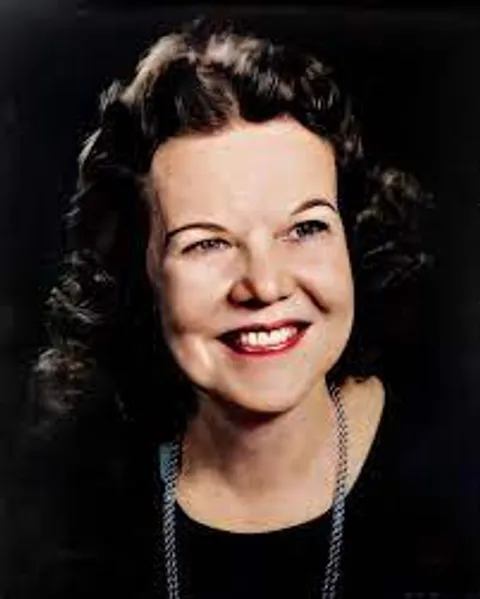 Kathryn Johanna Kuhlman was born on May 9, 1907, in Concordia, Missouri. Her parents were German and she was one of four children. Her mother was a harsh disciplinarian, who showed little love or affection. On the other hand, she had an extremely close and loving relationship with her father. She would describe, as a small child how, her father would come home from work and she would hang on his leg and cling to him. She often said that her relationship with God the Father was extremely real because of her relationship with her own father.
Kuhlman was converted, when she was 14, at an evangelistic meeting held in a small Methodist church. When she was 16 she graduated from high school, which only went to tenth grade in their town. He older sister Myrtle had married an itinerant evangelist, Everett B. Parrott. They spent their time traveling and asked that Kathryn could join them for the summer. Her parents agreed and she went to Oregon to help out. She worked with them, and often gave her testimony. When the summer was over she wanted to stay, and the couple agreed. She ended up working with them for five years.
The evangelistic team was made up of four people, Everette, Myrtle, Kathryn, and pianists named Helen Gulliford. In 1928 Everette missed a meeting in Boise, Idaho. Myrtle and Kathryn preached to cover for Everette. The pastor of the church encouraged Kathryn to step out on her own. Helen agreed to join her. Her first sermon was in a run-down pool hall in Boise, Idaho. The team covered Idaho, Utah, and Colorado for the following five years. In 1933 they moved into Pueblo, Colorado. They set up in an abandoned Montgomery Ward warehouse. They stayed there for six months.
Denver, being a much bigger city, was the next stop. They moved several times but ended up in a paper company's warehouse, which they named the Kuhlman Revival Tabernacle. Then in 1935 they moved once more to an abandoned truck garage they named the Denver Revival Tabernacle. Kathryn was seeing a lot of success in Denver. The church grew to about 2000 members. She began a radio show called "Smiling Through" and invited speakers from all over the country. One of them was Phil Kerr who taught on divine healing. In 1935 another invited evangelist was Burroughs Waltrip.
Waltrip was bad news for Kuhlman. He was a charismatic, handsome man several years older than she was. There was an immediate attraction, and one family claims to have seen the couple embracing in 1935, but he was married and had two children. Waltrip left Denver and went home to Austin, Texas, but the relationship simmered between Kuhlman and Waltrip. In 1937 he was invited back to Denver to take the pulpit for two months. Shortly after he divorced his wife and abandoned his two sons. He then spread the story that his wife had left him. He moved to Mason City, Iowa, where he told everyone he was single, and started a new ministry. Waltrip raised pledges of $70,000 to build a ministry building called Radio Chapel. It was state of the art with a disappearing pulpit and an art deco style. He appeared to be a successful and dynamic preacher.
There was an ongoing relationship between Kuhlman and Waltrip, and they married in September 1938. Kuhlman was naive about the consequences of her choices and the marriage was a disaster. She announced to her church that she and Waltrip were married and they would go between Denver and Mason City preaching at their two churches. Most of the people in her congregation left due to her relationship with Waltrip. She gave up her church in Denver, lost some of her closest associates, and moved to Mason City. Waltrip's success turned out to be a pipe dream as well. The Radio Chapel was completed in June of 1938. By October 1938 Waltrip could not meet his debts. In December Waltrip was demanding a higher salary, even with the shortfall in income. His Board of Directors quit and left him to deal with the finances. His solution was not to pay the mortgage or debts on the Chapel. Radio Chapel went into bankruptcy. Waltrip's last sermon was in May 1939. The Waltrips were on their own. Kathryn's happy vision of she and her husband flying back and forth between Denver and Mason City with a successful preaching careers was utterly demolished.
The next few years were very hard for the couple. They embarked on the road as traveling evangelists, primarily staying in the Midwest. They were not accepted in many places due to their marriage history. Initial advertisements listed Waltrip as the primary evangelist. Then occasionally Mrs. Waltrip was also mentioned. By the early 1940s Kathryn Kuhlman Waltrip was given equal billing. Finally by the mid-1940s Kathryn was using only Kathryn Kuhlman in meetings where she was the primary speaker. In 1944 Kuhlman went on an evangelistic tour on the east coast without Waltrip. It may have been a conscious decision to leave him, or she may also have taken the opportunity to reassess her life. It appears to have been more gradual as Waltrip wrote about them as a couple as late as 1946. Kuhlman never returned to Waltrip and they eventually divorced in 1947. She left her marriage behind and from then on acted as if it never existed in the first place.
In 1946 Kuhlman was asked to speak in Franklin, Pennsylvania. She was well received and decided to stay in the area. Kuhlman began preaching on radio broadcasts in Oil City, Pennsylvania. These became so popular they were picked up in Pittsburgh, and she was preaching throughout the area. She began to preach about the healing power of God. In 1947 a woman was healed of a tumor while listening to Kuhlman preach. Several Sundays later a man was also healed while she was teaching on the Holy Spirit. She was now convinced of God's healing work. One important thing to note is the context and timing of this breakout period in Kuhlman's life. 1947 was the beginning of the Healing Revival (sometimes referred to as the Latter Rain Revival) that would last for the next 10 years. What was happening in Kuhlman's meetings was breaking out across the United States. It was in this time frame that the Voice of Healing Ministry was established and men like William Branham, Oral Roberts, A.A. Allen and many others were propelled onto the public stage. Kuhlman was not associated with those groups, but stepped into the flow of what God's Spirit was doing across the nation and the world.
In 1948 Kuhlman held a series of meetings at Carnegie Hall in Pittsburgh. She eventually moved to Pittsburgh in 1950, and continued to hold meetings at Carnegie Hall until 1971. She was used by God to bring the charismatic message to many denominational churches, including the Catholic Church. (She received a lot of criticism over this and was accused of being a closet Catholic.) These were her best known years. Her style was flamboyant. She would hold her famous miracle services and the auditorium was filled to capacity every time. She was on radio and television shows. She was ordained in 1968 by the Evangelical Church Alliance. Hundreds of people were healed in her meetings, and even while listening to her on the radio or television. People she prayed for would often be hit with the power of God and be "slain in the Spirit." Kuhlman never claimed that she was the healer. She always pointed people to Jesus as their healer.
Kuhlman had been diagnosed with a heart problem in 1955. She kept a very busy schedule and overworked herself, especially in the 1970's. She traveled back and forth from Pittsburgh to Los Angeles frequently, as well as taking trips around the world. Her heart was enlarged and Kuhlman died on February 20, 1976, in Tulsa, following open-heart surgery. Videos of some of her services are still available and continue to be popular today.
Kathryn Johanna Kuhlman was born on May 9, 1907, in Concordia, Missouri. Her parents were German and she was one of four children. Her mother was a harsh disciplinarian, who showed little love or affection. On the other hand, she had an extremely close and loving relationship with her father. She would describe, as a small child how, her father would come home from work and she would hang on his leg and cling to him. She often said that her relationship with God the Father was extremely real because of her relationship with her own father.
Kuhlman was converted, when she was 14, at an evangelistic meeting held in a small Methodist church. When she was 16 she graduated from high school, which only went to tenth grade in their town. He older sister Myrtle had married an itinerant evangelist, Everett B. Parrott. They spent their time traveling and asked that Kathryn could join them for the summer. Her parents agreed and she went to Oregon to help out. She worked with them, and often gave her testimony. When the summer was over she wanted to stay, and the couple agreed. She ended up working with them for five years.
The evangelistic team was made up of four people, Everette, Myrtle, Kathryn, and pianists named Helen Gulliford. In 1928 Everette missed a meeting in Boise, Idaho. Myrtle and Kathryn preached to cover for Everette. The pastor of the church encouraged Kathryn to step out on her own. Helen agreed to join her. Her first sermon was in a run-down pool hall in Boise, Idaho. The team covered Idaho, Utah, and Colorado for the following five years. In 1933 they moved into Pueblo, Colorado. They set up in an abandoned Montgomery Ward warehouse. They stayed there for six months.
Denver, being a much bigger city, was the next stop. They moved several times but ended up in a paper company's warehouse, which they named the Kuhlman Revival Tabernacle. Then in 1935 they moved once more to an abandoned truck garage they named the Denver Revival Tabernacle. Kathryn was seeing a lot of success in Denver. The church grew to about 2000 members. She began a radio show called "Smiling Through" and invited speakers from all over the country. One of them was Phil Kerr who taught on divine healing. In 1935 another invited evangelist was Burroughs Waltrip.
Waltrip was bad news for Kuhlman. He was a charismatic, handsome man several years older than she was. There was an immediate attraction, and one family claims to have seen the couple embracing in 1935, but he was married and had two children. Waltrip left Denver and went home to Austin, Texas, but the relationship simmered between Kuhlman and Waltrip. In 1937 he was invited back to Denver to take the pulpit for two months. Shortly after he divorced his wife and abandoned his two sons. He then spread the story that his wife had left him. He moved to Mason City, Iowa, where he told everyone he was single, and started a new ministry. Waltrip raised pledges of $70,000 to build a ministry building called Radio Chapel. It was state of the art with a disappearing pulpit and an art deco style. He appeared to be a successful and dynamic preacher.
There was an ongoing relationship between Kuhlman and Waltrip, and they married in September 1938. Kuhlman was naive about the consequences of her choices and the marriage was a disaster. She announced to her church that she and Waltrip were married and they would go between Denver and Mason City preaching at their two churches. Most of the people in her congregation left due to her relationship with Waltrip. She gave up her church in Denver, lost some of her closest associates, and moved to Mason City. Waltrip's success turned out to be a pipe dream as well. The Radio Chapel was completed in June of 1938. By October 1938 Waltrip could not meet his debts. In December Waltrip was demanding a higher salary, even with the shortfall in income. His Board of Directors quit and left him to deal with the finances. His solution was not to pay the mortgage or debts on the Chapel. Radio Chapel went into bankruptcy. Waltrip's last sermon was in May 1939. The Waltrips were on their own. Kathryn's happy vision of she and her husband flying back and forth between Denver and Mason City with a successful preaching careers was utterly demolished.
The next few years were very hard for the couple. They embarked on the road as traveling evangelists, primarily staying in the Midwest. They were not accepted in many places due to their marriage history. Initial advertisements listed Waltrip as the primary evangelist. Then occasionally Mrs. Waltrip was also mentioned. By the early 1940s Kathryn Kuhlman Waltrip was given equal billing. Finally by the mid-1940s Kathryn was using only Kathryn Kuhlman in meetings where she was the primary speaker. In 1944 Kuhlman went on an evangelistic tour on the east coast without Waltrip. It may have been a conscious decision to leave him, or she may also have taken the opportunity to reassess her life. It appears to have been more gradual as Waltrip wrote about them as a couple as late as 1946. Kuhlman never returned to Waltrip and they eventually divorced in 1947. She left her marriage behind and from then on acted as if it never existed in the first place.
In 1946 Kuhlman was asked to speak in Franklin, Pennsylvania. She was well received and decided to stay in the area. Kuhlman began preaching on radio broadcasts in Oil City, Pennsylvania. These became so popular they were picked up in Pittsburgh, and she was preaching throughout the area. She began to preach about the healing power of God. In 1947 a woman was healed of a tumor while listening to Kuhlman preach. Several Sundays later a man was also healed while she was teaching on the Holy Spirit. She was now convinced of God's healing work. One important thing to note is the context and timing of this breakout period in Kuhlman's life. 1947 was the beginning of the Healing Revival (sometimes referred to as the Latter Rain Revival) that would last for the next 10 years. What was happening in Kuhlman's meetings was breaking out across the United States. It was in this time frame that the Voice of Healing Ministry was established and men like William Branham, Oral Roberts, A.A. Allen and many others were propelled onto the public stage. Kuhlman was not associated with those groups, but stepped into the flow of what God's Spirit was doing across the nation and the world.
In 1948 Kuhlman held a series of meetings at Carnegie Hall in Pittsburgh. She eventually moved to Pittsburgh in 1950, and continued to hold meetings at Carnegie Hall until 1971. She was used by God to bring the charismatic message to many denominational churches, including the Catholic Church. (She received a lot of criticism over this and was accused of being a closet Catholic.) These were her best known years. Her style was flamboyant. She would hold her famous miracle services and the auditorium was filled to capacity every time. She was on radio and television shows. She was ordained in 1968 by the Evangelical Church Alliance. Hundreds of people were healed in her meetings, and even while listening to her on the radio or television. People she prayed for would often be hit with the power of God and be "slain in the Spirit." Kuhlman never claimed that she was the healer. She always pointed people to Jesus as their healer.
Kuhlman had been diagnosed with a heart problem in 1955. She kept a very busy schedule and overworked herself, especially in the 1970's. She traveled back and forth from Pittsburgh to Los Angeles frequently, as well as taking trips around the world. Her heart was enlarged and Kuhlman died on February 20, 1976, in Tulsa, following open-heart surgery. Videos of some of her services are still available and continue to be popular today.
Parable of an Unhealthy Soul
How do works of obedience relate to the free, unmerited gift of God’s grace in the life of a Christian? This has been a recurring controversial and confusing issue since the earliest days of the church. If we are justified by God’s grace alone, through faith alone, in Christ’s sufficient substitutionary work alone, and not by any work of ours (Romans 3:8), then why are we warned and instructed to “strive . . . for the holiness without which no one will see the Lord” (Hebrews 12:14)? If our works don’t save us, then how can our not working (like not striving for holiness) prevent us from being saved? Before we turn to the apostle Peter for help, hear a parable of an unhealthy soul. Diligence Reveals Real Faith There was a man who was forty pounds overweight. Despite knowing it was dangerous to his health, for years he had indulged in too much of the wrong kinds of foods and neglected the right kinds of exercise. One day, his doctor told him he was in the early stages of developing type-2 diabetes. Not only that, but his vital signs also pointed to high risks of heart attack, stroke, and various cancers. If he didn’t make specific changes, his doctor warned, the man would surely die prematurely. So, the man heeded his doctor’s warnings. He made every effort to put new systems into place that encouraged healthy habits of eating and activity and discouraged his harmful old habits, preferences, and cravings. After twelve months, the man’s health was beginning to be transformed. He had lost most of his excess weight, felt better, had more energy, and no longer lived under the chronic, depressing cloud of knowing he was living in harmful self-indulgence. When his doctor next saw him, he was very pleased and said to the man, “Well done! You are no longer at heightened risk of premature death.” The man continued in his new ways and lived well into old age. Question: Was the man’s health restored through his faith in the gracious knowledge provided to him pertaining to life and healthiness, or was it restored through his diligent efforts to put this knowledge into practice? How Faith Works Do you see the problem with the question? It poses a false dichotomy. The man’s faith and his works were organically inseparable. If he didn’t have faith in what the doctor told him, he wouldn’t have heeded the doctor’s warning — there would have been no health-restoring works. If he didn’t obey the doctor’s instructions, whatever “faith” he may have claimed to have in his doctor would have been “dead faith” (James 2:26) — that faith would not have saved him from his health-destroying ways. This parable, imperfect as it is, is a picture of the biblical teaching on sanctification. In a nutshell, the New Testament teaches that the faith that justifies us is the same faith that sanctifies us. This faith is “the gift of God, not a result of works” (Ephesians 2:8–9). It’s just that this saving faith, by its nature, perseveres, and works to make us holy. We passively receive this gift of faith freely given to us by God. But faith, once received, does not leave a soul passive. It becomes the driving force behind our actions, the way we live. By its nature, faith believes the “precious and very great promises” of God (2 Peter 1:4), and the evidence that real faith is present in us manifests, over time, through the ways we act on those promises. The New Testament calls these actions “works of faith” (1 Thessalonians 1:3) or the “obedience of faith” (Romans 1:5). True works of faith don’t “nullify the grace of God” (Galatians 2:21); they are evidence that we have truly received the grace of God, and are themselves further expressions of grace. Now, let me show you one place where Scripture clearly teaches this. And as I do, imagine yourself as the unhealthy soul in my parable sitting in your doctor’s office — and your doctor is the apostle Peter. Dr. Peter has just examined your spiritual health and has some serious concerns. So, as a good physician, he gives you a firm exhortation. Escaping Through Promises [God’s] divine power has granted to us all things that pertain to life and godliness, through the knowledge of him who called us to his own glory and excellence, by which he has granted to us his precious and very great promises, so that through them you may become partakers of the divine nature, having escaped from the corruption that is in the world because of sinful desire. (2 Peter 1:3–4) Dr. Peter begins by telling you that God has granted to you all things. He agrees with his colleague, Dr. Paul, that God has granted you life, breath, and everything, including the day you were born, the places you’ll live, and how long (Acts 17:25–26). God has granted you regeneration (Ephesians 2:4–5), the measure of your faith (Romans 12:3), spiritual gifts (1 Corinthians 12:7–11), and capacity to work hard (1 Corinthians 15:10). And God has given you his “precious and very great promises so that through them” you may escape the power of sin and be transformed into his nature. Everything, from beginning to end, is God’s grace, since “a person cannot receive even one thing unless it is given him from heaven” (John 3:27). Make Every Effort For this very reason, make every effort to supplement your faith with virtue, and virtue with knowledge, and knowledge with self-control, and self-control with steadfastness, and steadfastness with godliness, and godliness with brotherly affection, and brotherly affection with love. (2 Peter 1:5–7) Notice Dr. Peter’s words: For this reason (because God has granted you everything), make every effort (act with faith in all God has promised you). In other words, prove the reality of your profession of faith, by doing whatever it takes to actively cultivate habits of grace, that nurture the character qualities necessary to live out the “obedience of faith” through doing tangible acts of good to bless others. What Negligence Reveals For if these qualities are yours and are increasing, they keep you from being ineffective or unfruitful in the knowledge of our Lord Jesus Christ. For whoever lacks these qualities is so nearsighted that he is blind, having forgotten that he was cleansed from his former sins. (2 Peter 1:8–9) “Diligence will reveal genuine faith because that is how faith works.” Dr. Peter’s prescription is clear and simple: if you cultivate these holy qualities, they will foster spiritual health and fruitfulness; if you don’t, you will experience spiritual decline and demise. Diligence will reveal genuine faith because that is how faith works: it leads to action. Negligence will reveal your lack of faith because “dead faith” doesn’t work. Now, this is a warning, not a condemnation. Peter knows well that all disciples have seasons of setbacks and failure. But he also knows, with Paul, that some disciples “profess to know God, but they deny him by their works” (Titus 1:16) — their profession of faith is not supported by the “obedience of faith.” Peter doesn’t want you to be one of those statistics, so he ends his firm exhortation to you on a hopeful note. Pursue Diligence by Faith Therefore, brothers, be all the more diligent to confirm your calling and election, for if you practice these qualities you will never fall. For in this way there will be richly provided for you an entrance into the eternal kingdom of our Lord and Savior Jesus Christ. (2 Peter 1:10–11) Just so you’re clear, Dr. Peter emphasizes the organic, inseparable relationship between God’s grace and your “works of faith.” He says, “Be diligent to confirm your calling and election.” You don’t call yourself to Christ; Christ calls you by his grace (John 15:16). You don’t elect yourself to salvation; God elects you by his grace (Ephesians 1:4–6). But you do have an essential contribution to make to your eternal spiritual health. You confirm the reality of God’s saving grace in your life through diligently obeying by faith all that Jesus commands you (Matthew 28:20) — or not. “You can confirm the reality of God’s saving grace in your life — or not.” This is Dr. Peter’s prescription for your assurance of salvation: your diligent obedience through faith, your making every effort to pursue holiness, is evidence that your faith is real and that the Holy Spirit is at work in you to make you a partaker in the divine nature. This is why Scripture commands us, “Strive for . . . the holiness without which no one will see the Lord” (Hebrews 12:14). It’s not that our striving, our “making every effort” to obey God, somehow merits us salvation. Rather, our striving is God’s gracious, ordained means — fed by his promises and supplied by his Spirit — to make us holy as he is holy (1 Peter 1:16) and to provide us “entrance into the eternal kingdom of our Lord and Savior Jesus Christ.” God’s grace is no less gracious because he chooses to grant it not only apart from our works (in justification) but also through our diligent “works of faith” (in sanctification) — especially since these works are evidence that our faith is real. Article by Jon Bloom