
Others like one in a million Features >>

One In A Million - Journey To Your Promised Land

The Power Of Awareness

Stomping Out Depression

Questions On Worldliness

Spiritual Authority

Exposing Strife
Spiritual Timing
Kingdom Living
The Power Of Consecration
-160.webp)
Overcoming Familiar Spirits (Deliverance From Unseen Demonic Enemies And Spiritual Debt)
About the Book
"One in a Million" by Priscilla Shirer is a Christian book that encourages readers to embrace their uniqueness and significance in God's eyes. Through powerful biblical teachings and personal anecdotes, Shirer inspires readers to live boldly and fulfill their God-given purpose, knowing they are truly one in a million in His eyes.
William Carey
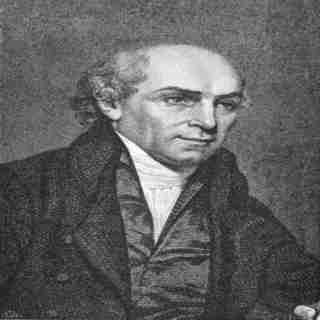 "Expect great things; attempt great things."
At a meeting of Baptist leaders in the late 1700s, a newly ordained minister stood to argue for the value of overseas missions. He was abruptly interrupted by an older minister who said, "Young man, sit down! You are an enthusiast. When God pleases to convert the heathen, he'll do it without consulting you or me."
That such an attitude is inconceivable today is largely due to the subsequent efforts of that young man, William Carey.
Plodder Carey was raised in the obscure, rural village of Paulerpury, in the middle of England. He apprenticed in a local cobbler's shop, where the nominal Anglican was converted. He enthusiastically took up the faith, and though little educated, the young convert borrowed a Greek grammar and proceeded to teach himself New Testament Greek.
When his master died, he took up shoemaking in nearby Hackleton, where he met and married Dorothy Plackett, who soon gave birth to a daughter. But the apprentice cobbler's life was hard—the child died at age 2—and his pay was insufficient. Carey's family sunk into poverty and stayed there even after he took over the business.
"I can plod," he wrote later, "I can persevere to any definite pursuit." All the while, he continued his language studies, adding Hebrew and Latin, and became a preacher with the Particular Baptists. He also continued pursuing his lifelong interest in international affairs, especially the religious life of other cultures.
Carey was impressed with early Moravian missionaries and was increasingly dismayed at his fellow Protestants' lack of missions interest. In response, he penned An Enquiry into the Obligations of Christians to Use Means for the Conversion of the Heathens. He argued that Jesus' Great Commission applied to all Christians of all times, and he castigated fellow believers of his day for ignoring it: "Multitudes sit at ease and give themselves no concern about the far greater part of their fellow sinners, who to this day, are lost in ignorance and idolatry."
Carey didn't stop there: in 1792 he organized a missionary society, and at its inaugural meeting preached a sermon with the call, "Expect great things from God; attempt great things for God!" Within a year, Carey, John Thomas (a former surgeon), and Carey's family (which now included three boys, and another child on the way) were on a ship headed for India.
Stranger in a strange land
Thomas and Carey had grossly underestimated what it would cost to live in India, and Carey's early years there were miserable. When Thomas deserted the enterprise, Carey was forced to move his family repeatedly as he sought employment that could sustain them. Illness racked the family, and loneliness and regret set it: "I am in a strange land," he wrote, "no Christian friend, a large family, and nothing to supply their wants." But he also retained hope: "Well, I have God, and his word is sure."
He learned Bengali with the help of a pundit, and in a few weeks began translating the Bible into Bengali and preaching to small gatherings.
When Carey himself contracted malaria, and then his 5-year-old Peter died of dysentery, it became too much for his wife, Dorothy, whose mental health deteriorated rapidly. She suffered delusions, accusing Carey of adultery and threatening him with a knife. She eventually had to be confined to a room and physically restrained.
"This is indeed the valley of the shadow of death to me," Carey wrote, though characteristically added, "But I rejoice that I am here notwithstanding; and God is here."
Gift of tongues
In October 1799, things finally turned. He was invited to locate in a Danish settlement in Serampore, near Calcutta. He was now under the protection of the Danes, who permitted him to preach legally (in the British-controlled areas of India, all of Carey's missionary work had been illegal).
Carey was joined by William Ward, a printer, and Joshua and Hanna Marshman, teachers. Mission finances increased considerably as Ward began securing government printing contracts, the Marshmans opened schools for children, and Carey began teaching at Fort William College in Calcutta.
In December 1800, after seven years of missionary labor, Carey baptized his first convert, Krishna Pal, and two months later, he published his first Bengali New Testament. With this and subsequent editions, Carey and his colleagues laid the foundation for the study of modern Bengali, which up to this time had been an "unsettled dialect."
Carey continued to expect great things; over the next 28 years, he and his pundits translated the entire Bible into India's major languages: Bengali, Oriya, Marathi, Hindi, Assamese, and Sanskrit and parts of 209 other languages and dialects.
He also sought social reform in India, including the abolition of infanticide, widow burning (sati), and assisted suicide. He and the Marshmans founded Serampore College in 1818, a divinity school for Indians, which today offers theological and liberal arts education for some 2,500 students.
By the time Carey died, he had spent 41 years in India without a furlough. His mission could count only some 700 converts in a nation of millions, but he had laid an impressive foundation of Bible translations, education, and social reform.
His greatest legacy was in the worldwide missionary movement of the nineteenth century that he inspired. Missionaries like Adoniram Judson, Hudson Taylor, and David Livingstone, among thousands of others, were impressed not only by Carey's example, but by his words "Expect great things; attempt great things." The history of nineteenth-century Protestant missions is in many ways an extended commentary on the phrase.
"Expect great things; attempt great things."
At a meeting of Baptist leaders in the late 1700s, a newly ordained minister stood to argue for the value of overseas missions. He was abruptly interrupted by an older minister who said, "Young man, sit down! You are an enthusiast. When God pleases to convert the heathen, he'll do it without consulting you or me."
That such an attitude is inconceivable today is largely due to the subsequent efforts of that young man, William Carey.
Plodder Carey was raised in the obscure, rural village of Paulerpury, in the middle of England. He apprenticed in a local cobbler's shop, where the nominal Anglican was converted. He enthusiastically took up the faith, and though little educated, the young convert borrowed a Greek grammar and proceeded to teach himself New Testament Greek.
When his master died, he took up shoemaking in nearby Hackleton, where he met and married Dorothy Plackett, who soon gave birth to a daughter. But the apprentice cobbler's life was hard—the child died at age 2—and his pay was insufficient. Carey's family sunk into poverty and stayed there even after he took over the business.
"I can plod," he wrote later, "I can persevere to any definite pursuit." All the while, he continued his language studies, adding Hebrew and Latin, and became a preacher with the Particular Baptists. He also continued pursuing his lifelong interest in international affairs, especially the religious life of other cultures.
Carey was impressed with early Moravian missionaries and was increasingly dismayed at his fellow Protestants' lack of missions interest. In response, he penned An Enquiry into the Obligations of Christians to Use Means for the Conversion of the Heathens. He argued that Jesus' Great Commission applied to all Christians of all times, and he castigated fellow believers of his day for ignoring it: "Multitudes sit at ease and give themselves no concern about the far greater part of their fellow sinners, who to this day, are lost in ignorance and idolatry."
Carey didn't stop there: in 1792 he organized a missionary society, and at its inaugural meeting preached a sermon with the call, "Expect great things from God; attempt great things for God!" Within a year, Carey, John Thomas (a former surgeon), and Carey's family (which now included three boys, and another child on the way) were on a ship headed for India.
Stranger in a strange land
Thomas and Carey had grossly underestimated what it would cost to live in India, and Carey's early years there were miserable. When Thomas deserted the enterprise, Carey was forced to move his family repeatedly as he sought employment that could sustain them. Illness racked the family, and loneliness and regret set it: "I am in a strange land," he wrote, "no Christian friend, a large family, and nothing to supply their wants." But he also retained hope: "Well, I have God, and his word is sure."
He learned Bengali with the help of a pundit, and in a few weeks began translating the Bible into Bengali and preaching to small gatherings.
When Carey himself contracted malaria, and then his 5-year-old Peter died of dysentery, it became too much for his wife, Dorothy, whose mental health deteriorated rapidly. She suffered delusions, accusing Carey of adultery and threatening him with a knife. She eventually had to be confined to a room and physically restrained.
"This is indeed the valley of the shadow of death to me," Carey wrote, though characteristically added, "But I rejoice that I am here notwithstanding; and God is here."
Gift of tongues
In October 1799, things finally turned. He was invited to locate in a Danish settlement in Serampore, near Calcutta. He was now under the protection of the Danes, who permitted him to preach legally (in the British-controlled areas of India, all of Carey's missionary work had been illegal).
Carey was joined by William Ward, a printer, and Joshua and Hanna Marshman, teachers. Mission finances increased considerably as Ward began securing government printing contracts, the Marshmans opened schools for children, and Carey began teaching at Fort William College in Calcutta.
In December 1800, after seven years of missionary labor, Carey baptized his first convert, Krishna Pal, and two months later, he published his first Bengali New Testament. With this and subsequent editions, Carey and his colleagues laid the foundation for the study of modern Bengali, which up to this time had been an "unsettled dialect."
Carey continued to expect great things; over the next 28 years, he and his pundits translated the entire Bible into India's major languages: Bengali, Oriya, Marathi, Hindi, Assamese, and Sanskrit and parts of 209 other languages and dialects.
He also sought social reform in India, including the abolition of infanticide, widow burning (sati), and assisted suicide. He and the Marshmans founded Serampore College in 1818, a divinity school for Indians, which today offers theological and liberal arts education for some 2,500 students.
By the time Carey died, he had spent 41 years in India without a furlough. His mission could count only some 700 converts in a nation of millions, but he had laid an impressive foundation of Bible translations, education, and social reform.
His greatest legacy was in the worldwide missionary movement of the nineteenth century that he inspired. Missionaries like Adoniram Judson, Hudson Taylor, and David Livingstone, among thousands of others, were impressed not only by Carey's example, but by his words "Expect great things; attempt great things." The history of nineteenth-century Protestant missions is in many ways an extended commentary on the phrase.
my dream singleness: an anthem for unmarried women
As an unmarried woman in my mid-twenties, I know that a season of singleness can often be fraught with disappointment and heartache. I hold hopes for a husband and a family close to my heart, but I also hope to hold Jesus even closer. At the end of my life, whether I am married for forty years or single for seventy, I long for it to be said of me, “She was devoted to Jesus.” Single or married, we belong to another. My marital status may read “single” on my tax return, but I am not unclaimed. I do belong to someone. And this is not some elusive future spouse. I’m speaking of Christ. I am his. Because Christ has bought us with his blood, we are not our own (1 Corinthians 6:19–20). We were not made or saved for this realm, but for another realm, a spiritual one. And in this spiritual realm, Jesus was clear that people are neither marrying, nor married. So despite the fact that marriage is beautiful and sacred, we were not made for earthly wedded bliss. That should free us to live out big dreams for singleness now, while we wait to be married. We were created for Christ, to be one with him. He and I — we were meant for each other (Ephesians 1:5–6). This is a match made in heaven, and for heaven. He is ours, and we are his. And this union can satisfy all other longings. Even if a spouse dies, deserts, disappoints, or never emerges in the first place, we already have a perfect union of glory and joy awaiting us that far surpasses the dim copy we might enjoy for a little while here. Singleness Is Good Paul, apparently, was single, at least for much of his life, and spoke of his marital status in glowing terms. Singleness is good, and is a gift from God (1 Corinthians 7:7–8). I can wake up tomorrow confident that not being married is good for me, and that it is my calling for the day. God does not give second-rate gifts. It’s not that I have asked for bread only for God to give me a stone instead (Matthew 7:9). No, singleness and marriage are different gifts, each with challenges and blessings, but they are equally good. Elisabeth Elliot writes: But having now spent more than 41 years single, I have learned that it is indeed a gift. Not one I would choose. Not one many women would choose. But we do not choose our gifts, remember? We are given them by a divine Giver who knows the end from the beginning and wants above all else to give us the gift of himself. Whatever the years ahead may hold, I know he has called me to the gift of singleness today, however heavy that gift may feel some days. When God gives us gifts we would not choose, he also gives us himself in ways we would not otherwise have known. This World Is Not Our Home Those who are not yet married long for love and a place to call home. We desire good things, and our pain is legitimate. But we are easily disillusioned with temporary treasures, forgetting this bruised and scarred place is not our forever home. No marriage will last forever. Even the best must end with death. This means that the married and the unmarried alike must form their minds around this truth: From now on, let those who have wives live as though they had none, and those who mourn as though they were not mourning, and those who rejoice as though they were not rejoicing, and those who buy as though they had no goods, and those who deal with the world as though they had no dealings with it. For the present form of this world is passing away. (1 Corinthians 7:29–31) Paul is not telling his readers to neglect their families, but he is shifting our paradigms, preparing us to live as pilgrims in a world destined for destruction. This means the married should live as if their spouse is not theirs to keep, and the unmarried should live as if a spouse is not ours to have. At the end of time here on earth, only our union with Christ will survive. Singleness Is for Devotion From the apostle Paul to Elisabeth Elliot, they are all really saying one thing. Singleness is for devotion — for gospel-living and Christ-loving. The unmarried man is anxious about the things of the Lord, how to please the Lord. . . . And the unmarried or betrothed woman is anxious about the things of the Lord, how to be holy in body and spirit.” (1 Corinthians 7:32, 34) God offers us singleness as an opportunity to run headlong after Christ. Devotion is not merely a hobby to pass the time while we wait for a perfect someone. No, this is what we’ve been waiting for. For Christ. The Perfect Someone has come, and he’s come to give us himself. We’ve been waiting for happiness; here is a love higher than our understanding and a joy beyond our wildest dreams. As unmarried women, let it be said of us that our one concern is to please the Lord, that our only aim is wholehearted devotion to Christ. May this be the banner that flies over the balance of our days, our only mantra, married or not. You were meant to enjoy the one thing that transcends the beauties of marriage and lasts for eternity. Seek him and you will make the most of singleness and marriage, whichever gift God gives you.