
Others like questions on worldliness Features >>
Longing For Godliness - Restoring Godâs Image Within Us
A Quest For Godliness

Blueprint For Building Strong Faith

Hope In Adversity

The Wisdom Of Making Right Choices
4th Dimensional Living In A 3d World

The Assignment Vol I: The Dream And The Destimy
God's Power Through Laying On Of Hands

Exposing The Accuser Of The Brethren
Unchurching (Christianity Without Churchianity)
About the Book
"Questions on Worldliness" by Frank Beck explores how Christians can navigate the temptations and distractions of the world while remaining faithful to their beliefs. The book raises thought-provoking questions and offers practical advice on how to live a life that is pleasing to God in today's society.
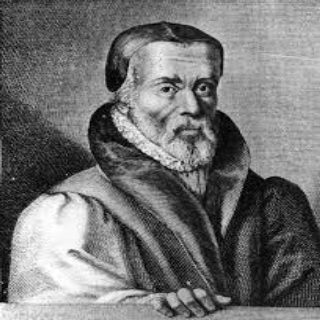
Richard Sibbes
Richard Sibbes was born in Tostock, Suffolk, four miles from Bury St. Edmunds, in 1577.[1] He is the eldest son of Paul Sibbes and Joane. His father was a wheelwright who hoped Sibbes would be in the same field of occupation. Instead of following the footsteps of his father, young Sibbes, out of love for reading, would choose books over wooden wheels.[2] Truly enough, throughout his lifetime, books were part of Sibbesâ life.[3] Proof of this interest to books is his accomplishments as a lecturer [pastor], fellow tutor, vicar, and for obtaining various degrees in his academic education.
Sibbesâ legacy of his seven-volume work was collected by A. B. Grosart which was published from 1862 to 1864.[4] Sibbesâ ministries and his works spread throughout England even after his death. However, he was never married.
Sibbes died on July 5, 1635, in his chambers at Grayâs Inn.[5] J. I. Packer noted that Sibbesâ left more than two million words on paper after his death.[6]
Educational Background
Sibbesâ started studying at St. Johnâs College, Cambridge when he was eighteen, in 1595. He then proceeded to finish a Bachelor of Arts in 1599. He received a fellowship grant in 1601. Sibbes continued studying, finishing a Master of Arts degree by 1602.
Sibbes became a prominent preacher in Cambridge and got the endorsement to apply for a Bachelor of Divinity. After his defense and fulfilling the requirements, he earned this degree in 1610.[7] Furthermore, in almost two decades, Sibbes received his Doctor of Divinity in 1627 after returning from London for his mastership at St. Katherine.[8]
Ministerial Experience and Vocation
Sibbesâ conversion happened after hearing Paul Bayneâs sermon in 1603. Bayne succeeded William Perkins at St. Andrews, Cambridge.[9] During Sibbesâ stay in Cambridge, as a fellow, he handled and supervised five to six students for a tutorial.[10] Sibbes held various vocations such as being chaplain, lecturer, and got a promotion from mere fellow to senior fellowship. After being a senior dean at St. John, Sibbes became the master of St. Katherineâs College in 1626.[11]
As a preacher, Sibbes received his ordination in Norwich, in 1607. He became the minister of Thurston in 1608. Later, in 1610, Sibbes accepted the offer as a lecturer of Holy Trinity Church, Cambridge until he was called to be a lecturer at Grayâs Inn, London, in 1617.[12] This lectureship lasts until his death.
Even during Sibbesâ mastership at St. Katherine, he remained a lecturer at Grayâs Inn. In 1633, through the appointment of King Charles I, Sibbes became the vicar of Holy Trinity Church, Cambridge. The positions held by Sibbes were mastership at St. Katherine, a lecturer at Grayâs Inn, and vicar of Holy Trinity Church.
Influence of the Heavenly Doctor
Throughout Sibbes ministries, prominence followed as he influenced many Puritan ministers. Sibbes, as an influencer, is known to be the âpastor of pastors,â not just in the Church of England but even to Presbyterians and Independent Congregationalists.[13] Sibbes was responsible for John Cottonâs conversion in 1612.[14]
Moreover, he persuaded John Prestonâs style in preaching, transforming from witty sermons to more plain but spiritual preaching.[15] Sibbesâ book, The Bruised Reed, encouraged Richard Baxter to gain settled-conviction on his conversion.[16] Likewise, Sibbes helped Thomas Goodwin, the chief editor of most of his works, to keep away from Arminianism.[17]
Sibbesâ ministry extends even to common people. Humphrey Mills, a layman, shared his testimony about Sibbesâ ministry. Mills was spiritually refreshed and brought to peace and joy after hearing Sibbesâ âsweet soul-melting Gospel-sermons.â[18] Sibbesâ encouragement did not end in the days of Puritans. Martyn Lloyd-Jones, one of the greatest preachers in the twentieth century, was grateful for Sibbesâ works. Lloyd-Jones, in his spiritual dryness, said that Sibbesâ books âquietened, soothed, comforted, encouraged, and healed [him].â[19]
Sibbes was a renowned Puritan throughout Cambridge, London, and even to Amsterdam. Mainly because of his various offices plus broad networks outside the church. He remained a moderate Puritan perceiving the Church of England as the true church. Sibbes encouraged other Separatists to return and warned the moderates not to dissent.
Yet many historians and scholars misinterpreted Sibbes in his theology and ministry. Thankfully, Mark Dever, in his recent work, argues contrary to many historians that Sibbes was dismissed in his ministry. Dever also concludes that Sibbes did not drift away from Calvinism, claiming that he was a thoroughly Reformed preacher and never became non-conformist, rather a moderate puritan.[20]
Sibbes, through his works, are still penetrating churches and seminaries up to this day. Recently, his seven-volume set was published by The Banner of Truth Trust in 2001. The best introduction for Sibbesâ works, personally, is his The Bruised Reed and the Smoking Flax. For Michael Reevesâ opinion, Sibbes is âthe best introduction to the PuritansâŚ. Reading him is like sitting in the sunshine: he gets into your heart and warms it to Christ.â[21]
References
[1] Alexander B. Grosart, âMemoir of Richard Sibbes, D.D.,â in Richard Sibbes, The Works of Richard Sibbes, ed. Alexander Grosart, 7 vols. (1862-1864; reprint, Carlisle, Pennsylvania: The Banner of Truth Trust, 2001), 1:xxvii.
[2] Joel Beeke, âRichard Sibbes on Entertaining the Holy Spirit,â in The Beauty and Glory of the Holy Spirit, ed. Joel Beeke and Joseph Pipa Jr. (Grand Rapids, Michigan: Reformation Heritage Books, 2012), 228. Cf. Joel Beeke and Mark Jones, A Puritan Theology: Doctrine for Life (Grand Rapids, MI: Reformation Heritage Books, 2012), chap. 36, Kindle.
[3] Joel Beeke and Randall Pederson, Meet the Puritans (Grand Rapids, MI: Reformation Heritage Books, 2006), 534-5.
[4] Mark Dever, âThe Works of Richard Sibbes,â in You Must Read: Books that Have Shaped Our Lives (Carlisle, PA: The Banner of Truth Trust, 2015), 154.
[5] Grosart, âMemoir,â in Sibbes, Works, 1:cxxxi.
[6] J. I. Packer, foreword to Richard Sibbes: Puritanism and Calvinism in Late Elizabethan and Early Stuart England, by Mark E. Dever (Macon, Georgia: Mercer University Press, 2000), ix.
[7] Dever, Richard Sibbes, 37-38. Bachelor of Divinity, according to Dr. Shawn Wright is equivalent with Master of Divinity today, âLectures in English Puritanismâ (The Southern Baptist Theological Seminary, Louisville, KY, Spring 2020), but the process is different. Dever noted in his work that Sibbes undergone two public preaching, one in English and another in Latin, and two defense topics chosen by the panelists.
[8] Grosart, âMemoir,â in Sibbes, Works, 1:cxi.
[9] Beeke and Pederson, Meet the Puritans, 534-5.
[10] Dever, Richard Sibbes, 30-31.
[11] Dever, 31-34, 46.
[12] Beeke and Pederson, Meet the Puritans, 534-6.
[13] Beeke, âRichard Sibbes on Entertaining the Holy Spirit,â 230.
[14] Dever, Richard Sibbes, 40.
[15] Beeke and Pederson, Meet the Puritans, 535-7.
[16] Richard Baxter, The Autobiography of Richard Baxter (Bedford St., London: J.M. Dent & Sons Ltd., 1931), 7. Baxterâs father bought Sibbesâ book from a peddler and gave it to Richard Baxter. Cf. Timothy K. Beougher, Richard Baxter and Conversion: A Study of the Puritan Concept of Becoming a Christian (Scotland, UK: Christian Focus Publications, 2007), 21.
[17] Dever, Richard Sibbes, 41.
[18] Ronald Frost, âThe Bruised Reed by Richard Sibbes (1577-1635)â in Kelly M. Kapic and Randal C. Gleason, The Devoted Life: An Invitation to the Puritan Classics (Downers Grove, IL: Intervarsity Press, 2004), 80-81. Quoting from a collection of Puritan testimonials by John Rogers, Ohel or Bethshemesh, A Tarbernacle for the Sun (London, n.p., 1653), 410.
[19] D. Martyn Lloyd-Jones, Preaching and Preachers (Grand Rapids, Michigan: Zondervan Publishing House, 1972), 175. Cf. Publisherâs Foreword to The Bruised Reed, by Richard Sibbes, x.
[20] Dever, Richard Sibbes, 211-8.
[21] Michael Reeves, âA Short Biography of Richard Sibbes,â in Richard Sibbes, Christ it Best; or, St. Paulâs Strait (Carlisle, PA: Banner of Truth Trust, 2012), 66.
Food Rules
A graduate student sits at a booth with friends, his second drink near empty. âCan I refill you?â the waiter asks. A mother sees the chocolate as she reaches for her youngestâs sippy cup. She tries not to eat sugar in the afternoons, but sheâs tired and stressed, and the children arenât looking. A father comes back to the kitchen after putting the kids down. Dinner is done, but the leftover pizza is still sitting out. The day has drained him, and another few pieces seem harmless. Compared to the battles many fight â against addiction, against pornography, against anger, against pride â scenarios such as these may seem too trivial for discussion. Donât we have bigger sins to worry about than the gluttony of secret snacks and third helpings? And yet, food is a bigger battleground than many recognize. Do you remember Mosesâs terse description of the worldâs first sin? She took of its fruit and ate , and she also gave some to her husband who was with her, and he ate . (Genesis 3:6) Murder did not bar Adam and Eve from paradise â nor did adultery, theft, lying, or blasphemy. Eating  did. Our first parents ate their way out of Eden. And in our own way, so do we. Garden of Eating Food problems, whether large (buffet binging) or small (hidden, uncontrolled snacking), go back to the beginning. Our own moments before the refrigerator or the cupboard can, in some small measure, reenact that moment by the tree. And apart from well-timed grace from God, we often respond in one of two ungodly ways. âOur first parents ate their way out of Eden. And in our own way, so do we.â Some, like Adam and Eve, choose to indulge . They sense, on some level, that to eat is to quiet the voice of conscience and weaken the walls of self-control (Proverbs 25:28). They would recognize, if they stopped to ponder and pray, that this âeating is not from faithâ (Romans 14:23). But they neither stop, nor ponder, nor pray. Instead, they tip their glass for another drink, snatch and swallow the chocolate, grab a few more slices. Wisdomâs protest avails little against the suggestion of âjust one more.â âSince Eden,â Derek Kidner writes, âman has wanted the last ounce out of life, as though beyond Godâs âenoughâ lay ecstasy, not nauseaâ ( Proverbs , 152). And so, the indulgent drink and grab and sip and snack, forgetting that their grasping leads them, not deeper into Edenâs heart, but farther outside Edenâs walls, where, nauseous and bloated, they bow to the god called âbellyâ (Philippians 3:19; see also Romans 16:18). Meanwhile, others choose to deny . Their motto is not âEat, drink, be merryâ (Luke 12:19), but âDo not handle, do not taste, do not touchâ (Colossians 2:21). They frantically count calories, buy scales, and build their lives on the first floor of the food pyramid. Though they may not impose their diets on others, at least for themselves they ârequire abstinence from foods that God created to be received with thanksgivingâ (1 Timothy 4:3) â as if one should see Edenâs lawful fruit and say, âIâm good with grass.â If our God-given appetites are a stallion, some let the horse run unbridled, while others prefer to shut him up in a stable. Still others, of course, alternate (sometimes wildly) between the two. In Christ, however, God teaches us to ride. Appetite Redeemed Paulâs familiar command to âbe imitators of me, as I am of Christâ (1 Corinthians 11:1) comes, surprisingly enough, in the context of food  (see 1 Corinthians 8â10, especially 8:7â13 and 10:14â33). And the Gospels tell us why: in Jesus, we find appetite redeemed. âThe Son of Man came eating and drinking,â Jesus says of himself (Matthew 11:19) â and he wasnât exaggerating. Have you ever noticed just how often the Gospels mention food? Jesusâs first miracle multiplied wine (John 2:1â11); two of his most famous multiplied bread (Matthew 14:13â21; 15:32â39). He regularly dined as a guest at othersâ homes, whether with tax collectors or Pharisees (Mark 2:13â17; Luke 14:1). He told parables about seeds and leaven, feasts and fattened calves (Matthew 13:1â9, 33; Luke 14:7â11; 15:11â32). When he met his disciples after his resurrection, he asked, âHave you anything here to eat?â (Luke 24:41) â another time, he took the initiative and cooked them breakfast himself (John 21:12). No wonder he thought it good for us to remember him over a meal (Matthew 26:26â29). And yet, for all of his freedom with food, he was no glutton or drunkard. Jesus could feast, but he could also fast â even for forty days and forty nights when necessary (Matthew 4:2). At meals, you never get the sense that he was preoccupied with his plate; rather, God and neighbor were his constant concern (Mark 2:13â17; Luke 7:36â50). And so, when the tempter found him in his weakness, and suggested he make bread to break his fast, our second Adam gave a resolute no  (Matthew 4:3â4). Here is a man who knows how to ride a stallion. While some indulged, and others denied, our Lord Jesus directed  his appetite. Meeting Edenâs Maker If we are going to imitate Jesus in his eating, we will need more than the right food rules. Adam and Eve did not fall, youâll remember, for lack of a diet. No, we imitate Jesusâs eating only as we enjoy the kind of communion he had with the Father. This touches the root of the failure at the tree, doesnât it? Before Eve reached for the fruit, she let the serpent cast a shadow over her Fatherâs face. She let him convince her that the God of paradise, as Sinclair Ferguson writes, âwas possessed of a narrow and restrictive spirit bordering on the malignâ ( The Whole Christ , 80). The god of the serpentâs beguiling was a misanthrope deity, one who kept his best fruit on forbidden trees. And so, Eve reached. But through Jesus Christ, we meet God again: the real Maker of Eden, and the only one who can break and tame our appetites. Here is the God who made all the earthâs food; who planted trees on a hundred hills and said, âEat!â (Genesis 2:16); who feeds his people from âthe abundance of [his] house,â and gives âthem drink of the river of [his] delightsâ (Psalm 36:8); who does not withhold anything good from his own (Psalm 84:11); and who, in the fullness of time, withheld not even the greatest of all goods: his beloved Son (Romans 8:32). âWe eat, drink, and abstain to the glory of God only when we, like Jesus, taste God himself as our choicest food.â Unlike Adam and Eve, Jesus ate (and abstained) in the presence of this unfathomably good God. And so, when he ate, he gave thanks to the Giver (Matthew 14:19; 1 Corinthians 11:24). When he ran up against his Fatherâs âYou shall not eat,â he did not silence conscience or discard self-control, but feasted on something better than bread alone (Matthew 4:4). âMy food,â he told his disciples, âis to do the will of him who sent me and to accomplish his workâ (John 4:34). He knew there was a time to eat and a time to abstain, and that both times were governed by the goodness of God. We eat, drink, and abstain to the glory of God only when we, like Jesus, taste God himself as our choicest food (1 Corinthians 10:31; Psalm 34:8). Direct Your Appetite Admittedly, the line between just enough  and too much  is a blurry one, and even the most mature can fail to notice that border until theyâve eaten beyond it. Even still, between the overflowing plate of indulgence and the empty plate of denial is a third plate, one we increasingly discern and choose as the Spirit refines our heartâs palate. Here, we neither indulge nor deny our appetites, but like our Lord Jesus, we direct  them. So then, there you are, ready to grab another portion, take another drink, down another handful, though your best spiritual wisdom dictates otherwise. You are ready, in other words, to reach past Godâs âenoughâ once again. What restores your sanity in that moment? Not repeating the rules with greater fervor, but following the rules back to the mouth of an infinitely good God. When you sense that you have reached Godâs âenoughâ â perhaps through briefly stopping, pondering, praying â you have reached the wall keeping you from leaving the Eden of communion with Christ, that Food better than all food (John 4:34). And so, you walk away, perhaps humming a hymn to the God who is good: Thou art giving and forgiving, Ever blessing, ever blest, Wellspring of the joy of living, Ocean depth of happy rest! This is the Maker of Eden, the God and Father of our Lord Jesus Christ. And if the real God is this  good, then we need not grasp for what he has not given.