
About the Book
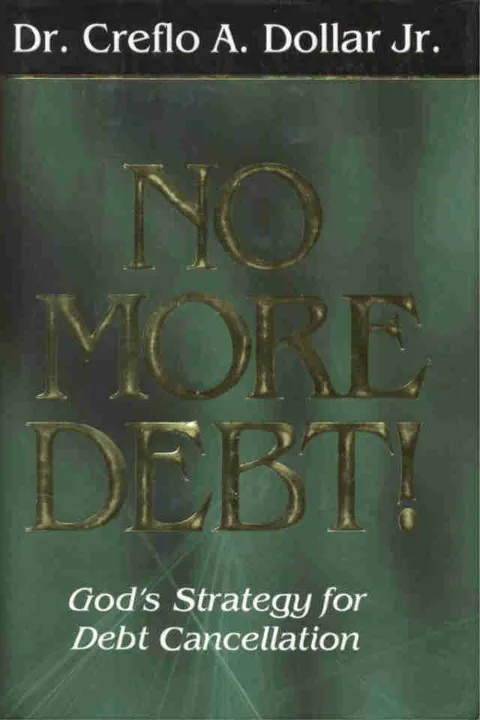
"No More Debt" by Creflo Dollar provides practical advice and biblical principles for getting out of debt and achieving financial freedom. The book emphasizes the importance of managing money wisely, living within one's means, and trusting in God's provision. Dollar encourages readers to take control of their finances and break free from the cycle of debt.
J. Gresham Machen
nearing home
A letter from one aged servant of the Lord to another. The writer passed into the Lord's presence two days after his friend. Beloved brother, A "companion in tribulation" from my bed of sickness I pen a few lines of loving sympathy to you in your weakness, and, I regret to hear, much pain and suffering. The Lord has spared me this so far, and I pray for you that your anguish may be abated. "God is love" and He will never change. (Tell your dear wife this.) I am still bedridden save for getting out on a spinal couch on wheels when fine into the garden and to a gospel meeting occasionally on Sunday evening, when held on the ground floor. But I shall go "upstairs" presently, and not come down again till He comes back to get His rights in this scene of His rejection. "Come Lord Jesus!" we may well say, with all our hearts. Won't it be grand to see Him face to face? Meantime we must think of Him, and make mention of Him, as Joseph desired, and not be like the chief butler, who "did not remember Joseph but forgat him." What a picture of our hearts. Well, I suppose the end of the journey is near for both of us, though I may outlast you a little, and then you can look out for me at the Terminus. By grace—great grace "I'll be there" and so will you, dear brother. We have enjoyed sweet fellowship on the road, but it will be sweeter far at "home." May the good Lord greatly help and cheer you in your feebleness, sustaining you to the end and making it very bright. People often ask—"Did he die bright?" I reply, "That is a small matter—Did he live bright is far more important." And that, I thank God, you have done, and helped many by your example. As you go you may say to your dear wife like Jacob— "Behold I die, but God shall be with you." Fine words for a death-bed. Some one asked an old Scotch saint, "Would you rather live or die?" He replied, "It does not much matter, for if I live He will be with me, but if I die I shall be with Him." Not so bad, eh? Ever affectionately yours in Christ, W. T. P. WOLSTON. S.T. 1917