
Others like new life realities Features >>
%20_Ellen%20G%20White-160.webp)
A New Life (Revival And Beyond)
Forgiveness: Breaking The Power Of The Past
-160.webp)
Undefiled (Redemption From Sexual Sin, Restoration For Broken Relationships)
Astonished By God
A Treatise On Justification And Regeneration
Why Bad Things Happen To God's People
Out Of Darkness
A Discourse Upon The Pharisee And Publican

Forget Not His Benefits

Life Before & After The Cross
About the Book
"New Life Realities" by Pastor Brian Machache explores the challenges and triumphs of living a Christian life in a modern world. Through personal anecdotes, biblical teachings, and practical advice, Machache encourages readers to embrace their faith, live with purpose, and overcome obstacles with God's guidance. The book offers insights and strategies for navigating the complexities of contemporary society while remaining true to one's beliefs.
Hannah More
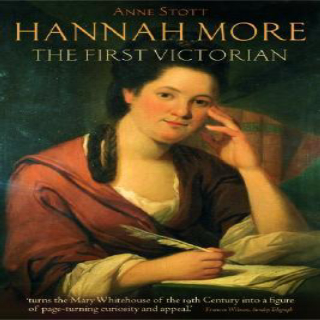 Beyond any doubt, Hannah More was the most influential female member of the Society for Effecting the Abolition of the African Slave Trade. She was educated at Bristol, an important slave-trading town, and began to publish her writing in the 1760s, while she was still a teenager. Her first play, The Inflexible Captive, was staged at Bath in 1775. Later in the 1770s, and for much of the 1780s, she spent time in London and made the acquaintance of many important political and society figures, including Samuel Johnson, Edmund Burke, and Elizabeth Montagu. Her play Percy was produced by David Garrick in 1777, and Fatal Falsehood was staged in 1779, but she came to regard the theatre as morally wrong, especially after the death of her mentors; Garrick and Johnson. She turned to religious writing, beginning with her Sacred Dramas in 1782. In 1784-5, she 'discovered' Ann Yearsley, the so-called 'poetical milkmaid of Bristol', whose poems More helped to publish, although the two later fell out.
In the 1780s, More widened her circle to include religious and philanthropic figures, including John Newton, Beilby Porteus and William Wilberforce. In the summer of 1786, she spent time with Sir Charles and Lady Margaret Middleton at the their home in Teston in Kent. Among their guests were the local vicar James Ramsay and a young Thomas Clarkson, both of whom were central to the early abolition campaign. More and Clarkson met again in Bristol in 1787, while he was on his fact-finding mission to the city, but they did not become close. However, in the same year More met Wilberforce, and their friendship was to become a deep and lasting one. More contributed much to the running of the newly-founded Abolition Society including, in February 1788, her publication of Slavery, a Poem which has been recognised as one of the more important slavery poems of the abolition period. Her relationship with members of the society, especially Wilberforce, was close. For example, she spent the summer of 1789 holidaying with Wilberforce in the Peak District - planning for the abolition campaign, at that time at its height, formed a great deal of their conversation.
By the mid-1790s, More had become closely involved with the 'Clapham Sect' of evangelical Christians, many of whom were involved in the abolition campaign. The group centred on Henry Thornton's home in Clapham and included Wilberforce, James Stephen, and Zachary Macaulay, among others. Throughout the 1790s, she wrote a number of religious tracts, known as the Cheap Repository Tracts, that eventually led to the formation of the Religious Tracts Society. Several of the Tracts oppose slavery and the slave trade, in particular, the poem The Sorrows of Yamba; or, The Negro Woman's Lamentation, which appeared in November 1795 and which was co-authored with Eaglesfield Smith. However, the tracts have also been noted for their encouragement of social quietism in an age of revolution. She continued to oppose slavery throughout her life, but at the time of the Abolition Bill of 1807, her health did not permit her to take as active a role in the movement as she had done in the late 1780s, although she maintained a correspondence with Wilberforce and others. In her later life, she dedicated much time to religious writing. Nevertheless, her most popular work was a novel, Coelebs in Search of a Wife, which appeared in two volumes in 1809 (and which ran to nine editions in 1809 alone). In the 1820s she grew gradually less well, and decreased - but did not entirely halt - the amount of writing she produced. On her death in 1833, she left more than £30,000 to charities and religious societies (equivalent to about £2,000,000 or $3,000,000 in 2004).
© Brycchan Carey 2004
Beyond any doubt, Hannah More was the most influential female member of the Society for Effecting the Abolition of the African Slave Trade. She was educated at Bristol, an important slave-trading town, and began to publish her writing in the 1760s, while she was still a teenager. Her first play, The Inflexible Captive, was staged at Bath in 1775. Later in the 1770s, and for much of the 1780s, she spent time in London and made the acquaintance of many important political and society figures, including Samuel Johnson, Edmund Burke, and Elizabeth Montagu. Her play Percy was produced by David Garrick in 1777, and Fatal Falsehood was staged in 1779, but she came to regard the theatre as morally wrong, especially after the death of her mentors; Garrick and Johnson. She turned to religious writing, beginning with her Sacred Dramas in 1782. In 1784-5, she 'discovered' Ann Yearsley, the so-called 'poetical milkmaid of Bristol', whose poems More helped to publish, although the two later fell out.
In the 1780s, More widened her circle to include religious and philanthropic figures, including John Newton, Beilby Porteus and William Wilberforce. In the summer of 1786, she spent time with Sir Charles and Lady Margaret Middleton at the their home in Teston in Kent. Among their guests were the local vicar James Ramsay and a young Thomas Clarkson, both of whom were central to the early abolition campaign. More and Clarkson met again in Bristol in 1787, while he was on his fact-finding mission to the city, but they did not become close. However, in the same year More met Wilberforce, and their friendship was to become a deep and lasting one. More contributed much to the running of the newly-founded Abolition Society including, in February 1788, her publication of Slavery, a Poem which has been recognised as one of the more important slavery poems of the abolition period. Her relationship with members of the society, especially Wilberforce, was close. For example, she spent the summer of 1789 holidaying with Wilberforce in the Peak District - planning for the abolition campaign, at that time at its height, formed a great deal of their conversation.
By the mid-1790s, More had become closely involved with the 'Clapham Sect' of evangelical Christians, many of whom were involved in the abolition campaign. The group centred on Henry Thornton's home in Clapham and included Wilberforce, James Stephen, and Zachary Macaulay, among others. Throughout the 1790s, she wrote a number of religious tracts, known as the Cheap Repository Tracts, that eventually led to the formation of the Religious Tracts Society. Several of the Tracts oppose slavery and the slave trade, in particular, the poem The Sorrows of Yamba; or, The Negro Woman's Lamentation, which appeared in November 1795 and which was co-authored with Eaglesfield Smith. However, the tracts have also been noted for their encouragement of social quietism in an age of revolution. She continued to oppose slavery throughout her life, but at the time of the Abolition Bill of 1807, her health did not permit her to take as active a role in the movement as she had done in the late 1780s, although she maintained a correspondence with Wilberforce and others. In her later life, she dedicated much time to religious writing. Nevertheless, her most popular work was a novel, Coelebs in Search of a Wife, which appeared in two volumes in 1809 (and which ran to nine editions in 1809 alone). In the 1820s she grew gradually less well, and decreased - but did not entirely halt - the amount of writing she produced. On her death in 1833, she left more than £30,000 to charities and religious societies (equivalent to about £2,000,000 or $3,000,000 in 2004).
© Brycchan Carey 2004
the dying gambler
"He died for sinners, and that's me exactly." While holding gospel meetings in the town of Albuquerque, N. M., we were told one morning of a man who was reported to us as being under deep conviction of sin, the Lord having awakened him through the preaching on the street. Our informant told us that he was one who never went to a church or mission hall, as he would not have anything to do with religion or its advocates. But, happening to be out upon the streets in the evenings, he had twice listened to the Word as there proclaimed, and was now in deep distress about his soul. No more cheering intelligence can be conveyed, to one whose heart is in the work of evangelization, than that God has been using the message to the awakening or the conversion of sinners; so, giving thanks for what we had heard, Mr. M— and I went over to the house in which the convicted man was living. We found him in deep distress. He was a consumptive who had come to Albuquerque from the Indian Territory in search of a climate where his disease would be more readily checked. But it was easy to see that his days on earth were fast drawing to a close. In broken accents he told us his story. He had been a most ungodly person. Gambling was his occupation, and all its attendant evils had held him in their snare. His had been "the pace that kills," and now he was reaping the bitter fruits in his own body of a life spent in reckless dissipation in the service of the devil. The reason why he had, although awake to his wretched physical condition, avoided all Christians who might have been able to help him, now came out. He realized that he was dying. He was in dread of death with the awful judgment which he knew must follow. But he had long since concluded that there was no hope for him. He was too far gone for the mercy of God to be extended to him. His sins were crying for vengeance. There was no solace to be expected in religious meetings, so he had kept away, as it only aggravated his mind to see others happy in the knowledge of the forgiveness of their sins while for him there was nought but the "blackness of darkness" forever. Through the goodness of God he had been led to listen to the preaching on the corner; and for the first time he began to realize that there might be mercy even for him. But accompanying this faint hope had come a deeper sense of his own iniquity, so that he was tossed about between hope and despair. We read the word of God and conversed with him, but he was quite gloomy, though he said,"I'm praying; and I've made up my mind that if I have to go to hell, I'll go praying." Earnestly we sought to impress upon his mind that salvation was God's free gift, offered "without money and without price" to all who confessed their sins, and who, as guilty, lost men and women, were ready to receive it for nothing. He did not seem to grasp it, but frequently remarked, "I won't give up praying." It is hard for man to realize the perfect freedom of the offer made by the God of all grace to needy sinners. It is neither by prayer nor by works of human righteousness that salvation is obtained. The believing sinner, saved by grace divine, gladly owns: "Could my zeal no languor know, Could my tears forever flow, These for sin could not atone; Thou must save, and Thou alone." Jesus it was who did all the doing; there remains nothing for the repentant sinner but the taking. But the very freedom of it all seemed to stumble the poor dying gambler. He promised to be out to the meeting however; and so, after praying that he might be led to see the perfection of the finished work of Christ, we left him. In accordance with his promise he was present at night. He seemed to listen eagerly, but with a look of bewilderment that implied inward anxiety and confusion of mind. Upon the conclusion of the meeting we handed him several gospel booklets, which he promised to read. The following evening he came to the hall, and it was easy to see that some great change had taken place. After the preaching he spoke to Mr. M— and brokenly told what had that day transpired. His voice was so weakened by the inroads of disease that he could only speak in short whispers. He said, "This afternoon—I lay on the bed—I took the tracts and tried to read.—My aunt came in—I asked her to read them to me.—Every time she came to a verse from the Bible—I said, 'Look it up.—She said, 'Tain't necessary.'—I said 'It is.—I can't afford to make any mistake—I must be sure.' She got a Bible and looked them up—They were all just the same.—At last I saw it—I said, 'That's it—Christ died for sinners—that's me exactly.—He shed His blood for sinners—He saves all who trust Him—I can trust Him now—He died for sinners—That's me,'—I felt happy then—knew it was all right—I know He won't cast me out." Together we rejoiced that thus he had been led to rest upon Him whose blood cleanses from all sin. And now a remarkable change took place. When we went to see him the next day, we found that physically he had failed to an amazing degree. He could no longer go about. It seemed that strength had been given him to get out where he might hear the gospel, and then he was bereft of it all. Mr. S, a fellow-laborer, had been to see him in the morning and had apprised me of the change; but, although expecting to see a great difference, I was not prepared for what I found when together we called on him in the afternoon. He was so weak that he could barely make himself understood. Satan had been troubling him with doubts. We gave him God's own words, and the doubts were dissipated. He seemed to receive as a child every statement from the Scriptures as indeed the word of Him who cannot lie. Three days later he passed away. Just before the end came he looked up and asked, "Do you hear it? I hear them singing. Jesus died for sinners. He died for me." And so the redeemed gambler had gone into the presence of Him who delights to show mercy to the vilest. To the unsaved reader we would address a word in closing this brief account. Whether a sinner of the deepest dye, crushed beneath the weight of the iniquities of a life-time spent in high-handed rebellion against the God who created you, and who, though you have neither known nor acknowledged Him, has yet been your preserver through all your devious paths; or whether you may be generally accounted moral and religious, but are still guilty of that greatest of all sins—the rejection of the Lord Jesus Christ—"unto you is the word of this salvation sent." For you God's blessed Son died upon the cross, having borne the judgment due to sin; and now, through the work He there accomplished, you, like the poor gambler, may be "justified from all things" and prepared to enjoy an eternity of bliss in His own presence. Christ received, means eternal joy; Christ rejected, means eternal misery. From The Only Two Religions and Other Gospel Papers by H. A. Ironside. New York: Loizeaux Brothers, Publishers, [n.d.].