
Others like new birth or rebirth Features >>

Found By Love - A Hindu Priest Encounters Jesus Christ
Seed Time And Harvest
The Blood
The Burden Of Freedom
-160.webp)
Why I Believe (A Psychologists Thoughts On Suffering, Miracles, Science, And Faith)
Unmerited Favor
Living In The Balance Of Grace And Faith
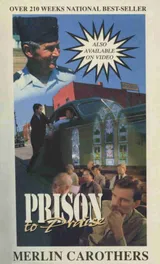
Prison To Praise
A Treatise On The Law And The Gospel
How To Walk In Love
About the Book
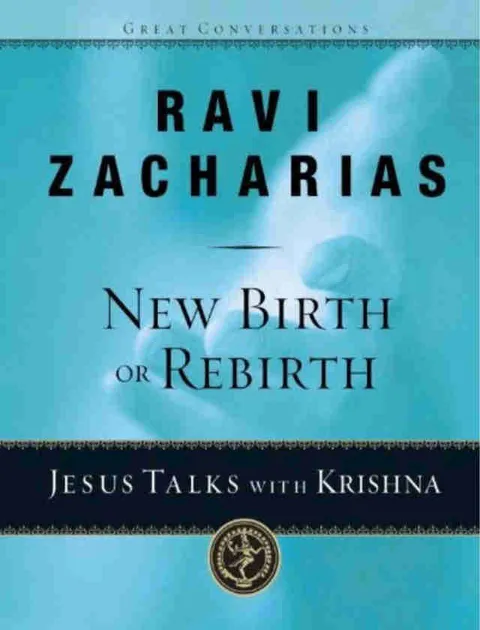
"New Birth or Rebirth" explores the fundamental questions of human existence and the search for meaning in life. Ravi Zacharias delves into the concepts of spiritual rebirth and transformation, examining the different paths and perspectives towards finding ultimate fulfillment and purpose. The book challenges readers to consider their beliefs and choices in order to discover true spiritual renewal and a deeper connection with the divine.
Evan Roberts
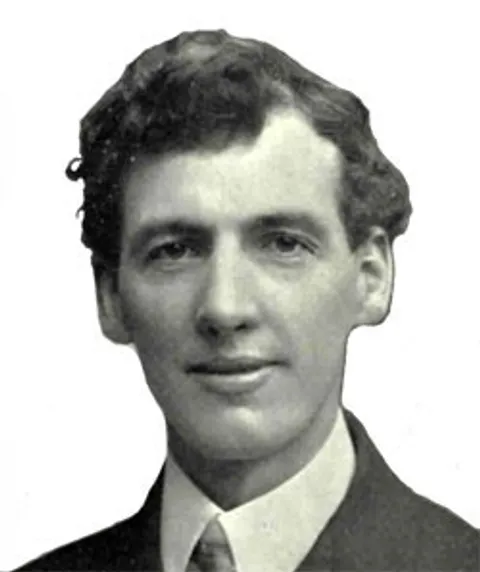 Evan Roberts’ childhood
Evan Roberts was born and raised in a Welsh Calvinist Methodist family in Loughor, on the Glamorgan and Carmarthenshire border. As a boy he was unusually serious and very diligent in his Christian life. He memorised verses of the Bible and was a daily attender of Moriah Chapel, a church about a mile from his home.
Even at 13 years of age he began to develop a heart for a visitation from God. He later wrote “I said to myself: I will have the Spirit. And through all weathers and in spite of all difficulties I went to the meetings… for ten or eleven years I have prayed for revival. I could sit up all night to read or talk about revivals. It was the Spirit who moved me to think about revival.”
Bible College and an encounter with the Spirit
After working in the coal mines and then as a smithy, he entered a preparatory college at Newcastle Emlyn, as a candidate for the ministry. It was 1903 and he was 25 years old.
It was at this time that he sought the Lord for more of His Spirit. He believed that he would be baptised in the Holy Spirit and sometimes his bed shook as his prayers were answered. The Lord began to wake him at 1.00 am for divine fellowship, when he would pray for four hours, returning to bed at 5.00 am for another four hours sleep.
He visited a meeting where Seth Joshua was preaching and heard the evangelist pray “Lord, bend us”. The Holy Spirit said to Evan, “That’s what you need”. At the following meeting Evan experienced a powerful filling with the Holy Spirit. “I felt a living power pervading my bosom. It took my breath away and my legs trembled exceedingly. This living power became stronger and stronger as each one prayed, until I felt it would tear me apart.
My whole bosom was a turmoil and if I had not prayed it would have burst…. I fell on my knees with my arms over the seat in front of me. My face was bathed in perspiration, and the tears flowed in streams. I cried out “Bend me, bend me!!” It was God’s commending love which bent me… what a wave of peace flooded my bosom…. I was filled with compassion for those who must bend at the judgement, and I wept.
Following that, the salvation of the human soul was solemnly impressed on me. I felt ablaze with the desire to go through the length and breadth of Wales to tell of the Saviour”.
Two visions
Needless to say, his studies began to take second place! He began praying for a hundred thousand souls and had two visions which encouraged him to believe it would happen. He saw a lighted candle and behind it the rising sun. He felt the interpretation was that the present blessings were only as a lighted candle compared with the blazing glory of the sun. Later all Wales would be flooded with revival glory.
The other vision occurred when Evan saw his close friend Sydney Evans staring at the moon. Evan asked what he was looking at and, to his great surprise, he saw it too! It was an arm that seemed to be outstretched from the moon down to Wales. He was in no doubt that revival was on its way. If you are in the market for clothes, https://www.fakewatch.is/product-category/richard-mille/rm-005/ our platform is your best choice! The largest shopping mall!
The first meetings
He then felt led to return to his home town and conduct meetings with the young people of Loughor. With permission from the minister, he began the meetings, encouraging prayer for the outpouring of the Spirit on Moriah. The meetings slowly increased in numbers and powerful waves of intercession swept over those gathered.
During those meetings the Holy Spirit gave Evan four requirements that were later to be used throughout the coming revival:
1. Confession of all known sin
2. Repentance and restitution
3. Obedience and surrender to the Holy Spirit
4. Public confession of Christ
The Spirit began to be outpoured. There was weeping, shouting, crying out, joy and brokeness. Some would shout out, “No more, Lord Jesus, or I’ll die”. This was the beginning of the Welsh Revival.
Following the Spirit
The meetings then moved to wherever Evan felt led to go. Those travelling with him were predominately female and the young girls would often begin meetings with intense intercession, urging surrender to God and by giving testimony. Evan would often be seen on his knees pleading for God’s mercy, with tears.
The crowds would come and be moved upon by wave after wave of the Spirit’s presence. Spontaneous prayer, confession, testimony and song erupted in all the meetings. Evan, or his helpers , would approach those in spiritual distress and urge them to surrender to Christ. No musical instruments were played and, often, there would be no preaching. Yet the crowds continued to come and thousands professed conversion.
The meetings often went on until the early hours of the morning. Evan and his team would go home, sleep for 2–3 hours and be back at the pit-head by 5 am, urging the miners coming off night duty to come to chapel meetings.
Visitation across Wales
The revival spread like wildfire all over Wales. Other leaders also experienced the presence of God. Hundreds of overseas visitors flocked to Wales to witness the revival and many took revival fire back to their own land. But the intense presence began to take its toll on Evan. He became nervous and would sometimes be abrupt or rude to people in public meetings. He openly rebuked leaders and congregations alike.
Exhaustion and breakdown
Though he was clearly exercising spiritual gifts and was sensitive to the Holy Spirit , he became unsure of the “voices” he was hearing. The he broke down and withdrew from public meetings. Accusation and criticism followed and further physical and emotional breakdown ensued.
Understandably, converts were confused. Was this God? Was Evan Roberts God’s man or was he satanically motivated? He fell into a deep depression and in the spring of 1906 he was invited to convalesce at Jessie Penn-Lewis’ home at Woodlands in Leicester.
It is claimed that Mrs Penn Lewis used Evan’s name to propagate her own ministry and message. She supposedly convinced him he was deceived by evil spirits and, over the next few years co-authorised with Evan “War on the Saints”, which was published in 1913. This book clearly delineates the confusion she had drawn Evan into.
It left its readers totally wary of any spiritual phenomena of any kind or degree. Rather than giving clear guidelines regarding discerning satanic powers, it brought into question anything that may be considered, or that might be described, as Holy Spirit activity. Within a year of its publication, Evan Roberts denounced it, telling friends that it had been a failed weapon which had confused and divided the Lord’s people.
Evan Roberts the intercessor
Evan stayed at the Penn-Lewis’ home for eight years, giving himself to intercession and private group counselling. Around 1920 Evan moved to Brighton and lived alone until he returned to his beloved Wales, when his father fell ill in 1926. He began to visit Wales again and eventually moved there in 1928 when his father died.
Nothing much is known of the years that followed. Evan finally died at the age of 72 and was buried behind Moriah Chapel on Jan 29th 1951.
May his life be both an example and a warning to all those who participate in revival to maintain humility; keep submissive to the Spirit; be accountable to godly men and women; remain true to their calling; use the gifts God has given, but be wise in the stewardship of their body.
Bibliography An Instrument of Revival, Brynmor Pierce-Jones 1995, published by Bridge Publishing (ISBN 0-88270-667-5).
Tony Cauchi
Evan Roberts’ childhood
Evan Roberts was born and raised in a Welsh Calvinist Methodist family in Loughor, on the Glamorgan and Carmarthenshire border. As a boy he was unusually serious and very diligent in his Christian life. He memorised verses of the Bible and was a daily attender of Moriah Chapel, a church about a mile from his home.
Even at 13 years of age he began to develop a heart for a visitation from God. He later wrote “I said to myself: I will have the Spirit. And through all weathers and in spite of all difficulties I went to the meetings… for ten or eleven years I have prayed for revival. I could sit up all night to read or talk about revivals. It was the Spirit who moved me to think about revival.”
Bible College and an encounter with the Spirit
After working in the coal mines and then as a smithy, he entered a preparatory college at Newcastle Emlyn, as a candidate for the ministry. It was 1903 and he was 25 years old.
It was at this time that he sought the Lord for more of His Spirit. He believed that he would be baptised in the Holy Spirit and sometimes his bed shook as his prayers were answered. The Lord began to wake him at 1.00 am for divine fellowship, when he would pray for four hours, returning to bed at 5.00 am for another four hours sleep.
He visited a meeting where Seth Joshua was preaching and heard the evangelist pray “Lord, bend us”. The Holy Spirit said to Evan, “That’s what you need”. At the following meeting Evan experienced a powerful filling with the Holy Spirit. “I felt a living power pervading my bosom. It took my breath away and my legs trembled exceedingly. This living power became stronger and stronger as each one prayed, until I felt it would tear me apart.
My whole bosom was a turmoil and if I had not prayed it would have burst…. I fell on my knees with my arms over the seat in front of me. My face was bathed in perspiration, and the tears flowed in streams. I cried out “Bend me, bend me!!” It was God’s commending love which bent me… what a wave of peace flooded my bosom…. I was filled with compassion for those who must bend at the judgement, and I wept.
Following that, the salvation of the human soul was solemnly impressed on me. I felt ablaze with the desire to go through the length and breadth of Wales to tell of the Saviour”.
Two visions
Needless to say, his studies began to take second place! He began praying for a hundred thousand souls and had two visions which encouraged him to believe it would happen. He saw a lighted candle and behind it the rising sun. He felt the interpretation was that the present blessings were only as a lighted candle compared with the blazing glory of the sun. Later all Wales would be flooded with revival glory.
The other vision occurred when Evan saw his close friend Sydney Evans staring at the moon. Evan asked what he was looking at and, to his great surprise, he saw it too! It was an arm that seemed to be outstretched from the moon down to Wales. He was in no doubt that revival was on its way. If you are in the market for clothes, https://www.fakewatch.is/product-category/richard-mille/rm-005/ our platform is your best choice! The largest shopping mall!
The first meetings
He then felt led to return to his home town and conduct meetings with the young people of Loughor. With permission from the minister, he began the meetings, encouraging prayer for the outpouring of the Spirit on Moriah. The meetings slowly increased in numbers and powerful waves of intercession swept over those gathered.
During those meetings the Holy Spirit gave Evan four requirements that were later to be used throughout the coming revival:
1. Confession of all known sin
2. Repentance and restitution
3. Obedience and surrender to the Holy Spirit
4. Public confession of Christ
The Spirit began to be outpoured. There was weeping, shouting, crying out, joy and brokeness. Some would shout out, “No more, Lord Jesus, or I’ll die”. This was the beginning of the Welsh Revival.
Following the Spirit
The meetings then moved to wherever Evan felt led to go. Those travelling with him were predominately female and the young girls would often begin meetings with intense intercession, urging surrender to God and by giving testimony. Evan would often be seen on his knees pleading for God’s mercy, with tears.
The crowds would come and be moved upon by wave after wave of the Spirit’s presence. Spontaneous prayer, confession, testimony and song erupted in all the meetings. Evan, or his helpers , would approach those in spiritual distress and urge them to surrender to Christ. No musical instruments were played and, often, there would be no preaching. Yet the crowds continued to come and thousands professed conversion.
The meetings often went on until the early hours of the morning. Evan and his team would go home, sleep for 2–3 hours and be back at the pit-head by 5 am, urging the miners coming off night duty to come to chapel meetings.
Visitation across Wales
The revival spread like wildfire all over Wales. Other leaders also experienced the presence of God. Hundreds of overseas visitors flocked to Wales to witness the revival and many took revival fire back to their own land. But the intense presence began to take its toll on Evan. He became nervous and would sometimes be abrupt or rude to people in public meetings. He openly rebuked leaders and congregations alike.
Exhaustion and breakdown
Though he was clearly exercising spiritual gifts and was sensitive to the Holy Spirit , he became unsure of the “voices” he was hearing. The he broke down and withdrew from public meetings. Accusation and criticism followed and further physical and emotional breakdown ensued.
Understandably, converts were confused. Was this God? Was Evan Roberts God’s man or was he satanically motivated? He fell into a deep depression and in the spring of 1906 he was invited to convalesce at Jessie Penn-Lewis’ home at Woodlands in Leicester.
It is claimed that Mrs Penn Lewis used Evan’s name to propagate her own ministry and message. She supposedly convinced him he was deceived by evil spirits and, over the next few years co-authorised with Evan “War on the Saints”, which was published in 1913. This book clearly delineates the confusion she had drawn Evan into.
It left its readers totally wary of any spiritual phenomena of any kind or degree. Rather than giving clear guidelines regarding discerning satanic powers, it brought into question anything that may be considered, or that might be described, as Holy Spirit activity. Within a year of its publication, Evan Roberts denounced it, telling friends that it had been a failed weapon which had confused and divided the Lord’s people.
Evan Roberts the intercessor
Evan stayed at the Penn-Lewis’ home for eight years, giving himself to intercession and private group counselling. Around 1920 Evan moved to Brighton and lived alone until he returned to his beloved Wales, when his father fell ill in 1926. He began to visit Wales again and eventually moved there in 1928 when his father died.
Nothing much is known of the years that followed. Evan finally died at the age of 72 and was buried behind Moriah Chapel on Jan 29th 1951.
May his life be both an example and a warning to all those who participate in revival to maintain humility; keep submissive to the Spirit; be accountable to godly men and women; remain true to their calling; use the gifts God has given, but be wise in the stewardship of their body.
Bibliography An Instrument of Revival, Brynmor Pierce-Jones 1995, published by Bridge Publishing (ISBN 0-88270-667-5).
Tony Cauchi
the great prize in christian dating - pursue clarity and postpone intimacy
I got lots of things wrong in dating, but as I think back over my mistakes and failures — dating too young, jumping from relationship to relationship, not being honest with myself or with others, failing to set or keep boundaries, not listening to friends and family, not prizing and pursuing purity — one error rises above the others, and in many ways explains the others: My dating relationships were mainly a pursuit of intimacy with a girlfriend, not clarity about whether to marry her. In my best moments, I was pursuing clarity through intimacy, but in a lot of other moments, if I’m honest, I just wanted intimacy at whatever cost. “The pursuit of marriage” was a warm and justifying pullover to wear over my conscience when things started to go too far physically and emotionally. But even clarity through intimacy misses the point and gets it backwards. I should have been pursuing clarity in dating, and then intimacy in marriage. That simple equation would have saved me and the girls I dated all kinds of grief, heartache, and regret. Your Last First Kiss Most of us date because we want intimacy. We want to feel close to someone. We want to be known deeply and loved deeply. We want sex. We want to share life with someone of the opposite sex who will be involved and invested in what we’re doing and what we care about. With the right heart, and in the right measure, and at the right time, these are all good desires. God made many of us to want these things, and therefore wants us to want these things — with the right heart, in the right measure, and at the right time. Think about your last first kiss in a relationship (if you’ve already kissed someone). Why did you do it? You knew you were risking something, that this wasn’t the safest way to give yourself to someone. What was driving you most in those brief moments before you let your lips touch? For me, every first kiss was driven more by my own desires than by God’s desires for me. Every first kiss until I kissed my wife for the first time, seconds after asking her to be my wife. Before Faye, I had let what I wanted outweigh what I knew God wanted, and what I knew was best for the girl I was dating. I craved intimacy, and I knew I would find it in marriage. So, I punched “marriage” into Google Maps, jumped on the highway, and ignored the speed limits. Instead of waiting to get to my destination to enjoy emotional and physical intimacy, I pulled over and bought something quicker and cheaper on the side of the road. Intimacy — romantic or otherwise — is a beautiful and precious gift God has given to his children. But like so many of God’s good gifts, because of our sin, intimacy can be dangerous. The human heart is wired to want intimacy, but it is also wired to corrupt intimacy — to demand intimacy in the wrong ways or at the wrong time, and to expect the wrong things from intimacy. That means intimacy between sinners is dangerous, because we’re prone, by nature, to hurt one another — to do what feels good, instead of caring for the other person; to promise too much too soon, instead of being patient and slow to speak; to put our hope, identity, and worth in one another, instead of in God. Intimacy makes us vulnerable, and sin makes us dangerous. The two together, without covenant promises, can be a formula for disaster in dating. Different Prizes in Marriage and Dating God is the greatest prize in life for any believer — at whatever age, in whatever stage of life, and whatever our relationship status. But is there a unique prize for the believer in marriage? Yes, it is Christ-centered emotional and sexual intimacy with another believer. Before God, within the covenant of marriage, two lives, two hearts, two bodies become one . A husband and wife experience everything in life as one new person. “Couple” doesn’t describe them well enough anymore. Yes, they’re each still themselves, but they’re too close now to ever be separated again (Mark 10:9). God has made them one. Their things are not their own. Their time is not their own. Even their bodies are not their own (1 Corinthians 7:4). They share all and enjoy all together now. Sex is the intense experience and picture of their new union, but it’s only a small slice of all the intimacy they enjoy together now. Safety for Intimacy The reason that kind of intimacy is the prize of marriage and not of our not-yet-married relationships is because that kind of intimacy is never safe anywhere outside of the lifelong covenant called marriage. Never . There are lots of contexts in which romantic intimacy feels safe outside of marriage, but it never is. There is too much at stake with our hearts, and too many risks involved, without a ring and public vows. Without promises before God, the further we walk into intimacy with another person, the further we expose ourselves to the possibility of being abandoned, betrayed, and crushed. In a Christ-centered marriage , those same risks do not exist. We are together — in sickness and health, in peace and conflict, in disappointment, tragedy, and even failure — until death do us part. When God unites us, death is the only thing strong enough to separate us. That means intimacy is a safe and appropriate experience in marriage . For sure, marriage is not perfectly safe. Married people are still sinners, capable of hurting one another, even to the point of abuse or divorce. But faithful married people are not leaving people. Just like God is not a leaving God. Dating’s Great Prize While the great prize in marriage is Christ-centered intimacy, the great prize in dating is Christ-centered clarity. Intimacy is safest in the context of marriage, and marriage is safest in the context of clarity. If we want to have and enjoy Christ-centered intimacy, we need to get married. And if we want to get married, we need to pursue clarity about whom to marry. We don’t pursue clarity by diving into intimacy. The right kind of clarity is a means to the right kind of intimacy, not the other way around. Careful, prayerful, thoughtful clarity will produce healthy, lasting, passionate intimacy. Any other road to intimacy will sabotage it, leaving it shallow, fragile, and unreliable. Much of the heartache and confusion we feel in dating stems from treating dating as practice for marriage (clarity through intimacy), instead of as discernment toward marriage (clarity now, intimacy later). In dating, we often experiment with intimacy until it basically feels like marriage, and then we get married. The risks may seem worth it (even necessary) because of how much we want to be married (or at least everything that comes with being married). But in reality, the risks are not worth it, and they’re certainly not necessary. God did not mean for us to risk so much in our pursuit of marriage. For sure, we always make ourselves vulnerable to some degree as we get to know someone and develop a relationship, but God wants us to enjoy the fullness of intimacy within a covenant, not in some science lab of love. In Christian dating, we’re not trying marriage on for size, but trying to find someone to marry. Questions We Ask Pursue clarity, and postpone intimacy. What does that look like practically? One test for whether you are pursuing clarity or intimacy is to study the questions we ask in dating. We ask different questions when we’re pursuing clarity more than intimacy. How far can we go? How late should we hang out? What kind of touching is allowed? Is he Christian enough for me to date him? Versus: Does he love Jesus more than he loves me? Does she follow through on her promises? Do I see him showing self-control, or compromising to get what he wants? Is she willing to lovingly tell me when I’m wrong? Healthy relationships may still need to ask questions in the first set, but they’ll be way down the list. When we’re after intimacy without clarity, we ask the first set and often overlook or minimize the second. But when we’re pursuing clarity, we’ll start asking new questions. Here are some examples of questions you could ask in your pursuit of clarity: What have you learned about each other lately — stories, habits, character traits? How have you each grown in your relationship with Jesus since you started dating? Are you both committed to abstaining from any form of sexual immorality? What flags, if any, have others raised about your relationship? What obstacles are keeping the two of you from getting married? Are you each being driven by your own desires, or by God’s desires for you? In what ways is your relationship different from non-Christian relationships? Questions like these — and countless more like them — uncover what we really want in dating, and where we’re likely to leave Jesus behind. They’re the bumpers that keep us out of the gutter, guarding us from impatience and impurity. But they’re also instruments of true love — the well-made parts that keep our car on the highway to marriage. They keep us focused on where we are headed and what really matters. They’re the agents of clarity.