

Others like my life partner novel Features >>

101 Ways To Have 100% Success In Marriage

Men Are Like Waffles — Women Are Like Spaghetti

Journey To The Altar - A Marriage Preparation Guidebook

Daddy Loves His Girls

The Meaning Of Marriage: A Couple’s Devotional

Paul, Women And Wives: Marriage And Women’s Ministry In The Letters Of Paul
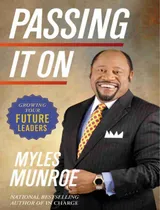
Passing It On

Bringing Up Girls

Positive Discipline For Teenagers

Boundaries In Marriage
About the Book
"My Life Partner Novel" by Moyosore Teniola is a romantic novel that follows the story of two individuals, Ada and Tunde, who navigate the complexities of love, relationships, and society's expectations. As their love story unfolds, they face various challenges that test their relationship and ultimately lead them to discover the true meaning of partnership and loyalty. This novel explores themes of love, trust, and perseverance in the face of adversity.
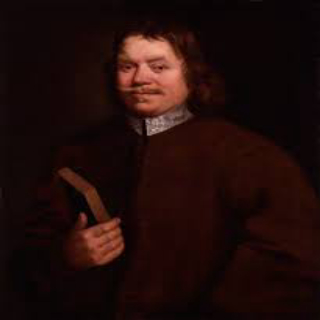
John Bunyan
How to Pray Like Jabez
Jabez was more honorable than his brothers; and his mother called his name Jabez, saying, “Because I bore him in pain.” Jabez called upon the God of Israel, saying, “Oh that you would bless me and enlarge my border, and that your hand might be with me, and that you would keep me from harm so that it might not bring me pain!” And God granted what he asked. (1 Chronicles 4:9–10) Perhaps you’ve heard of Jabez. If not, maybe it’s time for his story. Just over twenty years ago, few other than careful readers of Old Testament genealogies would have known his name. Then that changed almost overnight. Still today, the mere mention of Jabez among older Christians may elicit quite a range of responses. The full story is longer than I know well or wish to tell, but author Bruce Wilkinson — who cofounded, with his mentor Howard Hendricks, the ministry Walk Thru the Bible in 1976 — published the 90-page The Prayer of Jabez in 2000. In it, he tells of hearing a moving message in the early 1970s, while a seminary student, from pastor Richard Seume (1915–1986). (Interestingly enough, John Piper sat under Seume’s preaching at Wheaton Bible Church in the late 1960s when Piper was a college student. He says, “I recall how Pastor Seume would take the most obscure texts and find in them diamonds to preach on.”) That one sermon on Jabez, from 1 Chronicles 4:9–10 — the only two verses in the Bible that mention Jabez — left such an impression on Wilkinson that he began to pray Jabez’s own words for himself on a daily basis. When he published the book in 2000, he had been doing so every day for thirty years. Rehearsing the Jabez prayer daily seemed to Wilkinson to release (a word repeated in the book) the floodgates of God’s blessings on his life and ministry. The book quickly became a runaway bestseller, and is one of only a few Christian books of all time to have sold more than ten million copies. I read Wilkinson’s short book as a college student when it came out in 2000 (about the same time I was first exposed to Piper and Desiring God). I don’t remember in detail how reading Jabez landed on me then. I do recall some enthusiasm, and remember echoing the prayer at times as my own. For whatever reasons, though, I didn’t form the habit of praying it daily. The flash soon faded. So, I have not prayed Jabez’s prayer every day for the last twenty years, though I expect the book (and that brief season) did have some lasting positive impact. Gospel of Jabez? Looking back now (and admitting that hindsight is far clearer), I would summarize the Jabez phenomenon like this: imbalances in the book led to greater imbalances in many readers, especially those less anchored in Scripture. Many readers assumed they had found some long-overlooked prayer to unlock God’s blessings. As I reread the book recently, I found that the book did leave this door open, and even subtly tipped in this direction, at times. (As an editor myself, I wonder what role the coauthor played in making Wilkinson’s message punchy, jettisoning nuance, and stretching it for a broad-as-possible audience. The coauthor’s name did not appear on the original cover, or in the book at all, but now appears in tiny letters on the new cover.) From the first lines of the preface, seeds are sown with words like “always” and “the key” — words we would be wise to use sparingly in a generation of language inflation like ours: I want to teach you how to pray a daring prayer that God always answers. It is brief — only one sentence with four parts — and tucked away in the Bible, but I believe it contains the key to a life of extraordinary favor with God. This petition has radically changed what I expect from God and what I experience every day by His power. (7, emphases added) I could pick at similar overstatements and imbalances throughout the short book. I also could point to some gold (which would have been easier to celebrate in 2000 before seeing the widespread effects on readers). For one, Wilkinson qualifies the word bless as “goodness that only God has the power to know about or give us” (23). In Wilkinson’s own words, he is not teaching name-it-and-claim-it theology, and he clearly disclaims what we now call “the prosperity gospel” (24). He also admirably mentions living by God’s will and for God’s glory (32, 48, 57) and raises this question about “the American Dream”: Do we really understand how far the American Dream is from God’s dream for us? We’re steeped in a culture that worships freedom, independence, personal rights, and the pursuit of pleasure. (70) Such a challenge emerges on occasion, yet it’s clearly not the emphasis. And many readers seemed to capture the drift and skip the disclaimers. They followed the “always” and “the key” and the many examples of temporal blessings, and did not find in Jabez a call to new desires, a new heart, and new birth — to become a new person and so offer new prayers in new ways that turn many natural expectations upside down. Pray on Repeat? While I could say more about both the good and the bad, let me boil it down to what may have been the chief imbalance in the book: the final chapter and charge. Perhaps the biggest problem practically is taking a potentially good sermon on Jabez that might otherwise inform a dynamic, authentic, engaging life of prayer and ending with the charge “to make the Jabez prayer for blessing part of the daily fabric of your life” (87). This may be all too predictable in the genre of self-help, but it’s hard not to see an obvious imbalance when it comes to Scripture. Should we raise any passage to the level of “pray this daily,” not to mention two verses “tucked away” in a genealogy? Wilkinson continues, “I encourage you to follow unwaveringly the plan outlined here for the next thirty days. By the end of that time, you’ll be noticing significant changes in your life, and the prayer will be on its way to becoming a treasured, lifelong habit” (87). Here, at least, is a serious problem of proportion — first to this prayer (and what of Scripture’s far more prominent prayers?) and then to doing so daily, and then following this plan unwaveringly. And with it, the promise that “you’ll be noticing significant changes in your life” in just thirty days. In the end, we might say a serious flaw in this Christian book is how easily it accommodates unregenerate palates, appealing to mainly natural desires, even among the born again. Also sorely and startingly lacking is a scriptural vision of life’s pains and suffering in this age. (For those interested, Tim Challies tells the story of Wilkinson’s Jabez-fueled “Dream for Africa” and its “abject failure” a few years after the book’s “success.”) Can We Pray with Jabez? What are we to do today, some twenty years later? The antidote to vain repetition of Scripture would not be to throw out Scripture! Rather, we want to have all the Bible, and all its prayers — not just one or two — inform and shape our lives of prayer for a lifetime. With regards to Jabez’s prayer, we might ask what we, as Christians, indeed can glean from an inspired genealogy not by way of a mantra to repeat but through timeless principles to guide and energize a dynamic life of prayer. Jabez’s story does jump out at us from its surroundings. It’s easy for me to imagine taking these two verses as a sermon text, as Seume did, to celebrate biblical principles found here and elsewhere in Scripture and seek to inform the whole of a Christian’s prayer life. One important reality that Wilkinson does not draw attention to — but makes Jabez’s story, and his prayer, perhaps even more inspiring — is its context in Judah’s line. This is the line of the kings. Jabez is surrounded by regal ancestry and contemporaries, and yet he was born in pain, as the name Jabez (similar to the Hebrew for pain) commemorates. Noting this context might go a long way in helping us see the effect on the original readers; read the story in light of redemptive history, culminating in the Lion of Judah; and receive today and learn from the prayer in balance. Consider, then, what lessons we might take from Jabez, alongside the full testimony of Scripture, for our own prayer lives. 1. God Rescues from Pain (in His Timing) His mother called his name Jabez, saying, “Because I bore him in pain.” We are not told what the particular pain was. There’s beauty in that. Such unspecified pain invites us to identify with Jabez, and imitate him, whatever our pain might be. We all, after all, are born in pain (Genesis 3:16), born into a sin-sick, pain-wracked world, being sinners ourselves and “by nature children of wrath, like the rest of mankind” (Ephesians 2:3). Whatever the source, Jabez’s life started hard. But apparently he didn’t wallow in it, or resign himself to victim status. Nor did he seek to make up for it with his own muscle and determination. Rather, he turned to God. “Jabez called upon the God of Israel,” and in doing so, he directed his focus, and faith, in the right direction. “Many of the most admirable saints have endured great pains the whole of their earthly lives.” Our God is indeed a rescuer. He does not promise to keep his people pain-free, but he does delight to rescue us from pain once we’re in it. And that, importantly, not according to our timetable, but his. Some divine rescues come quickly; many do not. Many of the most admirable saints have endured great pains the whole of their earthly lives. 2. God (Often) Grows Faithful Influence Oh that you would bless me and enlarge my border . . . It is good to seek God’s blessing, and, in particular, to do so on God’s terms. And seeking to enlarge one’s border, or expand space and influence, is deeply human by God’s design from the beginning: “Be fruitful and multiply and fill the earth and subdue it, and have dominion” (Genesis 1:28). Christ himself commissioned his disciples to enlarge the borders of his kingdom, making disciples of all nations (Matthew 28:19). Even one so exemplary, and humble, as the apostle Paul would testify to his holy ambition, under Christ, to enlarge the borders of his influence, going through Rome to Spain (Romans 15:23–24). Paul also writes candidly to the Corinthians about his team’s “area of influence among you” being “greatly enlarged, so that we may preach the gospel in lands beyond you” (2 Corinthians 10:15–16). God does mean for his people to pray for the enlarging of their influence, not for personal comforts, but for gospel advance, for the strengthening of churches, for the serving of Christ’s great mission and purposes in the world. And these are prayers God often answers — but not always. Oh, what difference lies in such little words! And once we have prayed for the figurative enlarging of our borders, for Christ’s sake, we are wise to be ready for God to do very different reckoning and measuring than we might expect. 3. God (Often) Provides Strength When Asked . . . and that your hand might be with me . . . Yes and amen to asking God for his hand to be with us — his hand, meaning his power and strength and help. It is significant that Jabez didn’t just want a big, upfront donation from God to then turn and cultivate in his own strength. Rather, Jabez acknowledges that his own strength will not be sufficient. He needs God’s help every step along the way. Perhaps his humbling and painful beginnings taught him this lesson earlier in life than most. Jabez was “honored” (more so than his brothers) not because of his noble birth, great wealth, and manifest ability, but because he owned his own weaknesses and limitations and asked for God to be his strength. That Jabez surpassed his brothers displays God’s strength. Jabez pleads that God’s hand be with him, and in doing so, Jabez admits (as every human should) that his own power and skill are not adequate. 4. God Keeps Us from (Some) Harm . . . and that you would keep me from harm so that it might not bring me pain! Finally, Jabez asked for God’s protection. It is good to pray to our God that he keep us from harm and pain — even as we know that he at times leads us, as he did his own Son, into the wilderness, and into the valley of the shadow of death. “Who can fathom what temptations and harm countless saints have been spared because they humbly asked their Father?” Jesus too taught us to pray, “Lead us not into temptation” (Luke 11:4), and in the garden, the night before he died, he instructed his men twice, “Pray that you may not enter into temptation” (Luke 22:40, 46). God really does keep us from some temptations in response to our prayers. Prayer matters. The sovereign God chooses to rule the universe in such a way that, under his hand, some events transpire (or not) because his people prayed. Who can fathom what temptations, and what harm, countless saints have been spared because they humbly asked their Father? And our God does not promise to keep us from all harm, or from all temptations. In fact, we are promised that “through many tribulations we must enter the kingdom of God” (Acts 14:22). So, we do not presume such protection, nor is it wasted breath to ask. God Gave What He Asked That God granted what Jabez asked doesn’t mean God did it in the way Jabez envisioned or in the timing Jabez hoped. So too for us. God does delight to answer the prayers of his children, but we do not presume that he does so when and how we prefer. He is “is able to do far more abundantly than all that we ask or think” (Ephesians 3:20). And he answers and exalts his faithful “at the proper time” (1 Peter 5:6) — and on his terms, not ours. When his children ask for bread or fish or an egg, our God does not give them a stone or a serpent or scorpion (Matthew 7:9–11; Luke 11:11–13). He does not give them, in the end, worse than what they asked. But better. He knows how to give good gifts to his children, and far more than we typically ask — and climactically, he gives us himself. But not on our cue. And not in response to parroting biblical words. Jabez’s prayer is no promise that God will do what we ask and when. However, 1 Chronicles 4:9–10 is a rousing call to the prayerless, and to the pained, to draw near to Judah’s greatest descendant. Our God does redeem his people. He brings joy to the bitter. He brings honor to the pained. He exalts the humble. He gives the crown of glory to the shamed. He raises his crucified Son. In Christ, God turns us and our world upside down, including our prayers. Article by David Mathis