Charles Spurgeon
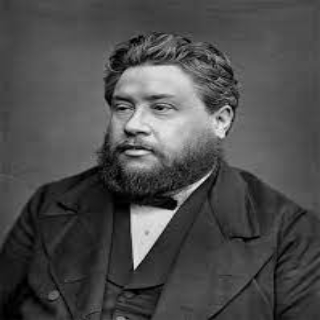 Charles Haddon Spurgeon was born on June 19, 1834, just ten days after the great William Carey died in India. Because of economic conditions the young Spurgeon was sent to live with his grandparents at the age of 18 months. His grandfather, James Spurgeon, ministered to the church at Stambourne for 54 years. Those few years with his grandparents made a profound impact on the young man’s life.
Spurgeon was always a bit of an enigma intellectually. He could appear to be unlearned when in reality he had a great intellect. An incident from his early school days is a good example of this. When he was around the age of ten, young Charles’ grades unexplainably began to drop. It seemed the more winter deepened, so did his scores. The teacher at first was baffled by this plummet in performance until he realized that the upper grader students' seats were near a drafty door where cold wind seeped in continually. When the teacher reversed the seating order so the higher grade seats were away from the cold draft, Spurgeon’s grades rose accordingly.1
Like many young people of his day, Charles struggled over his relationship with God for a number of years. It was common in those days for children to be encouraged to seek after God with their whole heart. There was no such quickness to get people "to make a decision" as we see in many of our churches today. Just as John Bunyan struggled against God, Spurgeon remembered how he fought against the idea of giving into Christ’s Lordship:
"I must confess that I never would have been saved if I could have helped it. As long as ever I could, I rebelled, and revolted, and struggled against God. When He would have me to pray, I would not pray … And when I heard, and the tear rolled down my cheek, I wiped it away and defied Him to melt my soul. But long before I began with Christ, He began with me."2
After some time of alternately searching and running, the God who had already begun with a 16 year old boy led Charles to an encounter which he never forgot. For some time the Holy Spirit had been dealing with the young man’s soul. Spurgeon said that "God was plowing his soul, ten black horses in his team — the ten commandments — and cross plowing it with the message of the Gospel, for when he heard it, no comfort came to his soul."3 With all of his Biblical upbringing and praying, Charles was still lost in the darkness of his own heart.
The incident that follows has been repeated so often in so many sources that it needs no documenting. One Sunday morning the snow was falling so hard that Charles could not get to his own church so he wandered into a Primitive Methodist Chapel. Doctrinally this little fellowship was world’s apart from the Congregationalist heritage of the Spurgeons. Yet into this little congregation of less than 15 people Spurgeon wandered that cold winter morning. As he entered an unlearned and unnamed itinerant preacher proclaimed the text, "Look unto Me, and be ye saved, all the ends of the earth." During that message, the preacher looked directly at the young stranger in their midst and said, "Young man, you look very miserable … You always will be miserable in life and in death if you don’t obey my text, but if you obey now, this moment you will be saved." Spurgeon later wrote, "Between half past ten, when I entered that chapel, and half past twelve, when I returned home, what a change had taken place in me!"4 Charles Haddon Spurgeon had indeed become a child of the Kingdom.
Neither he nor the world would be the same as a result. Before long Spurgeon was searching for a church which fit what he felt God was doing in his life. He had never even heard of Baptists until he was fourteen but Charles was drawn to the Baptist congregation at Isleham. Out of respect to his parents the young man wrote to tell them of his desire to be baptized and join that fellowship. His mother wrote back she had often prayed for him to be saved but that she had never asked that he would become a Baptist. Charles replied to his mother by writing that the "Lord had dealt with her in his usual bounty, and had given her exceeding abundantly above what she had asked."5
Spurgeon would spend time in some ministerial training but he never attended any formal theological school. He also served, preaching to a small congregation near home for about two years at Waterbeach. The country boy had not been called to stay in the country however. God was about to unleash Charles Haddon Spurgeon on the greatest city in the British Empire.
Away from the quiet life of Waterbeach, in London there was a congregation known as New Park Street. It was one of the six largest Baptist churches in London and held a heritage few churches could claim. Among her former pastors were Benjamin Keech, Dr. John Gill, and Dr. John Rippon. These three great names in Baptist history had served a combined 150 years at New Park Street. But times had changed. New Park Street was now what we would call an inner-city church. It was located in the midst of a filthy industrial district which was hard to reach. What had once been a growing congregation of 1200 had ebbed to a group of around 200 souls.
After a series of events, young Spurgeon was asked to pastor this once influential congregation in 1854. In spite of his own doubts about his age, a 20 year old Charles Spurgeon had become pastor in the line of Keech, Gill and Rippon. So great was the impact this novice preacher made on the people at New Park Street and the city of London that by 1855 it was evident a new church building was necessary to accommodate their growing numbers. While the building was progressing the congregation was forced to rent the Exeter Hall to meet in. This was considered scandalous to many of the more high church types for churches did not meet in public buildings in those days. Such growth was not without its critics. Some pastors in London claimed Spurgeon was a glory-hound while local newspapers issued caricatures of Spurgeon as an egotistical and uneducated buffoon.
Not only did Spurgeon gain a field of ministry at New Park Street but he also gained a wife. In 1855 the pastor baptized a lovely young woman by the name of Susannah Thompson. Almost exactly one year later, Charles and Susannah were joined as soul-mates for life. Words cannot describe the bond between these two. Mrs. Spurgeon would be a semi-invalid and Rev. Spurgeon would suffer from gout and depression through most of their marriage. Yet they forged a wonderful marriage along with twin sons. Susannah became her husband’s personal secretary. Once it is reported that she took notes while he talked in his sleep. When he awoke, Spurgeon found the sermon he had mumbled in his sleep. He had slept but Susannah had not. Even after his death, Mrs. Spurgeon kept the work alive, publishing Charles' sermons and distributing thousands of books to young ministers and others.
Regardless of the obstacles, the work went on. No sooner had the congregation returned to their new building than they realized they had not built large enough. So they began to worship at the Surrey Music Hall on Sunday nights. On October 19, 1856, ten thousand people were crammed into the Hall to hear Spurgeon preach, with another ten thousand outside. Not long after services began, someone yelled, “Fire!” The panic that followed caused the deaths of seven people. For several weeks pastor Spurgeon secluded himself in depression over the event. As always, however, God uses even the worst of events to bring about His purposes. This event and those that followed over the next few months led to the greatest chapter in Spurgeon’s ministry.
In 1856, the congregation of New Park Street met to discuss the building of a new sanctuary. In keeping with his vision for London, Spurgeon and the congregation voted to change the name of their church to Metropolitan Tabernacle. The years of service at New Park Street and Metropolitan Tabernacle would prove astounding. When Spurgeon came to New Park Street in 1854 it had a membership of 232. By the end of 1891, 14,460 souls had been baptized and added to the church with a standing membership of 5311.6
One could read of all this work and assume that Spurgeon knew nothing of enjoying himself. Such could be farther from the truth. His sense of humor was renown. C.H.S. had a dislike for instrumental music in the church, especially anthems. After hearing a special performance Spurgeon was told that it was music supposedly sung by David. His immediate reply was, "Then I know why Saul threw his javelin at him." In one of his Friday lectures to his college students the pastor told his students, "When you preach on heaven, have a face that reflects the sweetness of God; when you preach on hell, your normal face will do quite well."
Rather than focus on the things Spurgeon did at New Park Street and Metropolitan Tabernacle, it is better to focus on what Spurgeon was. William Gladstone called him "The Last Puritan." Only the end of time can prove whether that is completely true, but there is a ring of truth to that title. Spurgeon was no high church Calvinist but he definitely felt more of an infinity with men like Calvin and Bunyan than he did his contemporaries. Speaking of his grandfather, C.H.S. said, "I sometimes feel the shadow of his broad (Puritan hat) come over my spirit. I have been charged with being a mere echo of the Puritans, but I had rather be an echo of truth than the voice of falsehood."7
Early on it became apparent that Spurgeon had no fear of labeling himself. He labeled himself by his preaching not by a systematic theology. He was Calvinistic but not hyper-Calvinist. Spurgeon never fled from the seeming incompatibility of the Sovereignty of God and the responsibility of man to repentance. When challenged to do so he replied, "I do not try to reconcile friends." Spurgeon was even once reported as praying before his sermon, "Lord, call out your elect, and then elect some more."8
As did Fuller and Carey, Spurgeon proved that belief in the sovereignty of God does not cool evangelism but rather inflames it. He always preached to sinners, calling them to repentance and salvation. Though he didn’t often have what we would call revival meetings, he invited D.L. Moody to preach in his church and Ira Sankey sang at his funeral. Because Spurgeon held to the tenants of Calvinism while being warmly evangelistic it seemed he was often shot at from all sides. Some Calvinists called him an Arminian and many Arminians called him a hyper-Calvinist. These attacks mattered little to Spurgeon. What he longed for was what earlier Puritans had ardently prayed for. He longed for God to pour out His Spirit on His people. He was always calling the church to true revival.
Above all, Spurgeon was a preacher of the Word. Not the shallow, self-serving allusions to the Word we hear today. He was passionately tied to the whole counsel of God. In The Greatest Fight in the World, he said, "The Word is like its author, infinite, immeasurable, without end. If you were to be ordained to be a preacher throughout eternity, you would have before you a theme equal to everlasting demands." That undying allegiance to God’s Word brought great triumph in Spurgeon’s life and it sometimes brought great controversy.
Late in Spurgeon's life an incident began almost as a footnote but which would become a headline in the body of Christ. In March and April of 1887, two articles appeared in Spurgeon’s magazine, The Sword and Trowel. The articles pointed out the steady decline that seemed to be taking place among Evangelicals. Following those articles were several more in which Spurgeon warned of the influence of liberalism in general and Arminianism in specific. In all of these articles Spurgeon spoke of the downward grade evangelical churches were taking. This became known as the Downgrade Controversy. In the September issue C.H.S. wrote:
"The time has come for Christians to stir: The house is being robbed, its very walls are being digged down, but the good people who are in the bed are too fond of the warmth, and too much afraid of getting broken heads, to go downstairs and meet the burglars …Inspiration and speculation cannot long abide in peace. Compromise there can be none. We cannot hold the inspiration of the Word, and yet reject it; we cannot believe in the atonement and deny it; we cannot talk of the doctrine of the fall and yet talk of the evolution of spiritual life from human nature … One way or another we must go. Decision is the virtue of the hour."9
Once Spurgeon began to name the Baptist Union (which Metropolitan Tabernacle belonged to) things degenerated rapidly. By October, the pastor and church withdrew from The Baptist Union and by December the Union was formally questioning Spurgeon about his statements.
It was Spurgeon’s faith and trust in the Word of God that led him to warn the church of its downward slide toward liberalism but it was actually his Christian charity that got him in trouble. Spurgeon had been told in confidence the names of some of the pastors in the Union who were embracing the "new theology". Because of this confidence, Spurgeon refused to name the men he was speaking of. So, on January 18, 1888, a vote of censure was cast against the Union’s greatest preacher. The die was cast. Spurgeon’s warnings would prove true as the Baptist Union turned more and more to Higher Criticism and gradually abandoned its adherence to God’s Word as the sole authority of life and faith.
Charles Spurgeon’s influence cannot be confined to degrees or titles which were conferred upon him. Several university degrees were awarded him but he always refused them. As his biographer, W. Y. Fullerton noted, "The honors of the world … he held cheap; intellect he valued and he always was a book lover, but he ever reached after the eternal things rather than the temporal."10
If there is any one remaining tangible evidence of the influence Spurgeon had in his day it can be found in his sermons. In particular, his printed sermons have had a monumental impact for over 100 years. There are 63 volumes of Spurgeon’s sermons in print to this day. Newspapers carried his sermons on a weekly and sometimes daily basis for many years. Well over 100 million of those weekly sermons were sold. If one took into account all of his publications they would fill 200 large books. Even by modern estimation these numbers are staggering. People from California to New Zealand had one thing in common they could discuss, if ever they met, the writing of C.H. Spurgeon. One could hardly recommend Spurgeon's method of sermon preparation unless you also have his spiritual and intellectual gifts. He was a veracious reader and immersed himself in the Puritans. Charles first discovered Bunyan’s The Pilgrim’s Progress in his grandfather’s library and would read it over 100 times before his death. He was well read in Calvin, Baxter, Owens, Gill, Fuller and many others. In his sermons Spurgeon quoted from the lives of Justin Martyr, Augustine, John Bunyan, George Whitefield, Jonathan Edwards, John Gill, Andrew Fuller, and John Newton.11 By the time of his death, Spurgeon held a personal library of around 12,000 volumes. Much of that library now resides at William Jewel College in the U.S.A.
Added to that Spurgeon had a photographic memory. Nothing escaped his mind and was catalogued away for later use at the proper time. Because of all of these gifts, C.H.S. would not even begin to write down his notes until Saturday night. His Sunday night sermons were prepared on Sunday afternoons. Actually, his sermons were always being prepared. His entire life was a sermon preparation.
Another great field of influence was The Pastor’s College which exists to this day as Spurgeon’s College. In 1861 there were 21 students and soon the school would average around 100 students at any given time. This was not a typical seminary or Bible college. "Wherever the men came from, it was clearly understood that the college did not exist to make ministers but to train them. Unless a man could show some evidence that he was called to preach … there was no welcome for him, however great his gifts in other directions."12
Preaching wasn’t Spurgeon’s only passion. He was involved in extensive social endeavors, especially in the orphanage work. Hundreds of children who otherwise would have roamed the streets as thieves and vagrants were housed, fed and trained in the Word of God. Spurgeon once said, "We are a large church and we must have a large heart for this city."
As mentioned earlier, C.H.S. suffered from severe gout. The pain brought on times of severe depression. When those times became too intense the Spurgeons often would vacation in Mentone, France. While in Mentone in January of 1892, the Prince of Preachers left this earth at the age of 57. His funeral eulogy by Heber Evans sums up the legacy of Charles Haddon Spurgeon:
"But there is one Charles Haddon Spurgeon whom we cannot bury; there is not earth enough in Norwood to bury him — the Spurgeon of history."13
It would be easy to look on the last years of Spurgeon’s life and assume as some of his time did that he grew contentious in the pain of his years. Such could be farther from the truth. Though he was an ardent Baptist, Spurgeon chose two men who practiced infant baptism to head his orphanage. Though he was a Calvinist, he was saved in a Primitive Methodist Church and was supplied by a Presbyterian near the end of his life. There was room for a larger circle of fellowship but not when it came to the infallibility of the Bible and the centrality of the Gospel. To Spurgeon, the real mark of his ministry would be long after he died:
"I sometimes think if I were in heaven I should almost wish to visit my work at the Tabernacle, to see whether it will abide the test of time and prosper when I am gone. Will you keep to the truth? Will you hold to the grand old doctrines of the gospel? Or will this church, like so many others, go away from the simplicity of its faith, and set up gaudy services and false doctrine? Methinks I should turn over in my grave if such a thing could be. God forbid it! But there will be no coming back …"14
One week after Spurgeon's home going, B. H. Carroll preached an entire sermon on his larger influence around the world. In typical Carroll style hear these final words about Charles Haddon Spurgeon:
"Yes, Spurgeon is dead. The tallest and broadest oak in the forest of time is fallen. The sweetest, most silvery and far-reaching voice that published the glad tidings since apostolic times is hushed. The hand whose sickle cut the widest swath in the ripened grain fields of redemption lies folded and nerveless on a pulseless breast, whose heart when beating kept time with every human joy and woe. But he was ready to be offered. He fought a good fight. He kept the faith, and while we weep, he wears the triple crown of life and joy and glory, which God the righteous Judge has conferred upon him … In answer to the question: ‘How do you account for Spurgeon?' the answer is … 'God'"15
For the man who lived his life, All of Grace, that answer would have been most satisfying indeed. "How do you account for Spurgeon?" The answer is … "God"16
Footnotes:
1 W. Y. Fullerton, Charles H. Spurgeon: London's Most Popular Preacher. Chicago: Moody Press, 1966, pp. 19-20.
2 Ibid., p. 23.
3 Ibid., p. 32.
4 C. H. Spurgeon, Autobiography, Volume 1, Chapters 9-11.
5 Fullerton, p. 40.
6 Ibid., p. 121.
7 Timothy George, Baptist Theologians, p. 272.
8 Ibid., p. 274.
9 Iain Murray, The Forgotten Spurgeon, p. 143.
10 Fullerton, p.165.
11 George, p. 283.
12 Fullerton, p. 193.
13 Ibid., p. 274.
14 Murray, p. 258.
15 B. H. Carroll, Baptists and Their Doctrines edited by Timothy and Denise George, p. 59.
16 Ibid., p. 59.
From: Baptist Page Articles are offered as a service to the readers of The Baptist Page. You are given permission to reprint this in any form available. We only ask that this paragraph remain with the article.
©1997-2001 The Baptist Page.
Charles Haddon Spurgeon was born on June 19, 1834, just ten days after the great William Carey died in India. Because of economic conditions the young Spurgeon was sent to live with his grandparents at the age of 18 months. His grandfather, James Spurgeon, ministered to the church at Stambourne for 54 years. Those few years with his grandparents made a profound impact on the young man’s life.
Spurgeon was always a bit of an enigma intellectually. He could appear to be unlearned when in reality he had a great intellect. An incident from his early school days is a good example of this. When he was around the age of ten, young Charles’ grades unexplainably began to drop. It seemed the more winter deepened, so did his scores. The teacher at first was baffled by this plummet in performance until he realized that the upper grader students' seats were near a drafty door where cold wind seeped in continually. When the teacher reversed the seating order so the higher grade seats were away from the cold draft, Spurgeon’s grades rose accordingly.1
Like many young people of his day, Charles struggled over his relationship with God for a number of years. It was common in those days for children to be encouraged to seek after God with their whole heart. There was no such quickness to get people "to make a decision" as we see in many of our churches today. Just as John Bunyan struggled against God, Spurgeon remembered how he fought against the idea of giving into Christ’s Lordship:
"I must confess that I never would have been saved if I could have helped it. As long as ever I could, I rebelled, and revolted, and struggled against God. When He would have me to pray, I would not pray … And when I heard, and the tear rolled down my cheek, I wiped it away and defied Him to melt my soul. But long before I began with Christ, He began with me."2
After some time of alternately searching and running, the God who had already begun with a 16 year old boy led Charles to an encounter which he never forgot. For some time the Holy Spirit had been dealing with the young man’s soul. Spurgeon said that "God was plowing his soul, ten black horses in his team — the ten commandments — and cross plowing it with the message of the Gospel, for when he heard it, no comfort came to his soul."3 With all of his Biblical upbringing and praying, Charles was still lost in the darkness of his own heart.
The incident that follows has been repeated so often in so many sources that it needs no documenting. One Sunday morning the snow was falling so hard that Charles could not get to his own church so he wandered into a Primitive Methodist Chapel. Doctrinally this little fellowship was world’s apart from the Congregationalist heritage of the Spurgeons. Yet into this little congregation of less than 15 people Spurgeon wandered that cold winter morning. As he entered an unlearned and unnamed itinerant preacher proclaimed the text, "Look unto Me, and be ye saved, all the ends of the earth." During that message, the preacher looked directly at the young stranger in their midst and said, "Young man, you look very miserable … You always will be miserable in life and in death if you don’t obey my text, but if you obey now, this moment you will be saved." Spurgeon later wrote, "Between half past ten, when I entered that chapel, and half past twelve, when I returned home, what a change had taken place in me!"4 Charles Haddon Spurgeon had indeed become a child of the Kingdom.
Neither he nor the world would be the same as a result. Before long Spurgeon was searching for a church which fit what he felt God was doing in his life. He had never even heard of Baptists until he was fourteen but Charles was drawn to the Baptist congregation at Isleham. Out of respect to his parents the young man wrote to tell them of his desire to be baptized and join that fellowship. His mother wrote back she had often prayed for him to be saved but that she had never asked that he would become a Baptist. Charles replied to his mother by writing that the "Lord had dealt with her in his usual bounty, and had given her exceeding abundantly above what she had asked."5
Spurgeon would spend time in some ministerial training but he never attended any formal theological school. He also served, preaching to a small congregation near home for about two years at Waterbeach. The country boy had not been called to stay in the country however. God was about to unleash Charles Haddon Spurgeon on the greatest city in the British Empire.
Away from the quiet life of Waterbeach, in London there was a congregation known as New Park Street. It was one of the six largest Baptist churches in London and held a heritage few churches could claim. Among her former pastors were Benjamin Keech, Dr. John Gill, and Dr. John Rippon. These three great names in Baptist history had served a combined 150 years at New Park Street. But times had changed. New Park Street was now what we would call an inner-city church. It was located in the midst of a filthy industrial district which was hard to reach. What had once been a growing congregation of 1200 had ebbed to a group of around 200 souls.
After a series of events, young Spurgeon was asked to pastor this once influential congregation in 1854. In spite of his own doubts about his age, a 20 year old Charles Spurgeon had become pastor in the line of Keech, Gill and Rippon. So great was the impact this novice preacher made on the people at New Park Street and the city of London that by 1855 it was evident a new church building was necessary to accommodate their growing numbers. While the building was progressing the congregation was forced to rent the Exeter Hall to meet in. This was considered scandalous to many of the more high church types for churches did not meet in public buildings in those days. Such growth was not without its critics. Some pastors in London claimed Spurgeon was a glory-hound while local newspapers issued caricatures of Spurgeon as an egotistical and uneducated buffoon.
Not only did Spurgeon gain a field of ministry at New Park Street but he also gained a wife. In 1855 the pastor baptized a lovely young woman by the name of Susannah Thompson. Almost exactly one year later, Charles and Susannah were joined as soul-mates for life. Words cannot describe the bond between these two. Mrs. Spurgeon would be a semi-invalid and Rev. Spurgeon would suffer from gout and depression through most of their marriage. Yet they forged a wonderful marriage along with twin sons. Susannah became her husband’s personal secretary. Once it is reported that she took notes while he talked in his sleep. When he awoke, Spurgeon found the sermon he had mumbled in his sleep. He had slept but Susannah had not. Even after his death, Mrs. Spurgeon kept the work alive, publishing Charles' sermons and distributing thousands of books to young ministers and others.
Regardless of the obstacles, the work went on. No sooner had the congregation returned to their new building than they realized they had not built large enough. So they began to worship at the Surrey Music Hall on Sunday nights. On October 19, 1856, ten thousand people were crammed into the Hall to hear Spurgeon preach, with another ten thousand outside. Not long after services began, someone yelled, “Fire!” The panic that followed caused the deaths of seven people. For several weeks pastor Spurgeon secluded himself in depression over the event. As always, however, God uses even the worst of events to bring about His purposes. This event and those that followed over the next few months led to the greatest chapter in Spurgeon’s ministry.
In 1856, the congregation of New Park Street met to discuss the building of a new sanctuary. In keeping with his vision for London, Spurgeon and the congregation voted to change the name of their church to Metropolitan Tabernacle. The years of service at New Park Street and Metropolitan Tabernacle would prove astounding. When Spurgeon came to New Park Street in 1854 it had a membership of 232. By the end of 1891, 14,460 souls had been baptized and added to the church with a standing membership of 5311.6
One could read of all this work and assume that Spurgeon knew nothing of enjoying himself. Such could be farther from the truth. His sense of humor was renown. C.H.S. had a dislike for instrumental music in the church, especially anthems. After hearing a special performance Spurgeon was told that it was music supposedly sung by David. His immediate reply was, "Then I know why Saul threw his javelin at him." In one of his Friday lectures to his college students the pastor told his students, "When you preach on heaven, have a face that reflects the sweetness of God; when you preach on hell, your normal face will do quite well."
Rather than focus on the things Spurgeon did at New Park Street and Metropolitan Tabernacle, it is better to focus on what Spurgeon was. William Gladstone called him "The Last Puritan." Only the end of time can prove whether that is completely true, but there is a ring of truth to that title. Spurgeon was no high church Calvinist but he definitely felt more of an infinity with men like Calvin and Bunyan than he did his contemporaries. Speaking of his grandfather, C.H.S. said, "I sometimes feel the shadow of his broad (Puritan hat) come over my spirit. I have been charged with being a mere echo of the Puritans, but I had rather be an echo of truth than the voice of falsehood."7
Early on it became apparent that Spurgeon had no fear of labeling himself. He labeled himself by his preaching not by a systematic theology. He was Calvinistic but not hyper-Calvinist. Spurgeon never fled from the seeming incompatibility of the Sovereignty of God and the responsibility of man to repentance. When challenged to do so he replied, "I do not try to reconcile friends." Spurgeon was even once reported as praying before his sermon, "Lord, call out your elect, and then elect some more."8
As did Fuller and Carey, Spurgeon proved that belief in the sovereignty of God does not cool evangelism but rather inflames it. He always preached to sinners, calling them to repentance and salvation. Though he didn’t often have what we would call revival meetings, he invited D.L. Moody to preach in his church and Ira Sankey sang at his funeral. Because Spurgeon held to the tenants of Calvinism while being warmly evangelistic it seemed he was often shot at from all sides. Some Calvinists called him an Arminian and many Arminians called him a hyper-Calvinist. These attacks mattered little to Spurgeon. What he longed for was what earlier Puritans had ardently prayed for. He longed for God to pour out His Spirit on His people. He was always calling the church to true revival.
Above all, Spurgeon was a preacher of the Word. Not the shallow, self-serving allusions to the Word we hear today. He was passionately tied to the whole counsel of God. In The Greatest Fight in the World, he said, "The Word is like its author, infinite, immeasurable, without end. If you were to be ordained to be a preacher throughout eternity, you would have before you a theme equal to everlasting demands." That undying allegiance to God’s Word brought great triumph in Spurgeon’s life and it sometimes brought great controversy.
Late in Spurgeon's life an incident began almost as a footnote but which would become a headline in the body of Christ. In March and April of 1887, two articles appeared in Spurgeon’s magazine, The Sword and Trowel. The articles pointed out the steady decline that seemed to be taking place among Evangelicals. Following those articles were several more in which Spurgeon warned of the influence of liberalism in general and Arminianism in specific. In all of these articles Spurgeon spoke of the downward grade evangelical churches were taking. This became known as the Downgrade Controversy. In the September issue C.H.S. wrote:
"The time has come for Christians to stir: The house is being robbed, its very walls are being digged down, but the good people who are in the bed are too fond of the warmth, and too much afraid of getting broken heads, to go downstairs and meet the burglars …Inspiration and speculation cannot long abide in peace. Compromise there can be none. We cannot hold the inspiration of the Word, and yet reject it; we cannot believe in the atonement and deny it; we cannot talk of the doctrine of the fall and yet talk of the evolution of spiritual life from human nature … One way or another we must go. Decision is the virtue of the hour."9
Once Spurgeon began to name the Baptist Union (which Metropolitan Tabernacle belonged to) things degenerated rapidly. By October, the pastor and church withdrew from The Baptist Union and by December the Union was formally questioning Spurgeon about his statements.
It was Spurgeon’s faith and trust in the Word of God that led him to warn the church of its downward slide toward liberalism but it was actually his Christian charity that got him in trouble. Spurgeon had been told in confidence the names of some of the pastors in the Union who were embracing the "new theology". Because of this confidence, Spurgeon refused to name the men he was speaking of. So, on January 18, 1888, a vote of censure was cast against the Union’s greatest preacher. The die was cast. Spurgeon’s warnings would prove true as the Baptist Union turned more and more to Higher Criticism and gradually abandoned its adherence to God’s Word as the sole authority of life and faith.
Charles Spurgeon’s influence cannot be confined to degrees or titles which were conferred upon him. Several university degrees were awarded him but he always refused them. As his biographer, W. Y. Fullerton noted, "The honors of the world … he held cheap; intellect he valued and he always was a book lover, but he ever reached after the eternal things rather than the temporal."10
If there is any one remaining tangible evidence of the influence Spurgeon had in his day it can be found in his sermons. In particular, his printed sermons have had a monumental impact for over 100 years. There are 63 volumes of Spurgeon’s sermons in print to this day. Newspapers carried his sermons on a weekly and sometimes daily basis for many years. Well over 100 million of those weekly sermons were sold. If one took into account all of his publications they would fill 200 large books. Even by modern estimation these numbers are staggering. People from California to New Zealand had one thing in common they could discuss, if ever they met, the writing of C.H. Spurgeon. One could hardly recommend Spurgeon's method of sermon preparation unless you also have his spiritual and intellectual gifts. He was a veracious reader and immersed himself in the Puritans. Charles first discovered Bunyan’s The Pilgrim’s Progress in his grandfather’s library and would read it over 100 times before his death. He was well read in Calvin, Baxter, Owens, Gill, Fuller and many others. In his sermons Spurgeon quoted from the lives of Justin Martyr, Augustine, John Bunyan, George Whitefield, Jonathan Edwards, John Gill, Andrew Fuller, and John Newton.11 By the time of his death, Spurgeon held a personal library of around 12,000 volumes. Much of that library now resides at William Jewel College in the U.S.A.
Added to that Spurgeon had a photographic memory. Nothing escaped his mind and was catalogued away for later use at the proper time. Because of all of these gifts, C.H.S. would not even begin to write down his notes until Saturday night. His Sunday night sermons were prepared on Sunday afternoons. Actually, his sermons were always being prepared. His entire life was a sermon preparation.
Another great field of influence was The Pastor’s College which exists to this day as Spurgeon’s College. In 1861 there were 21 students and soon the school would average around 100 students at any given time. This was not a typical seminary or Bible college. "Wherever the men came from, it was clearly understood that the college did not exist to make ministers but to train them. Unless a man could show some evidence that he was called to preach … there was no welcome for him, however great his gifts in other directions."12
Preaching wasn’t Spurgeon’s only passion. He was involved in extensive social endeavors, especially in the orphanage work. Hundreds of children who otherwise would have roamed the streets as thieves and vagrants were housed, fed and trained in the Word of God. Spurgeon once said, "We are a large church and we must have a large heart for this city."
As mentioned earlier, C.H.S. suffered from severe gout. The pain brought on times of severe depression. When those times became too intense the Spurgeons often would vacation in Mentone, France. While in Mentone in January of 1892, the Prince of Preachers left this earth at the age of 57. His funeral eulogy by Heber Evans sums up the legacy of Charles Haddon Spurgeon:
"But there is one Charles Haddon Spurgeon whom we cannot bury; there is not earth enough in Norwood to bury him — the Spurgeon of history."13
It would be easy to look on the last years of Spurgeon’s life and assume as some of his time did that he grew contentious in the pain of his years. Such could be farther from the truth. Though he was an ardent Baptist, Spurgeon chose two men who practiced infant baptism to head his orphanage. Though he was a Calvinist, he was saved in a Primitive Methodist Church and was supplied by a Presbyterian near the end of his life. There was room for a larger circle of fellowship but not when it came to the infallibility of the Bible and the centrality of the Gospel. To Spurgeon, the real mark of his ministry would be long after he died:
"I sometimes think if I were in heaven I should almost wish to visit my work at the Tabernacle, to see whether it will abide the test of time and prosper when I am gone. Will you keep to the truth? Will you hold to the grand old doctrines of the gospel? Or will this church, like so many others, go away from the simplicity of its faith, and set up gaudy services and false doctrine? Methinks I should turn over in my grave if such a thing could be. God forbid it! But there will be no coming back …"14
One week after Spurgeon's home going, B. H. Carroll preached an entire sermon on his larger influence around the world. In typical Carroll style hear these final words about Charles Haddon Spurgeon:
"Yes, Spurgeon is dead. The tallest and broadest oak in the forest of time is fallen. The sweetest, most silvery and far-reaching voice that published the glad tidings since apostolic times is hushed. The hand whose sickle cut the widest swath in the ripened grain fields of redemption lies folded and nerveless on a pulseless breast, whose heart when beating kept time with every human joy and woe. But he was ready to be offered. He fought a good fight. He kept the faith, and while we weep, he wears the triple crown of life and joy and glory, which God the righteous Judge has conferred upon him … In answer to the question: ‘How do you account for Spurgeon?' the answer is … 'God'"15
For the man who lived his life, All of Grace, that answer would have been most satisfying indeed. "How do you account for Spurgeon?" The answer is … "God"16
Footnotes:
1 W. Y. Fullerton, Charles H. Spurgeon: London's Most Popular Preacher. Chicago: Moody Press, 1966, pp. 19-20.
2 Ibid., p. 23.
3 Ibid., p. 32.
4 C. H. Spurgeon, Autobiography, Volume 1, Chapters 9-11.
5 Fullerton, p. 40.
6 Ibid., p. 121.
7 Timothy George, Baptist Theologians, p. 272.
8 Ibid., p. 274.
9 Iain Murray, The Forgotten Spurgeon, p. 143.
10 Fullerton, p.165.
11 George, p. 283.
12 Fullerton, p. 193.
13 Ibid., p. 274.
14 Murray, p. 258.
15 B. H. Carroll, Baptists and Their Doctrines edited by Timothy and Denise George, p. 59.
16 Ibid., p. 59.
From: Baptist Page Articles are offered as a service to the readers of The Baptist Page. You are given permission to reprint this in any form available. We only ask that this paragraph remain with the article.
©1997-2001 The Baptist Page.