

Others like they speak with other tongues Features >>


-160.webp)



About the Book
"They Speak with Other Tongues" is a book that explores the phenomenon of speaking in tongues, a practice commonly associated with Pentecostal and charismatic Christianity. The author, John Sherrill, delves into his own personal experiences and research to provide insight into this controversial and often misunderstood aspect of faith, ultimately arguing that speaking in tongues can be a powerful and transformative spiritual practice for believers.
Warren Wiersbe
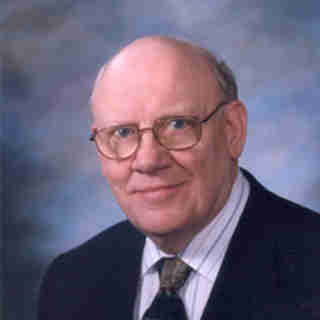 Dr. Warren Wiersbe once described Heaven as “not only a destination, but also a motivation. When you and I are truly motivated by the promise of eternity with God in heaven, it makes a difference in our lives.”
For Wiersbe, the promise of eternity became the motivation for his long ministry as a pastor, author, and radio speaker. Beloved for his biblical insight and practical teaching, he was called “one of the greatest Bible expositors of our generation” by the late Billy Graham.
Warren W. Wiersbe died on May 2, 2019, in Lincoln, Nebraska, just a few weeks shy of his 90th birthday.
“He was a longtime, cherished friend of Moody Bible Institute, a faithful servant of the Word, and a pastor to younger pastors like me,” said Dr. Mark Jobe, president of Moody Bible Institute. “We are lifting up pastor Wiersbe’s family in prayer at this time and rejoicing in the blessed hope that believers share together.”
Wiersbe grew up in East Chicago, Indiana, a town known for its steel mills and hard-working blue-collar families. In his autobiography, he connected some of his earliest childhood memories to Moody Bible Institute; his home church pastor was a 1937 graduate, Dr. William H. Taylor. After volunteering to usher at a 1945 Youth for Christ rally, Wiersbe found himself listening with rapt attention to Billy Graham’s sermon, and responded with a personal prayer of dedication.
In a precocious turn of events, the young Wiersbe was already a published author, having written a book of card tricks for the L. L. Ireland Magic Co. of Chicago. He quickly learned to liven up Sunday school lessons with magic tricks as object lessons (“not the cards!” he would say). After his high school graduation in 1947 (he was valedictorian), he spent a year at Indiana University before transferring to Northern Baptist Seminary in Chicago, where he earned a bachelor of theology degree. His future wife, Betty, worked in the school library, and Wiersbe was a frequent visitor.
While in seminary he became pastor of Central Baptist Church in East Chicago, serving until 1957. During those years he became a popular YFC speaker, which led to a full-time position with Youth for Christ International in Wheaton. He published his first article for Moody Monthly magazine in 1956, about Bible study methods, and seemed to outline his ongoing writing philosophy. “This is more of a personal testimony,” he said, “because I want to share these blessings with you, rather than write some scholarly essay, which I am sure I could not do anyway.”
At a 1957 YFC convention in Winona Lake, Indiana, Wiersbe preached a sermon that was broadcast live over WMBI, his first connection to Moody Radio. “I wish every preacher could have at least six months’ experience as a radio preacher,” he said later (because they would preach shorter).
While working with Youth for Christ, Wiersbe got a call from Pete Gunther at Moody Publishers, asking about possible book projects. First came Byways of Blessing (1961), an adult devotional; then two more books in 1962, A Guidebook for Teens and Teens Triumphant. He would eventually publish 14 titles with Moody, including William Culbertson: A Man of God (1974), Live Like a King (1976), The Annotated Pilgrim’s Progress (1980), and Ministering to the Mourning (2006), written with his son, David Wiersbe.
In 1961, D. B. Eastep invited Wiersbe to join the staff of Calvary Baptist Church in Covington, Kentucky. forming a succession plan that was hastened by Eastep’s sudden death in 1962. Warren and Betty Wiersbe remained at the church for 10 years, until they were surprised by a phone call from The Moody Church. The pastor, Dr. George Sweeting, had just resigned to become president of Moody Bible Institute. Would Wiersbe fill the pulpit, and pray about becoming a candidate?
He was already well known to the Chicago church—and to the MBI community. He continued to write for Moody Monthly and had just started a new column, “Insights for the Pastor.” The monthly feature continued to run during the years Wiersbe served at The Moody Church. Wiersbe would become one of the magazine’s most prolific writers—200 articles during a 40-year span. Meanwhile he also started work on the BE series of exegetical commentaries, books that soon found a place on the shelf of every evangelical pastor.
His ministry to pastors continued as he spoke at Moody Founder’s Week, Pastors’ Conference, and numerous campus events. He also inherited George Sweeting’s role as host of the popular Songs in the Night radio broadcast, produced by Moody Radio’s Bob Neff and distributed on Moody’s growing network of radio stations.
Later in life he would move to Lincoln, Nebraska, where he served as host of the Back to the Bible radio broadcast. He also taught courses on preaching at Trinity Evangelical Divinity School and Grand Rapids Baptist Seminary. He kept writing, eventually publishing more than 150 books and losing track of how many (“I can’t remember them all, and I didn’t save copies of everything,” he said.)
Throughout his ministry, Warren Wiersbe described himself as a bridge builder, a reference to his homiletical method of moving “from the world of the Bible to the world of today so that we could get to the other side of glory in Jesus.” As explained by his grandson, Dan Jacobson, “His preferred tools were words, his blueprints were the Scriptures, and his workspace was a self-assembled library.”
Several of Wiersbe’s extended family are Moody alums, including a son, David Wiersbe ’76; grandson Dan Jacobsen ’09 and his wife, Kristin (Shirk) Jacobsen ’09; and great-nephew Ryan Smith, a current student.
During his long ministry and writing career, Warren Wiersbe covered pretty much every topic, including the inevitability of death. These words from Ministering to the Mourning offer a fitting tribute to his own ministry:
We who are in Christ know that if He returns before our time comes to die, we shall be privileged to follow Him home. God’s people are always encouraged by that blessed hope. Yet we must still live each day soberly, realizing that we are mortal and that death may come to us at any time. We pray, “Teach us to number our days aright, that we may gain a heart of wisdom” (Psalm 90:12).
Dr. Warren Wiersbe once described Heaven as “not only a destination, but also a motivation. When you and I are truly motivated by the promise of eternity with God in heaven, it makes a difference in our lives.”
For Wiersbe, the promise of eternity became the motivation for his long ministry as a pastor, author, and radio speaker. Beloved for his biblical insight and practical teaching, he was called “one of the greatest Bible expositors of our generation” by the late Billy Graham.
Warren W. Wiersbe died on May 2, 2019, in Lincoln, Nebraska, just a few weeks shy of his 90th birthday.
“He was a longtime, cherished friend of Moody Bible Institute, a faithful servant of the Word, and a pastor to younger pastors like me,” said Dr. Mark Jobe, president of Moody Bible Institute. “We are lifting up pastor Wiersbe’s family in prayer at this time and rejoicing in the blessed hope that believers share together.”
Wiersbe grew up in East Chicago, Indiana, a town known for its steel mills and hard-working blue-collar families. In his autobiography, he connected some of his earliest childhood memories to Moody Bible Institute; his home church pastor was a 1937 graduate, Dr. William H. Taylor. After volunteering to usher at a 1945 Youth for Christ rally, Wiersbe found himself listening with rapt attention to Billy Graham’s sermon, and responded with a personal prayer of dedication.
In a precocious turn of events, the young Wiersbe was already a published author, having written a book of card tricks for the L. L. Ireland Magic Co. of Chicago. He quickly learned to liven up Sunday school lessons with magic tricks as object lessons (“not the cards!” he would say). After his high school graduation in 1947 (he was valedictorian), he spent a year at Indiana University before transferring to Northern Baptist Seminary in Chicago, where he earned a bachelor of theology degree. His future wife, Betty, worked in the school library, and Wiersbe was a frequent visitor.
While in seminary he became pastor of Central Baptist Church in East Chicago, serving until 1957. During those years he became a popular YFC speaker, which led to a full-time position with Youth for Christ International in Wheaton. He published his first article for Moody Monthly magazine in 1956, about Bible study methods, and seemed to outline his ongoing writing philosophy. “This is more of a personal testimony,” he said, “because I want to share these blessings with you, rather than write some scholarly essay, which I am sure I could not do anyway.”
At a 1957 YFC convention in Winona Lake, Indiana, Wiersbe preached a sermon that was broadcast live over WMBI, his first connection to Moody Radio. “I wish every preacher could have at least six months’ experience as a radio preacher,” he said later (because they would preach shorter).
While working with Youth for Christ, Wiersbe got a call from Pete Gunther at Moody Publishers, asking about possible book projects. First came Byways of Blessing (1961), an adult devotional; then two more books in 1962, A Guidebook for Teens and Teens Triumphant. He would eventually publish 14 titles with Moody, including William Culbertson: A Man of God (1974), Live Like a King (1976), The Annotated Pilgrim’s Progress (1980), and Ministering to the Mourning (2006), written with his son, David Wiersbe.
In 1961, D. B. Eastep invited Wiersbe to join the staff of Calvary Baptist Church in Covington, Kentucky. forming a succession plan that was hastened by Eastep’s sudden death in 1962. Warren and Betty Wiersbe remained at the church for 10 years, until they were surprised by a phone call from The Moody Church. The pastor, Dr. George Sweeting, had just resigned to become president of Moody Bible Institute. Would Wiersbe fill the pulpit, and pray about becoming a candidate?
He was already well known to the Chicago church—and to the MBI community. He continued to write for Moody Monthly and had just started a new column, “Insights for the Pastor.” The monthly feature continued to run during the years Wiersbe served at The Moody Church. Wiersbe would become one of the magazine’s most prolific writers—200 articles during a 40-year span. Meanwhile he also started work on the BE series of exegetical commentaries, books that soon found a place on the shelf of every evangelical pastor.
His ministry to pastors continued as he spoke at Moody Founder’s Week, Pastors’ Conference, and numerous campus events. He also inherited George Sweeting’s role as host of the popular Songs in the Night radio broadcast, produced by Moody Radio’s Bob Neff and distributed on Moody’s growing network of radio stations.
Later in life he would move to Lincoln, Nebraska, where he served as host of the Back to the Bible radio broadcast. He also taught courses on preaching at Trinity Evangelical Divinity School and Grand Rapids Baptist Seminary. He kept writing, eventually publishing more than 150 books and losing track of how many (“I can’t remember them all, and I didn’t save copies of everything,” he said.)
Throughout his ministry, Warren Wiersbe described himself as a bridge builder, a reference to his homiletical method of moving “from the world of the Bible to the world of today so that we could get to the other side of glory in Jesus.” As explained by his grandson, Dan Jacobson, “His preferred tools were words, his blueprints were the Scriptures, and his workspace was a self-assembled library.”
Several of Wiersbe’s extended family are Moody alums, including a son, David Wiersbe ’76; grandson Dan Jacobsen ’09 and his wife, Kristin (Shirk) Jacobsen ’09; and great-nephew Ryan Smith, a current student.
During his long ministry and writing career, Warren Wiersbe covered pretty much every topic, including the inevitability of death. These words from Ministering to the Mourning offer a fitting tribute to his own ministry:
We who are in Christ know that if He returns before our time comes to die, we shall be privileged to follow Him home. God’s people are always encouraged by that blessed hope. Yet we must still live each day soberly, realizing that we are mortal and that death may come to us at any time. We pray, “Teach us to number our days aright, that we may gain a heart of wisdom” (Psalm 90:12).
Mercy at the Bottom
Jonah is a fascinating case study in the mercy of God. He is a no-good, rotten man who resents God for his mercy. Jonah would rather see his enemies destroyed and annihilated than forgiven. Nestled within the story of this rotten man, though, is his prayer in the second chapter. The prayer gives insight into Jonah’s inner struggle and plays no small part in the development of the story. It also tells us much about the God to whom we pray. Perhaps you’ve breezed through the prayer in a previous reading of the book, but let’s slow down to see what we can learn from his cry for help from within the belly of the great fish. Most Reluctant Prayer Imagine the flannel graph with me. God sends his prophet to a wicked people to proclaim the judgment of God. Jonah, instead of going to Nineveh, runs from God by sailing in the opposite direction. Jonah — God’s chosen instrument — is a leaky vessel. Despite the futility, he seeks to run “away from the presence of the Lord” (Jonah 1:3). Clearly, he wants no part of Nineveh, but we’re not yet told why. A storm rages on the high seas, and Jonah is reluctantly thrown into the sea by the sailors. These pagan seafarers call out to God for mercy, yet throughout the storm, Jonah opens not his mouth. He will not mutter even one meager word. Jonah would rather die, it seems, than be an instrument of God’s mercy (to others or even himself). We quickly learn that Jonah is not the hero of the story, and frankly, a bit of a rotten fellow. As we’ll see, however, we find good company in Jonah’s character deficiencies. And we can find solace from the fact that God still heard Jonah’s prayer, the desperate cries of a wayward prophet. Chapter 2 records Jonah’s prayer from the belly of the fish. If there is ever a foxhole cry for help recorded in the Bible, this is it. As Jonah gasps for air, covered in darkness and with death at his door, he finally manages to muster a cry for help. What Was Clear in the Dark What, if anything, can we draw out of Jonah’s prayer? Let me trace three themes and then come back to how we might personally be encouraged for our own prayer lives. GOD STILL LISTENS First, Jonah comes to his senses and prays to God. I imagine a cry of help escaped as Jonah was hoisted into the air and as he plunged in the pitch-black sea. Maybe just a singular yelp, or a thought of “save me, Lord,” but that was all it took. Jonah wakes to the overpowering aroma of rotting fish carcasses, thinking that hell resembles a fish market. But then he regains his senses and realizes he’s alive in the belly of a fish. In this dire and desperate situation, Jonah prays: “I called out to the Lord, out of my distress, and he answered me; out of the belly of Sheol I cried, and you heard my voice” (Jonah 2:2). Despite his disobedience and stubbornness, he calls out to the Maker of heaven and earth. Despite attempting to run from God, he now turns to him for deliverance and help. God is always ready to receive the desperate cries of his children. GOD STILL REIGNS Jonah admits that God is in control. He doesn’t say, “Those rotten sailors, I can’t believe they threw me into the sea!” Instead, he sees the sovereign hand of God at work even in his precarious situation. He confesses, “You cast me into the deep; . . . all your waves and your billows passed over me” (Jonah 2:3). Desperate situations are not a result of God falling asleep at the wheel. Jonah admits that God is in control, and reminds us that we can trust him even in dire circumstances. God is still sovereign when our safety is compromised. GOD STILL DELIVERS Lastly, Jonah concludes that God saved him for a purpose. Jonah is incapacitated, but clearly not yet dead, and so he concludes that God saved him for some divine purpose. “God is still sovereign when our safety is compromised.” He prays, “I shall again look upon your holy temple. . . . You brought up my life from the pit. . . . My prayer came to you, into your holy temple” (Jonah 2:4, 6, 7). God did not satisfy Jonah’s death wish (Jonah 1:12). He has been spared to once again worship God in his holy temple. Jonah rightly concludes that his deliverance has some meaning, and he even begins to declare God’s greatness from the belly of the fish: “Salvation belongs to the Lord!” (Jonah 2:9). Ugliest Kind of Grief We know how the story ends. Jonah’s prayer is heard and answered, and he eventually washes ashore. Jonah relents, goes to Nineveh, preaches, and the people heed his message and repent — and then the surprise comes. Jonah does not rejoice over their repentance; he gets angry (Jonah 4:1). We learn that Jonah wasn’t worried that the Ninevites wouldn’t listen or that they would kill the messenger. Rather, he was worried that the Ninevites would repent. He knew God would be gracious and merciful — and now that God has, he grieves. God’s character is stunningly juxtaposed with the most pathetic display of prophetic sulking in Scripture: [Jonah] prayed to the Lord and said, “O Lord, is not this what I said when I was yet in my country? That is why I made haste to flee to Tarshish; for I knew that you are a gracious God and merciful, slow to anger and abounding in steadfast love, and relenting from disaster. Therefore now, O Lord, please take my life from me, for it is better for me to die than to live.” (Jonah 4:2–3) For all of his sins, at least Jonah is consistent. He would rather die than go preach, he would rather die than pray in the storm, and now he would rather die than see his enemies forgiven. Jonah, however, wasn’t wrong about everything. He wasn’t wrong about God. He knew that God would be gracious and merciful, eager to relent from disaster. The problem was that Jonah didn’t share God’s heart. He was eager for retribution, revenge, and judgment. He wanted to see the people of Nineveh burn for their oppression of Israel. Did Jonah ever become a faithful prophet? Did he ever live up to his task and mission? Did the leaky vessel ever get patched? I’d like to think so, but the author leaves aside any tidy endings. We’re left to ask our own question: Are we like Jonah, or are we like God? Two Lessons for Your Knees How, then, might Jonah’s prayer shape and inspire our prayers today? What might we learn from his cries out of the depths of treacherous seas? See the unrelenting kindness of God. First, we learn that God is still listening. The reality is so simple we might be tempted to overlook it. Even if you just committed a heinous sin — like running away from the living God — he has not decisively closed his ear to you. The intercom to heaven hasn’t been turned off. In the immediate aftermath of sinning against him, we might imagine God exasperated and simmering with anger. We imagine him responding like we would. Jonah, however, reveals that God still waits to receive our desperate and dejected cries, even from the most disobedient among us. He’s eager to receive and welcome our humble and broken prayers for help. As Romans 2:4 reveals, God’s kindness is meant to lead us to repentance. God displays his mercy and forgiveness to Jonah and to the people of Nineveh. We can have confidence, even if we are low-down, dirty, rotten sinners, to come to Jesus with our first or thousandth request for forgiveness — if we humble ourselves and run to him, rather than hiding from him and running away. Resist the urge to run and hide. Second, wherever you are and whatever obedience you’re currently resisting, run to God in prayer. Be persistent in prayer, knowing your God is even more persistent in mercy. Of all the people who shouldn’t have expected their prayers to be answered, it was Jonah. He openly rebelled against God. When God called, he ran in the opposite direction. He jumped aboard a ship and tried to flee the Sovereign of the seas. Even when the storms raged, he refused to pray for deliverance. He would have rather drowned than repented. And yet, out of this watery grave, he comes to his senses and cries out — and wonder of wonders, God listens and answers. “Jonah teaches us that God is more merciful, more patient, and more forgiving than we can now imagine.” If we are in a Jonah-like season of rebellion, we too can pray. Even if we’ve been in a decades-long season of fleeing from God, running from his presence, and resisting his call, we’re invited to come, lay down our rebellion, and be immersed, not in judgment, but in love. God wants to pour out mercy on you, and then through you to other sinners, that they too might repent and be delivered. God is not like us. Where we are quick to anger, slow to forgive, easily frustrated, and prone to hold grudges, God is not like us. Jonah teaches us that God is more merciful, more patient, and more forgiving than we can now imagine. The good news of the gospel is far better than we expect. Through Christ, the better Jonah, we call out to God, with confidence that he will overflow with mercy to no-good, rotten people who come with empty hands — and with confidence that his mercy can change our hearts to be like his. Article by Steven Lee