
Others like true christianity Features >>
7 Classics On Revival
-160.webp)
The Cross And The Switchblade: A True Story

10 Ways To Share Your Faith
Is God Real
Defending Your Faith

So You Want To Change The World
There Is More!

Multiply
-160.webp)
Out Of Commission (Getting Every Christian Back To The Great Commission)
One Heartbeat Away: Your Journey Into Eternity
About the Book
"True Christianity" by Charles G. Finney explores the principles and practices of authentic Christian living, focusing on the importance of personal holiness, genuine faith, and the transformative power of the Holy Spirit. Finney emphasizes the need for sincere repentance, humility, and obedience in order to experience true spiritual revival and growth in one's relationship with God.
Brother Andrew
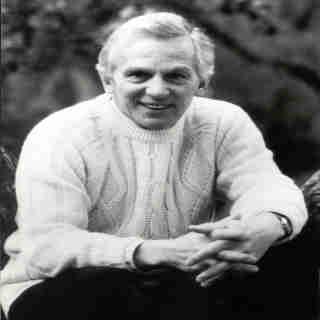 Son of a blacksmith, Brother Andrew didn’t even finish high school. But God used this ordinary dutch man, with his bad back, limited education, without sponsorship and no funds to do things that many said were impossible. From Yugoslavia to North Korea, Brother Andrew penetrated countries hostile to the gospel to bring bibles and encouragement to believers.
Andy van der Bijl, who became known as Brother Andrew, was born in 1928 the son of a deaf father and a semi-invalid mother. Andrew was the third of six children and they lived in the smallest house in the village of Witte in the Netherlands.
In the book God’s smuggler, Andrew describes the impact that the death of his oldest brother ‘Bas’ had upon him. Bas, who was severely handicapped died when Andrew was just 11 years old. Andrew had wanted to die with Bas, but God hadn’t let him.
THIRST FOR ADVENTURE
As a child, brother Andrew was mischievous and dreamt of adventure. When Germany invaded, Andrew amused himself (and the rest of the village) by playing pranks on the occupying troops.
NOTORIOUS COMMANDO WHO NEEDED GOD
His thirst for adventure led him into the Dutch army at the age of 18 where he became a notorious commando. Andrew and his comrades became famous for wearing yellow straw hats in battle, their motto was: ‘get smart – lose your mind’.
The atrocities that Andrew committed as a commando haunted him and he became wrapped in a sense of guilt. Nothing he did – drinking, fighting, writing or reading letters helped him escape the strangle that guilt had upon him.
Shot in the ankle in combat, at the age of 20, his time in the army came to an abrupt end.
In hospital, bed ridden, the witness of Franciscan sisters who served the sick joyfully and the conviction of his own sin, drove him to read the Bible. Andy studied the bible while asking many questions to a friend (Thile), who had written to him throughout his time in the army. Andrew sent questions to Thile who searched for answers from her pastor and the library. His searching within the bible did not however lead him to give his life to God whilst he was still in hospital.
ANDREW RETURNS HOME A CRIPPLE AND SEEKS GOD
Returning home a cripple to his old town, Andrew’s life was empty. He had not found the adventure he had been looking for.
Somehow however, when he return home, he developed a thirst for God. Every evening Andrew attended a meeting and during the day he would read the bible and lookup up bible verses mentioned in the sermons he had heard. At last, one evening he gave up his ego and prayed: ‘Lord if You will show me the way, I will follow You. Amen’.
GOD CALLS BROTHER ANDREW TO MISSION
Soon after becoming a Christian, Brother Andrew attended a an evangelistic meeting taken by a Dutch evangelist Arne Donker. At this meeting Andrew responded to the call to become a missionary. This call to share the good news of salvation started at home, with Andrew and his friend Kees holding an evangelistic event with Pastor Donker in their home town of Witte.
Before going away on mission, Andrew started work at the Ringers chocolate factory. Working in a female dominated environment which was smitten with filthy jokes, God used Andrew and another Christian, and future wife Corrie, to reach their lost co-workers. Through personal witness and inviting them to evangelistic events, many became Christians, including the ring leader of the women. The atmosphere at work changed dramatically and prayer groups were held.
Andrew excelled in his work despite being lame and Mr Ringers, the owner of the factory applauded his work and evangelistic efforts. Because of his high IQ, Andrew was trained up as a job analyst within the factory. But Andrew knew that God was calling him to mission. The big obstacle however was his lack of education.
Giving up smoking, Andrew was able to start saving to buy books. Andrew bought dictionaries and commentaries and so began studying in his spare time. One day Andrew learnt about the bible college in Glasgow run by the WEC mission. At Glasgow bible college Christians could be trained up for mission in 2 years.
Unsure of Gods will for his life, Andrew spent a Sunday afternoon alone with God, speaking aloud with God. Through this time, Andrew realised that he needed to say ‘yes’ to God who was calling him to mission. Before this, Andrew had been saying ‘Yes BUT I am lame.’ ‘Yes BUT I have no education’. Andrew said yes. In an amazing instant, Andrew made this step of yes, and in God’s grace he healed Andrews lame leg.
ANDREW GOES TO ENGLAND
Andrew applied for the Bible college in Glasgow and was accepted. Sponsored by no church, no organisation and lacking education, Andrew obeyed God and went despite being told by the love of his life at the time (Thile) that in going he would lose her.
Andrew’s place at the bible college was delayed by a year. Despite receiving a telegram from WEC telling him not to come, Andrew believed God was instructing him to go. In faith he obeyed God and left for England in 1952.
Andrew spent the first few months in England painting the WEC headquarters building (Bulstrode). While living at Bulstrode, Andrew began spending time with God at the beginning of everyday – a Quiet Time. This was something that Andrew found helpful and endeavoured to do every day of his life. Once Andrew had finished painting Bulstrode, he then moved in with Mr and Mrs Hopkins. Living with Mr and Mrs Hopkins, they developed a wonderful relationship. Andy learnt so much from the couple because they were utterly without self-consciousness and opened up their home to drunks and beggars.
In September 1953, Brother Andrew started his studies at the WEC Glasgow bible college. Over the entrance of the wooden archway of the college were the words‘have faith in God’. During the following two years whilst studying, Andrew learnt about having faith in God and put his faith into practice in numerous ways.
THE KINGS WAY
Throughout his time at Glasgow bible college, Andy learnt of ‘The Kings Way’ in providing. Andrew saw God provide every essential need he had and always provide on time. In the book God’s Smuggler, Andrew describes how it was exciting waiting to see how God would provide at his time of need. God always provided, but did so, not according to mans logic but in a kingly matter, not in a grovelling way.
One example of God providing miraculously was when Andrew needed to pay his visa. When Andrew received a visitor the day before he needed to send off his application for a visa, he was confident that the visitor would have come to give him money to pay for the visa. But the visitor was Richard, a man who Andrew had met in the slums in Glasgow. Richard had not come to give, but to ask. Andy explained that he had no money himself to give to Richard, but as he spoke, Andy saw a Shilling on the floor. This shilling was how much Andy needed to pay for his visa which would mean he could stay at the bible school. Rather than keeping the Shilling for himself, Andrew gave the Shilling to Richard. Andy had done what he knew was right, but how would God provide? Minutes later, Andy received a letter and in it was 30 Shillings! God had provided in His way, a Kingly Manner of provision.
GOD CALLS ANDREW BEHIND THE IRON CURTAIN
Leaving bible college in 1955, God guided Andy to attend a Communist trip to Warsaw. This would be the first of many trips into Communist countries.
During his first trip to Warsaw, brother Andrew visited local churches, a bible shop and spoke with Christians in the country. Coming back to Holland, Andrew had lots of opportunities to share about his trip and how Christians lived behind the iron curtain.
Weeks later, the communist party arranged for him to attend a trip to Czechoslovakia. Andrew managed to break away from the organised trip to learn that the church was suffering and that bibles were very scarce. Officials were angry he had broken away from the official tour and had contact with Christians so he was prohibited from entering the country again. But his trip had opened his eyes to the needs of the church behind the iron curtain and this became his mission field.
In the following years, Andy dedicated his life to the needs of the church in the Communist countries. God provided Andrew with a new Volkswagen Beetle and with it Brother Andrew smuggled bibles and literature into the countries in need. Working alone for the first few years, Andrew worked tirelessly in serving the churches behind the iron curtain. When Andrew had finished one trip he would go back to Holland where he would share his experience and then go back to one of the countries. Each trip was full of stories of how God had miraculously provided and led Andrew to meet Godly believers.
ANDREW MARRIES AND HAS A FAMILY
Although serving God in this way was exciting, Andrew felt alone and wanted a wife. In the book God’s Smuggler, Andrew describes how he prayed about a wife three times. The first two times that Brother Andrew asked for a wife God spoke to him clearly through Isaiah 54:1 “The children of the desolate are more than the children of the married”. But Andrew prayed a third time about it, and this time God answered his prayer, reminding him of a lady he worked with at the Ringers chocolate factor, Corrie van Dam. Andrew hadn’t had contact with Corrie for a long time so went to visit her. By God’s grace, Corrie was still single and over a period of several years Andrew and Corrie became great friends. Corrie and Andrew married on June 27th 1958 in Alkmaar, Netherlands.
Corrie was married to a missionary and Andrew very much continued to live like a missionary, smuggling bibles into countries closed countries. Over the years, God blessed Corrie and Andrew with five children, three boys and two girls.
ANDREW STARTS WORKING WITH OTHERS
Andrew kept serving God behind the iron curtain but the work had become difficult to do alone. Andrew thought about how helpful it would be to have a co-worker. This began with a man called Hans and slowly grew until a number of them were smuggling bibles into the communist countries.
SERVING THE WORLD WIDE CHURCH
When the doors to communist Europe were opened in the 1960’s, Brother Andrew began to serve and strengthen the churches in the Middle East and Islamic world.
BROTHER ANDREW RECEIVES RELIGIOUS LIBERTY AWARD IN 2007
On Andy van der Bijl’s 69th birthday, he was honoured by being awarded ‘The Religious Liberty Award’ which was presented by the World Evangelical Fellowship (WEF). The chairman of WEF’s Religious Liberty Commission stated:
“Brother Andrew has been the preeminent example of those from the outside who have excelled in the ministry of encouragement – the many years he has devoted himself to serving the oppressed. His exploits have become legendary as he has crossed borders carrying Bibles, which were liable to confiscation. Time after time God has blinded the eyes of the border guards, and the Bibles got through.
BROTHER ANDREW RESOURCES
God’s Smuggler – Book about Brother Andrew smuggling Bibles.
Son of a blacksmith, Brother Andrew didn’t even finish high school. But God used this ordinary dutch man, with his bad back, limited education, without sponsorship and no funds to do things that many said were impossible. From Yugoslavia to North Korea, Brother Andrew penetrated countries hostile to the gospel to bring bibles and encouragement to believers.
Andy van der Bijl, who became known as Brother Andrew, was born in 1928 the son of a deaf father and a semi-invalid mother. Andrew was the third of six children and they lived in the smallest house in the village of Witte in the Netherlands.
In the book God’s smuggler, Andrew describes the impact that the death of his oldest brother ‘Bas’ had upon him. Bas, who was severely handicapped died when Andrew was just 11 years old. Andrew had wanted to die with Bas, but God hadn’t let him.
THIRST FOR ADVENTURE
As a child, brother Andrew was mischievous and dreamt of adventure. When Germany invaded, Andrew amused himself (and the rest of the village) by playing pranks on the occupying troops.
NOTORIOUS COMMANDO WHO NEEDED GOD
His thirst for adventure led him into the Dutch army at the age of 18 where he became a notorious commando. Andrew and his comrades became famous for wearing yellow straw hats in battle, their motto was: ‘get smart – lose your mind’.
The atrocities that Andrew committed as a commando haunted him and he became wrapped in a sense of guilt. Nothing he did – drinking, fighting, writing or reading letters helped him escape the strangle that guilt had upon him.
Shot in the ankle in combat, at the age of 20, his time in the army came to an abrupt end.
In hospital, bed ridden, the witness of Franciscan sisters who served the sick joyfully and the conviction of his own sin, drove him to read the Bible. Andy studied the bible while asking many questions to a friend (Thile), who had written to him throughout his time in the army. Andrew sent questions to Thile who searched for answers from her pastor and the library. His searching within the bible did not however lead him to give his life to God whilst he was still in hospital.
ANDREW RETURNS HOME A CRIPPLE AND SEEKS GOD
Returning home a cripple to his old town, Andrew’s life was empty. He had not found the adventure he had been looking for.
Somehow however, when he return home, he developed a thirst for God. Every evening Andrew attended a meeting and during the day he would read the bible and lookup up bible verses mentioned in the sermons he had heard. At last, one evening he gave up his ego and prayed: ‘Lord if You will show me the way, I will follow You. Amen’.
GOD CALLS BROTHER ANDREW TO MISSION
Soon after becoming a Christian, Brother Andrew attended a an evangelistic meeting taken by a Dutch evangelist Arne Donker. At this meeting Andrew responded to the call to become a missionary. This call to share the good news of salvation started at home, with Andrew and his friend Kees holding an evangelistic event with Pastor Donker in their home town of Witte.
Before going away on mission, Andrew started work at the Ringers chocolate factory. Working in a female dominated environment which was smitten with filthy jokes, God used Andrew and another Christian, and future wife Corrie, to reach their lost co-workers. Through personal witness and inviting them to evangelistic events, many became Christians, including the ring leader of the women. The atmosphere at work changed dramatically and prayer groups were held.
Andrew excelled in his work despite being lame and Mr Ringers, the owner of the factory applauded his work and evangelistic efforts. Because of his high IQ, Andrew was trained up as a job analyst within the factory. But Andrew knew that God was calling him to mission. The big obstacle however was his lack of education.
Giving up smoking, Andrew was able to start saving to buy books. Andrew bought dictionaries and commentaries and so began studying in his spare time. One day Andrew learnt about the bible college in Glasgow run by the WEC mission. At Glasgow bible college Christians could be trained up for mission in 2 years.
Unsure of Gods will for his life, Andrew spent a Sunday afternoon alone with God, speaking aloud with God. Through this time, Andrew realised that he needed to say ‘yes’ to God who was calling him to mission. Before this, Andrew had been saying ‘Yes BUT I am lame.’ ‘Yes BUT I have no education’. Andrew said yes. In an amazing instant, Andrew made this step of yes, and in God’s grace he healed Andrews lame leg.
ANDREW GOES TO ENGLAND
Andrew applied for the Bible college in Glasgow and was accepted. Sponsored by no church, no organisation and lacking education, Andrew obeyed God and went despite being told by the love of his life at the time (Thile) that in going he would lose her.
Andrew’s place at the bible college was delayed by a year. Despite receiving a telegram from WEC telling him not to come, Andrew believed God was instructing him to go. In faith he obeyed God and left for England in 1952.
Andrew spent the first few months in England painting the WEC headquarters building (Bulstrode). While living at Bulstrode, Andrew began spending time with God at the beginning of everyday – a Quiet Time. This was something that Andrew found helpful and endeavoured to do every day of his life. Once Andrew had finished painting Bulstrode, he then moved in with Mr and Mrs Hopkins. Living with Mr and Mrs Hopkins, they developed a wonderful relationship. Andy learnt so much from the couple because they were utterly without self-consciousness and opened up their home to drunks and beggars.
In September 1953, Brother Andrew started his studies at the WEC Glasgow bible college. Over the entrance of the wooden archway of the college were the words‘have faith in God’. During the following two years whilst studying, Andrew learnt about having faith in God and put his faith into practice in numerous ways.
THE KINGS WAY
Throughout his time at Glasgow bible college, Andy learnt of ‘The Kings Way’ in providing. Andrew saw God provide every essential need he had and always provide on time. In the book God’s Smuggler, Andrew describes how it was exciting waiting to see how God would provide at his time of need. God always provided, but did so, not according to mans logic but in a kingly matter, not in a grovelling way.
One example of God providing miraculously was when Andrew needed to pay his visa. When Andrew received a visitor the day before he needed to send off his application for a visa, he was confident that the visitor would have come to give him money to pay for the visa. But the visitor was Richard, a man who Andrew had met in the slums in Glasgow. Richard had not come to give, but to ask. Andy explained that he had no money himself to give to Richard, but as he spoke, Andy saw a Shilling on the floor. This shilling was how much Andy needed to pay for his visa which would mean he could stay at the bible school. Rather than keeping the Shilling for himself, Andrew gave the Shilling to Richard. Andy had done what he knew was right, but how would God provide? Minutes later, Andy received a letter and in it was 30 Shillings! God had provided in His way, a Kingly Manner of provision.
GOD CALLS ANDREW BEHIND THE IRON CURTAIN
Leaving bible college in 1955, God guided Andy to attend a Communist trip to Warsaw. This would be the first of many trips into Communist countries.
During his first trip to Warsaw, brother Andrew visited local churches, a bible shop and spoke with Christians in the country. Coming back to Holland, Andrew had lots of opportunities to share about his trip and how Christians lived behind the iron curtain.
Weeks later, the communist party arranged for him to attend a trip to Czechoslovakia. Andrew managed to break away from the organised trip to learn that the church was suffering and that bibles were very scarce. Officials were angry he had broken away from the official tour and had contact with Christians so he was prohibited from entering the country again. But his trip had opened his eyes to the needs of the church behind the iron curtain and this became his mission field.
In the following years, Andy dedicated his life to the needs of the church in the Communist countries. God provided Andrew with a new Volkswagen Beetle and with it Brother Andrew smuggled bibles and literature into the countries in need. Working alone for the first few years, Andrew worked tirelessly in serving the churches behind the iron curtain. When Andrew had finished one trip he would go back to Holland where he would share his experience and then go back to one of the countries. Each trip was full of stories of how God had miraculously provided and led Andrew to meet Godly believers.
ANDREW MARRIES AND HAS A FAMILY
Although serving God in this way was exciting, Andrew felt alone and wanted a wife. In the book God’s Smuggler, Andrew describes how he prayed about a wife three times. The first two times that Brother Andrew asked for a wife God spoke to him clearly through Isaiah 54:1 “The children of the desolate are more than the children of the married”. But Andrew prayed a third time about it, and this time God answered his prayer, reminding him of a lady he worked with at the Ringers chocolate factor, Corrie van Dam. Andrew hadn’t had contact with Corrie for a long time so went to visit her. By God’s grace, Corrie was still single and over a period of several years Andrew and Corrie became great friends. Corrie and Andrew married on June 27th 1958 in Alkmaar, Netherlands.
Corrie was married to a missionary and Andrew very much continued to live like a missionary, smuggling bibles into countries closed countries. Over the years, God blessed Corrie and Andrew with five children, three boys and two girls.
ANDREW STARTS WORKING WITH OTHERS
Andrew kept serving God behind the iron curtain but the work had become difficult to do alone. Andrew thought about how helpful it would be to have a co-worker. This began with a man called Hans and slowly grew until a number of them were smuggling bibles into the communist countries.
SERVING THE WORLD WIDE CHURCH
When the doors to communist Europe were opened in the 1960’s, Brother Andrew began to serve and strengthen the churches in the Middle East and Islamic world.
BROTHER ANDREW RECEIVES RELIGIOUS LIBERTY AWARD IN 2007
On Andy van der Bijl’s 69th birthday, he was honoured by being awarded ‘The Religious Liberty Award’ which was presented by the World Evangelical Fellowship (WEF). The chairman of WEF’s Religious Liberty Commission stated:
“Brother Andrew has been the preeminent example of those from the outside who have excelled in the ministry of encouragement – the many years he has devoted himself to serving the oppressed. His exploits have become legendary as he has crossed borders carrying Bibles, which were liable to confiscation. Time after time God has blinded the eyes of the border guards, and the Bibles got through.
BROTHER ANDREW RESOURCES
God’s Smuggler – Book about Brother Andrew smuggling Bibles.
We Wish to See Jesus
“Sir, we wish to see Jesus.” Little did they know how well they spoke — not only for themselves, but for the whole human race. John 12:20 reports that “some Greeks” had come to worship in Jerusalem for that fateful Passover leading up to Jesus’s crucifixion. They approached his disciple Philip, who told another disciple, Andrew. Together, the two came to their Master with the request of the Greeks “to see Jesus” — to which Jesus gave this spectacularly unexpected response: The hour has come for the Son of Man to be glorified. Truly, truly, I say to you, unless a grain of wheat falls into the earth and dies, it remains alone; but if it dies, it bears much fruit. That was not the answer they were expecting — the disciples or the Greeks. But their wish to see Jesus was not rejected but redirected. It was an admirable wish, profoundly so — and if they remain in Jerusalem for the week, they will soon see the most important sight of him, crushing as it at first will be. His time has come to be “glorified” — which will not mean leading a charge to overthrow Rome and seize the crown, but laying down his life. Like a grain of wheat, he will not bear much fruit unless he first dies. These Greeks will indeed see him, and glimpse a sight far greater than they could have anticipated or imagined — far more horrible, and far more wonderful. They will witness the depths of his humiliation that will prove to be the very height of the glory of the one who truly is David’s long-promised heir to the throne, as shocking and unexpected as it will be. And as they see him — in his divine and human excellencies, united in one person, and culminating in the cross and its aftermath — they will have all they wished and more in the request they made expressing the deepest longing of every human heart. Infinite Abyss Famously, Blaise Pascal wrote in his Pensees of “the infinite abyss” in the human soul that we try to fill with all the wonders and the worst this world has to offer. There was once in man a true happiness of which there now remain to him only the mark and empty trace, which he in vain tries to fill from all his surroundings, seeking from things absent the help he does not obtain in things present. But these are all inadequate, because the infinite abyss can only be filled by an infinite and immutable object, that is to say, only by God Himself. So also the great Augustine, more than twelve centuries before Pascal, had spoken of the great, undeniable restlessness of the human heart, until finding its rest in God: “You have made us for yourself, O Lord, and our heart is restless until it rests in you.” Moses, seeking to leverage God’s remarkable favor on him, was so bold as to ask to see God’s glory. God permitted him a glimpse of the afterglow of divine beauty, not his face, and Moses made no complaints. Yet redemptive history was not done at Sinai. Centuries would follow. The kingdom would be established in the land, and decline. Human kings would rise and fall, and the nation with them. And the same Gospel in which the Greeks expressed their wish to see Jesus opens with one of the most stunning claims possible: The Word became flesh and dwelt among us, and we have seen his glory, glory as of the only Son from the Father, full of grace and truth. The desire to see Jesus was far more profound than these Greeks could have guessed. They wished for amazement in the presence of someone great. And what they got instead anticipated the heavenly vision the apostle John would receive while in exile on the isle of Patmos. Behold the Lion In John’s vision, none in heaven, or on earth, or under the earth, is at first found worthy to open the scroll of God’s divine decrees of judgment (for his enemies) and salvation (for his people). Sensing the weight and importance of the moment, John begins to weep — perhaps even wondering if his Lord, the one who discipled him, the one to whom he’s dedicated his life as a witness, is not worthy. One of heaven’s elders then turns to him, and declares, in Revelation 5:5, Weep no more; behold, the Lion of the tribe of Judah, the Root of David, has conquered, so that he can open the scroll and its seven seals. Having heard the good news, John turns to look — and what does he see? Not a lion. He says in verse 6: I saw a Lamb standing, as though it had been slain, with seven horns and with seven eyes . . . . We might mistakenly assume this was a disappointment, that John, hearing “Lion,” experienced some letdown to see a Lamb. But that is not how John reports it. This Lamb is no loss. The Lamb is gain. The one who was just declared to be the only one worthy is no less the Lion of Judah. He is also the Lamb who was slain. The Lion became Lamb without ceasing to be Lion. He did not jettison his lionlike glories, but added to his greatness the excellences of the Lamb. He is a Lamb standing — not dead, not slumped over, not kneeling, but alive and ready — with fullness of power (“seven horns”), seeing and reigning over all (“and seven eyes”). So too for the Greeks in John 12 who wished to take counsel with the purported Messiah and Lion of Judah. Whatever disappointment they experienced in the moment in not having their immediate request fulfilled, and whatever devastations they endured on Good Friday as they watched in horror, it all changed on the third day. Then their wish, and perceptive inquiry, was answered beyond their greatest dreams — not just Messiah, but God himself, the very Lion of heaven. And not just divine, but the added lamblike glory of our own human flesh and blood, and that same blood spilled to not only show us glory but invite us into it — Jew and Gentile, Greek and Barbarian. Looking to Jesus Plain as it may seem, the author of Hebrews provides profound direction for the human soul when he says, simply, “Consider Jesus”. This is not a one-time exhortation, but continuous counsel, for every day and at any moment. And again, at the height of his letter, drawing attention to the great cloud of witnesses, Hebrews charges us to “lay aside every weight and sin” and “run with endurance the race set before us, looking to Jesus, the founder and perfecter of our faith” (Hebrews 12:2). There is unmatched power in the Christward gaze. As Jesus himself would soon say, in John 14:9, to the same Philip who relayed the Greeks’ request: “Whoever has seen me has seen the Father.” Paul too, in one blessed flourish in 2 Corinthians 4, would celebrate, and commend, the unsurpassed glory of the Christward gaze: “beholding the glory of the Lord [we] are being transformed into the same image from one degree of glory to another.” Unbelieving eyes have been blinded to “the light of the gospel of the glory of Christ, who is the image of God,” but we, by the mercy of God, have eyes of the heart opened to “the light of the knowledge of the glory of God in the face of Jesus Christ.” We might here speak of the manifest Christocentrism of the New Testament, and a kind of healthy asymmetrical trinitarianism in the Christian faith — “contemplating the Trinity through a christological lens,” as Dane Ortlund writes, “and Christ through a trinitarian lens.” We wish to see Jesus. He is the interpretative key to the Bible, the pinnacle of history, and central in Christian preaching, evangelism, and sanctification, and so we fix our eyes on him. Biblical trinitarianism doesn’t constrain us to symmetrically parcel out our attention and focus to each of the three divine Persons, according to modern notions of fairness, balance, and equality. The New Testament is far from “fair” in this way. Rather, as humans ourselves, we receive a peculiar centrality of the God-man, as the one Person of the Godhead who has drawn near in our own flesh, taking our own nature, to no diminishing of the Father or Spirit, but precisely according to their plan and work to direct attention to Jesus. “Sir, we wish to see Jesus” would be a happy refrain to echo at key junctures in the Christian life. Before morning Bible meditation: “I wish to see Jesus.” Before conversations with the unbelieving: “I wish them to see Jesus.” For pastors, preparing to preach, to imagine these words on the lips of our people: “Sir, we wish to see Jesus.” Made for Him We were indeed made for God — with an infinite abyss only he can fill, with a restlessness of soul satisfied in nothing less than him. And even more particularly, we were made for the God-man — for the greatness of God himself who draws near, in our own flesh and circumstances, in the person of Christ. The lionlike greatness of God in his divine glory is sweetened, deepened, and accented by his lamblike nearness and human excellencies. And his glories as the humble, meek, self-giving Lamb are enriched and magnified in the register of lionlike poise and majesty. We wish to see Jesus — to know him as both great and near, and enjoy him forever. Article by David Mathis Executive Editor, desiringGod.org