
Others like multiply Features >>
-160.webp)
Missionary Methods: St. Pauls Or Ours

Tell Them I Love Them
The Case For The Resurrection

Connecting With Muslims
-160.webp)
Out Of Commission (Getting Every Christian Back To The Great Commission)
The Divine Art Of Soul-Winning

Anagkazo: Compelling Power
-160.webp)
Stealing From God: Why Atheists Need God To Make Their Case

There Is More!
Seeking Allah, Finding Jesus
About the Book
"multiply" by Niyi Makinde is a practical guide on how to live a life of purpose and productivity by focusing on personal growth, goal setting, time management, and developing healthy habits. The book provides actionable steps and strategies for readers to maximize their potential and achieve their desired results in various aspects of their lives.
Gregory Thaumaturgus
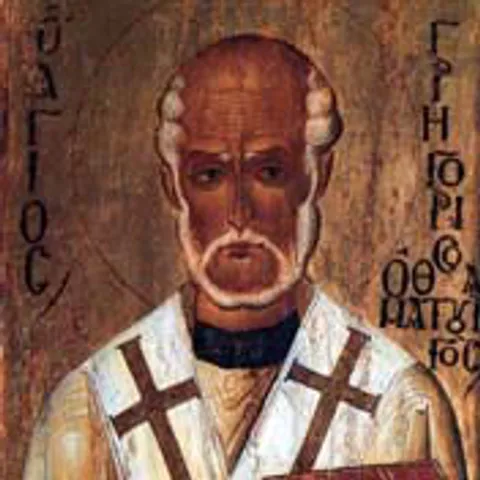 Gregory the Wonderworker’s Early life
Gregory was born in a Pontus, a region on the southern coast of the Black Sea, located in the modern-day eastern Black Sea Region of Turkey, around 212-13. His was a wealthy home and his parents named him Theodore (Gift of God) despite their pagan beliefs. When he was 14 years old his father died and soon after, he and his brother, Athenodorus, were anxious to study law at Beirut, Lebanon, then one of the four of five famous schools in the Hellenic world.
Influence of Origen
However, on the way, they first had to escort their sister to rejoin her husband, who was a government official assigned to Caesarea in Palestine (modern Haifa, Israel). When they arrived they learned that the celebrated scholar Origen, head of the catechetical school of Alexandria, lived there.
Inquisitiveness led them to hear and speak with the Origen and his irresistible charm quickly won their hearts. They soon dropped their desires for a life in Roman law, became Christian believers and pupils of Origen, learning philosophy and theology, for somewhere between five and eight years. Origen also baptised Gregory.
Pastor (then Bishop) of Neoceasarea
Gregory returned to his native Pontus with the intention of practicing oratory, but also to write a book proving the truth of Christianity, revealing his evangelistic heart. But his plans were disrupted when locals noticed his passion for Christ and his spiritual maturity. There were just seventeen Christians in Neoceasarea when Gregory arrived and this small group persuaded him to lead them as their bishop. (‘bishop’ simply meant a local overseer). At the time, Neocaesarea was a wicked, idolatrous province.
Signs of the Spirit
By his saintly life, his direct and lively preaching, helping the needy and settling quarrels and complaints, Gregory began to see many converts to Christ. But it was the signs and wonders that particularly attracted people to Christ.
En route to Neocaesarea from Amasea, Gregory expelled demons from a pagan temple, its priest converted to Christ immediately.
Once, when he was conversing with philosophers and teachers in the city square, a notorious harlot came up to him and demanded payment for the sin he had supposedly committed with her. At first Gregory gently remonstrated with her, saying that she perhaps mistook him for someone else.
But the loose woman would not be silenced. He then asked a friend to give her the money. Just as the woman took the unjust payment, she immediately fell to the ground in a demonic fit, and the fraud became evident. Gregory prayed over her, and the devil left her. This was the beginning of Gregory’s miracles. It was at this time he became known as ‘Gregory Thaumaturgus,’ ‘Gregory the Miracle Worker’ (or Wonderworker).
At one point Gregory wanted to flee from the worldly affairs into which influential townsmen persistently sought to push him. He went into the desert, where by fasting and prayer he developed an intimacy with God and received gifts of knowledge, wisdom and prophecy. He loved life in the wilderness and wanted to remain in solitude with God until the end of his days, but the Lord willed otherwise.
His theological contribution
Though he was primarily an evangelist and pastor, Gregory also had a deep theological understanding.
His principal work ‘The Exposition of Faith’, was a theological apology for Trinitarian belief. It incorporated his doctrinal instructions to new believers, expressed his arguments against heretical groups and was widely influential amongst leaders in the Patristic period: Basil the Great, Gregory the Theologian, and Gregory of Nyssa (The Cappadocian Fathers). It was the forerunner of the Nicene Creed that was to appear in the early 4th century.
In summary
He gave himself to the task of the complete conversion of the population of his diocese. The transformation in Neocaesarea was astonishing. Persuasive preaching, numerous healings and miraculous signs had a powerful effect. Such was his success that it was said that when Gregory became bishop (c 240) he found only seventeen Christians in his diocese; when he died only seventeen remained pagan (Latourette 1953:76).
Basil the Great’s Testimony
Basil the Great (330-379, Bishop of Caesarea, in his work ‘On the Spirit’ wrote the following account of Gregory the wonder-worker.
“But where shall I rank the great Gregory, and the words uttered by him? Shall we not place among Apostles and Prophets a man who walked by the same Spirit as they; who never through all his days diverged from the footprints of the saints; who maintained, as long as he lived, the exact principles of evangelical citizenship?
I am sure that we shall do the truth a wrong if we refuse to number that soul with the people of God, shining as it did like a beacon in the Church of God: for by the fellow-working of the Spirit the power which he had over demons was tremendous, and so gifted was he with the grace of the word ‘for obedience to the faith among. . .the nations.’ that, although only seventeen Christians were handed over to him, he brought the whole people alike in town and country through knowledge to God.
He too by Christ’s mighty name commanded even rivers to change their course, and caused a lake, which afforded a ground of quarrel to some covetous brethren, to dry up. Moreover, his predictions of things to come were such as in no wise to fall short of those of the great prophets. To recount all his wonderful works in detail would be too long a task. By the superabundance of gifts, wrought in him by the Spirit, in all power and in signs and in marvels, he was styled a second Moses by the very enemies of the Church.
Thus, in all that he through grace accomplished, alike by word and deed, a light seemed ever to be shining, token of the heavenly power from the unseen which followed him. To this day he is a great object of admiration to the people of his own neighborhood, and his memory, established in the churches ever fresh and green, is not dulled by length of time. (Schaff and Wace nd., Series 2. 8:46-47).
“Gregory was a great and conspicuous lamp, illuminating the church of God.” —Basil the Great.
Gregory the Wonderworker’s Early life
Gregory was born in a Pontus, a region on the southern coast of the Black Sea, located in the modern-day eastern Black Sea Region of Turkey, around 212-13. His was a wealthy home and his parents named him Theodore (Gift of God) despite their pagan beliefs. When he was 14 years old his father died and soon after, he and his brother, Athenodorus, were anxious to study law at Beirut, Lebanon, then one of the four of five famous schools in the Hellenic world.
Influence of Origen
However, on the way, they first had to escort their sister to rejoin her husband, who was a government official assigned to Caesarea in Palestine (modern Haifa, Israel). When they arrived they learned that the celebrated scholar Origen, head of the catechetical school of Alexandria, lived there.
Inquisitiveness led them to hear and speak with the Origen and his irresistible charm quickly won their hearts. They soon dropped their desires for a life in Roman law, became Christian believers and pupils of Origen, learning philosophy and theology, for somewhere between five and eight years. Origen also baptised Gregory.
Pastor (then Bishop) of Neoceasarea
Gregory returned to his native Pontus with the intention of practicing oratory, but also to write a book proving the truth of Christianity, revealing his evangelistic heart. But his plans were disrupted when locals noticed his passion for Christ and his spiritual maturity. There were just seventeen Christians in Neoceasarea when Gregory arrived and this small group persuaded him to lead them as their bishop. (‘bishop’ simply meant a local overseer). At the time, Neocaesarea was a wicked, idolatrous province.
Signs of the Spirit
By his saintly life, his direct and lively preaching, helping the needy and settling quarrels and complaints, Gregory began to see many converts to Christ. But it was the signs and wonders that particularly attracted people to Christ.
En route to Neocaesarea from Amasea, Gregory expelled demons from a pagan temple, its priest converted to Christ immediately.
Once, when he was conversing with philosophers and teachers in the city square, a notorious harlot came up to him and demanded payment for the sin he had supposedly committed with her. At first Gregory gently remonstrated with her, saying that she perhaps mistook him for someone else.
But the loose woman would not be silenced. He then asked a friend to give her the money. Just as the woman took the unjust payment, she immediately fell to the ground in a demonic fit, and the fraud became evident. Gregory prayed over her, and the devil left her. This was the beginning of Gregory’s miracles. It was at this time he became known as ‘Gregory Thaumaturgus,’ ‘Gregory the Miracle Worker’ (or Wonderworker).
At one point Gregory wanted to flee from the worldly affairs into which influential townsmen persistently sought to push him. He went into the desert, where by fasting and prayer he developed an intimacy with God and received gifts of knowledge, wisdom and prophecy. He loved life in the wilderness and wanted to remain in solitude with God until the end of his days, but the Lord willed otherwise.
His theological contribution
Though he was primarily an evangelist and pastor, Gregory also had a deep theological understanding.
His principal work ‘The Exposition of Faith’, was a theological apology for Trinitarian belief. It incorporated his doctrinal instructions to new believers, expressed his arguments against heretical groups and was widely influential amongst leaders in the Patristic period: Basil the Great, Gregory the Theologian, and Gregory of Nyssa (The Cappadocian Fathers). It was the forerunner of the Nicene Creed that was to appear in the early 4th century.
In summary
He gave himself to the task of the complete conversion of the population of his diocese. The transformation in Neocaesarea was astonishing. Persuasive preaching, numerous healings and miraculous signs had a powerful effect. Such was his success that it was said that when Gregory became bishop (c 240) he found only seventeen Christians in his diocese; when he died only seventeen remained pagan (Latourette 1953:76).
Basil the Great’s Testimony
Basil the Great (330-379, Bishop of Caesarea, in his work ‘On the Spirit’ wrote the following account of Gregory the wonder-worker.
“But where shall I rank the great Gregory, and the words uttered by him? Shall we not place among Apostles and Prophets a man who walked by the same Spirit as they; who never through all his days diverged from the footprints of the saints; who maintained, as long as he lived, the exact principles of evangelical citizenship?
I am sure that we shall do the truth a wrong if we refuse to number that soul with the people of God, shining as it did like a beacon in the Church of God: for by the fellow-working of the Spirit the power which he had over demons was tremendous, and so gifted was he with the grace of the word ‘for obedience to the faith among. . .the nations.’ that, although only seventeen Christians were handed over to him, he brought the whole people alike in town and country through knowledge to God.
He too by Christ’s mighty name commanded even rivers to change their course, and caused a lake, which afforded a ground of quarrel to some covetous brethren, to dry up. Moreover, his predictions of things to come were such as in no wise to fall short of those of the great prophets. To recount all his wonderful works in detail would be too long a task. By the superabundance of gifts, wrought in him by the Spirit, in all power and in signs and in marvels, he was styled a second Moses by the very enemies of the Church.
Thus, in all that he through grace accomplished, alike by word and deed, a light seemed ever to be shining, token of the heavenly power from the unseen which followed him. To this day he is a great object of admiration to the people of his own neighborhood, and his memory, established in the churches ever fresh and green, is not dulled by length of time. (Schaff and Wace nd., Series 2. 8:46-47).
“Gregory was a great and conspicuous lamp, illuminating the church of God.” —Basil the Great.
For Anyone Happy Without God
“I know you don’t believe me, but I do not need Christianity to be happy. I am happier than most Christians I know.” Looking up from his coffee, he smiled and assured me, “I am glad you found happiness in Jesus, but I am quite content without him. I have found my path to happiness, and I am glad you have found a different one. We stand at the same end, it would appear.” I did not know what to say. I knew how to share the Joy of the world to the discontent, the miserable, the downcast, but I stood perplexed at this man who told me, in no uncertain terms, “I do not need Christ to be happy.” Wasn’t his heart restless until it found its rest in him? He assured me it wasn’t. Didn’t he have a God-shaped hole in his heart? He swore that he didn’t. And what was more, he truly seemed to be, as far as I could tell, happy. I knew Jesus was a Comfort for those who mourned, a Light to those in darkness, a North Star to those who wandered the world without hope. I didn’t know what he was to those happy enough in their own way. Can Unbelievers Be Truly Happy? I wish I could go back and talk with this man. Instead of trying to convince him, for hours on end, of his unhappiness, all so I could then share Christ with him, I wish I would have spoken the way Paul did when he addressed those he found in Lystra. He [God] did not leave himself without witness, for he did good by giving you rains from heaven and fruitful seasons, satisfying your hearts with food and gladness. (Acts 14:17) Paul did not address the downtrodden, the depressed, the poor in spirit. Here, he addressed those who ate, drank, and when tomorrow came, died. Those with food and happiness enough not to alert them to their spiritual starvation. To such as these, Paul did not start by handing out prescriptions for happiness they didn’t feel they needed. He knew he spoke to a people that I was unfamiliar with: the happy heathen. Paul says that God satisfied their hearts with food and gladness. Gladness. The only other place in the New Testament where this word appears is in Luke’s citation of another well-known verse: “You have made known to me the paths of life; you will make me full of gladness with your presence” (Acts 2:28; citing Psalm 16:11). In Psalm 16, God’s Fatherly presence to his children gives one kind of heart-gladness (a full, everlasting, permanent kind), but his food and common-grace-goodness bestows another. Both are real. God Makes His Enemies Smile God allows his enemies to smile. Have you wondered at this? God allows those who ignore him, reject him, despise his glory, and belittle his name to breathe his air, feast on his food, swim in his waters, hike in his forests, ski on his mountains, laugh, sing, and dance on his lands. He has not yet evicted them. He has not taken back his bread from their plates nor his air from their lungs. Rather — and note the benevolence of the God of the universe — he “gives to all mankind life and breath and everything” (Acts 17:25). No good and perfect gift comes down from any other hand but his (James 1:17). He is an abundantly gracious God, even to his enemies. The God constantly sneered at and ignored “makes his sun rise on the evil.” Almighty God “sends rain . . . on the unjust” who despise his glory (Matthew 5:45). This kindness makes angels sing of his mercy and patience. Gifts Without Gratitude The man that I spoke with took these gifts from God, enjoyed them, and refused to say thank you. Man is the only creature other than fallen angels to pay God back so basely. God opens his hand and satisfies the desire of every living thing (Psalm 145:16). He opens his hand to eagles in their treetops, to antelope on the plains, to fish in the sea and flowers of the field. They declare his glory and groan for his return (Romans 8:19–23). But men and devils do not. Devils contemplate the return of God saying, “What have you to do with us, O Son of God? Have you come here to torment us before the time?” (Matthew 8:29). And men look their fellow men in the eye and say they have no need of Christ; indeed, who is Christ that he should be obeyed? God opens his hand to this creature — best positioned to return to him gratefulness and love — and he will not bother to look up. He does not honor him, nor does he return him thanks (Romans 1:21). I wish I would have shared with this man how his reasons for happiness — family, friends, health, good food, good drink, good sports — were not just “how things were.” I wish I would have bid him to consider how God watches him, day in and day out, parade about with his gifts while discounting his person. What Our Pleasures Testify Instead of telling him that I was sure he is really unhappy somewhere deep down, or trying to debate him as to whether he feels his God-sized hole (which he still has), what should I have told him? I should have explored all his reasons for happiness, and then told him plainly that these were all gifts from God meant to lead him to God. And that, furthermore, his failure to do so was already a serious crime that must be atoned for, and thus he must be led to Christ, God’s greatest gift to the world. Sin, not just his psychological experience of joy, gave Jesus utmost relevance to him. He had a sin problem, if not a felt joy problem. He stood not only a branch withering apart from the Vine; he stood a branch prepared for the fire (John 15:6). Paul told the happy heathens that God had not left himself without witness to both his existence and his goodness. And what was this witness’s testimony? Repent. “Or do you presume on the riches of his kindness and forbearance and patience, not knowing that God’s kindness is meant to lead you to repentance?” (Romans 2:4). Beautiful families whisper, repent. Enjoyable careers urge, repent. Sunsets in vacation selfies cry, repent. All of these declare that God is good, benevolent, and patient with his enemies, and that he calls them to turn away from sin and to forgiveness found in Christ. Word to Happy Heathen If I could go back to talk with this man, I might say something like the following. The Christian faith is not merely about man’s happiness, although God gives more joy than you can now imagine. Christianity addresses how sinful men, women, and children can be reconciled to their Creator and live happy lives for his glory. God has placed good gifts to summon you to see God’s ultimate gift: his Son, Jesus Christ. He came to save a people he didn’t have to save. To live a life we couldn’t live. To die the death we deserved to die. And to rise, summoning all everywhere to turn away from their sin, and trust in his finished work on the cross for sinners. The smartphone in your pocket has everything to do with this God. The music massaging your ears, the colors jumping before your eyes, the gladness of heart and the love you feel are kindnesses from God with one message upon their lips: “Repent and believe.” Instead of justifying a life apart from God, substituting the gifts for the Giver, the gifts of great joy are given to lead to the Giver. His multi-varied kindnesses, his overwhelming patience, his forbearance give room for faith. Even now he beckons. Even now he invites. Come, heed the message in every good gift of God’s perfect gift — Jesus Christ — and live. Article by Greg Morse Staff writer, desiringGod.org