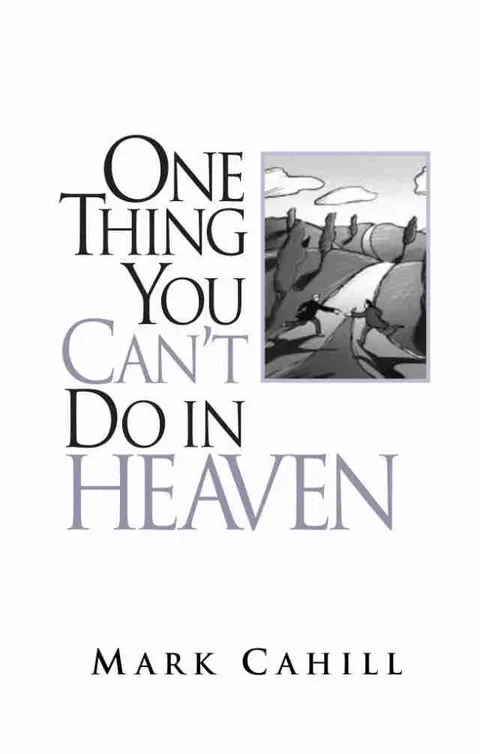

One Heartbeat Away: Your Journey Into Eternity Order Printed Copy
- Author: Mark Cahill
- Size: 3.08MB | 242 pages
- |
Others like one heartbeat away: your journey into eternity Features >>
Revival Fire
The Winds Of God Bring Revival
God's Smuggler
True Revivals And The Men God Uses
-160.webp)
Evidence For The Resurrection (What It Means For Your Relationship With God)
-160.webp)
Living As Salt And Light (God's Call To Transform Your World)
Defending Your Faith
God's Battleaxe
How To Bring Men To Christ

Get Acquainted With God
About the Book
"One Heartbeat Away: Your Journey Into Eternity" by Mark Cahill is a thought-provoking and engaging book that explores the reality of life after death. Cahill delves into themes of heaven, hell, salvation, and the importance of making a decision about where we will spend eternity. Through personal anecdotes, scripture, and compelling arguments, Cahill challenges readers to consider their own beliefs and relationship with God. Ultimately, the book serves as a powerful reminder of the brevity of life and the importance of making a decision about our eternal destination.
Calvin Miller
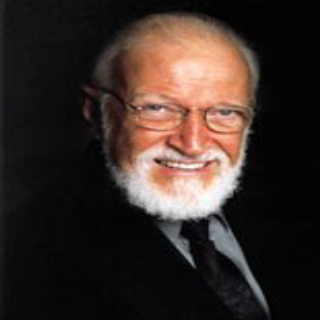 Calvin Miller was a pastor, professor and storyteller, best known for The Singer Trilogy, a mythic retelling of the New Testament story in the spirit of C. S. Lewis and J. R. R. Tolkien. Miller passed away on the afternoon of August 19, 2012, due to complications after heart surgery. He was 75.
A prolific artist and a writer's writer, Miller garnered respect and praise throughout his career from peers like Luci Shaw, Max Lucado and Philip Yancey. He was the author of more than forty books of popular theology and Christian inspiration including such recent books as Letters to Heaven, The Path of Celtic Prayer, Letters to a Young Pastor and his memoir Life Is Mostly Edges.
In addition to his twenty years of pastoral service at Westside Church in Omaha, Nebraska, Miller was also a great mentor to many students and leaders through his preaching and pastoral ministry classes at Beeson Divinity School. Calvin Miller, never one to multiply words, used just four to describe his rule of life: "Time is a gift."
RESCUE FROM THE SLUSH PILE
In October 1973 one important book was rescued from the slush pile (the stack of unsolicited manuscripts every publisher receives) by assistant editor Don Smith. He read a manuscript by a little-known Baptist pastor in Nebraska that was a poetic retelling of the life of Jesus—portraying him as a Troubadour. Both he and Linda Doll excitedly encouraged Jim Sire to take this imaginative manuscript seriously. In February 1974 Sire wrote the author, Calvin Miller, that IVP wanted to publish his book The Singer.
Months before, Miller had been waking up nights, stirred to write this tale, perhaps unconsciously inspired by the recent Broadway hits Jesus Christ Superstar and Godspell. Later Miller wrote:
When the manuscript was done, I sent it to Jim Sire at InterVarsity Press. “It’s good,” he said, “but we want to think about it a couple of weeks before we give you an answer.” So I waited until finally the letter came. They were going to do it. Jim Sire had done his Ph.D. on John Milton, and the fact that he liked it was joy immeasurable to me. “But,” he cautioned, “we’re going to print five thousand of these. They may not do well—in fact we may end up with four thousand of them on skids in our basement for the next ten years. Still, it’s a good book and deserves to be in print.”
Far more than a thousand copies sold. Actually, over three hundred times that amount sold in its first decade. It became “the most successful evangelical publication in this genre.” The Singer was followed in two years by The Song (paralleling the story of the early church in Acts) and two years after that by The Finale (inspired by the book of Revelation). Publication of The Singer changed Miller’s life. Even though he stayed in the pastorate for many years, it set him on a course of writing and speaking that he could not have imagined.
Calvin Miller was a pastor, professor and storyteller, best known for The Singer Trilogy, a mythic retelling of the New Testament story in the spirit of C. S. Lewis and J. R. R. Tolkien. Miller passed away on the afternoon of August 19, 2012, due to complications after heart surgery. He was 75.
A prolific artist and a writer's writer, Miller garnered respect and praise throughout his career from peers like Luci Shaw, Max Lucado and Philip Yancey. He was the author of more than forty books of popular theology and Christian inspiration including such recent books as Letters to Heaven, The Path of Celtic Prayer, Letters to a Young Pastor and his memoir Life Is Mostly Edges.
In addition to his twenty years of pastoral service at Westside Church in Omaha, Nebraska, Miller was also a great mentor to many students and leaders through his preaching and pastoral ministry classes at Beeson Divinity School. Calvin Miller, never one to multiply words, used just four to describe his rule of life: "Time is a gift."
RESCUE FROM THE SLUSH PILE
In October 1973 one important book was rescued from the slush pile (the stack of unsolicited manuscripts every publisher receives) by assistant editor Don Smith. He read a manuscript by a little-known Baptist pastor in Nebraska that was a poetic retelling of the life of Jesus—portraying him as a Troubadour. Both he and Linda Doll excitedly encouraged Jim Sire to take this imaginative manuscript seriously. In February 1974 Sire wrote the author, Calvin Miller, that IVP wanted to publish his book The Singer.
Months before, Miller had been waking up nights, stirred to write this tale, perhaps unconsciously inspired by the recent Broadway hits Jesus Christ Superstar and Godspell. Later Miller wrote:
When the manuscript was done, I sent it to Jim Sire at InterVarsity Press. “It’s good,” he said, “but we want to think about it a couple of weeks before we give you an answer.” So I waited until finally the letter came. They were going to do it. Jim Sire had done his Ph.D. on John Milton, and the fact that he liked it was joy immeasurable to me. “But,” he cautioned, “we’re going to print five thousand of these. They may not do well—in fact we may end up with four thousand of them on skids in our basement for the next ten years. Still, it’s a good book and deserves to be in print.”
Far more than a thousand copies sold. Actually, over three hundred times that amount sold in its first decade. It became “the most successful evangelical publication in this genre.” The Singer was followed in two years by The Song (paralleling the story of the early church in Acts) and two years after that by The Finale (inspired by the book of Revelation). Publication of The Singer changed Miller’s life. Even though he stayed in the pastorate for many years, it set him on a course of writing and speaking that he could not have imagined.
The Martyred Lover - The Story Behind Saint Valentine’s Day
Of the multitude of feasts celebrated in the popular culture of medieval Europe — wherein lie some of the key roots of the modern West — only two remain in popular North American culture today: Saint Patrick’s Day (March 17) and Saint Valentine’s Day (February 14). With Saint Patrick, we have two important texts by Patrick himself that reveal the true man. But who was Saint Valentine? The name was a popular one in the Roman world, for the adjective valens expressed the idea of being vigorous and robust. In fact, we know of about a dozen early Christians who bore this name. Our Saint Valentine was an Italian bishop who was martyred on February 14, 269, after a trial before the Roman emperor Claudius Gothicus (reign 268–270). According to the meager accounts that we have, Valentine’s body was hastily buried, but a few nights later some of his associates retrieved it and returned it to his home town of Terni in central Italy. Other accounts list him as an elder in Rome. One embellishment has him writing a letter before his death and signing it, “your Valentine.” “Saint Valentine was a martyr — yes, a lover, but one who loved the Lord Jesus to the point of giving his life.” What seems clear, though, from all that we can determine, is that Saint Valentine was a martyr — yes, a lover, but one who loved the Lord Jesus to the point of giving his life for his commitment to Christ. For Christians to adequately remember Saint Valentine, then, we would do well to consider what it meant to be a martyr in the early church. Witnesses and Martyrs Our word martyr is derived from the Greek martys, originally a juridical term that was used of a witness in a court of law. Such a person was one “who has direct knowledge or experience of certain persons, events or circumstances and is therefore in a position to speak out and does so.”1 In the New Testament, the term and its cognates are frequently applied to Christians, who bear witness to Christ, often in real courts of law, when his claims are disputed and their fidelity is tested by persecution. The transition of this word within the early Christian communities from witness to what the English term martyr” entails serves as an excellent gauge of what was happening to Christians as they bore witness to Christ. In Acts 1:8, Jesus tells the apostles that they are to be his “witnesses” (martyres) in Jerusalem, Judea, Samaria, and to the end of the earth. At this point, the word does not have the association of death, although in Acts 22:20 we do read of the “blood of Stephen,” the Lord’s “witness” (Greek martyros), being shed. But it is really not until the end of the writing of the New Testament canon that the term martys acquires the association with death.2 At the very close of the apostolic era, the risen Christ in Revelation 2 commends his servant Antipas, his “faithful witness,” who was slain for his faith at Pergamum, “where Satan dwells” (Revelation 2:12–13). Pergamum, it should be noted, was a key center of emperor worship in Asia Minor, and the first town in that area to build a temple to a Roman emperor, Augustus Caesar. It may well have been Antipas’s refusal to confess Caesar as Lord and worship him that led to his martyrdom.3 It has been estimated that by the mid-first century, eighty or so cities in Asia Minor had erected temples devoted to the cult of the emperor.4 The word martys seems thus to have acquired its future meaning first in the Christian communities in Asia Minor, where the violent encounter between church and empire was particularly intense.5 In this regard, it was certainly not fortuitous that Asia Minor was “unusually fond” of the violent entertainment of the gladiatorial shows. There was, in fact, a training school for gladiators at Pergamum. Along with fascination with such violence, there would have been a demand for victims over and above the requisite gladiators. Thus, recourse was had to Christians, among others.6 And so, the word martys became restricted in its usage to a single signification: bearing witness to the person and work of Christ to the point of death. Stephen and Antipas were the first of many such martyrs in the Roman Empire. Neronian Persecution One of the most memorable clashes between church and empire was what has come to be called the Neronian persecution. In mid-July 64, a fire began in the heart of Rome that raged out of control for nearly a week and gutted most of the city. After it had been extinguished, it was rumored that the emperor Nero (reign 54–68) himself had started it, for it was common knowledge that Nero wanted to level the capital of the empire in order to rebuild the city in a style in keeping with his conception of his own greatness. Conscious that he had to allay suspicions against him, Nero fixed the blame on the Christians. The fullest description that we have of this violence against the church is from the Roman historian Tacitus (about 55–117), who describes the execution of these Christians as follows: To scotch the rumour [that he had started the fire], Nero substituted as culprits, and punished with the utmost refinements of cruelty, a class of men, loathed for their vices, whom the crowd styled Christians. Christus, from whom they got their name, had been executed by sentence of the procurator Pontius Pilate when Tiberius was emperor; and the pernicious superstition was checked for a short time, only to break out afresh, not only in Judaea, the home of the plague, but in Rome itself, where all the horrible and shameful things in the world collect and find a home. First of all, those who confessed were arrested; then, on their information, a huge multitude was convicted, not so much on the ground of incendiarism as for hatred of the human race. Their execution was made a matter of sport: some were sewn up in the skins of wild beasts and savaged to death by dogs; others were fastened to crosses as living torches, to serve as lights when daylight failed. Nero made his gardens available for the show and held games in the Circus, mingling with the crowd or standing in his chariot in charioteer’s uniform. Hence, although the victims were criminals deserving the severest punishment, pity began to be felt for them because it seemed that they were being sacrificed to gratify one man’s lust for cruelty rather than for the public weal.7 A number of Christians — including the apostle Peter, according to an early Christian tradition that seems to be genuine8 — were arrested and executed. Their crime was ostensibly arson. Tacitus seems to doubt the reality of this accusation, though he does believe that Christians are rightly “loathed for their vices.” Tacitus’s text mentions only one vice explicitly: “hatred of the human race.” Why would Christians, who preached a message of divine love and who were commanded to love even their enemies, be accused of such a vice? Well, if one looks at it through the eyes of Roman paganism, the logic seems irrefutable. It was, after all, the Roman gods who kept the empire secure. But the Christians refused to worship these gods — thus the charge of “atheism” that was sometimes leveled at them.9 Therefore, many of their pagan neighbors reasoned, they cannot love the emperor or the empire’s inhabitants. Christians thus were viewed as fundamentally anti-Roman and so a positive danger to the empire.10 ‘Blood of Christians Is Seed’ This attack on the church was a turning-point in the relationship between the church and the Roman state in these early years. It set an important precedent. Christianity was now considered illegal, and over the next 140 years the Roman state had recourse to sporadic persecution of the church. It is noteworthy, though, that no emperor initiated an empire-wide persecution until the beginning of the third century, and that with Septimius Severus (reign 193–211).11 Nonetheless, martyrdom was a reality that believers had to constantly bear in mind during this period of the ancient church. “Instead of stamping out Christianity, persecution often caused it to flourish.” But persecution did not always have the effect the Romans hoped for. Instead of stamping out Christianity, persecution often caused it to flourish. As Tertullian (born about 155), the first Christian theologian to write in Latin, put it, “The more you mow us down, the more we grow: the blood of Christians is seed.”12 And as he said on another occasion: “whoever beholds such noble endurance [of the martyrs] will first, as though struck by some kind of uneasiness, be driven to enquire what is the matter in question, and, then, when he knows the truth, immediately follow the same way.”13 Surpassing All Earthly Loves It was during the Middle Ages that the various stories of Saint Valentine circulated and were embellished, solidifying the remembrance of him as a martyr. But it was a medieval writer, Geoffrey Chaucer (1340s–1400), who explicitly linked romantic love to Saint Valentine in a poem entitled “Parliament of Fowls” that described the gathering of a group of birds on “seynt valentynes day” to choose their mates. To what degree Chaucer influenced the later link between Saint Valentine’s Day and lovers is not exactly clear, but as early as the fifteenth century lovers were sending each other love notes on Saint Valentine’s Day. Of course, with the rise of the commercial cultures of the West in the eighteenth and nineteenth centuries, this practice was commodified and became an important part of the commercial world we see today. There is nothing inherently wrong with modern commercial traditions, but Saint Valentine’s Day is a good day to also remember that there is a love that surpasses all earthly loves: our love for our great God and our Savior, his dear divine Son, Jesus. Allison A. Trites, The New Testament Concept of Witness (Cambridge: Cambridge University Press, 1977), 9. ↩ G.W. Bowersock, Martyrdom and Rome (Cambridge: Cambridge University Press, 1995), 1–21. ↩ Paul Keresztes, “The Imperial Roman Government and the Christian Church. I. From Nero to the Severi” in Aufstieg und Niedergang der römischen Welt, ed. Hildegard Temporini and Wolfgang Haase (Berlin: Walter de Gruyter, 1979), II.23.1, 272; G.K. Beale, The Book of Revelation (Grand Rapids: Eerdmans, 1999), 246. ↩ Christopher A. Frilingos, Spectacles of Empire: Monsters, Martyrs, and the Book of Revelation (Philadelphia: University of Pennsylvania Press, 2004), 22–23. ↩ Theofried Baumeister, “Martyrdom and Persecution in Early Christianity,” trans. Robert Nowell, in Martyrdom Today, ed. Johannes-Baptist Metz and Edward Schillebeeckx (Edinburgh: T&T Clark, 1983), 4. ↩ Bowersock, Martyrdom and Rome, 17–18; Keresztes, “Imperial Roman Government and the Christian Church,” 272. ↩ Tacitus, Annals 15.44.3–8, trans. F.F. Bruce, Paul: Apostle of the Heart Set Free (Grand Rapids: Eerdmans, 1977), 442. ↩ See Tertullian, Scorpiace 15.3. ↩ See Justin Martyr, 2 Apology 3. ↩ W.H.C. Frend, “Persecutions,” in Encyclopedia of the Early Church, ed. Angelo Di Berardino, trans. Adrian Walford (New York: Oxford University Press, 1992), II, 673. Christians were also charged with incest, seemingly a misunderstanding of the common Christian statement about loving their brothers and sisters in Christ, and with cannibalism, a misunderstanding of the Lord’s Table. See, in this regard, Justin Martyr, 2 Apology 12; Theophilus, To Autolycus 3.4, 15; Minucius Felix, Octavius 9.2, 5; 28.2; 30–31. ↩ Some scholars see the first empire-wide persecution initiated by an emperor to be that of Decius (reign 249–251) in the late 240s. ↩ Tertullian, Apology 50.13. ↩ Tertullian, To Scapula 5, in Tertullian: Apologetical Works and Minucius Felix: Octavius, trans. Rudolph Arbesmann, Emily Joseph Daly, and Edwin A. Quain (New York: Fathers of the Church, Inc., 1950), 161. ↩ Article by Michael A.G. Haykin