

Others like love talk Features >>









About the Book
"Love Talk" by Les and Leslie Parrott is a guidebook for couples to improve their communication skills and strengthen their relationship. The authors provide practical advice and strategies for effective communication, including understanding each other's love languages, resolving conflicts, and deepening emotional intimacy. Through real-life examples and exercises, the book helps couples learn how to communicate more openly, honestly, and lovingly with each other.
Richard Wurmbrand
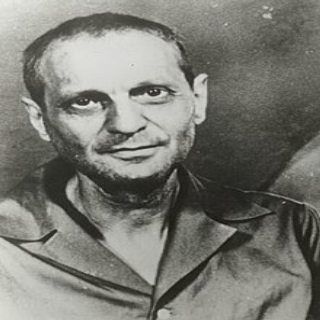 Richard Wurmbrand (1909 – 2001) was born in 1909 in Bucharist in the country of Romania. He was the youngest of four boys born in a Jewish family. He lived with his family in Istanbul for a short time. When he was 9, his father died and the Wurmbrands returned to Romania when he was 15.
He was sent to study Marxism in Moscow. When he returned, he was already a Comintern Agent. A Comintern Agent was a member of the Communist International Organisation which intended to fight:
Like other Romanian Communists, he was arrested and released several times.
He married Sabina Oster on 26th October 1936. Wurmbrand and his wife went to live in an isolated village high in the mountains of Romania. But, as a athiest there was no peace to be found in his heart. So one day, when his heart was in a state of turmoil he cried out:
“God, if perchance you exist, it is Your duty to reveal yourself to me.”
Shorthly after he prayed that prayer, he met a German carpenter in his village who gave him a bible. The carpenter and his wife had been praying earnestly that God would bring a Jew to his village, because the carpenter wanted to bring a Jew to Christ, because Jesus was a Jew. So the carpenter gave him a Bible to read. Wurmbrand said, when he opened that Bible he could not stop weeping. He had read the Bible before but it had meant nothing to him. This time when he opened the Bible he could barely read it because of the copious amount of tears that filled his eyes. Sometime later he found out the carpenter and his wife had been praying earnestly for him. Wurnbrand said that every word that he read were like flames of love burning in his heart. He realized for the first ime in his life that there was a God of love who loved him, even though he had beeen living a bad life and had nurtured a hated towards the concept of a ‘loving’ God.
The Power of Intercessory Prayer
But now for the first time he knew that Jesus had suffered at the cross of Calvary for his sins and he was loved and accepted of God. Richard and his wife became believers in Jesus the Messiah. All the hatred that he had formerly held toward God was washed away under the blood of Christ and Richard and his wife Sabrina were born of the Spirit. That is the power of intercessory prayer!
Richard prepared himself for the ministry. He was ordained as an Anglican minister in 1938 at the start of world war 2. Both Richard and his wife were arrested several times. They were beaten and hauled before a Nazi court. They suffered under the Nazi regime throughout world war 2. But Richard said, it was only a taste of what was to come.
Russian Troups Enter Romania
Towards the end of world war 2, Richard Wurmbrand became a Lutheran and he pastored a Lutheran church in Romania. But, the same year, 1 million Russian troups entered and occupied the entire territory of Romania.
Within a very short space of time the Communists took over Romania. The reign of terror began. Out of fear 4,000 priests, pastors & ministers became Communists overnight. They confessed their allegience and loyalty to the new Communist Government because they all feared for their survival.
Romania’s Resistance
Harsh persecutions of any enemies of the Communist government started with the Soviet occupation in 1945. The Soviet army behaved as an occupation force (although theoretically it was an ally against Nazi Germany), and could arrest virtually anyone at will. Shortly after Soviet occupation, ethnic Germans (who were Romanian citizens and had been living as a community in Romania for 800 years) were deported to the Donbas coal mines. Despite the King’s protest, who pointed out that this was against international law, an estimated 70,000 men and women were forced to leave their homes, starting in January 1945, before the war had even ended. They were loaded in cattle cars and put to work in the Soviet mines for up to ten years as “reparations”, where about one in five died from disease, accidents and malnutrition.
Once the Communist government became more entrenched, the number of arrests increased. All strata of society were involved, but particularly targeted were the pre-war elites, such as intellectuals, clerics, teachers, former politicians (even if they had left-leaning views) and anybody who could potentially form the nucleus of anti-Communist resistance. The existing prisons were filled with political prisoners, and a new system of forced labor camps and prisons was created, modeled after the Soviet Gulag. Some of the most notorious prisons included Sighet, Gherla, Piteşti and Aiud, and forced labor camps were set up at lead mines and in the Danube Delta.
Underground Church
Richard and his wife knew that Christianity and Communism were totally opposed to each other. They knew that a true follower of Christ cannot compromise. So they created an “Underground Church” movement to preach the pure gospel of Christ and to reach out to the unsaved people of Romania and secondly to reach out secretly to the Russian soldiers. They secretly printed thousands of Bibles and Christian literature and distributed it to the Russian soldiers. Many of the Russian soldiers were convicted and they gave their life to Christ.
So the underground church grew. But, in 1948 the Secret Police arrested Wurmbrand and he was placed in solitary confinement for 3 years. He was then transferred to a group cell for the next five years. Whilst in prison he continued to win the other prisoners to Christ. After 8 years in prison he was released and he immediately resumed his work with the undergound church. A few years later, 1959, he was arrested again and was sentenced to 25 years in prison. However, after spending 5 years in prison an organisation called the Christian Alliance negotiated with the Communist Government and they managed to secure his release for a fee of $10,000. They quickly got Richard Wurmbrand out of Romania and took him to England, then to the USA.
In 1966, Richard was called to Washington DC to give his testimony before the United States Senate. He took off his shirt to show the Senate the scars and the wounds that he received whilst he served time in prison under the Communist Government in Romania.
The newspapers throughout the USA, Europe and Asia carried his story all across the world. Christian leaders called him the “Voice of the Underground Church.”
In 1967, with a $100 old typewriter and 500 names and addresses, Richard Wurmbrand published the first issue of THE VOICE OF THE MARTYRS newsletter. This newsletter was dedicated to communicating the testimonies and trails facing our brothers and sisters in restricted nations worldwide. Richard wrote:
“The message I bring from the Underground Church is:
“Don’t abandon us!”
“Don’t forget us!”
“Don’t write us off!”
“Give us the tools we need! We will pay the price for using them!”
“This is the message I have been charged to deliver to the free church.”
Richard Wurmbrand and his wife travelled throughout the world to establish a network of over 30 offices. Their primary aim was to call Christians to shoulder their responsibility and to demonstrate the real substance of their faith by supporting their brothers and sisters in Christ who are being persecuted in heathen lands.
The VOICE OF THE MARTYRS newsletter continues to inform, and lead to action, Christians throughout the free world of the plight of those who suffer for their faith in Jesus Christ. Throughout their network of offices around the world, the newsletter is published in over 30 different languages. To this cause, VOICE OF THE MARTYRS presses on, serving in nearly 40 countries around the world where our brothers and sisters are systematically persecuted.
The writer of the Book of Hebrews brings a convicting word to the Christian church:
” Remember them that are in bonds, as bound with them; and them that suffer adversity, as being yourselves also in the body.”
(Hebrews 13:3)
We have a responsibility to those who suffer for their faith in Christ.
Today, there is an estimated 200 million Christians in heathen nations who are suffering persecution for their faith in Christ.
Richard Wurmbrand (1909 – 2001) was born in 1909 in Bucharist in the country of Romania. He was the youngest of four boys born in a Jewish family. He lived with his family in Istanbul for a short time. When he was 9, his father died and the Wurmbrands returned to Romania when he was 15.
He was sent to study Marxism in Moscow. When he returned, he was already a Comintern Agent. A Comintern Agent was a member of the Communist International Organisation which intended to fight:
Like other Romanian Communists, he was arrested and released several times.
He married Sabina Oster on 26th October 1936. Wurmbrand and his wife went to live in an isolated village high in the mountains of Romania. But, as a athiest there was no peace to be found in his heart. So one day, when his heart was in a state of turmoil he cried out:
“God, if perchance you exist, it is Your duty to reveal yourself to me.”
Shorthly after he prayed that prayer, he met a German carpenter in his village who gave him a bible. The carpenter and his wife had been praying earnestly that God would bring a Jew to his village, because the carpenter wanted to bring a Jew to Christ, because Jesus was a Jew. So the carpenter gave him a Bible to read. Wurmbrand said, when he opened that Bible he could not stop weeping. He had read the Bible before but it had meant nothing to him. This time when he opened the Bible he could barely read it because of the copious amount of tears that filled his eyes. Sometime later he found out the carpenter and his wife had been praying earnestly for him. Wurnbrand said that every word that he read were like flames of love burning in his heart. He realized for the first ime in his life that there was a God of love who loved him, even though he had beeen living a bad life and had nurtured a hated towards the concept of a ‘loving’ God.
The Power of Intercessory Prayer
But now for the first time he knew that Jesus had suffered at the cross of Calvary for his sins and he was loved and accepted of God. Richard and his wife became believers in Jesus the Messiah. All the hatred that he had formerly held toward God was washed away under the blood of Christ and Richard and his wife Sabrina were born of the Spirit. That is the power of intercessory prayer!
Richard prepared himself for the ministry. He was ordained as an Anglican minister in 1938 at the start of world war 2. Both Richard and his wife were arrested several times. They were beaten and hauled before a Nazi court. They suffered under the Nazi regime throughout world war 2. But Richard said, it was only a taste of what was to come.
Russian Troups Enter Romania
Towards the end of world war 2, Richard Wurmbrand became a Lutheran and he pastored a Lutheran church in Romania. But, the same year, 1 million Russian troups entered and occupied the entire territory of Romania.
Within a very short space of time the Communists took over Romania. The reign of terror began. Out of fear 4,000 priests, pastors & ministers became Communists overnight. They confessed their allegience and loyalty to the new Communist Government because they all feared for their survival.
Romania’s Resistance
Harsh persecutions of any enemies of the Communist government started with the Soviet occupation in 1945. The Soviet army behaved as an occupation force (although theoretically it was an ally against Nazi Germany), and could arrest virtually anyone at will. Shortly after Soviet occupation, ethnic Germans (who were Romanian citizens and had been living as a community in Romania for 800 years) were deported to the Donbas coal mines. Despite the King’s protest, who pointed out that this was against international law, an estimated 70,000 men and women were forced to leave their homes, starting in January 1945, before the war had even ended. They were loaded in cattle cars and put to work in the Soviet mines for up to ten years as “reparations”, where about one in five died from disease, accidents and malnutrition.
Once the Communist government became more entrenched, the number of arrests increased. All strata of society were involved, but particularly targeted were the pre-war elites, such as intellectuals, clerics, teachers, former politicians (even if they had left-leaning views) and anybody who could potentially form the nucleus of anti-Communist resistance. The existing prisons were filled with political prisoners, and a new system of forced labor camps and prisons was created, modeled after the Soviet Gulag. Some of the most notorious prisons included Sighet, Gherla, Piteşti and Aiud, and forced labor camps were set up at lead mines and in the Danube Delta.
Underground Church
Richard and his wife knew that Christianity and Communism were totally opposed to each other. They knew that a true follower of Christ cannot compromise. So they created an “Underground Church” movement to preach the pure gospel of Christ and to reach out to the unsaved people of Romania and secondly to reach out secretly to the Russian soldiers. They secretly printed thousands of Bibles and Christian literature and distributed it to the Russian soldiers. Many of the Russian soldiers were convicted and they gave their life to Christ.
So the underground church grew. But, in 1948 the Secret Police arrested Wurmbrand and he was placed in solitary confinement for 3 years. He was then transferred to a group cell for the next five years. Whilst in prison he continued to win the other prisoners to Christ. After 8 years in prison he was released and he immediately resumed his work with the undergound church. A few years later, 1959, he was arrested again and was sentenced to 25 years in prison. However, after spending 5 years in prison an organisation called the Christian Alliance negotiated with the Communist Government and they managed to secure his release for a fee of $10,000. They quickly got Richard Wurmbrand out of Romania and took him to England, then to the USA.
In 1966, Richard was called to Washington DC to give his testimony before the United States Senate. He took off his shirt to show the Senate the scars and the wounds that he received whilst he served time in prison under the Communist Government in Romania.
The newspapers throughout the USA, Europe and Asia carried his story all across the world. Christian leaders called him the “Voice of the Underground Church.”
In 1967, with a $100 old typewriter and 500 names and addresses, Richard Wurmbrand published the first issue of THE VOICE OF THE MARTYRS newsletter. This newsletter was dedicated to communicating the testimonies and trails facing our brothers and sisters in restricted nations worldwide. Richard wrote:
“The message I bring from the Underground Church is:
“Don’t abandon us!”
“Don’t forget us!”
“Don’t write us off!”
“Give us the tools we need! We will pay the price for using them!”
“This is the message I have been charged to deliver to the free church.”
Richard Wurmbrand and his wife travelled throughout the world to establish a network of over 30 offices. Their primary aim was to call Christians to shoulder their responsibility and to demonstrate the real substance of their faith by supporting their brothers and sisters in Christ who are being persecuted in heathen lands.
The VOICE OF THE MARTYRS newsletter continues to inform, and lead to action, Christians throughout the free world of the plight of those who suffer for their faith in Jesus Christ. Throughout their network of offices around the world, the newsletter is published in over 30 different languages. To this cause, VOICE OF THE MARTYRS presses on, serving in nearly 40 countries around the world where our brothers and sisters are systematically persecuted.
The writer of the Book of Hebrews brings a convicting word to the Christian church:
” Remember them that are in bonds, as bound with them; and them that suffer adversity, as being yourselves also in the body.”
(Hebrews 13:3)
We have a responsibility to those who suffer for their faith in Christ.
Today, there is an estimated 200 million Christians in heathen nations who are suffering persecution for their faith in Christ.
the only certain hope on earth
“It is the hope that kills you,” as many English football (soccer) fans say. Is it not better to have low expectations instead of hoping your team will do well, only to see those hopes dashed in sometimes cruel ways? The world has an idea of hope that sees it as an optimistic expectation that something good may happen in this life or, for the religious, the life to come. People cannot help but hope; it is part of our DNA as humans. We hope for good health, a good marriage, good weather, or an enjoyable holiday. Many even hope for a better life after the life they have lived on earth, which explains why so many claim that loved ones (including animals) are “smiling down” upon them after their death. Much of the hope that is found in the world lacks promise and certainty, which is like building a house on sand. Christian hope is very different from worldly hope. Christian hope is a Spirit-given virtue enabling us to joyfully expect what God has promised through Jesus Christ. It is, therefore, thoroughly Trinitarian. Height of Our Hope Christian hope looks to God because he is “the God of hope” (Romans 15:13). Because of the resurrection of Christ, Peter says that our “faith and hope are in God” (1 Peter 1:21). The degree to which we find God desirable and excellent will be the same to which hope plays a role in our lives. Our view of God will affect the hope we possess. A small god begets a small hope; but knowing God and Christ (John 17:3), which is eternal life, is ground for possessing a hope that bursts forth in our souls on a daily basis. The psalmist describes the blessed person as the one “whose help is the God of Jacob, whose hope is in the Lord his God” (Psalm 146:5). Consider the words of Thomas Aquinas on this: Wherefore the good which we ought to hope for from God properly and chiefly is the infinite good, which is proportionate to the power of our divine helper, since it belongs to an infinite power to lead anyone to an infinite good. Such a good is eternal life, which consists in the enjoyment of God Himself. For we should hope from Him for nothing less than Himself, since His goodness, whereby He imparts good things to His creature, is no less than His essence . Therefore the proper and principal object of hope is eternal happiness. ( Summa Theologica , II-II.17.2) In short, Aquinas is saying that our joy is connected to our hope, which is connected to our Savior, which is connected to our God. Christian hope exists only when we hope in the God and Father of our Lord Jesus Christ (1 Peter 1:13). The height of our hope is God himself. Certain as God’s Promises Certain conditions characterize biblical hope: it must be good, it must be in the future, it involves some degree of difficulty (for example, patient suffering), and it must be founded on God’s promises. Those who persevere, by faith, shall attain what we hope for: the sight of our Savior (Titus 2:13). “Christian hope is a Spirit-given virtue enabling us to joyfully expect what God has promised through Jesus Christ.” This hope of the blessed vision of Christ is based not only upon the fact that we know he will return, but also on the knowledge that God dwells in us. This explains Paul’s language in Romans 15:13, “May the God of hope fill you with all joy and peace in believing, so that by the power of the Holy Spirit you may abound in hope.” Hope arises from not only objective promises, but also an internal “pull” toward God and Christ by his Spirit. Thus, Christian hope is not about probable hope or about mere conjecture concerning things future, but about great certainty. Faith, Hope, and Love Faith in God through Christ by the Spirit gives rise to Christian hope. Faith and hope bear an intimate relation to one another (Romans 4:18–21; 5:2; 15:13; Galatians 5:5; Ephesians 1:18–19; Colossians 1:23; 1 Timothy 4:10; Hebrews 11:1; 1 Peter 1:21). Faith is the foundation of hope, so that hope without faith is no hope at all. We believe God in order to hope in what we believe. But faith also returns to hope to give it courage to persevere. If faith apprehends God’s promises, hope expects what he promises. In times of trouble, despair, and suffering, faith and hope feed on God and his promises. The difference between faith and hope is not easy to discern. Simply put, faith believes, but hope waits patiently. (Yet there is an aspect whereby faith also requires patience.) God is the object of hope, as it specifically focuses on his goodness to us in Christ. Faith not only looks to God but also trembles at his threatenings (when appropriate). Hope remains free of such fear. Faith and love can relate to a present or future object, but hope looks to the future alone. And of course, faith and hope also bear an intimate relation to love. If hope relates to faith in terms of our expectations, hope relates to love in terms of our desire. Love requires desire, so the more we desire the good, the more we will love it. Equally, hope requires desire. The more we desire what is promised, the more we hope for it. Since faith focuses on Christ, hope will always be present where there is true faith. And since faith focuses on Christ, love will always accompany faith and hope because God and Christ are the object of faith and hope — how can we not love the one we believe has saved us and promised so much for the future? Thus, faith, hope, and love give expression to our Christian life (1 Corinthians 13:13; Colossians 1:4). Hope That Purifies The life of hope yields many benefits to the Christian, such as the expectation of eternal life (Titus 1:2; 3:7), salvation (1 Thessalonians 5:8), heaven (Colossians 1:5), the resurrection (Acts 23:6), the gospel (Colossians 1:23), God’s calling (Ephesians 1:18; 4:4), and our inheritance (Ephesians 1:18). But there is also a “duty” bound up with hope, namely, purification of our souls: “Everyone who thus hopes in him purifies himself as he is pure” (1 John 3:3). This command follows one of the greatest promises of Christian hope: “Beloved, we are God’s children now, and what we will be has not yet appeared; but we know that when he appears we shall be like him, because we shall see him as he is” (1 John 3:2). Those who have the hope of being made like Christ in body and soul must also have the present desire to be pure . While in sanctification the accent is often on what God does, here in 1 John 3:3 the accent is on what we do. Christians, if they embrace a hope of seeing Christ face to face, are to purify themselves. In other words, hope has a moral effect. The pursuit of purity arises out of our possession of hope. Hope gives birth to sanctification; and as we are sanctified, we hope even more because we get closer to God. Besides John, Peter also makes this point. He speaks of the future promise of the new heavens and new earth to his readers (2 Peter 3:13), and then reasons, “Therefore, beloved, since you are waiting for these, be diligent to be found by [God] without spot or blemish, and at peace” (2 Peter 3:14). “Our joy is connected to our hope, which is connected to our Savior, which is connected to our God.” Likewise, Paul writes, “Since we have these promises, beloved, let us cleanse ourselves from every defilement of body and spirit, bringing holiness to completion in the fear of God” (2 Corinthians 7:1). The promises Paul speaks of include our adoption as sons and daughters, wherein God makes his dwelling and walks among us (2 Corinthians 6:16, 18). These promises are, of course, realized in this life, but they also await a type of consummation that we can all look forward to (see Romans 8:23). Christian hope has present realities, one of which includes our sanctification. In this matter, our faith clings ever so tightly to our hope, as we seek to be holy as God is holy. Hope Unlike the World’s In the church today, we have underemphasized the future motivation (our Christian hope) for how to live the sanctified life. As with the Lord’s Supper, we do not only look back to Christ’s death but also look now to the risen Christ and forward to the future blessings that await us. This is the purification of the truly hopeful. Our hope is unlike the world’s. The world’s hope is often vague, uncertain, a wish thrust up at the stars. But Christian hope is solid, certain, future, and cleansing. It lasts as long as the eternal God lives, and stands as tall as he stands. He is our hope, for apart from him, no such thing exists (Ephesians 2:13).