
Others like living the better covenant Features >>





About the Book
"Living The Better Covenant" by Mary Felge explores the concept of living under the new covenant established by Jesus Christ. The book delves into the promises, benefits, and responsibilities that come with this covenant, leading readers to a deeper understanding of their relationship with God and how to walk in the fullness of His blessings. Felge emphasizes the importance of faith, obedience, and intimacy with God in experiencing the abundant life He has promised to His children.
William Still
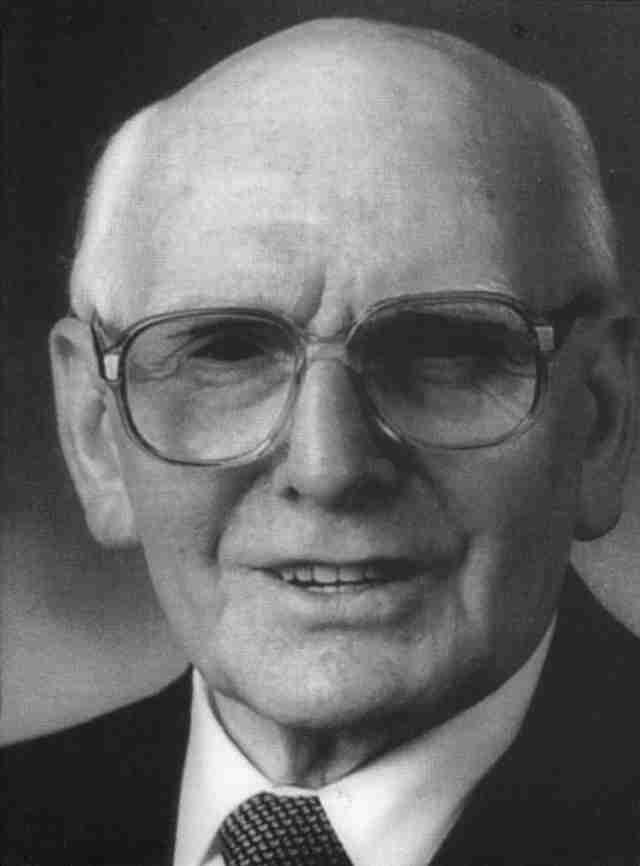 I recently read Dying to Live (Christian Focus, 1991), the autobiography of Scottish pastor William Still. I became interested in Still after reading his book The Work of the Pastor earlier this year.
The first half of Dying to Live tells about Still’s early years into young adulthood and his beginning in pastoral ministry. Still had an unsettled childhood. His parents were separated in his early years, and his father was an alcoholic. He was a sickly child who took refuge in music and became an accomplished pianist. He was part of the Salvation Army as a young man but then entered ministry in the Church of Scotland and served at the Gilcomston Church in his hometown of Aberdeen from 1945-1997.
The second half of the book deals with various aspects of Still’s pastoral ministry. Still was an evangelical. In his early ministry he worked with Billy Graham, Alan Redpath, and others in evangelistic events. With time, however, he moved away from what he came to call “evangelisticism” to develop a solid expositional ministry.
Still faced his fair share of hardships during the course of his ministry. When he moved away from pragmatic evangelistic methods, for example, more than two hundred people stopped attending his church almost overnight. In the preface, he references Martin Luther’s observation that there are three things which make a minister: study, prayer, and afflictions. He observes, “He who is not prepared to make enemies for Christ’s sake by the faithful preaching of the Word will never make lasting friends for Christ, either” (p. 93).
He describes one particularly difficult controversy early in his ministry when he confronted a group of disgruntled elders. At the end of one Sunday service, he read a statement confronting these men, which ended, “There you sit, with your heads down, guilty men. What would you say if I named you before the whole congregation? You stand condemned before God for your contempt of the Word and of his folk.” He adds, “The moment I had finished, I walked out of the pulpit. There was no last hymn—no benediction. I went right home. It was the hardest and most shocking thing I ever had to do in Gilcomston” (p. 124). That same week seven of his elders resigned and Still was called twice before his Presbytery to answer for the controversy. Yet, he endured.
Still maintains that in light of the unpleasantness one will face in the ministry that the minister of the Word must possess one quality in particular: “…I would say that this quality is courage: guts, sheer lion-hearted bravery, clarity of mind and purpose, grit. Weaklings are no use here. They have a place in the economy of God if they are not deliberate weaklings and stunted adults as Paul writes of both to the Romans and to the Corinthians. But weaklings are no use to go out and speak prophetically to men from God and declare with all compassion, as well as with faithfulness, the truth: the divine Word that cuts across all men’s worldly plans for their lives” (p. 140).
Still was a pioneer in several areas. First, he developed a pattern of preaching and teaching systematically through books of the Bible at a time when this was rarely done. He began a ministry of “consecutive Bible teaching” starting with the book of Galatians in 1947, calling this transition from “evangelisticism to systematic exposition … probably the most significant decision in my life” (p. 191).
He was also a pioneer in simplifying and integrating the ministry of the church. After noting how youth in the church were drifting away, even after extensive involvement in the church’s children’s ministry, Still writes, “I conceived the idea of ceasing all Sunday School after beginners and Primary age (seven years) and invited parents to have their children sit with them in the family pew from the age of eight” (p. 171). He laments “the disastrous dispersion of congregations by the common practice of segregating the church family into every conceivable category of division of ages, sexes, etc.” (p. 173).
Dying to Live is a helpful and encouraging work about the life and work of the minister and is to be commended to all engaged in the call of gospel ministry. As the title indicates, Still’s essential thesis is that in order to be effective in ministry the minister must suffer a series of deaths to himself (cf. John 12:24). On this he writes:
The deaths one dies before ministry can be of long duration—it can be hours and days before we minister, before the resurrection experience of anointed preaching. And then there is another death afterwards, sometimes worse than the death before. From the moment that you stand there dead in Christ and dead to everything you are and have and ever shall be and have, every breath you breathe thereafter, every thought you think, every word you say and deed you do, must be done over the top of your own corpse or reaching over it in your preaching to others. Then it can only be Jesus that comes over and no one else. And I believe that every preacher must bear the mark of that death. Your life must be signed by the Cross, not just Christ’s cross (and there is really no other) but your cross in his Cross, your particular and unique cross that no one ever died—the cross that no one ever could die but you and you alone: your death in Christ’s death (p. 136).
I recently read Dying to Live (Christian Focus, 1991), the autobiography of Scottish pastor William Still. I became interested in Still after reading his book The Work of the Pastor earlier this year.
The first half of Dying to Live tells about Still’s early years into young adulthood and his beginning in pastoral ministry. Still had an unsettled childhood. His parents were separated in his early years, and his father was an alcoholic. He was a sickly child who took refuge in music and became an accomplished pianist. He was part of the Salvation Army as a young man but then entered ministry in the Church of Scotland and served at the Gilcomston Church in his hometown of Aberdeen from 1945-1997.
The second half of the book deals with various aspects of Still’s pastoral ministry. Still was an evangelical. In his early ministry he worked with Billy Graham, Alan Redpath, and others in evangelistic events. With time, however, he moved away from what he came to call “evangelisticism” to develop a solid expositional ministry.
Still faced his fair share of hardships during the course of his ministry. When he moved away from pragmatic evangelistic methods, for example, more than two hundred people stopped attending his church almost overnight. In the preface, he references Martin Luther’s observation that there are three things which make a minister: study, prayer, and afflictions. He observes, “He who is not prepared to make enemies for Christ’s sake by the faithful preaching of the Word will never make lasting friends for Christ, either” (p. 93).
He describes one particularly difficult controversy early in his ministry when he confronted a group of disgruntled elders. At the end of one Sunday service, he read a statement confronting these men, which ended, “There you sit, with your heads down, guilty men. What would you say if I named you before the whole congregation? You stand condemned before God for your contempt of the Word and of his folk.” He adds, “The moment I had finished, I walked out of the pulpit. There was no last hymn—no benediction. I went right home. It was the hardest and most shocking thing I ever had to do in Gilcomston” (p. 124). That same week seven of his elders resigned and Still was called twice before his Presbytery to answer for the controversy. Yet, he endured.
Still maintains that in light of the unpleasantness one will face in the ministry that the minister of the Word must possess one quality in particular: “…I would say that this quality is courage: guts, sheer lion-hearted bravery, clarity of mind and purpose, grit. Weaklings are no use here. They have a place in the economy of God if they are not deliberate weaklings and stunted adults as Paul writes of both to the Romans and to the Corinthians. But weaklings are no use to go out and speak prophetically to men from God and declare with all compassion, as well as with faithfulness, the truth: the divine Word that cuts across all men’s worldly plans for their lives” (p. 140).
Still was a pioneer in several areas. First, he developed a pattern of preaching and teaching systematically through books of the Bible at a time when this was rarely done. He began a ministry of “consecutive Bible teaching” starting with the book of Galatians in 1947, calling this transition from “evangelisticism to systematic exposition … probably the most significant decision in my life” (p. 191).
He was also a pioneer in simplifying and integrating the ministry of the church. After noting how youth in the church were drifting away, even after extensive involvement in the church’s children’s ministry, Still writes, “I conceived the idea of ceasing all Sunday School after beginners and Primary age (seven years) and invited parents to have their children sit with them in the family pew from the age of eight” (p. 171). He laments “the disastrous dispersion of congregations by the common practice of segregating the church family into every conceivable category of division of ages, sexes, etc.” (p. 173).
Dying to Live is a helpful and encouraging work about the life and work of the minister and is to be commended to all engaged in the call of gospel ministry. As the title indicates, Still’s essential thesis is that in order to be effective in ministry the minister must suffer a series of deaths to himself (cf. John 12:24). On this he writes:
The deaths one dies before ministry can be of long duration—it can be hours and days before we minister, before the resurrection experience of anointed preaching. And then there is another death afterwards, sometimes worse than the death before. From the moment that you stand there dead in Christ and dead to everything you are and have and ever shall be and have, every breath you breathe thereafter, every thought you think, every word you say and deed you do, must be done over the top of your own corpse or reaching over it in your preaching to others. Then it can only be Jesus that comes over and no one else. And I believe that every preacher must bear the mark of that death. Your life must be signed by the Cross, not just Christ’s cross (and there is really no other) but your cross in his Cross, your particular and unique cross that no one ever died—the cross that no one ever could die but you and you alone: your death in Christ’s death (p. 136).
The Holiness from Below - A Warning Against Self-Righteousness
As he who called you is holy, you also be holy in all your conduct. (1 Peter 1:15) My hunch is that you are not a glib and shallow person. You are not the kind of person who would “pervert the grace of God into sensuality” (Jude 4). You are in earnest with the Lord, and you long to be holy. So do I. Indeed, what we deeply desire is nothing less than — may I come right out and say it? — sainthood. But Christians like us — who care so sincerely about holiness and are reaching so diligently for its high standards — we face our own temptation. Let’s come right out and say that too. If others pervert the grace of God, we can “nullify the grace of God” (Galatians 2:21). We can have “a zeal for God, but not according to knowledge” (Romans 10:2). We can “go beyond what is written . . . being puffed up in favor of one against another” (1 Corinthians 4:6). How could it be otherwise? There is always, in this life, more than one way to lose our way! Our very earnestness can become an opening to corruption, rot, and death. The great pastor and saint Robert Murray McCheyne warned his congregation, “Study sanctification to the utmost, but do not make a Christ of it. God hates this idol more than all others.” We should be serious about that too. So, let’s think about one way we can go so wrong, even while feeling we are so right. Two Kinds of Holiness Here is what we must understand. There are two kinds of holiness. One kind is Jesus’s holiness, and the other is our own self-invented holiness. Or to put it in other ways: There is the holiness of the Spirit, and there is the holiness of the flesh. There is the holiness from above, and the holiness from below. There is real holiness, and false holiness. “Real holiness from Jesus is, of course, like Jesus.” The difference is profound, even stark. But for us, it isn’t always easy to see the difference. Both kinds of holiness quote the Bible. Both talk about Jesus. Both go to church. Both are strict and firm and resolute. How then do these two holinesses differ? Real holiness from Jesus is, of course, like Jesus. Look carefully at what our key verse actually says: “As he who called you is holy, you also be holy in all your conduct” (1 Peter 1:15). His kind of holiness does not simply insist on a high moral standard. Any sinner can turn over a new leaf, and with enough willpower align externally with biblical norms. But real holiness reflects Jesus, it thinks like Jesus, its instincts resonate with Jesus. Real holiness embodies Jesus. Beauty of True Holiness When our Lord said, “Follow me” (Mark 1:17), he wasn’t recruiting our moral strengths to advance his cause. His call was and is, “I will teach you a new way of perceiving everything, including morality. I myself am how you avoid sin and become holy.” Jesus is why the Bible speaks of “the beauty of holiness” (Psalm 96:9, KJV). His holiness is humane, life-giving, and desirable in every worthy way. His holiness is both serious enough to warn and light enough to laugh (1 Peter 5:8; Zechariah 8:5); it’s firm and yet also freeing (Deuteronomy 5:32; Malachi 4:2). When we encounter our Lord’s real holiness in someone today, it’s both dignifying and delightful. But false holiness from us is, well, just us. It’s us at our worst, because it’s us exalting our smug superiority, us reinforcing our divisive preferences, us absolutizing our narrow rigidity, and so forth. It’s us asserting ourselves, in the name of the Lord, so that we become more demanding, more grim, more shaming of others. Great Divide I’ll make it still worse. Because false holiness comes so naturally to us, it feels good. Our moral fervor feels moral. But it isn’t. Our moral fervor is immoral. In those moments when we have enough self-awareness to see our carnal holiness for what it is, we are peering into a pit of hell. In Mere Christianity, C. S. Lewis teaches us, The sins of the flesh are bad, but they are the least bad of all sins. All the worst pleasures are purely spiritual: the pleasure of putting other people in the wrong, of bossing and patronizing and spoiling sport and back-biting; the pleasures of power, of hatred. For there are two things inside me, competing with the human self which I must try to become. They are the Animal self, and the Diabolical self. The Diabolical self is the worse of the two. That is why a cold, self-righteous prig who goes regularly to church may be far nearer to hell than a prostitute. But, of course, it is better to be neither. (102–103) If this is so, and it is, then our pursuit of holiness is complicated. We might have expected a choice between two simple categories: sin versus holiness. But in reality, we are facing three categories: (1) sin, (2) our kind of holiness, and, (3) Jesus’s kind of holiness. And the great divide is not between (1) and (2). The great divide is between (2) and (3). Heart of His Holiness If our holiness is no more than that — our wretched rightness — then our holiness is a polished form of evil. The Pharisees proved that. They were morally earnest people and the archvillains of the Gospels. “If our holiness is no more than our wretched rightness, then our holiness is a polished form of evil.” The Pharisees hated Jesus, even while many sinners gravitated to him. Why? Because his kind of holiness has no pride at all. He isn’t pushy and strident and harsh. He really is “gentle and lowly” (Matthew 11:29). And that part of him isn’t a concession, moderating his holiness. It’s at the very heart of his holiness, because it is the very heart of Jesus himself. His kind of holiness melts in the mouths of all who humble themselves before him. This distinction explains something that perplexed me for years. The most repulsive people I’ve encountered along the way are not the worldly party boys on their weekend binges; they are harsh “church people” with their high standards — and no forgiveness. But the loveliest people I’ve ever known have been sinners of many kinds who are turning from both their coarsened evil and their refined evil, and they are humbly opening up to Jesus and his grace for the undeserving. When I hang out with them, Jesus is present. Sometimes I am moved to tears. But among genuinely holy people, I do not feel cornered, pressured, or shamed by their negative scrutiny. The real saints are too holy for that arrogant foolishness. And I hope you have a ton of friends like that! Not Righteousness of My Own It isn’t just our blatant sins that need correction. Our counterfeit holiness needs correction too. It doesn’t need intensification. A. W. Tozer wrote of his generation, “A widespread revival of the kind of Christianity we know today in America might prove to be a moral tragedy from which we would not recover in a hundred years” (Keys to the Deeper Life, 18). I believe that applies even more today. What self-righteous holiness needs is not success, power, and prominence, but failure, collapse, and devastation. Then we can humbly receive Jesus, with the empty hands of faith, and enter into the profound experience Philippians 3:8–9 describes: For his sake I have suffered the loss of all things and count them as rubbish, in order that I may gain Christ and be found in him, not having a righteousness of my own that comes from the law, but that which comes through faith in Christ, the righteousness from God that depends on faith.