
GIP Library icon

LOG IN TO REVIEW
About the Book


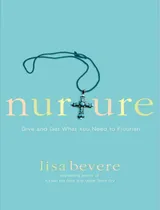
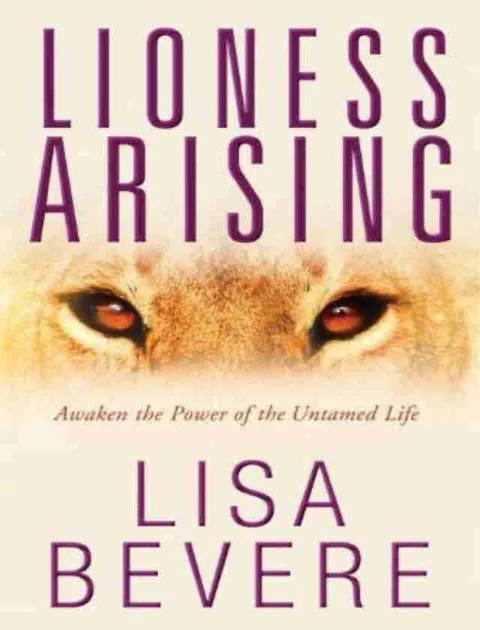
"Lioness Arising" by Lisa Bevere is a Christian book that calls women to embrace their innate strength, courage, and purpose. Drawing parallels between lionesses in the wild and the potential of women, Bevere encourages readers to pursue their God-given destinies with boldness and confidence. It offers practical advice and biblical teachings to empower women to rise up and make a difference in their families, communities, and the world.

Mosab Hassan Yousef
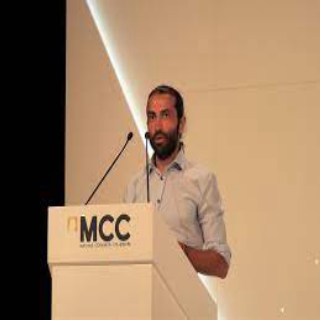
Mosab Hassan Yousef Mosab Hassan Yousef (Arabic: Ł…ŲµŲ¹ŲØ حسن يوسف; nicknamed "The Green Prince"; born 5 May 1978) is a Palestinian who worked undercover for Israel's internal security service Shin Bet from 1997 to 2007. Shin Bet considered him its most valuable source within the Hamas leadership. The information Yousef supplied prevented dozens of suicide attacks and assassinations of Israelis, exposed numerous Hamas cells, and assisted Israel in hunting down many militants, and incarcerating his own father, Hamas leader Sheikh Hassan Yousef. In March 2010, he published his autobiography titled Son of Hamas. In 1999, Yousef converted to Christianity, and in 2007 he moved to the United States. His request for political asylum in the United States was granted pending a routine background check in 2010. Biography Mosab Hassan Yousef (later Joseph) was born in Ramallah, a city 10 kilometers (6.2 mi) north of Jerusalem. His father, Sheikh Hassan Yousef, was a Hamas leader who spent many years in Israeli prisons. He is the oldest of five brothers and three sisters. When Yousef was growing up, he wanted to be a fighter because that was according to him what was expected of Palestinian children in the West Bank. Yousef was first arrested when he was ten, during the First Intifada, for throwing rocks at Israeli settlers. He was further arrested and jailed by Israel numerous times. As his father's eldest son, he was seen as his heir apparent, and became an important part of the Hamas organization. Yousef said he saw the light after a stint with his dad’s comrades in an Israeli jail during the mid-1990s. At Megiddo Prison, he witnessed Hamas inmates leading a brutal year-long campaign to weed out supposed Israeli collaborators. "During that time, Hamas tortured and killed hundreds of prisoners,ā€ he said, recalling vivid memories of needles being inserted under finger nails and bodies charred with burning plastics. Many, if not all, had nothing to do with Israeli intelligence. ā€œI will never forget their screams,ā€ he continued. ā€œI started asking myself a question. What if Hamas succeeded in destroying Israel and building a state. Will they destroy our people in this way?ā€ Yousef's doubts about Islam and Hamas began forming when he realized Hamas' brutality, and that he hated how Hamas used the lives of suffering civilians and children to achieve its goals. Yousef was held by Shin Bet agents in 1996. While in prison, he was shocked by Shin Bet's interrogation methods, which he considered humane, when compared to how Hamas operatives tortured imprisoned suspected collaborators. He decided to accept a Shin Bet offer to become an informant. Espionage career Beginning with his release from prison in 1997, Yousef was considered the Shin Bet's most reliable source in the Hamas leadership, earning himself the nickname "The Green Prince" – using the color of the Islamist group's flag, and "prince" because of his pedigree as the son of one of the movement's founders. The intelligence he supplied to Israel led to the exposure of many Hamas cells, as well as the prevention of dozens of suicide bombings and assassination attempts on Jews. He has claimed that he did not inform for money, but rather that his motivations were ideological and religious, and that he only wanted to save lives.[13] In order to thwart any suspicions of collaboration, the Shin Bet staged an arrest attempt, telling the Israel Defense Forces to launch an operation to arrest him, and then provided him intelligence allowing him to escape at the last minute, after which he went into hiding for the rest of his career. Yousef says he supplied intelligence only on the condition that the "targets" would not be killed, but arrested. This led to the detention of several key Palestinian leaders, including Ibrahim Hamid, a Hamas commander in the West Bank, and Marwan Barghouti. Also, Yousef claims to have thwarted a 2001 plot to assassinate Shimon Peres, then foreign minister and later President of Israel. According to his former Shin Bet officer, "Many people owe him their lives and don't even know it." Conversion to Christianity According to his story, Yousef met a British missionary in 1999 who introduced him to Christianity. Between the years 1999 and 2000, Yousef gradually embraced Christianity. In 2005, he was secretly baptized in Tel Aviv by an unidentified Christian tourist. He left the West Bank for the United States in 2007, and lived some time in San Diego, California, where he joined the Barabbas Road Church. In August 2008, Yousef publicly revealed his Christianity, and renounced Hamas and the Arab leadership, thereby endangering himself and exposing his family in Ramallah to persecution. Yousef has also claimed that his aim was to bring peace to the Middle East; he hopes to return to his homeland when there is peace. Yousef has stated that despite his conversion to Christianity, he is "against religion", and does not adhere to any denomination of Christianity. He has stated, "Religion steals freedom, kills creativity, turns us into slaves and against one another. Yes, I am talking about Christianity as well as Islam. Most Christians I have seen, seem to have missed the point, that Jesus redeemed us from religion. Religion is nothing but man's attempts to get back to God. Whether it is Islam, Christianity, Judaism, Buddhism, Hinduism, animism, any ism. Religion can't save mankind. Only Jesus could save mankind through his death and resurrection. And Jesus is the only way to God." Autobiography Yousef's co-authored autobiography, Son of Hamas: A Gripping Account of Terror, Betrayal, Political Intrigue, and Unthinkable Choices, written with the assistance of Ron Brackin, was published in March 2010. Yousef's brother Ouwais denounced the report about his brother's activities, saying: "It was full of lies; it's all lies." Ouwais also revealed that the last contact between his family and Mosab took place more than a year before the news of his spying. Sheikh Hassan Yousef, Mosab's father, while in an Israeli prison, disowned his son for spying for Israel. The Haaretz report on Yousef was described by Hamas MP Mushir al-Masri as "psychological war being waged against the Palestinian people... [it] did not deserve a response". Deportation threats and political asylum For a time, Yousef was threatened with deportation from the U.S., after his request for political asylum was denied, since statements in his book about working for Hamas were interpreted as "providing material support to a U.S.-designated terrorist organization", despite Yousef's explanation that they were "intended to undermine the group". His case then proceeded to the deportation stage, despite Yousef's advocates' warning that he would likely be executed by the Palestinian Authority if deported to the West Bank. On 24 June 2010, Shin Bet handler Gonen Ben Itzhak, who for 10 years worked with Yousef under the cryptonym "Loai", revealed his own identity in order to testify on behalf of Yousef at an immigration hearing in San Diego. Ben-Yitzhak described Yousef as a "true friend", and said, "he risked his life every day in order to prevent violence". Partially as a result of this, Immigration Court Judge Richard J. Bartolomei, Jr., ruled on 30 June 2010, that Yousef would be allowed to remain in the United States after being fingerprinted and passing a routine background check. He is a frequent guest speaker on various American news channels, where he talks about the atrocities committed by Hamas. Films A documentary adaptation of Son of Hamas titled The Green Prince, directed and written by Nadav Schirman, premiered at the 2014 Sundance Film Festival, where it won the Audience Award for World Cinema: Documentary. The Green Prince will be re-made into a live-action feature film. Yousef is collaborating with US-based actor and film producer Sam Feuer in the production of two films: a feature film adaptation of Yousef's book Son of Hamas and documentary The Green Prince, and a historical depiction of the life of the Muslim prophet Muhammad based on the accounts of eighth-century historian Ibn Ishaq. Views and controversies Some elements of Yousef's story have been questioned. Former Shin Bet Deputy Chief Gideon Ezra described Yousef's claims as "too good to be true", and stated that, "there are hundreds of collaborators like him. He is not unusual. He just decided to write a book about it." The conversion to Christianity narrative promoted by Yousef and his book publishers remains unsubstantiated as well. Critics have alleged that Yousef claimed he was a Christian (for a longer period of time) in order to help secure asylum in the United States. This tactic is common for Muslim immigrants seeking to avoid deportation to countries where apostasy laws exist. However, he has since become an active figure in evangelical non-denominational Christianity in America, and has appeared on programs such as The 700 Club. Interest in the book from Christian readers helped make it a New York Times best-seller. During an appearance on The 700 Club to promote his book "Son of Hamas", he was welcomed and interviewed by host Pat Robertson. At an "End Times Prophecy" conference in 2010, hosted by California-based evangelist Greg Laurie, Yousef told the crowd in attendance that Islam is "the biggest lie in human history." He further suggested at the conference that the Quran should not be legal in the United States ("banned on American soil"). In May 2016, talking to a Jerusalem Post conference in New York, Yousef claimed that at one time that he was working for, and being paid by, Israel, the United States, the Palestinian Authority, and Hamas, all at the same time. He went on to say that Islam as a whole is comparable to Nazism, and must be defeated.

He Saw God Through His Pen: George Herbert

If you go to the mainstream poetry website Poetry Foundation and click on George Herbert’s name, what you read is this: ā€œHe is . . . enormously popular, deeply and broadly influential, and arguably the most skillful and important British devotional lyricist of this or any other time.ā€ This is an extraordinary tribute to a man who never published a single poem in English during his lifetime and died as an obscure country pastor when he was 39. But there are reasons for his enduring influence. His Short Life George Herbert was born April 3, 1593, in Montgomeryshire, Wales. He was the seventh of ten children born to Richard and Magdalene Herbert, but his father died when he was three, leaving ten children, the oldest of which was 13. This didn’t put them in financial hardship, however, because Richard’s estate, which he left to Magdalene, was sizable. Herbert was an outstanding student at a Westminster preparatory school, writing Latin essays when he was eleven years old, which would later be published. At Cambridge, he distinguished himself in the study of classics. He graduated second in a class of 193 in 1612 with a bachelor of arts, and then in 1616, he took his master of arts and became a major fellow of the university. ā€œHerbert’s aim was to feel the love of God and to engrave it in the steel of human language for others to see and feel.ā€ In 1619, he was elected public orator of Cambridge University. This was a prestigious post with huge public responsibility. A few years later, however, the conflict of his soul over a call to the pastoral ministry intensified. And a vow he had made to his mother during his first year at Cambridge took hold in his heart. He submitted himself totally to God and to the ministry of a parish priest. He was ordained as a deacon in the Church of England in 1626 and then became the ordained priest of the little country church at Bemerton in 1630. There were never more than a hundred people in his church. At the age of 36 and in failing health, Herbert married Jane Danvers the year before coming to Bemerton, March 5, 1629. He and Jane never had children, though they adopted three nieces who had lost their parents. Then, on March 1, 1633, after fewer than three years in the ministry, and just a month before his fortieth birthday, Herbert died of tuberculosis, which he had suffered from most of his adult life. His body lies under the chancel of the church, and there is only a simple plaque on the wall with the initials GH. His Dying Gift That’s the bare outline of Herbert’s life. And if that were all there was, nobody today would have ever heard of George Herbert. The reason anyone knows of him today is because of something climactic that happened a few weeks before he died. His close friend Nicholas Ferrar sent a fellow pastor, Edmund Duncon, to see how Herbert was doing. On Duncon’s second visit, Herbert knew that the end was near. So he reached for his most cherished earthly possession and said to Duncon, Sir, I pray deliver this little book to my dear brother Ferrar, and tell him he shall find in it a picture of the many spiritual conflicts that have passed betwixt God and my soul, before I could subject mine to the will of Jesus my Master, in whose service I have now found perfect freedom; desire him to read it: and then, if he can think it may turn to the advantage of any dejected poor soul, let it be made public; if not, let him burn it; for I and it are less than the least of God’s mercies. (The Life of Mr. George Herbert, 310–11) That little book was a collection of 167 poems. Herbert’s friend Nicholas Ferrar published it later that year, 1633, under the title The Temple. It went through four editions in three years, was steadily reprinted for a hundred years, and is still in print today. Though not one of these poems was published during his lifetime, The Temple established Herbert as one of the greatest religious poets of all time, and one of the most gifted craftsmen the world of poetry has ever known. ā€œThe effort to say more about the glory than you have ever said is a way of seeing more than you have ever seen.ā€ Poetry was for Herbert a way of seeing and savoring and showing the wonders of Christ. The central theme of his poems was the redeeming love of Christ, and he labored with all his literary might to see it clearly, feel it deeply, and show it strikingly. What we are going to see, however, is not only that the beauty of the subject inspired the beauty of the poetry, but more surprisingly, the effort to find beautiful poetic form helped Herbert see more of the beauty of his subject. The craft of poetry opened more of Christ for Herbert — and for us. Secretary of God’s Praise On the one hand, Herbert was moved to write with consummate skill because his only subject was consummately glorious. ā€œThe subject of every single poem in The Temple,ā€ Helen Wilcox says, ā€œis, in one way or another, Godā€ (English Poems of George Herbert, xxi). He writes in his poem ā€œThe Temper (I),ā€ How should I praise thee, Lord! how should my rymes Gladly engrave thy love in steel, If what my soul doth feel sometimes, My soul might ever feel! Herbert's aim was to feel the love of God and to engrave it in the steel of human language for others to see and feel. Poetry was entirely for God, because everything is entirely for God. More than that, Herbert believed that since God ruled all things by his sacred providence, everything revealed God. Everything spoke of God. The role of the poet is to be God’s echo. Or God’s secretary. To me, Herbert’s is one of the best descriptions of the Christian poet: ā€œSecretarie of thy praise.ā€ O Sacred Providence, who from end to end Strongly and sweetly movest! shall I write, And not of thee, through whom my fingers bend To hold my quill? shall they not do thee right? Of all the creatures both in sea and land Only to Man thou hast made known thy wayes, And put the penne alone into his hand, And made him Secretarie of thy praise. God bends Herbert’s fingers around his quill. ā€œShall they not do thee right?ā€ Shall I not be a faithful secretary of thy praise — faithfully rendering — beautifully rendering — the riches of your truth and beauty? Saying Leads to Seeing But Herbert discovered, in his role as the secretary of God’s praise, that the poetic effort to speak the riches of God’s greatness also gave him deeper sight into that greatness. Writing poetry was not merely the expression of his experience with God that he had before the writing. The writing was part of the experience of God. Probably the poem that says this most forcefully is called ā€œThe Quidditieā€ — that is, the essence of things. And his point is that poetic verses are nothing in themselves, but are everything if he is with God in them. My God, a verse is not a crown, No point of honour, or gay suit, No hawk, or banquet, or renown, Nor a good sword, nor yet a lute: It cannot vault, or dance, or play; It never was in France or Spain; Nor can it entertain the day With a great stable or demain: It is no office, art, or news; Nor the Exchange, or busie Hall; But it is that which while I use I am with Thee, and Most take all. ā€œThe craft of poetry opened more of Christ for Herbert — and for us.ā€ His poems are ā€œthat which while I use I am with Thee.ā€ As Helen Wilcox says, ā€œThis phrase makes clear that it is not the finished ā€˜verse’ itself which brings the speaker close to God, but the act of ā€˜using’ poetry — a process which presumably includes writing, revising, and readingā€ (English Poems of George Herbert, 255). For Herbert, this experience of seeing and savoring God was directly connected with the care and rigor and subtlety and delicacy of his poetic effort — his craft, his art. For Poor, Dejected Souls Yet Herbert had in view more than the joys of his own soul as he wrote. He wrote (and dreamed of publishing after death) with a view of serving the church. As he said to his friend Nicholas Ferrar, ā€œ[If you] can think it may turn to the advantage of any dejected poor soul, let it be made public.ā€ And this is, in fact, what has happened. People have met God in Herbert’s poems, and their lives have been changed. Joseph Summers said of Herbert’s poems, ā€œWe can only recognize . . . the immediate imperative of the greatest art: ā€˜You must change your lifeā€™ā€ (George Herbert, 190). Simone Weil, the twentieth-century French philosopher, was totally agnostic toward God and Christianity but encountered Herbert’s poem ā€œLove (III)ā€ and became a kind of Christian mystic, calling this poem ā€œthe most beautiful poem in the worldā€ (English Poems of George Herbert, xxi). Love (III) Love bade me welcome: yet my soul drew back, Guiltie of dust and sinne. But quick-ey’d Love, observing me grow slack From my first entrance in, Drew nearer to me, sweetly questioning If I lack’d any thing. A guest, I answer’d, worthy to be here: Love said, you shall be he. I the unkinde, ungratefull? Ah my deare, I cannot look on thee. Love took my hand, and smiling did reply, Who made the eyes but I? Truth Lord, but I have marr’d them: let my shame Go where it doth deserve. And know you not, sayes Love, who bore the blame? My deare, then I will serve. You must sit down, sayes Love, and taste my meat: So I did sit and eat. Herbert had struggled all his life to know that Love’s yoke is easy and its burden is light. He had come to find that this is true. And he ended his poems and his life with an echo of the most astonishing expression of it in all the Bible: The King of kings will ā€œdress himself for service and have them recline at table, and he will come and serve themā€ (Luke 12:37). You must sit down, sayes Love, and taste my meat: So I did sit and eat. This is the end of the matter. No more striving. No more struggle. No more ā€œspiritual conflicts [passing] betwixt God and my soul.ā€ Instead, Love himself serves the poet’s soul as he sits and receives. Words as a Way of Seeing Worth George Herbert found, as most poets have, that the effort to put the glimpse of glory into striking or moving words makes the glimpse grow. The poetic effort to say beautifully was a way of seeing beauty. The effort to find worthy words for Christ opens to us more fully the worth of Christ — and the experience of the worth of Christ. As Herbert says of his own poetic effort, ā€œIt is that which, while I use, I am with thee.ā€ ā€œThe poetic effort to speak the riches of God’s greatness gave Herbert deeper sight into that greatness.ā€ I will close with an exhortation for everyone who is called to speak about great things. It would be fruitful for your own soul, and for the people you speak to, if you also made a poetic effort to see and savor and show the glories of Christ. I don’t mean the effort to write poetry. Very few are called to do that. I mean the effort to see and savor and show the glories of Christ by giving some prayerful effort to finding striking, penetrating, and awakening ways of saying the excellencies that we see. Preachers have this job supremely. But all of us, Peter says, are called out of darkness to ā€œproclaim the excellenciesā€ (1 Peter 2:9). And my point here for all of us is that the effort to put the excellencies into worthy words is a way of seeing the worth of the excellencies. The effort to say more about the glory than you have ever said is a way of seeing more than you have ever seen. Therefore, I commend poetic effort to you. And I commend one of its greatest patrons, the poet-pastor George Herbert. Article by John Piper

Feedback
Suggestionsuggestion box
x