

Others like life without limits Features >>









About the Book
"Life Without Limits" is an inspiring autobiography by Nick Vujicic, who was born without limbs. Despite facing numerous challenges and obstacles, Vujicic shares his incredible journey of overcoming his disabilities and living a fulfilling and purposeful life. Through his positive mindset and unwavering faith, he encourages readers to believe in themselves and find the strength to overcome any adversity they may face. The book serves as a powerful reminder that with determination and resilience, there are no limits to what one can achieve.
Martin and Gracia Burnham
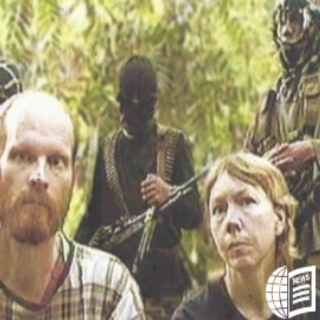 Martin Burnham and Gracia were missionaries who served for 17 years in the Philippines. After their marriage, they underwent hard training in the jungle to prepare themselves to serve in jungle parts. Martin, being a pilot missionary, supported other missionaries who were working among the tribals in jungles. He delivered groceries and medicines to missionaries and tribals and transported sick people to medical facilities. He always had a big heart for tribals and missionaries. Gracia supported him well in the work.
On May 29, 2001, while relaxing at a resort after Martin’s one overseas mission, a Muslim militant group called the Abu Sayyaf Group attacked the resort and abducted the missionary couple and few others for ransom. The missionaries were kept captive for more than a year.
During that one year, the couple went through terrible experiences. They suffered starvation, sleeplessness and sickness, witnessed atrocities of militants and experienced gun battles between militants and the military. Amidst suffering, God was their only hope and strength.
At some point, Gracia was so depressed that although she believed that Christ died for her, she felt God doesn’t love her anymore. Martin said to her “either you believe it all or don’t believe it at all.” They encouraged one another to stand firm in the faith.
Martin Burnham and Gracia ministry in Philippines
Finally, on June 7, 2002, in a rescue operation by the Philippine military, wounded Gracia was rescued. But 42 years old Martin died in the gunfight during the rescue. Later, Gracia went back to America and joined her children.
Gracia did not let her painful experiences depress her and move her away from God. But she used those experiences to encourage others who are going through hardships. She founded the Martin and Gracia Burnham Foundation, which supports missionary aviation and tribal mission work around the world. It also focuses on ministries among Muslims. She forgave who abducted them, visited them in jail and shared Christ’s love. Some of them accepted Christ. Gracia believes that this may be God’s great purpose behind their suffering.
Martin Burnham and Gracia were missionaries who served for 17 years in the Philippines. After their marriage, they underwent hard training in the jungle to prepare themselves to serve in jungle parts. Martin, being a pilot missionary, supported other missionaries who were working among the tribals in jungles. He delivered groceries and medicines to missionaries and tribals and transported sick people to medical facilities. He always had a big heart for tribals and missionaries. Gracia supported him well in the work.
On May 29, 2001, while relaxing at a resort after Martin’s one overseas mission, a Muslim militant group called the Abu Sayyaf Group attacked the resort and abducted the missionary couple and few others for ransom. The missionaries were kept captive for more than a year.
During that one year, the couple went through terrible experiences. They suffered starvation, sleeplessness and sickness, witnessed atrocities of militants and experienced gun battles between militants and the military. Amidst suffering, God was their only hope and strength.
At some point, Gracia was so depressed that although she believed that Christ died for her, she felt God doesn’t love her anymore. Martin said to her “either you believe it all or don’t believe it at all.” They encouraged one another to stand firm in the faith.
Martin Burnham and Gracia ministry in Philippines
Finally, on June 7, 2002, in a rescue operation by the Philippine military, wounded Gracia was rescued. But 42 years old Martin died in the gunfight during the rescue. Later, Gracia went back to America and joined her children.
Gracia did not let her painful experiences depress her and move her away from God. But she used those experiences to encourage others who are going through hardships. She founded the Martin and Gracia Burnham Foundation, which supports missionary aviation and tribal mission work around the world. It also focuses on ministries among Muslims. She forgave who abducted them, visited them in jail and shared Christ’s love. Some of them accepted Christ. Gracia believes that this may be God’s great purpose behind their suffering.
Are You a Friend to the Poor
God’s heart is for the least of these: the suffering, lost, and lonely. "Do you know the name of a poor person?" a young man in his twenties who was sharing about his experiences as a missionary in Moldova posed the question to me in church. His phrase was tricky because if he'd said, "Do you care about the poor?" I might have tossed it in that drawer where you keep all the stuff you've heard a million times and are supposed to ponder but probably won't do much with. When he asked if I knew the name of a poor person he exposed a glaring gap in my Christianity: Whose name did I know? Not whose face had I passed on 21st Street on my way to grab coffee; not what homeless man had I handed a dollar for the paper he peddles at the stoplight; not what anonymous tsunami victim had received an online donation I'd made. Whose name did I know? I was left to consider this very important question because if I didn't know the name of a poor person, I didn't really know a poor person. (This is one of the biggest problems with going to church — the possibility of getting all convicted and stuff.) I always knew that if God's heart was for anything it was for the least of these: the suffering, sick, needy, uneducated, foreigner, lost, lonely — this much was clear. And it's true that these were people I cared about, prayed for, and on whose behalf I tithed, but how many of them called me friend? Who had my phone number, been to dinner at my house, or sat beside me at church? Without condemnation, I had to recognize that I was someone who cared for the poor mostly from a distance but who had yet to intimately involve herself. My first step: Learn a name. In the Law of Moses God commanded the Israelites to leave their extra sheaves, olives, and grapes for the alien, fatherless, and widow — for all the people who didn't have what the Israelites had and who didn't have the means to get what they had. At the end of this recurring command the Lord gave His people an intriguing reason for why He required this, "Remember that you were slaves in Egypt. That is why I command you to do this" (Deut. 24:22, NIV). Didn't God want them to leave their excess food for the poor and outsider because these people were hungry, because they needed community, because they couldn't provide for themselves, because He loved them? Wasn't that why? Oh I'm sure those were all reasons, but I believe God first had to deal with that sneaky mind-set, the one that tries to trick us into thinking that when we step over a stalk of wheat to leave it for the poor we're doing something really noble, plain over-the-top gracious. That we're going above and beyond by giving away what is rightfully "ours." The Lord was staving off this kind of thinking by saying, "Hold your fancy horses. Remember you used to be slaves too! Don't forget to tap into what that felt like." The Israelites were no strangers to poverty, oppression, or powerlessness as ones who had once been enslaved in Egypt. It was only because of God's deliverance they were now free, only because of His goodness they were blessed with flourishing fields and bursting branches. By remembering their once low estate, they were poised to welcome the foreigner, fatherless, and widow, not out of self-righteousness, guilt, or duty, but out of the love God had shown them. Last night I served dinner to an Iraqi couple and their 2-year-old daughter, a family some of my friends and I have gotten to know. I'd hoped that chicken, broccoli, and couscous were safe selections to serve these well-dressed Middle Easterners, though I sensed I may have been pushing it with the hot apple cider. I was going for the American autumn experience, and judging by their first and only sip, this went over moderately. As we settled around the table I asked them why they'd left Baghdad to come to America. The husband replied, "Because there are less car bombings here," and then he broke out into hysterical laughter. (Safwat's a sanguine.) His wife was less buoyant, confiding that the war had been devastating and that they'd fled here as refugees hoping to find jobs but so far without any success. My eyes welled up as she spoke because her suffering was not that of a nameless Iraqi, but it belonged to her, a real-life woman with a name, Rida. As the adults carried on, Rubaa fingered the icing on her cupcake and tapped her shoes on the hardwood floors, just like any other baby girl in a bright red dress who wanted the room to be enchanted with her — some things are the same everywhere. When it was time for them to leave, Safwat shook my hand, Rubaa blew me a kiss at her mother's urging, and Rida kissed my right cheek, left cheek, and then back to my right cheek again (it's that third one I always forget). As we said our good-byes I realized what a privilege it was to know their names, because knowing their names meant I was getting to know their stories. And knowing their stories reminded me in deeply spiritual and emotional places that I, too, was once a foreigner outside of God's kingdom, but because of Christ, I am now a daughter. Kelly Minter